




Aedan Yue Li retweeted

Parenting practices seem to have little or no impact on children's personalities, contrary to some of the best-known theories in psychology. (Longitudinal study; N = 3,880) online.ucpress.edu/collabra/…

Aedan Yue Li retweeted

I am beyond excited to share a new preprint from my lab ‘The Conceptual Structure of Human Relationships across Modern and Historical Cultures’. We discovered a universal representational space of social relationship concepts. doi.org/10.31234/osf.io/ut6q…
Aedan Yue Li retweeted

I am not sure of the official DAY OF PUBLICATION but my taste ensembles are in JEP:G!
psycnet.apa.org/record/2024-…
please read if you have ever found yourself wondering "on average, how sweet are these briefly presented food pictures?"
w/ jon cant and @KeisukeFukuda4

Aedan Yue Li retweeted

Bispectral Neural Networks go to #ICLR2023!
In this work, we present a new neural network architecture capable of learning unknown groups purely from the symmetries implicit in data
—with @cashewmake2, Bruno Olshausen, and Christopher Hillar
1/17

Aedan Yue Li retweeted

In the latest paper from my lab, @jerryptang showed that we can decode language that a person is hearing (or even just thinking) from fMRI responses. nature.com/articles/s41593-0…

Aedan Yue Li retweeted

Are Emergent Abilities of Large Language Models a Mirage?
Presents an alternative explanation for emergent abilities: one can choose a metric which leads to the inference of an emergent ability or another metric which does not.
arxiv.org/abs/2304.15004



Aedan Yue Li retweeted

It was amazing to see the massive support this week for this big change - thank you.
And huge thank you to the 870 people who already signed up to review for Imaging Neuroscience!
Can we make it a thousand? :-)

We have had a large number of people offer to become reviewers for Imaging Neuroscience - so we now have a short web form to register yourself as a reviewer - we'll get back in touch shortly - many thanks! Please see the journal website:
imaging-neuroscience.org
Aedan Yue Li retweeted

Major physical advances from the last century — general relativity, the Standard Model and the hunt for the Higgs boson — all have symmetry to thank. New symmetries promise new breakthroughs. quantamagazine.org/a-new-kin…
Aedan Yue Li retweeted
Constellations of chemicals interact to form the fragrances familiar to us. To truly understand smell, scientists need to map the relationships among these molecules. Machine learning can help. quantamagazine.org/ai-model-…
Aedan Yue Li retweeted

Check out our new work “What language reveals about perception: distilling psychophysical knowledge from large language models”! @RajaMarjieh, @sucholutsky, @polvanrijn, @norijacoby, @CompAudition, @cocosci_lab. arxiv.org/pdf/2302.01308.pdf 1/n

Aedan Yue Li retweeted
All NeuroImage and NeuroImage:Reports editors have resigned over the high publication fee, and are starting a new non-profit journal
imaging-neuroscience.org
This comes with great regret, and a huge amount of thought and discussion- please read announcement to get more details.


Aedan Yue Li retweeted

Article in @QuantaMagazine on two of the most brilliant thinkers I know: Bruno Olshausen and Pentti Kanerva:
quantamagazine.org/a-new-app…
Aedan Yue Li retweeted

Updated the preprint below! We have included the THINGS data (similarity of 1854 natural objects) and successfully aligned the mental representations of 1854 objects across individuals in an unsupervised manner using Gromov-Wasserstein optimal transport.
psyarxiv.com/h3pqm/

Is my “red” your “red”? In this preprint with @ariel_zj, @NaoTsuchiya, @oizumim, we propose a novel quantitative method to compare subjective experiences in a purely unsupervised manner based on the qualia structure paradigm. 1/13
psyarxiv.com/h3pqm/
Aedan Yue Li retweeted

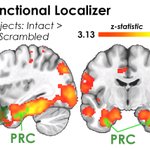
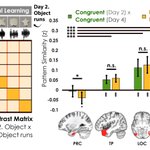
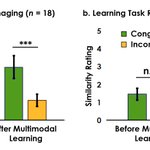
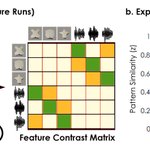
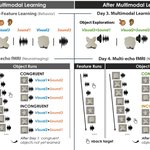
Resolving Cross-modal Semantic Interference among Object Concepts Requires Medial Temporal Lobe Cortex dlvr.it/Sm7xCd @mitpress @mitpress
Along the way, I introduce several tools to measure object representations.
Mouse-tracking may be particularly exciting, as it can measure internal representations from human behavior dynamically at millisecond temporal resolution: t.ly/C2AE
1
1
250