

Prev: @YaleLawSch @PrincetonSPIA|| Ed Reform, Policy & Philanthropy|| Development & Communications|| @Cornell Univ Trustee
Joined September 2011
- Tweets9.3K
- Following621
- Followers1.1K
- Likes3.2K





Asa Craig retweeted

🚨Breaking: Louisiana judge orders temporary restraining order prohibiting Kalshi, Polymarket, Coinbase, Robinhood, and other “prediction market” operators from continuing their unlicensed and unregulated illegal gambling in Louisiana.
It’s not complicated: if you aren’t a licensed gaming operator, you aren’t legal. Illegal gambling is a crime and is subject to jail time and significant penalties. Judges all over the country have overwhelmingly called this activity what it is: gambling. Kalshi’s and the other operators’ attempts to make up new words to evade state gambling laws, regulators, and taxes are not fooling anyone.


Asa Craig retweeted

"You want people to enjoy making bets. There's absolutely nothing wrong with making a bet here or there. The problem I think we run into is people thinking that their path to financial freedom is a seven-leg parlay.”
— @SenatorPicozzi, co-chair of PA's Problem Gambling Caucus
Asa Craig retweeted

At the Massachusetts Gaming Commission, we believe regulated sports wagering is safer sports wagering.
Chair Maynard's full written testimony to the Subcommittee on Higher Education and Workforce Development is now available on our site: buff.ly/wa8n9nq

Asa Craig retweeted

Complex topic, but I disagree with MGC's Maynard's call for more industry-linked or funded research involving the controversial "RG" framework.
That's why @Arnold_Ventures @AsaCraig funding of research with a higher degree of separation from industry is a better route.
Maynard today: "I think that it's important for every state and our federal government to recognize how important it is to fund research around responsible gaming. The more we know, the more we can do. I always say, 'if we can't measure it, we can't manage it.' It's a relatively new field, right? 2018 was when PASPA was repealed."
Another thing I would push back on: The harms have been extensively measured in countless U.S. surveys and studies over recent years. You can put evidence-based, stronger guardrails in right now. MA has a bill on the table to do just that, which I didn't hear Maynard mention. Of course, MGC has a neutral stance on policy.
Let's also not succumb to the idea that the U.S. can't implement much stronger frictions based on research from countries that have had government-sanctioned online betting for much longer than the U.S.
Maynard is a thoughtful regulator and is tasked with an essentially impossible balancing act between industry interests and public health. Still, we must reject calls for RG research with industry ties or framing. People with addiction, along with affected others, deserve better.

Asa Craig retweeted

NEW: Congressman @RoKhanna just called on banning sports prediction markets
@SafeBetsWorld CEO Alex Konanykhin explained why the pushback was inevitable after the Blue Tsunami:
"What used to be political cover is going to become a huge liability"


Asa Craig retweeted

“Alcohol stores don’t give you a coupon for a free drink if you’ve taken a week off drinking,” he said. “It used to be man versus vice. Now it’s man versus vice combined with a billion-dollar tech company. That’s not a fair fight.”

Just an astonishing and enraging story about a public health crisis and what happened when an NBA player got hooked on sports betting. newyorker.com/magazine/2026/…

Asa Craig retweeted

Insane story, incredible reporting by @NickBerardini


The N.B.A. player Jontay Porter got deep into FanDuel, and in debt to the wrong people. The only way out, it seemed, was to gamble on himself. newyorker.com/magazine/2026/…
Asa Craig retweeted

Half of men under fifty have a sports-betting account. Nick Berardini reports on a new gambling empire—and what it’s costing us: newyorkermag.visitlink.me/3Q…
Asa Craig retweeted

The largest expansion of legalized gambling in US history has experts warning that we are on the precipice of a public-health crisis with addiction rates spiking. newyorker.com/magazine/2026/…
ift.tt/gIyTB4x
Asa Craig retweeted

Online sports #betting linked to rise in problem #gambling hotline calls in the US by researchers at the University of New Hampshire newschannel5.com/health/ment… via @NC5

Asa Craig retweeted
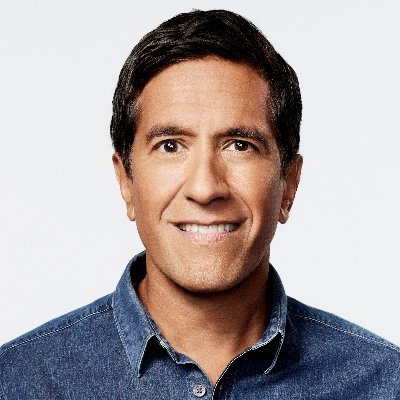
Who is most susceptible to online gambling addiction?
Co-director of the UCLA Gambling Studies Program Dr. Timothy Fong gives Dr. Sanjay Gupta and @CoyWire a sobering answer to that question… “Literally any single human on Earth.”
Catch this week’s episode of Chasing Life to hear what the biggest risk factors are for gambling addiction and what we can do to mitigate them.
Streaming on the CNN App and here: bit.ly/4zwcpAc
Asa Craig retweeted

Sports prediction markets are sports bets. By effectively requiring prediction markets to offer contracts in all 50 states, even on Tribal lands, the CFTC is once again violating state law and Tribal sovereignty.
Despite ongoing litigation and court orders to cease offering contracts in several states and Tribal lands as recently as today, the CFTC and its rogue chairman now appear to be encouraging platforms to continue offering gambling products in contempt of these court orders.
This is the CFTC’s most egregious attempt yet to undermine state law, the Tribes, and now, the courts. The CFTC chairman has been captured by the industry and his actions reflect only their interests.

Derivatives markets must operate on a uniform basis on a national scale in order to achieve the purposes set out in the Commodity Exchange Act. Geographic access restrictions undermine the national uniformity and consistency that the Act is intended to facilitate.
Today's interpretative guidance ensures that exchanges provide competitive, open, fair, and impartial access to their members pursuant to @CFTC regulations.
Asa Craig retweeted

"Prediction market" is what some overpaid consultant came up with. "Gambling" is the term you're looking for.
Asa Craig retweeted
I am 100% Team Nate in this beef. It’s *obvious* to anyone paying attention that the betting markets just moved over time towards the models. That’s the info they were working off of! They didn’t “discover” anything

Asa Craig retweeted
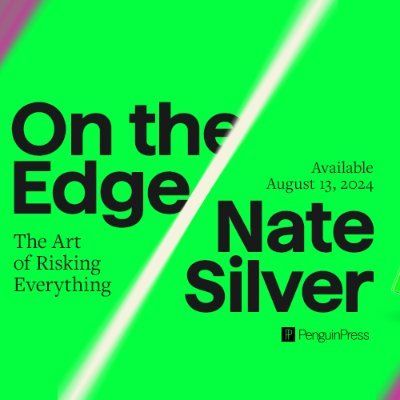
Give me a break, the polls and models provided the direction in contast to vibes and dumb insiders. And yes it's good that traders were smart enough to trust them. But the better election models were more confident about the outcome than the markets and got there more quickly.

Last night, the power to decide what America sees changed hands.
I have spent a ton of time in DC over the last few months. The elites were certain the markets were off. I heard many variants of “no chance markets are right about X” and “I’ve been in politics for a decade. ‘These people’ don’t really know much.”
Last night, ‘these people’ beat the elites.
Prediction market favorites won 479 of the first 487 races. That’s 98%.
The elites live in a bubble. They theorize, write, ideate, and mistake credentials for an understanding of lives they’ve never lived. They don’t see and feel what the everyday man, on the ground, sees and feels.
Knowledge is not exclusive to the elites but scattered across millions of people.
Someone knows their hometown better than any national pundit. Someone has followed a local race passionately for months. Someone has followed a local race dispassionately for months. Someone notices a shift in their community before it makes the headlines. Someone is shaped by an incident at work. Someone is shaped by what’s getting harder or easier for their families.
Each holds a piece of the picture that no expert can see in full.
And for the longest time, that knowledge had no way to reach the rest of the world.
For generations, election night meant turning on the TV and waiting for a handful of people to tell you what happened.
Prediction markets change that.
You don't need a title, a large following, or an editor to publish you. All you need is a perspective and the conviction to back it.
That changes who holds power over information.
Anyone can see the market. Anyone can contribute to it. Anyone can question it. No title gives you the final word. No gatekeepers can filter your view.
Sometimes the signal can be wrong. But anyone can challenge the consensus and improve it.
And when people consolidate their knowledge together, something remarkable happens: millions of individual perspectives become a signal that we all can learn from.
Over the last few months, the people showed up on Kalshi to tell the world what they were going to do.
Last night, the megaphone was passed to them.

Asa Craig retweeted

The CFTC is behaving like the Office of Thrift Supervision. Given the conflicts they’re creating with a bipartisan coalition of states, this isn’t sustainable and at a certain point it’s going to provoke a real rethinking of the agency by Congress.

Significant escalation via the @CFTC, which has ordered prediction markets to stop geofencing states within 30 days, or explain why they can’t.
Puts Kalshi in precarious spot, on a collision course with court orders in Michigan, Nevada & Washington, where its sports contracts are currently banned.
Asa Craig retweeted

“He was particularly critical of the Third Circuit’s reasoning, describing its approach as a ‘threadbare, plain-meaning analysis’ that largely separates statutory language from its broader context.”
More from @MikeBreen513:
nextpredict.io/market-news/l…

Asa Craig retweeted
YOUNG VOTERS slam online sports betting in Nebraska?
The measure to legalize sports betting did far WORSE in Lancaster County (home to the University of Nebraska) than statewide.
58% in Lancaster vs 54.5% statewide

A historic defeat for the traditional online sports betting industry appears to be looming in the US state of Nebraska, the only state voting on the topic this election.
Despite $23 million to $0 in support of legalizing it (according to Nebraska Plains Ledger data), the measure appears to be in big trouble. Only 41% of votes have been counted as of this post, but the tally for legalizing online sports betting is down ~7 points (NYT/AP).
Nebraska would be just the second state after California in 2022 to reject legalizing online sports betting at the ballot box.
Legal online sports gambling isn't as controversial as AI data centers, but it's quite unpopular.
An Overton Insights poll from May found American voters opposed legalization 47% to 31%.
Prediction markets, which offer sports betting outside state regulation, are even more controversial, according to other polling.
Eight years after the Supreme Court overturned the federal prohibition, U.S. online sports betting has run amok, according to numerous public health experts and policymakers I've interviewed. The public appears to be turning on it. Even if Nebraskans narrowly approve it, the industry is losing favor with the American public.
As a result, public health reform related to online gambling is gaining momentum.