

Mining Coins ⛏️ YT : https://nitter.gq/t.co/boW85CY4wg
unknown
Joined June 2022
- Tweets8.1K
- Following79
- Followers733
- Likes5.6K




Pinned Tweet
.env Miner v1.0.4 is now live.
We have officially integrated Rigor ($RES / $ORU) with high-performance CUDA GPU compute and official core support.
Key updates in v1.0.4:
1. Rigor ($RES / $ORU) Mining Engine
- Real CUDA GPU mining engine utilizing the OpuHash / SHA3-256 algorithm.
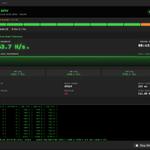
- Verified on NVIDIA hardware (142+ MH/s on RTX 5060 Ti at 100% compute load).
- Dual support: GPU Studio for NVIDIA cards and CPU Studio for official node RPC mining.
- Preconfigured seed routing and development fee integration.
2. 1-Click Miner & Engine Manager
- One-click automated diagnostics across all 14 supported networks.
- In-app engine updates with zero manual folder extraction.
3. Architecture Overhaul
- Dedicated GPU Studio and CPU Studio workspaces.
- Obsidian Cyber interface with real-time telemetry (MH/s, watts, thermals, accepted/rejected shares).
Release and direct download links:
- Release page: github.com/lemo1bot/env-mine…
- Direct download: github.com/lemo1bot/env-mine…
Official channels:
- Telegram: t.me/env_120
- YouTube: youtube.com/@envlemon
- X: nitter.gq/bank_of_eth
#oru #res #rigor

Ting: A New Experimental Blockchain Network Is Live
Ting has announced its first public release. The network is live, and its software is available for anyone interested in running nodes, mining or building applications.
The project is inviting technical feedback, particularly on its protocol design, consensus specification and implementation.
Explore the Ting ecosystem:
- GitHub Organization: github.com/ting-organization
- Protocol Rules: github.com/ting-organization…
- Node Explorer: node1.ting-node.com/
- Node Wiki: node1.ting-node.com/wiki
- Miner Guide: github.com/ting-organization…
- Mining Instructions: github.com/ting-organization…
- Miner Downloads: github.com/ting-organization…
- Wallet Guide: github.com/ting-organization…
- Ting ID: github.com/ting-organization…
- Ting Swap: ting-organization.github.io/…
- Ting Canvas: ting-organization.github.io/…
Security and transparency:
Release archives include SHA-256 checksums and build attestations, but desktop binaries are not code-signed. Verify downloads before running them, or build from source.
Security reports: github.com/ting-organization…
GitHub Discussions: github.com/ting-organization…
YouTube: youtube.com/@Ting-i4j1m
Demo Video: youtube.com/watch?v=rPae96sb…
Ting is still a small experimental project. This is an opportunity for developers, miners and node operators to examine the implementation, test the network and provide constructive feedback.
Explore the code. Verify the protocol. Don't trust promotional claims without testing.
#Ting #Blockchain #PoW #Mining #Crypto #OpenSource
KawaidCoin (KWD): A Python-Based SHA-256 Proof-of-Work Blockchain
KawaidCoin is an experimental blockchain project built to explore how early Bitcoin (2009–2010) worked under the hood.
The project currently has a live network with several core blockchain components implemented.
Key features:
- SHA-256 Proof-of-Work consensus
- Cumulative chain-work tracking
- 21 million KWD maximum supply
- Block reward halving every 100 blocks
- SECP256k1 ECDSA wallet generation
- Signed transaction validation
- Merkle Tree generation
- Interactive SPV proof verification
- Standalone CPU mining script
- Peer-to-peer orderbook interface
Current status: The network is at Block 40, according to the announcement.
KawaidCoin is open-source, with an explorer, faucet and P2P exchange available for community testing.
Explore KWD:
Explorer & Faucet: two026-blockchain.onrender.c…
P2P Exchange: two026-blockchain.onrender.c…
GitHub Source Code: github.com/mdkhalid78690-bot…
YouTube Demo: youtube.com/watch?v=8OTM6c1h…
An interesting educational project for anyone interested in Bitcoin fundamentals, SHA-256 mining and blockchain development.
Review the source code and test the network before participating. This is an experimental project, not an independently verified production blockchain.
#KWD #KawaidCoin #Bitcoin #SHA256 #PoW #CPUMining #Blockchain
QNET Blockchain: A Post-Quantum-Resistant Layer 1 Under Development
QNET is an experimental Layer 1 blockchain exploring post-quantum cryptography, mobile node participation and decentralized infrastructure.
Key technology:
- Post-quantum signatures: ML-DSA-65 (NIST FIPS 204)
- Hybrid X25519 + ML-KEM-768 key exchange
- Account-based blockchain architecture
- One-second microblock schedule
- Checkpoint-BFT finality system
- Deterministic WebAssembly smart contract execution
- Native QRC-20 and QRC-721 transaction support
Two node types:
- Light Nodes: Designed for mobile participation through the QNet Wallet, using periodic signed attestations rather than continuous mining.
- Super Nodes: Provide infrastructure for network operation and consensus.
QNC token model:
- Maximum supply: 4,294,967,296 QNC
- Genesis supply: Zero
- Premine: None
- Decimals: 9
- Reward distribution: 75% to Light Nodes and 25% to Super Nodes when both groups are eligible.
- Emission: Four-year halvings during the first 20 years, followed by a further 10x reduction.
Two-phase node activation:
Phase 1 uses 1DEV, an external Solana SPL token, which is permanently burned for node activation.
Phase 2 is scheduled to begin when 90% of the original 1DEV supply has been burned or five years have passed since genesis, whichever comes first. Activation then moves to QNC, with payments redistributed through Pool #3.
Important: QNET is currently an experimental test network. Software, token economics and protocol parameters may change, and network resets or interruptions are possible. QNC has no guaranteed monetary value. Post-quantum design claims should be independently reviewed; the project is not presented here as independently audited or production-ready.
Explore the project:
Website: aiqnet.io/
Documentation: aiqnet.io/docs
GitHub: github.com/AIQnetLab/QNet-Bl…
Explorer: aiqnet.io/explorer
Build verification: github.com/AIQnetLab/QNet-Bl…
QNet Wallet: aiqnet.io/wallet
Telegram: t.me/QNET1DEV
Announcements: t.me/AiQnetLab
Developer on X: nitter.gq/AIQnetLab
Review the documentation and source code, test the network, and form your own opinion.
#QNET #Blockchain #PostQuantum #Layer1 #Web3 #Crypto
Pinch (PINCH): An Independent Ethash PoW Blockchain
Pinch is an EVM-compatible Proof of Work network secured by Ethash, featuring native payments, on-chain escrow agreements and public reputation ratings.
Key specifications:
- Algorithm: Ethash (GPU and CPU mining)
- No premine or genesis allocation
- Block reward: 50 PINCH
- Halving: Every 2,100,000 blocks
- Maximum scheduled supply: 210 million PINCH
- Chain ID: 5261646
- Solo mining only — no mining pool currently available
- Compatible with EVM wallets such as MetaMask and Trust Wallet
Important mining rule: From block 20,000, PINCH-STAKE-1 introduces reward-address balance requirements. Depending on the balance, miners receive 50%, 60%, 75%, or 100% of the scheduled block reward. Any reduced portion is never minted.
Transparency matters: According to the announcement, the founder's two computers mined every block before this announcement. At block 11,600, the founder held approximately 581,000 PINCH, including 100,000 PINCH locked in the bridge vault for wPINCH on Base. This is an important early distribution detail to consider.
Explore Pinch:
Website: pinch.network/
Downloads: pinch.network/downloads.html
Explorer: pinch.network/explorer/
Review the consensus rules, mining instructions, binaries and checksums before participating. Always verify token contract addresses through the official website.
#PINCH #PoW #Ethash #GPUmining #CPUmining #Blockchain
NEB (Neural Engine Byte) — Experimental PoW Testnet | GPU + CPU Mining
What if every mining attempt also contributed to training a neural network?
NEB — Neural Engine Byte introduces an experimental Proof-of-Work design where each mining attempt performs a training step on a network-owned neural model and dataset.
Instead of conventional hash-only mining, NEB uses the resulting gradients as part of its mining process.
How NEB Works
- The blockchain maintains its own neural network and dataset.
- Every mining attempt executes one training step.
- Gradient digests are used to determine block and share eligibility.
- Shares contributed by miners help train the model in the following block.
- Nodes can independently reproduce mining attempts using exact integer arithmetic.
- Block verification reportedly takes around 17 ms on one CPU core.
Testnet Specifications
- Project: Neural Engine Byte
- Ticker: $NEB
- Version: 0.1.0
- Protocol: 2
- Consensus: Neural-network-based experimental PoW
- Block time: 60 seconds
- Difficulty adjustment: ASERT
- ASERT half-life: 600 seconds
- Block reward: 20 NEB
- Halving: Every 450,000 blocks
- Project allocation: 5% of each block reward
- Genesis coins: Permanently unspendable
CPU + GPU Mining
NEB supports both CPU and NVIDIA GPU mining.
- CPU miner: "neb-miner-cpu"
- GPU miner: "neb-miner-gpu"
- NVIDIA requirement: Compute Capability 7.5 or later
- NVIDIA driver: Version 580 or later
- HiveOS package: Available
Basic Mining Setup
Download the appropriate release, "mnist-q8.bin" dataset (47 MB), and "SHA256SUMS" from the official release page.
neb-wallet --wallet wallet.txt new
neb-node --run --dataset mnist-q8.bin --datadir data --miner-lock "$(neb-wallet --wallet wallet.txt lock)"
neb-miner-gpu --node 127.0.0.1:3441 --dataset mnist-q8.bin
For CPU mining, use "neb-miner-cpu" instead of the GPU miner.
Official Links
- Website & Explorer: neuralenginebyte.org
- Source Code: github.com/SilasEigen/neb
- Release v0.1.0: github.com/SilasEigen/neb/re…
- Whitepaper: github.com/SilasEigen/neb/bl…
- Discord: discord.gg/B6dTbScw8
- X: nitter.gq/silas_eigen
An experimental PoW approach worth examining.
Explore the code, run a node, test CPU/GPU mining, and investigate how useful neural-network training can be integrated into blockchain consensus.
#NEB #NeuralEngineByte #PoW #CPU #GPU #Mining #Blockchain #NewProject
BOING NETWORK — Public Testnet Is Live | Quality Enforced by the Protocol
BOING Network is building a blockchain ecosystem focused on protocol-level quality assurance, deployment verification, and developer tooling.
The public testnet is live, giving users, developers, and node operators an opportunity to explore the network and test its infrastructure.
Live on Public Testnet
- Public RPC and faucet
- Quality Gate deployment checks
- Published rule registry
- Boing Express wallet
- Boing Observer explorer
- Node, CLI, and SDK tooling
What's in Development
- Community review pool for uncertain deployments
- Validator-set growth and production hardening
- Broader cross-chain liquidity routes
- Future incentivized testnet program
Required Before Mainnet
- Independent security audits
- Genesis and validator readiness
- Finalized slashing and appeals processes
- Incident-response procedures
- Completion of published readiness milestones
Important: Testnet Participation
The incentivized testnet is not currently running. Public testnet participation does not guarantee rewards, tokens, or an airdrop.
Mainnet has not launched. Testnet BOING is for testing and experimentation and has no guaranteed monetary value. Tokenomics and allocations may change.
Official Project Links
- Website: boing.network/
- X: nitter.gq/BoingNetwork
- YouTube: youtube.com/@boingblockchain…
- Discord: discord.gg/jy9azx6ePT
Explore. Build. Verify.
Start with the public testnet, read the documentation, experiment with the available tools, and follow development through official channels.
The Quality Gate aims to reduce deployment risks, but cannot guarantee that every application or deployment is safe. Always verify information through official project channels.
#BOING #Blockchain #Testnet #Web3 #Nodes #Developers #NewProject

BITRUBIN (BRBN) — Bitcoin-Based Experimental Research Project
Introducing BITRUBIN, an experimental research and prototype project by Faycal Hammouti, exploring a Bitcoin-only blockchain approach with two proposed assets:
- BITRUBIN (BRBN)
- BITPEARL (BPRL)
Project Overview
- Project: BITRUBIN
- Main asset: BRBN
- Second asset: BPRL
- Author: Faycal Hammouti
- Blockchain: Bitcoin only
- Current status: Research / Prototype
Important Status Disclosure
BITRUBIN is currently an experimental research project, not a live cryptocurrency launch.
There is currently:
- No announced token issuance
- No announced production launch
- No confirmed public mining opportunity
- No investment offer
The project is still in its research and prototype stage.
Explore the Project
- English Whitepaper v2.3: github.com/safran3388-oss/BI…
- Development Status: github.com/safran3388-oss/BI…
- Roadmap: github.com/safran3388-oss/BI…
- GitHub Repository: github.com/safran3388-oss/BI…
An interesting project to follow from a Bitcoin research and development perspective.
Read the documentation, examine the proposed design, and follow development updates before drawing conclusions.
#BITRUBIN #BRBN #BITPEARL #BPRL #Bitcoin #Blockchain #Research #OpenSource
VMRX — Independent RandomX Blockchain | CPU Mining
VMRX is an experimental, open-source blockchain built around the RandomX Proof-of-Work algorithm.
The project welcomes CPU miners, developers, independent node operators, and security researchers who want to inspect the implementation, run nodes, and contribute to its development.
Project Focus
- Independent RandomX blockchain
- CPU-oriented Proof-of-Work mining
- Open-source core implementation
- Desktop node and miner software
- Block explorer and mining pool dashboard
Development & Transparency
The project is still experimental. Areas requiring further validation include:
- Funded wallet transactions
- Historical wallet recovery
- Independent security review
- Long-term P2P network resilience
Community participation and reproducible bug reports can help identify weaknesses and improve the implementation.
Important Clarification
VMRX must not be confused with VMESH listings.
No future exchange listing, liquidity, or market price is guaranteed.
Official Project Links
Website: randomx.vargamesh.com/en/
Explorer: randomx.vargamesh.com/en/exp…
Mining guide: randomx.vargamesh.com/en/min…
Pool dashboard: mining.randomx.vargamesh.com…
Core GitHub: github.com/ati1993de/vmrx-co…
Desktop GitHub: github.com/ati1993de/vmrx-no…
Verify the code. Run a node. Mine responsibly.
#VMRX #RandomX #PoW #CPU #Mining #Blockchain #OpenSource #NewProject

NEBULA ($NBL) — Open-Source Python PoW Blockchain
A new experimental Bitcoin-style blockchain built entirely in Python is looking for developers, miners, and independent reviewers.
Developed by Rahmat, a solo developer from Kabul, NEBULA aims to implement a familiar Bitcoin-style architecture with its own consensus and networking components.
Technical Specifications
- Language: Python
- Consensus: SHA-256d Proof-of-Work
- Transaction model: UTXO
- Difficulty adjustment: LWMA, 60-block window
- Block target: 10 minutes
- P2P networking: TLS
- License: MIT
Blockchain Features
- P2PKH and P2SH transactions
- Multisignature transactions
- BIP39/32/44 wallet support
- Derivation path: "m/44'/2025'/0'/0/n"
Tokenomics
- Ticker: $NBL
- Maximum supply: 21,000,000 NBL
- Initial block reward: 50 NBL
- Halving: Every 210,000 blocks
- Block reward allocation: 100% to miners
- No foundation cut or developer tax
Premine Disclosure
NEBULA has a genesis premine of 1,035,000 NBL, approximately 4.9% of the maximum supply.
The developer states that this allocation is included in the genesis block and can be checked using a public test script. This is an openly disclosed premine, not a zero-premine launch.
Current Development Status
NEBULA is still pre-launch. Only local regtest functionality is available; there is currently no public testnet or public seed-node infrastructure.
Test coins have no value, and the project has not undergone an independent security audit. The developer advises against using real funds.
How to Review the Code
git clone github.com/rahmatullahvibene…
cd nebula-blockchain
python3 tests/test_genesis_premine_v1025.py
python3 tests/test_lwma_v1025.py
The announcement reports 18/18 genesis-premine checks and 22/22 LWMA checks passing. These are project-reported test results, not an independent audit.
Official Links
- GitHub: github.com/rahmatullahvibene…
- Telegram: t.me/nebula_nbl_official
What the developer needs: Independent reviews of consensus code, LWMA difficulty adjustment, genesis logic, and premine implementation.
An experimental project worth examining from a developer and protocol-review perspective.
#NEBULA #NBL #PoW #SHA256d #Python #CPU #GPU #Mining #Blockchain #OpenSource
TITANFORGE NETWORK — Come and Try to Break It
TitanForge is inviting miners, node operators, developers, and independent researchers to challenge its design before the network moves further into testing.
The team isn't just asking people to mine. It wants the community to examine the protocol, question its assumptions, identify weaknesses, and test the network.
How to Get Involved
- Read the Litepaper and examine the protocol design.
- Challenge the technical assumptions and identify edge cases.
- Review the network documentation.
- Run nodes and mine on the testnet once the code and network become available.
- Report bugs, vulnerabilities, and technical concerns through Discord.
Explore TitanForge
- Website: titanforge.network/
- Litepaper: titanforge.network/titanforg…
- Network documentation: titanforge.network/docs/netw…
- GitHub: github.com/TitanForgeNetwork
- X: nitter.gq/TitanForgeNet
- Discord: discord.gg/k2kEq2DpQB
The invitation is simple:
Don't just follow the project. Read the design, question the decisions, test the implementation, and help find what breaks.
Hard questions and constructive criticism are welcome.
TitanForge is a project in development. Its rules and parameters may change. This post is for informational purposes only and is not financial advice or an offer.
#TitanForge #PoW #CPU #GPU #Nodes #Mining #NewProject
SOV — New PoW Mining Project | Launched 1 November 2026
A new mining project has announced its launch with an unusual consensus algorithm: Proof of Latency-Coupled Tensor Folding.
Network Specifications
- Ticker: $SOV
- Launch date: 1 November 2026
- Algorithm: Proof of Latency-Coupled Tensor Folding
- Maximum supply: 21,000,000 SOV
- Block time: 60 seconds
- Initial block reward: 50 SOV
Mining Pool
Official pool: "stratum+tcp://pool.apexpaas.com:3339"
Website: pool.apexpaas.com
Security Reminder
Use a virtual machine (VM) to isolate your mining environment. Review the miner, its permissions, and network activity before running it. Never expose wallet seed phrases or private keys to untrusted software.
A new project for miners and node enthusiasts to investigate.
#SOV #PoW #CPU #GPU #节点 #挖矿 #新项目
BIGCOIN ($BIG) — Independent SHA-256d Proof-of-Work Blockchain
A new independent Bitcoin-derived chain, built for those who appreciate straightforward Proof-of-Work and transparent project rules.
BigCoin is forked from Bitcoin Core 31.1, with its own genesis block mined on 21 October 2026. It has its own network, consensus history, ports, and address formats. It does not share Bitcoin's blockchain history.
No ICO. No Presale. No Airdrop. Nothing for Sale.
Core Specifications
- Ticker: $BIG
- PoW: SHA-256d
- Block reward: 50 BIG
- Halving: Every 210,000 blocks
- Block target: 10 minutes
- Difficulty retarget: Every 2,016 blocks
- Approximate supply cap: 22 million BIG
- P2P port: "8338"
- Address formats: "big1..." Bech32 / Base58 starting with "B"
SegWit, Taproot, and other Bitcoin soft forks are active from genesis.
Founder Reward — Disclosed
The project explicitly discloses a founder reward of 1,000,000 BIG, hard-coded into consensus and documented in the README and block explorer.
The stated supply cap includes this allocation:
- Approximately 21 million mineable BIG
- 1 million BIG founder reward
The founder states these coins are not for sale. This is an important distinction: BigCoin is not a zero-premine project.
Mining Status
BigCoin launched with a CPU-minable difficulty. According to the announcement, a miner with dedicated hardware joined shortly after the v1.0 release, and difficulty has since risen significantly.
Solo mining is supported through "getblocktemplate" or the built-in "generatetoaddress" RPC. There is currently no official mining pool.
Technical Transparency
The developer has disclosed an early difficulty-retarget arithmetic issue and explained the resulting behavior. Version 1.1 includes a header-sync fix and pins selected early block hashes to protect settled history.
Official Links
- Source code (MIT): github.com/bigcoin77/bigcoin
- Windows releases: github.com/bigcoin77/bigcoin…
- Block explorer: http://133.242.139.204/
- Seed node: "133.242.139.204:8338"
The project states that GitHub, its releases, and the explorer are its official channels. It has no official Telegram or Discord and no token on another chain.
A simple pitch from the developer: release the code, mine, maintain the network, sell nothing, and promise nothing.
#BigCoin #BIG #SHA256d #BitcoinFork #PoW #Mining
Opacra ($OPCA) — Private, CPU-Mined Cryptocurrency | Mainnet: 8 November 2026
A new privacy-focused Proof-of-Work project is preparing to launch its mainnet.
Opacra is built on Monero's codebase, using its established privacy technology rather than introducing custom cryptography.
Privacy by Default
- Sender, receiver, and transaction amounts are hidden.
- Ring signatures with 16 members.
- Stealth addresses and RingCT.
- Bulletproofs+ and Dandelion++.
- Optional payment proofs, reserve proofs, and view-only wallets for selective auditing.
CPU Mining
- RandomOPCA — a RandomX variant.
- Designed for mining on ordinary CPUs.
- 30-second block target.
- LWMA difficulty adjustment.
- Regular transactions become spendable after 10 blocks; mined coins unlock after 60 blocks.
Supply & Distribution
- Maximum emission: 10,000,000 OPCA on a smooth emission curve, followed by a 0.05 OPCA tail emission per block.
- 95% of block rewards go to miners, plus transaction fees.
- 5% goes to a development fund at a fixed, publicly disclosed address.
- The fund has a published view key for checking incoming funds.
Launch & Fair Distribution
Mainnet is scheduled for Sunday, 8 November 2026. The exact launch time will be announced by 4 November.
The project states:
- No premine.
- No ICO, presale, or private sale.
- No airdrop.
- Full block rewards available from block one.
- Founder mining begins at launch under the same conditions as everyone else.
Testnet Is Live
Testnet 3 began on 26 October 2026 and uses the same rules and software planned for mainnet. Users can test wallet creation, CPU mining, and private transactions.
Testnet coins have no monetary value and will not carry over to mainnet.
Security & Transparency
Opacra says its code has received review from an experienced cryptocurrency developer, but has not undergone a professional security audit. The project also plans signed emergency checkpoints to help protect the young network against early attacks.
Official Links
- Website and downloads: opacra.org
- X: nitter.gq/opacra_org
- Testnet explorer: available through the official website
- Source code: available through the official website
Experimental software, so review the code and verify release signatures before running it. Only download from the official domain.
#Opacra #OPCA #Privacy #Monero #RandomX #CPUMining #PoW

UNFT Chain — A Layer 1 Network Built Around Proof, Storage & Digital Ownership
UNFT Chain is a Layer 1 blockchain that combines mining, storage infrastructure, verification, and native NFT functionality.
Its mainnet launched on 1 August 2026, following three years of development and testing, including more than 500,000 blocks produced on Testnet4.
Network & Monetary Parameters
- Native coin: $UNFT
- Maximum supply: 18,000,000 UNFT
- Initial supply: 5,050,000 UNFT
- Initial block subsidy: 26 UNFT
- Block cadence: 600 seconds
- Subsidy reductions: Scheduled halvings
Block Subsidy Distribution
- 84.5% — Block-producing miner
- 10% — Storage / W3 History
- 5% — PoRe verifiers
- 0.5% — Burn
Initial Supply Allocation — 5.05M UNFT
The project discloses its initial supply allocation upfront:
- 2,000,000 — Public airdrops
- 1,000,000 — Mining-node participation programs
- 1,000,000 — External marketing
- 550,000 — dApps and ecosystem development
- 500,000 — Storage-node incentives
These are planned allocations, not confirmation that all tokens have already been distributed. The project states there is no founder allocation within the initial supply.
Current Development Status
The Layer 1 consensus is operational on mainnet. Storage and PoRe currently operate through an automated worker at the L2 service layer on Testnet4, with mainnet deployment still ahead.
Why UNFT?
UNFT aims to expand NFT utility beyond digital art, supporting ownership records, certificates, access rights, and verifiable information.
The protocol also supports native NFT creation without locking funds in dedicated UTXOs. This functionality has been extensively tested on Testnet4.
Explore UNFT Chain
- Website: unftchain.org
- Explorer: unftscan.com
- Mining license information: unftcoin.com
- W3 Timestamp Certifications: unftproof.com
The project welcomes technical questions and criticism around PoF edge cases, ZKI identity dependencies, license requirements, and its ecological and economic trade-offs.
#UNFT #Blockchain #PoW #Mining #NFT #Layer1
RETRO BOOMER ($TAPE) — A Proof-of-Work Meme Blockchain
Meet RETRO BOOMER, a PoW blockchain built around fair distribution, CPU and GPU mining, and a little internet nostalgia.
Fair Launch
- Zero premine
- Zero team allocation
- Zero presale
- Block subsidies halve through scheduled emission stages
- No additional TAPE created through block subsidies after the final stage
CPU + GPU Mining
RETRO BOOMER supports CPU and GPU mining through its mining ecosystem. The v1.0.0 release includes Core software and a desktop GUI wallet, with an external miner available through the project's release and mining documentation.
v1.0.0 Downloads
- Windows x86_64
- Linux x86_64
- Linux ARM64
- macOS Intel
- macOS Apple Silicon
The release also includes build metadata, verified HistoryStep materials, and SHA-256 checksums.
Mainnet Details
- Network: RETRO BOOMER Mainnet
- Wallet prefix: "tape1"
- Block target: 60 seconds
- P2P port: "19600"
- RPC port: "19601"
Official Links
Website: retroboomer.org
GitHub: github.com/Aquacongas/retro-…
Release v1.0.0: github.com/Aquacongas/retro-…
Discord: discord.gg/ScDrUsxSWN
Don't buy the hype. Mine the meme.
Miners, developers, meme enthusiasts, and internet fossils are welcome.
#RETROBOOMER #TAPE #PoW #CPUmining #GPUmining #Mining

Plenum: No Premine. No Treasury. No Promises. Just the Specification.
Plenum is taking a transparent approach to building a new blockchain.
The protocol specification is fixed, documentation is public, and a Windows x64 wallet has been released. However, the public network has not launched yet.
Current development status:
- Protocol specification fixed
- Public technical documentation
- Windows x64 wallet v0.1.0 available
- Explorer published, currently showing no chain activity
- No public genesis block mined
- No running node or mining pool yet
The project's stated principles:
- No premine
- No development fee
- No protocol-funded treasury
- Block one rewards whoever mines it
- No promised exchange listing or launch date
Windows Wallet v0.1.0
File: "plenum-win-x64.zip"
Size: 213,178,812 bytes
SHA-256:
"9fa75ce4dedfb5c6072dd3651633b6bd38eca6c340c3ff78682777fe4ab2f18e"
The wallet is unsigned and currently works locally. It does not connect to a network, synchronize, or support mining.
Verify the archive before running:
"certutil -hashfile plenum-win-x64.zip SHA256"
Official resources:
Website: plenum-core.github.io/plenum…
Documentation: plenum-core.github.io/plenum…
Explorer: plenum-core.github.io/plenum…
Windows Wallet: github.com/plenum-core/plenu…
GitHub Release: github.com/plenum-core/plenu…
No audit, no listing, no price, and no promised launch date. The project is still in development.
#Plenum #Blockchain #Crypto #PoW #OpenSource #FairLaunch
End ? 👀

Later today, we are officially ending all remaining support for the Iron Fish network.
A few days ago, we observed abnormal activity involving wIRON and the ChainPort bridge. After working with ChainPort and reviewing their logs, we discovered that the cause was an inflation bug in the Iron Fish blockchain itself.
We traced the bug to a commit from early 2019 in the Merkle tree implementation. The developer at the time implemented a standard Merkle tree. However, because of nuances in how a note’s nullifier is calculated (the mechanism that lets a normal user spend their funds), the attacker was able to spend the same note more than once.
The attacker then compounded the exploit, aggregated their notes, and exited through the ChainPort bridge. This code path was within the scope of both our external and internal audits, but the bug wasn’t caught during review.
For closure, we’ve committed the patch for the exploit, with a detailed postmortem included in the PR, before shutting down and archiving the ironfish repo.
The meta-analysis here is that software that can’t be upgraded immediately (most of crypto), is in an extremely precarious position. The ability to find and exploit vulnerabilities in technically complex code is becoming commoditized. Safety guardrails on US frontier models make it difficult for companies to use them to patch security vulnerabilities, while abliterated open-source models are approaching frontier capabilities.
We wish everyone all the best, and we hope crypto finds a path through this.
Thank you all.