
Sports Physiotherapist and fitness coach, Karate Black Belt , keen cyclist special interest in proprioception and fascia
Bath GB
Joined May 2011
- Tweets1.8K
- Following195
- Followers318
- Likes968


BarryPhysio retweeted

4 weeks to the day! ⏳
I’ll be heading to London 🇬🇧 for my 2-day MLR course.
If you value science 🧠, sensible comms, grounded clinical reasoning, well-practised handling skills & pragmatic management frameworks… this is what we do 🙌
theradicularclinician.com/in…


Mastering Lumbar Radiculopathy (MLR) | Course Update 🤩
📍 London | September 2026
📅 19th & 20th September 2026
I’ll be hosting my MLR course in London at St Mary's Hospital.
🇬🇧 This will be my only UK in person course for the year
🤝 Hosted by Mr @CarlWongCM fellow Nervy Nerd
🎓 Two days focused on spine related leg pain and key differentials
📘 Includes my Radicular Reminders Clinical Companion hardback book
🐦 Early bird now available
🔗 Book here: theradicularclinician.com/in…
📲 Or scan the QR code in the poster below

A very good course
4 weeks to the day! ⏳
I’ll be heading to London 🇬🇧 for my 2-day MLR course.
If you value science 🧠, sensible comms, grounded clinical reasoning, well-practised handling skills & pragmatic management frameworks… this is what we do 🙌
theradicularclinician.com/in…
45
BarryPhysio retweeted
Exactly six weeks today! ⏳
Still some availability.
Evidence-informed content, always updated. All clinically applicable, with lots of practical. Networking galore.
The post-course content is worth the price of admission alone, to be quite honest 😉🧠
Details below 👇
Mastering Lumbar Radiculopathy (MLR) | Course Update 🤩
📍 London | September 2026
📅 19th & 20th September 2026
I’ll be hosting my MLR course in London at St Mary's Hospital.
🇬🇧 This will be my only UK in person course for the year
🤝 Hosted by Mr @CarlWongCM fellow Nervy Nerd
🎓 Two days focused on spine related leg pain and key differentials
📘 Includes my Radicular Reminders Clinical Companion hardback book
🐦 Early bird now available
🔗 Book here: theradicularclinician.com/in…
📲 Or scan the QR code in the poster below
BarryPhysio retweeted

Dietary protein levels affect the rate of repair of non-exercise muscle damage. Thus, they very likely similarly affect the rate of repair of exercise-induced muscle damage and the recovery of strength after a workout.


BarryPhysio retweeted
Been playing about with some visual ideas. Here is one on Deep Gluteal Syndrome. Previously known as Piriformis Syndrome. I’ve placed it on a spectrum with the ever so rare sciatic neuropathy. Throw in ‘sciatica’ (aka radicular pain) and we’ve got a nomenclature mess for the ages.
Note hip abduction would be preserved in both situations as this is done by the superficial gluteal nerve. (the elusive L5 myotome) 👽
Here are the refs, mainly case studies, retrospective, and speculative stuff.
DGS
pubmed.ncbi.nlm.nih.gov/2421…
pubmed.ncbi.nlm.nih.gov/2701…
Sciatic Neuropathy
pubmed.ncbi.nlm.nih.gov/3041…
pubmed.ncbi.nlm.nih.gov/9647…
pubmed.ncbi.nlm.nih.gov/2457…

BarryPhysio retweeted

I was recently asked, "What's the most important book you've read in your career?"
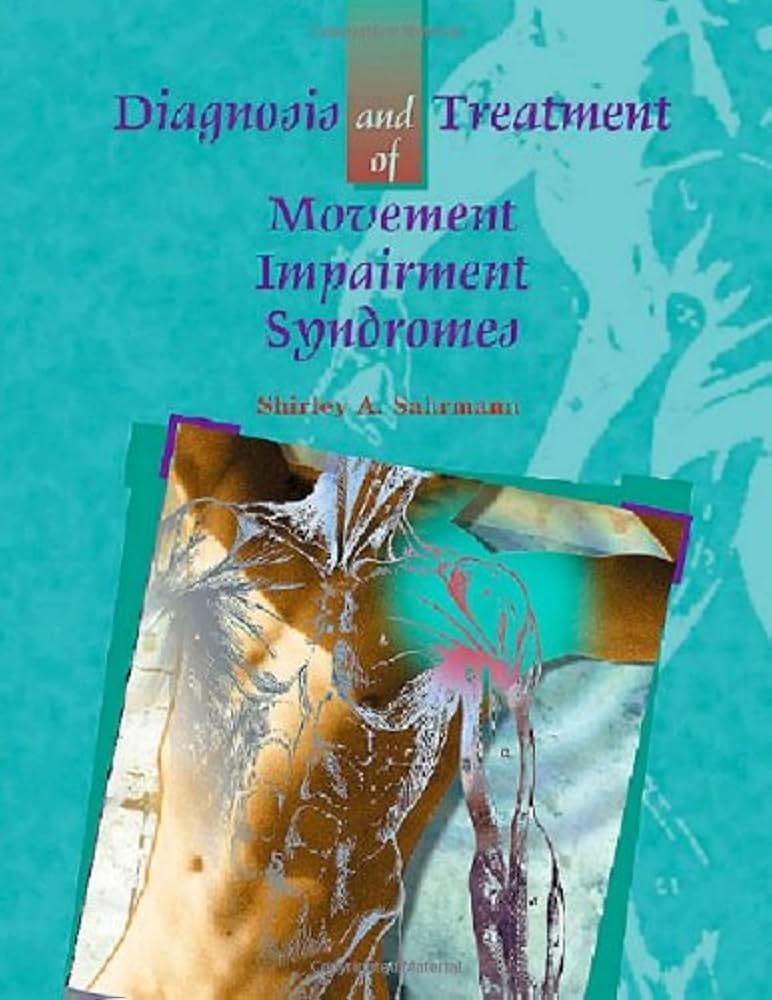
The answer was really simple: "Diagnosis and Treatment of Movement Impairment Syndromes," by Shirley Sahrmann.
Early in my career - especially in light of my own shoulder pain history - Sahrmann's work was an amazing contrast to the medical model of care that focused entirely on treating symptoms (medical diagnoses) instead of investigating root causes (movement diagnoses).
Sahrmann proposes countless functional tests and corrective exercise interventions aimed at treating the causes of the problems rather than the compensations that emerge after dysfunction has emerged.
This book has profoundly impacted the way that some of the industry’s greatest minds train their clients and athletes and themselves. To be blunt, Shirley Sahrmann has likely forgotten more than most physical therapists will ever know.
Full disclosure: it reads like stereo instructions, and you may only cover 2-3 pages at a time. However, when you finish the book, you could restart it immediately and learn something new each time you work through. The reason is simple: the movement impairment syndromes model is something that "clicks" with each new client/athlete/patient you encounter. Not every "shoulder impingement" is the same; you appreciate why they're all unique.
If you’re serious about your own education, and have the best interests of your clients and athletes in mind, you owe it to yourself to pick up a copy of this classic.
amzn.to/47xBIGj
BarryPhysio retweeted
Increases in relative muscular endurance (which accounts for gains in maximum strength) allow us to see how different types of strength training program affect the various adaptations underpinning fatigue resistance.

BarryPhysio retweeted
Nine months ago I embarked on my very first taught, in person CPD course. Four years in the making. Its been tough but highly enjoyable.
Mastering Lumbar Radiculopathy.
All of my knowledge from the spinal clinic, underpinned by science with a lack of fluff.
I have now delivered five of them. Four in-person courses and a very successful six part, six week online version. I also developed a professional website and managed to complete my ACP Masters.🎓
It is maybe not the most well known CPD course but i think the content speaks for itself and I have now properly finalised all of my artwork for the vascular, hip and myelopathy sections of Day 2 💪
Thank you to those who have supported and collaborated with me in 2025.
I will soon announce a 2026 London Date 🤟
theradicularclinician.com/
@PrimaryCareMSK
@rob_chiro
@martinthomas11
@clinicalphysio
@ClementsCharl96
@physiojack @Martin_Nekkolai
@BillingMartin @Irish_Physio
BarryPhysio retweeted
When creatine is consumed when subjects are not carrying out strength training, it causes an increase in muscle size anyway. This increase in muscle size can be attributed to an increase in intracellular water.

BarryPhysio retweeted
Most of the swelling that is observed after muscle-damaging exercise is caused by individual muscle fibers increasing in size, not by the spaces between muscle fibers increasing in size.

BarryPhysio retweeted
An individualized increase in weekly training volume of either 30% or 60% was unable to increase either strength gains or hypertrophy in strength-trained males. In fact, numerically the increased training volumes produced worse effects.

BarryPhysio retweeted
Stimulating rep theory predicts that heavy loads do not require fatigue to cause hypertrophy. This study tested that hypothesis by having 1 group train to failure with 6RMs and the other group do singles with the same load. They achieved the same strength gains and hypertrophy.

BarryPhysio retweeted
The eccentric phase is absolutely NOT more important than the concentric phase for hypertrophy during normal strength training. That claim is not remotely possible by any stretch of the imagination. Read more in the full (free) Patreon article.

BarryPhysio retweeted
Fitness influencers are fond of arguing that eccentric contractions are better for muscle growth than concentric contractions. Nevertheless, there are minimal differences between eccentrics and concentrics in terms of their potential for hypertrophy.

BarryPhysio retweeted
Eventually, exercise scientists will have to accept that fatigue is responsible for the interference effects that are observed during concurrent training. As always, the full (free) article is available on Patreon.

BarryPhysio retweeted
Increases in muscle mass caused by static stretching are affected by the total daily stretch duration, but with strongly diminishing returns. This aligns with the data regarding strength training, in which the first set produces much greater hypertrophy than later sets.

BarryPhysio retweeted
Muscle damage is caused by a biochemical process starting with calcium ion accumulation. When calcium ions are prevented from accumulating, this dramatically reduces direct markers of muscle damage. This would not happen if damage were produced by tearing forces.

BarryPhysio retweeted

This is why I wait 4-5 months after surgery and 70% LSI to start jogging. Also they just have done some plyos and demonstrate a quiet knee that responded well to each task. No rush to run and don’t recommend running much earlier unless they demonstrate good enough strength. No rush with jogging after an ACL!

🚶♂️⚡ How does treadmill speed impact gait after ACL reconstruction? This study examines adaptations just 4 months post-surgery & their rehab implications.
Check it out now! 👉 ijspt.scholasticahq.com/arti…
#ACLRecovery #GaitTraining #RehabScience
@Sara_YMans @Scsiggy


