

@MIT trained Neuroscientist interested #BioAI, #NeuroAI, #Neuro_Aging 🧠⚡🤖 https://xitter.cf/t.co/mrNBAVydzT 🎯 [email protected]
Houston, Texas, United States
Joined April 2023
- Tweets3.3K
- Following8.3K
- Followers16.6K
- Likes7.7K


Pinned Tweet
Friends and colleagues often ask, “What are the top 100 important "AI in Biology" papers that provide broad insights into the field?” 📚🔬 While narrowing it down to exactly 100 is no small feat, I’ve curated a list of foundational and impactful #BioAI papers. I'm sure the list would exceed more than 100 given the relentless expansion of this thrilling field! Please follow this thread for key insights, and please feel free to suggest any papers I may have missed!
With my background and interests, I prioritize papers in #AgingBiology, #CellBiology, and #Neuroscience. I’ll keep this thread pinned to my profile and update it regularly. I encourage everyone to add more papers from their own expertise—let’s make this interactive and foster engaging discussions! Here is a collection of essential #AIbio papers. #100_AIBio_Papers #AIBio_papers #AIBio_Chat #AIneuro_papers #AI_AgingBio_papers

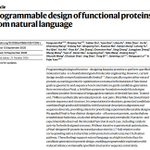
Programmable design of functional proteins from natural language
nature.com/articles/s41586-0…

Entire Massachusetts fired up with PhD. I used to be one of the data points :)


@BioAI_Neuro retweeted

The next breakthrough in medical AI might come from a model that was never built for medicine.
That’s the story I shared at Meta’s Open Science Summit:
🔬 SAM → MedSAM: we adapted general image segmentation to identify anatomy and disease across medical images.
🫀 JEPA → EchoJEPA: we built on video representation learning to study the beating heart, training on 18M ultrasound videos.
Huge credit to @JunMa_AI4Health (MedSAM), @alifmunim (EchoJEPA), and our incredible collaborators.
Honored to present at @Meta's HQ in Menlo Park and great to reconnect with old friends and meet new ones!
And a big shoutout to @AIatMeta for its leadership in open-source AI. Sharing powerful models gives researchers around the world the foundations to tackle problems far beyond their original purpose. Our work is one example of that impact. @alexandr_wang
You can’t predict who will build the next breakthrough on your research. Making it open gives them a chance.
Papers + code (all open source!) 👇
MedSAM: github.com/bowang-lab/MedSAM
EchoJEPA: github.com/bowang-lab/EchoJE…


This is just amazing ! Brain region maturation rates and mental illness link !!!

The speed at which regions of the brain mature during early adolescence can forecast the emergence of mental-health conditions up to four years before symptoms develop
go.nature.com/47yuVfc

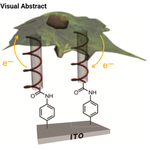
Tailoring 3D Single-Walled Carbon Nanotubes Anchored to Indium Tin Oxide for Natural Cellular Uptake and Intracellular Sensing
pubs.acs.org/nalefd/article/…
Objective: Develop a platform for real-time monitoring of intracellular events using vertically aligned single-walled carbon nanotubes (VASWCNTs).
Cell model: Used RAW 264.7 mouse macrophages as the eukaryotic cell system.
Device fabrication: Cultured cells on indium tin oxide substrates functionalized with VASWCNTs.
Direct cellular interface: Demonstrated spontaneous penetration of VASWCNTs into cells without applying external force.
Intracellular sensing: Demonstrated detection of methylene blue, a redox-active molecule, within the cellular environment.
Key innovation: Established the feasibility of directly interfacing VASWCNTs with living cells for electrochemical sensing.
Potential applications: Enables future studies of intracellular redox activity, cellular physiology, and real-time electrochemical monitoring.

@BioAI_Neuro retweeted
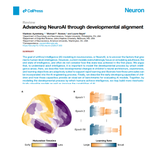
Advancing NeuroAI through developmental alignment
cell.com/neuron/home
SUMMARY:
1. Model the development of intelligence, not just its adult state. Current AI models primarily aim to replicate adult-level abilities. NeuroAI should also investigate how intelligence develops from infancy to adulthood to understand the mechanisms that produce sophisticated cognition.
2. Build AI architectures inspired by brain development. The human brain develops hierarchically, with sensory regions maturing before higher-level association areas. AI could adopt this principle by training early layers first and progressively developing higher-level layers, potentially improving robustness and learning efficiency.
3. Use developmental learning as a curriculum. Children encounter information in a natural progression from simple to complex. Training AI with gradually increasing complexity, such as blurry-to-clear images or simple-to-complex visual experiences, may improve generalization, robustness, and data efficiency.
4. Learn from children's limited but meaningful experiences. Unlike AI models trained on enormous datasets, children learn remarkably well from relatively few experiences. Training models on realistic, child-centered sensory data and age-appropriate experiences may help reduce their dependence on massive datasets.
5. Incorporate curiosity-driven learning and exploration. Children actively seek information that is neither too easy nor too difficult to understand. AI models could use predictive learning, information gain, and the ability to select their own experiences to develop more efficient and adaptive learning strategies.
6. Treat developmental milestones as benchmarks for AI. Children's perceptual and cognitive abilities emerge in a characteristic sequence. Evaluating whether AI models acquire similar capacities over training—not merely whether they achieve adult-level performance—could reveal whether their learning mechanisms resemble those of humans.
7. Use NeuroAI to discover the mechanisms of intelligence. By manipulating neural architecture, training experiences, and learning objectives in AI models, researchers can test which factors are necessary or sufficient for particular cognitive abilities. This approach can also help explain brain development, identify mechanisms of dysfunction, and inform future clinical research.
8. Integrate architecture, experience, and learning objectives. These three factors interact throughout development and should not be optimized independently. A developmentally informed approach could produce AI systems that are more biologically plausible, robust, energy-efficient, and capable of generalizing beyond their training data.
Central message: To understand and reproduce human intelligence, NeuroAI must study not only what the adult brain can do, but also how the developing brain acquires those abilities. Childhood development offers a powerful blueprint for building more capable and biologically grounded AI systems.

@BioAI_Neuro retweeted
Prefrontal cortex as a meta-reinforcement learning system
nature.com/articles/s41593-0…
1. The traditional dopamine theory: The canonical model proposes that dopamine (DA) signals reward prediction errors (RPEs), strengthening or weakening synaptic connections to reinforce associations between situations, actions, and rewards.
2. The prefrontal cortex (PFC) also supports learning: Evidence shows that the PFC represents action values, reward history, previous choices, and upcoming actions, suggesting that it can implement its own reward-based learning computations.
3. A new theory — meta-reinforcement learning (meta-RL): Rather than treating dopamine and the PFC as separate, competing learning systems, the theory proposes that dopamine trains the PFC network to develop its own independent learning algorithm.
4. The brain as a recurrent neural network: The authors model the PFC, together with interconnected basal ganglia and thalamic regions, as a recurrent neural network that integrates sensory inputs, previous actions, and reward information to guide decisions.
5. Two learning timescales: Dopamine-driven synaptic plasticity operates across extended experience, shaping network connectivity. Once trained, the PFC's neural activity dynamics support faster learning within individual tasks, even when synaptic weights remain fixed.
6. Adaptive learning rates: The model adjusts its learning rate according to environmental volatility. It learns faster when reward probabilities change frequently and more slowly when conditions remain stable, resembling observed human behavior.
7. Explaining reward prediction errors and inferred values: The framework explains how dopamine signals can reflect inferred changes in reward value, even when an outcome has not been directly experienced. The PFC's learned representation of task structure can influence the predictions contributing to dopamine signals.
8. Model-based behavior can emerge from model-free training: Simulations of the two-step decision-making task produced behavior consistent with model-based learning. This suggests that dopamine-driven training can create PFC dynamics capable of exploiting task structure without requiring a separate model-based learning algorithm during testing.
9. Learning to learn: After training across many related tasks, the model rapidly adapts to unfamiliar stimuli and can learn new reward associations from very little experience. This mirrors the improvement in learning efficiency observed in animal experiments.
10. Dopamine may have a dual role: In addition to modifying synaptic plasticity, dopamine signals may convey reward information that directly influences ongoing PFC activity. The framework therefore offers an alternative interpretation of optogenetic experiments that manipulate dopamine and change decision-making behavior.
Key takeaway: The central idea is that dopamine teaches the prefrontal cortex how to learn. Dopamine-driven synaptic changes gradually shape a recurrent neural network whose activity can then implement a faster, flexible learning algorithm. By connecting neuroscience with recurrent neural networks and meta-learning in AI, this theory offers a unified computational explanation for reward-based learning, adaptive decision-making, and learning to learn.


This is exciting! Wish it also will be in TX. Is there an online virtual version of this meeting ?

200 RSVPs. 100+ on the waitlist. Zero livestream.
Tomorrow night, @bioptimus_ai brings its world model for biology to San Francisco.
@bitsinbio and @mbiolabs are proud to present 𝗔 𝗪𝗼𝗿𝗹𝗱 𝗠𝗼𝗱𝗲𝗹 𝗳𝗼𝗿 𝗕𝗶𝗼𝗹𝗼𝗴𝘆: 𝗔𝗻 𝗘𝘃𝗲𝗻𝗶𝗻𝗴 𝘄𝗶𝘁𝗵 𝗕𝗶𝗼𝗽𝘁𝗶𝗺𝘂𝘀 𝗖𝗘𝗢 @jeanphi_vert.
📅 Wednesday, October 21
⏱️ 6:00 pm - 8:30 pm
📍 MBC BioLabs, San Francisco
Bioptimus is a Paris team building foundation models for biology, founded in 2024 by scientists from Google DeepMind and @OwkinScience. They showed M-Optimus in London. Now it's San Francisco's turn.
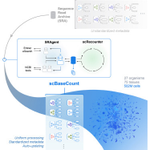
M-Optimus is the first model to bring three views of biology into one system:
🔬 Histology
What tissue looks like under the microscope, the same data behind H-Optimus-1, ranked #1 on PathBench and downloaded more than 1.8 million times.
🧬 Single-cell
What each individual cell is doing, gene by gene.
🗺️ Spatial transcriptomics
Where that activity happens inside the tissue.
Put together, you get a model that starts to simulate biology instead of just describing it.
The evening includes a live demo of M-Optimus, Q&A with the Bioptimus team, and food and drinks with the densest room of AI x bio people in SF this week.
A huge thank you to Rachel Hatano, PhD from MBC BioLabs for hosting us again, and to @MathildaStrom, Jordan Hagan, Ricardo Oliveira, and the Bioptimus team for bringing M-Optimus to SF.
We're at capacity. If you registered and can't make it, switch your RSVP to "Not Going" so someone on the waitlist gets your spot.
I'll see you there in person 🫡

Proteome scale drug prioritization from AlphaFold 3 interaction confidence
biorxiv.org/content/10.64898…
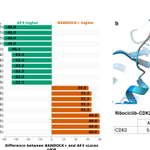
Study objective: Evaluates whether AlphaFold 3 (AF3) protein–ligand interaction confidence scores can support proteome-scale drug repurposing, benchmarking them against BANDOCK+ using the CANDO platform.
Comparable performance: Using 2,449 approved drugs and 1,103 matched human proteins, AF3 achieved an nAIA of 10.13 and NDCG of 0.056, slightly outperforming BANDOCK+ (9.93 and 0.054).
Best-performing metric: Among four AF3 confidence metrics, global ipTM performed best for downstream drug prioritization, making it the primary metric for subsequent comparisons.
Robustness across datasets: AF3 and BANDOCK+ showed broadly similar performance across protein sublibraries selected by experimental structure quality, AF3 model confidence, and random sampling, although BANDOCK+ performed moderately better in the unbiased 200-protein subset.
Disease-specific differences: Neither method consistently outperformed the other across disease categories and individual indications. Their relative performance varied depending on the disease, evaluation metric, and protein dataset.
Key conclusion and limitations: AF3 confidence scores, particularly ipTM, offer a promising approach for large-scale computational drug repurposing. However, confidence scores are not binding affinities, and comparable ranking performance does not establish interaction validity or clinical efficacy; experimental validation remains essential.


Intelligence alone is insufficient for subjective experiences
LLMs can mimic thought and feeling with uncanny skill, but intelligence alone is not enough for subjective experience
go.nature.com/3VSXWQ4

@BioAI_Neuro retweeted
The recipe for intelligence in natural and artificial systems
cell.com/neuron/fulltext/S08…
Summary
1. The relationship between neuroscience and AI has changed. In 2016, neuroscience was often presented as a roadmap for capabilities that AI lacked. By 2026, AI has developed many of those capabilities through methods that were not directly derived from biological mechanisms.
2. Modern AI has advanced conceptual learning, compositional reasoning, rapid adaptation, and planning. Large-scale generative models, associative retrieval, meta-learning, and rich pretrained representations have helped address several longstanding limitations.
3. Memory remains central to intelligence. Rapidly retrieving relevant relationships, integrating new experience, and maintaining stable long-term knowledge are distinct computational challenges.
4. Intelligence requires learning how to learn. The ability to generalize from limited experience depends on representations that organize relationships between tasks and situations.
5. Planning depends on prior knowledge. A system's ability to reason about possible actions is strongly influenced by the semantic and relational knowledge it has already acquired.
6. Three major challenges remain: persistent long-term learning, reliable metacognition and goal-directed control, and robust reasoning in open-ended environments.
7. Neuroscience can contribute mechanisms and hypotheses. Hippocampal-cortical interactions, synaptic plasticity, memory consolidation, cognitive control, and active perception are promising areas of investigation, although their translation into AI requires careful testing.
8. The next phase of NeuroAI should focus on integration. Rather than studying memory, learning, reasoning, or planning in isolation, researchers should investigate how these functions cooperate to support adaptive behavior.
The central message
The most important insight is that intelligence may depend less on any single component than on the way multiple computational processes are organized and coordinated.
AI research is revealing new ways to construct capable systems, while neuroscience offers opportunities to understand how biological systems learn, remember, reason, and adapt under real-world constraints.
The next major advances may therefore emerge not from simply making artificial neural networks larger or making them more anatomically brain-like, but from discovering the computational principles that allow learning, memory, inference, planning, and self-monitoring to function as one integrated system.
That is the deeper meaning of moving from the ingredients of intelligence to the recipe of intelligence.

@BioAI_Neuro retweeted
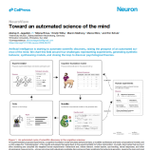
Toward an automated science of the mind
cell.com/neuron/fulltext/S08…
Summary
Artificial intelligence is opening the door to a new era of scientific discovery: the automated science of the mind. Traditionally, cognitive science has relied on a cycle in which researchers design experiments, collect human behavioral data, develop computational models, and refine theories through scientific debate. Although this approach has advanced our understanding of human cognition, it is time-consuming, dependent on human intervention, and often limited by researchers’ existing assumptions about experiments and models.
The emerging field of automated cognitive science aims to accelerate this process by integrating AI across four stages of discovery. First, AI can generate and represent diverse experimental paradigms, expanding the range of questions researchers can investigate. Second, cognitive foundation models can simulate human behavior, enabling researchers to explore hypotheses before conducting costly experiments. Third, AI-driven program synthesis can generate interpretable computational models that explain observed behavior and reveal new cognitive mechanisms. Finally, automated systems can close the discovery loop by evaluating competing theories, identifying informative experiments, and proposing the next steps in scientific investigation.
However, significant challenges remain. Synthetic behavior may reproduce shortcuts or population-specific biases rather than genuine human cognition. Automatically generated models may be difficult to interpret, sensitive to assumptions, or capable of exploiting evaluation metrics without capturing the underlying mechanisms. Moreover, defining scientific novelty, theoretical importance, and meaningful progress requires careful validation and human oversight.
Ultimately, automated cognitive science is not simply about using AI to analyze data faster. It represents a shift toward AI systems that actively generate experiments, simulate behavior, construct theories, and iteratively test new hypotheses. If successful, this approach could transform cognitive science from a largely researcher-driven process into a more scalable, continuous, and data-informed discovery cycle—while keeping empirical evidence, interpretability, and scientific rigor at its core.
