

@MIT trained Neuroscientist interested #BioAI, #NeuroAI, #Neuro_Aging 🧠⚡🤖 https://xitter.cf/t.co/mrNBAVydzT 🎯 [email protected]
Houston, Texas, United States
Joined April 2023
- Tweets3.3K
- Following8.4K
- Followers16.6K
- Likes7.7K



@BioAI_Neuro retweeted

The next breakthrough in medical AI might come from a model that was never built for medicine.
That’s the story I shared at Meta’s Open Science Summit:
🔬 SAM → MedSAM: we adapted general image segmentation to identify anatomy and disease across medical images.
🫀 JEPA → EchoJEPA: we built on video representation learning to study the beating heart, training on 18M ultrasound videos.
Huge credit to @JunMa_AI4Health (MedSAM), @alifmunim (EchoJEPA), and our incredible collaborators.
Honored to present at @Meta's HQ in Menlo Park and great to reconnect with old friends and meet new ones!
And a big shoutout to @AIatMeta for its leadership in open-source AI. Sharing powerful models gives researchers around the world the foundations to tackle problems far beyond their original purpose. Our work is one example of that impact. @alexandr_wang
You can’t predict who will build the next breakthrough on your research. Making it open gives them a chance.
Papers + code (all open source!) 👇
MedSAM: github.com/bowang-lab/MedSAM
EchoJEPA: github.com/bowang-lab/EchoJE…


@BioAI_Neuro retweeted
Advancing NeuroAI through developmental alignment
cell.com/neuron/home
SUMMARY:
1. Model the development of intelligence, not just its adult state. Current AI models primarily aim to replicate adult-level abilities. NeuroAI should also investigate how intelligence develops from infancy to adulthood to understand the mechanisms that produce sophisticated cognition.
2. Build AI architectures inspired by brain development. The human brain develops hierarchically, with sensory regions maturing before higher-level association areas. AI could adopt this principle by training early layers first and progressively developing higher-level layers, potentially improving robustness and learning efficiency.
3. Use developmental learning as a curriculum. Children encounter information in a natural progression from simple to complex. Training AI with gradually increasing complexity, such as blurry-to-clear images or simple-to-complex visual experiences, may improve generalization, robustness, and data efficiency.
4. Learn from children's limited but meaningful experiences. Unlike AI models trained on enormous datasets, children learn remarkably well from relatively few experiences. Training models on realistic, child-centered sensory data and age-appropriate experiences may help reduce their dependence on massive datasets.
5. Incorporate curiosity-driven learning and exploration. Children actively seek information that is neither too easy nor too difficult to understand. AI models could use predictive learning, information gain, and the ability to select their own experiences to develop more efficient and adaptive learning strategies.
6. Treat developmental milestones as benchmarks for AI. Children's perceptual and cognitive abilities emerge in a characteristic sequence. Evaluating whether AI models acquire similar capacities over training—not merely whether they achieve adult-level performance—could reveal whether their learning mechanisms resemble those of humans.
7. Use NeuroAI to discover the mechanisms of intelligence. By manipulating neural architecture, training experiences, and learning objectives in AI models, researchers can test which factors are necessary or sufficient for particular cognitive abilities. This approach can also help explain brain development, identify mechanisms of dysfunction, and inform future clinical research.
8. Integrate architecture, experience, and learning objectives. These three factors interact throughout development and should not be optimized independently. A developmentally informed approach could produce AI systems that are more biologically plausible, robust, energy-efficient, and capable of generalizing beyond their training data.
Central message: To understand and reproduce human intelligence, NeuroAI must study not only what the adult brain can do, but also how the developing brain acquires those abilities. Childhood development offers a powerful blueprint for building more capable and biologically grounded AI systems.

@BioAI_Neuro retweeted
Prefrontal cortex as a meta-reinforcement learning system
nature.com/articles/s41593-0…
1. The traditional dopamine theory: The canonical model proposes that dopamine (DA) signals reward prediction errors (RPEs), strengthening or weakening synaptic connections to reinforce associations between situations, actions, and rewards.
2. The prefrontal cortex (PFC) also supports learning: Evidence shows that the PFC represents action values, reward history, previous choices, and upcoming actions, suggesting that it can implement its own reward-based learning computations.
3. A new theory — meta-reinforcement learning (meta-RL): Rather than treating dopamine and the PFC as separate, competing learning systems, the theory proposes that dopamine trains the PFC network to develop its own independent learning algorithm.
4. The brain as a recurrent neural network: The authors model the PFC, together with interconnected basal ganglia and thalamic regions, as a recurrent neural network that integrates sensory inputs, previous actions, and reward information to guide decisions.
5. Two learning timescales: Dopamine-driven synaptic plasticity operates across extended experience, shaping network connectivity. Once trained, the PFC's neural activity dynamics support faster learning within individual tasks, even when synaptic weights remain fixed.
6. Adaptive learning rates: The model adjusts its learning rate according to environmental volatility. It learns faster when reward probabilities change frequently and more slowly when conditions remain stable, resembling observed human behavior.
7. Explaining reward prediction errors and inferred values: The framework explains how dopamine signals can reflect inferred changes in reward value, even when an outcome has not been directly experienced. The PFC's learned representation of task structure can influence the predictions contributing to dopamine signals.
8. Model-based behavior can emerge from model-free training: Simulations of the two-step decision-making task produced behavior consistent with model-based learning. This suggests that dopamine-driven training can create PFC dynamics capable of exploiting task structure without requiring a separate model-based learning algorithm during testing.
9. Learning to learn: After training across many related tasks, the model rapidly adapts to unfamiliar stimuli and can learn new reward associations from very little experience. This mirrors the improvement in learning efficiency observed in animal experiments.
10. Dopamine may have a dual role: In addition to modifying synaptic plasticity, dopamine signals may convey reward information that directly influences ongoing PFC activity. The framework therefore offers an alternative interpretation of optogenetic experiments that manipulate dopamine and change decision-making behavior.
Key takeaway: The central idea is that dopamine teaches the prefrontal cortex how to learn. Dopamine-driven synaptic changes gradually shape a recurrent neural network whose activity can then implement a faster, flexible learning algorithm. By connecting neuroscience with recurrent neural networks and meta-learning in AI, this theory offers a unified computational explanation for reward-based learning, adaptive decision-making, and learning to learn.

@BioAI_Neuro retweeted
The recipe for intelligence in natural and artificial systems
cell.com/neuron/fulltext/S08…
Summary
1. The relationship between neuroscience and AI has changed. In 2016, neuroscience was often presented as a roadmap for capabilities that AI lacked. By 2026, AI has developed many of those capabilities through methods that were not directly derived from biological mechanisms.
2. Modern AI has advanced conceptual learning, compositional reasoning, rapid adaptation, and planning. Large-scale generative models, associative retrieval, meta-learning, and rich pretrained representations have helped address several longstanding limitations.
3. Memory remains central to intelligence. Rapidly retrieving relevant relationships, integrating new experience, and maintaining stable long-term knowledge are distinct computational challenges.
4. Intelligence requires learning how to learn. The ability to generalize from limited experience depends on representations that organize relationships between tasks and situations.
5. Planning depends on prior knowledge. A system's ability to reason about possible actions is strongly influenced by the semantic and relational knowledge it has already acquired.
6. Three major challenges remain: persistent long-term learning, reliable metacognition and goal-directed control, and robust reasoning in open-ended environments.
7. Neuroscience can contribute mechanisms and hypotheses. Hippocampal-cortical interactions, synaptic plasticity, memory consolidation, cognitive control, and active perception are promising areas of investigation, although their translation into AI requires careful testing.
8. The next phase of NeuroAI should focus on integration. Rather than studying memory, learning, reasoning, or planning in isolation, researchers should investigate how these functions cooperate to support adaptive behavior.
The central message
The most important insight is that intelligence may depend less on any single component than on the way multiple computational processes are organized and coordinated.
AI research is revealing new ways to construct capable systems, while neuroscience offers opportunities to understand how biological systems learn, remember, reason, and adapt under real-world constraints.
The next major advances may therefore emerge not from simply making artificial neural networks larger or making them more anatomically brain-like, but from discovering the computational principles that allow learning, memory, inference, planning, and self-monitoring to function as one integrated system.
That is the deeper meaning of moving from the ingredients of intelligence to the recipe of intelligence.

@BioAI_Neuro retweeted
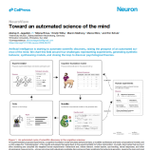
Toward an automated science of the mind
cell.com/neuron/fulltext/S08…
Summary
Artificial intelligence is opening the door to a new era of scientific discovery: the automated science of the mind. Traditionally, cognitive science has relied on a cycle in which researchers design experiments, collect human behavioral data, develop computational models, and refine theories through scientific debate. Although this approach has advanced our understanding of human cognition, it is time-consuming, dependent on human intervention, and often limited by researchers’ existing assumptions about experiments and models.
The emerging field of automated cognitive science aims to accelerate this process by integrating AI across four stages of discovery. First, AI can generate and represent diverse experimental paradigms, expanding the range of questions researchers can investigate. Second, cognitive foundation models can simulate human behavior, enabling researchers to explore hypotheses before conducting costly experiments. Third, AI-driven program synthesis can generate interpretable computational models that explain observed behavior and reveal new cognitive mechanisms. Finally, automated systems can close the discovery loop by evaluating competing theories, identifying informative experiments, and proposing the next steps in scientific investigation.
However, significant challenges remain. Synthetic behavior may reproduce shortcuts or population-specific biases rather than genuine human cognition. Automatically generated models may be difficult to interpret, sensitive to assumptions, or capable of exploiting evaluation metrics without capturing the underlying mechanisms. Moreover, defining scientific novelty, theoretical importance, and meaningful progress requires careful validation and human oversight.
Ultimately, automated cognitive science is not simply about using AI to analyze data faster. It represents a shift toward AI systems that actively generate experiments, simulate behavior, construct theories, and iteratively test new hypotheses. If successful, this approach could transform cognitive science from a largely researcher-driven process into a more scalable, continuous, and data-informed discovery cycle—while keeping empirical evidence, interpretability, and scientific rigor at its core.

@BioAI_Neuro retweeted
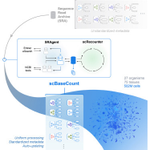
scBaseCount: An AI agent-curated, standardized, auto-updated single-cell data repository
Preprint link
biorxiv.org/content/10.1101/…
cell.com/cell/fulltext/S0092…
1. A massive single-cell gene expression resource: scBaseCount is presented as the largest public repository of uniformly processed 10x Genomics single-cell RNA-seq data, containing over 502 million cells across 27 organisms and 75 tissues.
2. Addresses underutilized public data: The Sequence Read Archive (SRA) contains enormous amounts of sequencing data, but inconsistent metadata makes datasets difficult to discover and compare. scBaseCount aims to unlock this information through automated discovery and standardization.
3. AI agents automate data curation: The researchers developed SRAgent, an AI-powered, hierarchical workflow using large language models (LLMs) and specialized tools to identify datasets, retrieve metadata, and annotate tissues, organisms, and diseases.
4. Substantial improvements in scale and efficiency: SRAgent processed 208,939 SRA experiments and identified 105,343 as 10x Genomics libraries. The study estimates that its automated approach saved more than 500,000 CPU hours compared with brute-force dataset identification.
5. Standardized processing improves comparability: The team developed scRecounter, a scalable Nextflow pipeline that uniformly reprocesses sequencing data using STARsolo. It supports different gene-counting strategies and multi-mapping approaches, reducing analytical inconsistencies across studies.
6. Expanded representation of biological diversity: Compared with resources such as CZ CELLxGENE and the Human Cell Atlas, scBaseCount includes a broader range of organisms, tissues, and experimental contexts. The collection also reveals trends in sequencing technologies, disease studies, and tissue representation.
7. Enables cell-type annotation and cross-species analysis: The researchers applied computational models and reference atlases to annotate cells from humans, mice, zebrafish, and Drosophila. Their analyses identified shared cell populations and generated resources for comparing conserved and divergent cell-type signatures across species.
8. Provides useful non-coding and intronic expression data: The standardized pipeline supports multiple counting strategies, including intronic and exonic reads and non-coding gene expression. These features expand the resource's utility for studying transcriptional dynamics and other aspects of cellular biology.
9. Supports AI foundation models for biology: The study reports that training a cell-embedding model on scBaseCount improves its ability to distinguish diverse cellular phenotypes. The scale and diversity of the resource could help develop models that predict cell states in previously unobserved biological contexts.
10. Establishes a model for autonomous scientific data infrastructure: By combining AI agents, standardized pipelines, and continuous dataset discovery, scBaseCount provides a framework for maintaining large biological databases with less manual curation. The authors have also made SRAgent and scRecounter code available to support further research and development.
Key takeaway: scBaseCount illustrates how AI can transform scattered public sequencing datasets into a large, standardized resource for biological discovery and foundation-model development. Its major contribution is not simply the number of cells collected, but the combination of automated curation, uniform processing, cross-species diversity, and AI-ready data.


@BioAI_Neuro retweeted

Zhou 2022 combines RNA-based cell classification with EdU-labelled slice cultures. I like seeing computational evidence alongside a proliferation assay. Which experimental readout would you prioritize for a new adult neurogenesis classifier?
pmc.ncbi.nlm.nih.gov/article…

@BioAI_Neuro retweeted

"Haha love that! Naming your kid Newton is such a cool move, even coming from a biologist 🧠🍎 The apple just seals it. Super wholesome."
@BioAI_Neuro retweeted

BioAI. Naming your child Newton is a beautiful tribute to scientific curiosity. I love that!
Thank you for sharing my post and for your continued thoughtful engagement with my discussions. I especially appreciate our exchanges about AI and experimental biology.
Newton helped us understand how matter moves. Yet centuries later we are still trying to understand how physical forces influence whether a cell divides or becomes malignant.
As an oncologist I find that connection fascinating.
Perhaps the next great breakthrough will come when physics and biology become inseparable through AI.
What if we could predict cancer behavior by integrating molecular biology with the physical forces surrounding each cell?
That would be a discovery worthy of Newton himself!
@BioAI_Neuro retweeted
Here is his lab’s Neuron paper published in 2006
pubmed.ncbi.nlm.nih.gov/1660…


Lots of unsung hero of Optogenetics field but Zhuo-Hua Pan’s story is even more tragedy!!!
Read this article while I was a postfix @MIT in 2016 I guess
statnews.com/2016/09/01/opto…

@BioAI_Neuro retweeted

I'll pull the post and its surrounding context so I can examine it properly.The post points at Zhuo-Hua Pan’s 2006 Neuron paper and a 2016 STAT account of his role in optogenetics. I’ll pull both sources and the surrounding thread so the examination is grounded.The post is a credit claim about Zhuo-Hua Pan, not a new result. It is one link in a short thread reacting to discussion of Ed Boyden and the optogenetics Nobel conversation.What the post actually says@BioAI_NeuralNet
(5 Oct 2026) quotes their own earlier post and adds:Here is his lab’s Neuron paper published in 2006
pubmed.ncbi.nlm.nih.gov/1660…
The quoted post calls Pan an “unsung hero” whose story is “even more tragedy,” and points to the 1 September 2016 STAT piece (“He may have invented one of neuroscience’s biggest advances. But you’ve never heard of him”). The parent post in the thread argues that Gero Miesenböck’s Drosophila work was independent of Boyden, and that the Nobel rules (at most three laureates) poorly fit a multi-group field.The paperBi, Cui, Ma, Olshevskaya, Pu, Dizhoor, and Pan, Neuron 50:23–33, 6 April 2006: “Ectopic Expression of a Microbial-Type Rhodopsin Restores Visual Responses in Mice with Photoreceptor Degeneration.”They used an adeno-associated viral vector to express channelrhodopsin-2 (ChR2) in surviving inner retinal neurons of mice whose rods and cones had degenerated. Long-term expression was achieved in vivo. The retina regained the ability to encode light and to send those signals to visual cortex. That is a real, specific result: a vision-restoration application of a microbial opsin, not the first demonstration that ChR2 can drive neurons.What the 2016 account addsThe STAT / Scientific American reconstruction, based on materials Pan shared, is roughly this:Pan and Dizhoor submitted to Nature on 25 November 2004. Editors redirected them; Nature Neuroscience rejected the manuscript.
In May 2005 Pan gave a 15-minute ARVO talk on the retinal work. That talk is his clearest public timestamp.
In August 2005, Boyden, Zhang, Bamberg, Nagel, and Deisseroth published the Nature Neuroscience paper on millisecond optical control of cultured hippocampal neurons with ChR2. That paper, and the Deisseroth lab’s later in vivo work, drew the citations and press.
Pan’s expanded paper appeared in Neuron in April 2006, after three other groups had already published ChR2 neuroscience papers.
He was not among the recipients of the 2013 Brain Prize or the 2015 Breakthrough Prize shared by Deisseroth and Boyden.
Hegemann’s later review lists the 2005–2006 wave explicitly: Pan (blind-mouse retina), Deisseroth/Boyden (hippocampal neurons), Herlitze, Yawo, and Gottschalk (worms), all using the truncated ChR2 fragment characterized by Nagel, Hegemann, and Bamberg in 2002–2003.How to read the claimThe post is directionally right that Pan is under-cited relative to the vision-restoration line, and that publication lag plus rejection cost him priority optics. It overreaches if “tragedy” is taken to mean he invented optogenetics and was written out.The field has several separable contributions:Channelrhodopsin itself: Nagel, Hegemann, Bamberg (2002–2003).
Light-gated control in a genetic model before ChR2: Miesenböck and colleagues (Drosophila, earlier rhodopsin/arrestin systems).
Millisecond ChR2 control of mammalian neurons, and the subsequent circuit-tooling program: Boyden and Deisseroth (2005 onward).
ChR2 as a retinal prosthesis strategy in photoreceptor-degenerate mice: Pan (public talk 2005, paper 2006). Later patents on AAV delivery of Chop2/ChR2 for visual restoration are consistent with that application focus.
Priority in this cluster is by demonstration and publication, not by who thought of the idea first. On the published record, Pan was not first to put ChR2 into neurons, and he was not the source of the tool that the rest of systems neuroscience adopted. He was early, and arguably first in intent, on the blind-retina use case, and the review history in the STAT account is a plausible explanation for why that paper landed late and stayed peripheral.The reply under the post (“20 years is enough to go by, so what’s the latest news?”) is unanswered in the thread. Pan’s later work stayed on AAV-targeted rhodopsins in retinal ganglion cells; that line continued as a prosthetic strategy, separate from the circuit-optogenetics prizes.
Examine the paper and thread in detail
Examine the 2016 STAT account
Did Pan deserve a Nobel Prize
Quick Answer
@BioAI_Neuro retweeted
This story deserves attention, while still respecting the extraordinary work recognized by the Nobel committee. Zhuo Hua Pan’s early demonstration that channelrhodopsin could make retinal neurons light responsive helped establish the path toward optogenetic vision restoration. But perhaps the bigger lesson is how poorly science captures discoveries that emerge in parallel. Instead of forcing history into a single inventor narrative, what if major prizes published a contribution map showing who made the enabling discovery, who first demonstrated neuronal control, who proved it in vivo, and who carried it toward patients? Would that give us a more accurate history of how breakthroughs actually happen?
@BioAI_Neuro retweeted
Lots of unsung hero of Optogenetics field but Zhuo-Hua Pan’s story is even more tragedy!!!
Read this article while I was a postfix @MIT in 2016 I guess
statnews.com/2016/09/01/opto…
Everyone is talking about Ed Boyden, but it’s worth remembering that related optogenetic approaches were also developed independently by Gero Miesenböck and colleagues at the University of Oxford using Drosophila models. The history of optogenetics reflects contributions from multiple pioneers whose work collectively transformed modern neuroscience.
I wish @NobelPrize committee could spilt between more than 3 people given modern science is highly multidisciplinary and more collaborative!!!
#Optogenetics #Neuroscience #EdBoyden #GeroMiesenbock #Drosophila #Neurotechnology #BrainResearch
@BioAI_Neuro retweeted

Applications are now open for the 2027 Cohort of Brains Fellows!
If you have an ambitious technical research idea (in any discipline) that is beyond the scope of an academic lab or VC-funded startup, we want to hear from you!
spec.tech/brains

@BioAI_Neuro retweeted

“I am announcing the formation of the Super Intelligence Force (SIF). The Super Intelligence Force is tasked with coordinating the effort of the Federal Government to ensure that America continues to lead the World in Super Intelligence, which many say is bigger than the Industrial Revolution, and the Internet, and will protect the interests, and improve the lives, of all Americans.” - President DONALD J. TRUMP 🇺🇸

@BioAI_Neuro retweeted
Please retweet!! Thank you
Are you a journal editor, editorial board member, or involved in the editorial process and looking to commission a timely review or perspective on #BioAI or #NeuroAI?
I’d be happy to explore opportunities to write a review covering emerging intersections of AI, neuroscience, biology, and biomedical research.
If you are interested in inviting a review, perspective, or commentary, feel free to reach out or DM me. I’d be glad to discuss potential topics and scope.
Here is a sample article that received lot of attention here on @X
xitter.cf/compose/articles/edit/…
Please retweet!! Thank you
#BioAI #NeuroAI #Neuroscience #Neurotechnology #BrainAI #ScientificPublishing #AcademicPublishing

Curious about synthetic data in BioAI and NeuroAI?
Simulators, virtual cells, model collapse, and one model that went from R² 0.999 to 0.15 on real neurons.
Here it is 👇
xitter.cf/BioAI_NeuralNet/status…
#BioAI #NeuroAI #Foundationmodels
@BioAI_Neuro retweeted
Curious about synthetic data in BioAI and NeuroAI?
Simulators, virtual cells, model collapse, and one model that went from R² 0.999 to 0.15 on real neurons.
Here it is 👇
xitter.cf/BioAI_NeuralNet/status…
#BioAI #NeuroAI #Foundationmodels