

Technical Swing Trader | Investor Charts find the setup. Fundamentals build the thesis. Accounting student.
Joined September 2024
- Tweets2.4K
- Following79
- Followers1.5K
- Likes3.1K







$ANT
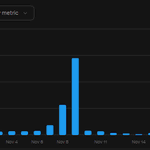
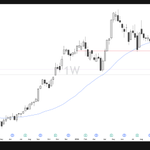
This chart says everything you need to know...


$ANT | The Red Flags Were There From the Start
What did investors expect would happen when Anthropic's founders were given the opportunity to cash out nearly $2B while still retaining control of the company?
All at a valuation that I already considered to be extremely inflated.
Anthropic's IPO played out almost exactly how I feared it would...
The stock opened 34% above its $83 IPO price before reversing sharply, leaving investors who bought at the opening holding some very expensive bags.
And that's what bothers me. How was this arrangement not scrutinized more?
The seven co-founders sold $2B worth of shares in the IPO.
All while retaining 50.1% of shareholder voting power through a special share structure.
Let that sink in for a sec.
The founders can sell portions of their ownership while retaining disproportionate voting power.
Meanwhile, investors are putting their money into a company I consider overvalued, over which they have very limited influence.
Investors provide the capital. Founders retain the control.
All while lining their own pockets in the process, as investors who chased the IPO were left holding the bags.
And after the post-IPO selloff, I think that arrangement deserves a lot more scrutiny.

1
1
293


Cedric retweeted
🚨Citi Is Buying the Dip, but Is the Bottom Actually In?
My feed is already filling up with the usual "HOPE YOU BOUGHT THE BOUNCE" posts.
But celebrating a bounce is easy.
Understanding what's actually driving it, and whether it can turn into a sustainable recovery, is a completely different story.
And that's where things get interesting.
According to a circulating November 21 market note, Citi is shifting from selling rallies to buying dips.
▶️ Cover short positions.
▶️ Roll down puts.
▶️ Start buying stocks.
▶️ Position for changes in Fed policy through Fed funds futures.
That's quite the shift in sentiment.
But here's what I think investors need to understand.
A large part of this outlook appears to be driven by positioning and options expiration.
And while that could help stabilize markets or even trigger a substantial recovery, it doesn't necessarily mean the underlying problems have disappeared.
Especially not for the AI trade.
Citi's own research has highlighted the enormous capital requirements of the AI buildout, with some of the newer infrastructure providers facing considerably greater financing risks.
So even if we see a strong rebound, I wouldn't automatically interpret that as confirmation that the correction is over.
Stay carefull out there.
$SPY $QQQ


$NBIS | Are the Stars Aligning?
After having quite a few discussions about the neocloud industry, I've noticed that a lot of investors seem increasingly optimistic about $NBIS.
And looking at the setup, I can see why.
▶️ Arguably the best-positioned neocloud of the bunch.
▶️ Management expects 2027 revenue to roughly quadruple to $12–13B.
▶️ Back near its starting point for the year, now -9.6% YTD.
▶️ Sitting at a major support level that I'm sure plenty of investors have their eyes on.
With these factors coming together, I can certainly understand why so many investors are keeping a close eye on $NBIS.
For the $NBIS bulls, what's your price target, and when do you expect it to get there?


Wanted to chime in here and put the spotlight on one of Cathie Wood's worst investments.
$TDOC
ARK Invest reportedly lost an estimated $3.2 BILLION on Teladoc Health.
For perspective, the entire company is worth just $1.36B today.
She lost more than TWICE what the entire company is currently worth. 😭
Next time you feel bad about a trade, just remember this one.


HOW DOES CATHIE WOOD KEEP GETTING AWAY WITH THIS!?
She bought $NVDA at $227 and literally sold yesterday at $125...


1
5
515
$ANT | The Red Flags Were There From the Start
What did investors expect would happen when Anthropic's founders were given the opportunity to cash out nearly $2B while still retaining control of the company?
All at a valuation that I already considered to be extremely inflated.
Anthropic's IPO played out almost exactly how I feared it would...
The stock opened 34% above its $83 IPO price before reversing sharply, leaving investors who bought at the opening holding some very expensive bags.
And that's what bothers me. How was this arrangement not scrutinized more?
The seven co-founders sold $2B worth of shares in the IPO.
All while retaining 50.1% of shareholder voting power through a special share structure.
Let that sink in for a sec.
The founders can sell portions of their ownership while retaining disproportionate voting power.
Meanwhile, investors are putting their money into a company I consider overvalued, over which they have very limited influence.
Investors provide the capital. Founders retain the control.
All while lining their own pockets in the process, as investors who chased the IPO were left holding the bags.
And after the post-IPO selloff, I think that arrangement deserves a lot more scrutiny.
The feedback I've received for talking about the AI buildout bear case has been an eye-opener to me.
My original post questioned what would happen to companies like $CRWV, $NBIS and $IREN if NVIDIA started scaling back its financial backing of the AI infrastructure buildout.
We're talking about companies spending billions on expansion, with much of that growth depending on access to outside capital.
What happens if that financing becomes harder to secure before these investments start generating enough cash to sustain themselves?
That's the risk I wanted to discuss.
I'm not here to spread fear or convince anyone to sell their positions.
I'm simply an investor asking questions and trying to understand the risks that come with this enormous AI buildout.
I genuinely hope that not only these companies, but also you succeed, and that everyone makes money along the way.
But hoping for a great future shouldn't mean ignoring everything that could go wrong.
And judging by some of the reactions I've received, discussing the other side of the argument isn't particularly popular on X.
I thought it would lead to some interesting discussions, but I got slapped in the face instead.
I find that quite sad, don't you?
We all know customer demand is very real, and having big contracts secured before building infrastructure is a major advantage.
But why would that rule out a bubble?
Demand can continue to grow while investors are overestimating the future profitability of the very companies supplying that demand.
Look at the dot-com bubble.
Internet was growing rapidly companies where blowing billions on infrastructure, and we all know the technology changed the world.
For better or worse.
And we all know it didn’t prevent enormous amounts of capital being misallocated or investors from suffering big losses.
Now circling back to the AI buildout story.
Securing customers doesn’t eliminate financing risks, we are talking about billions in capex.
Having those customers secured before hand certainly reduces some risk.
But it doesn’t mean these enormous investments will generate attractive returns.
Construction costs, borrowing costs, delays, future competition and having to replace the GPUs influences this all of this.
And regarding your point about NVIDIA, I think you are overlooking an important part of Ed Zitron’s argument.
It’s not simply whether NVIDIA directly lends them money.
NVIDIA has become financially involved in the AI infrastructure ecosystem through equity investments, cloud-capacity and other substantial agreements.
$NBIS received a $2B equity investment
$CRWV has a multibillion dollar agreement under which NVIDIA commits to purchasing unsold computing capacity.
$IREN has a $3.4B cloud-services contract with $NVDA
That demonstrates that dollar’s involvement goes far beyond just supplying GPUs.
Agreements like this provide contracted revenue, strengthen balance sheets or help companies secure financing elsewhere.
So simply dismissing NVIDIA’s financial importance in all of this simply because companies have “other customers and lenders” seems like an oversimplification.
Now, regarding your post about GPU demand reaching all-time highs and neoclouds having more costumers than available capacity.
Yes the demand is strong.
But isn’t that exactly what encourages companies to invest enormous amounts of capital, potentially based on overoptimistic future returns?
It doesn’t tell us whether the billions being invested to meet that demand will generate attractive returns.
That’s why I don’t think record GPU demand rule out the possibility of a bubble.

Ed Zitron makes no sense here, lol.
He keeps making the same speculative AI bubble argument, but there cant be a bubble if companies are trying to ramp supply to meet their demand.
I have not seen one NeoCloud go out and buy GPU’s & build Datacenter’s in hopes for a customer to come, the customers are actually on the other end hoping to get GPU’s & a Datacenter to plug them in.
And no $IREN $NBIS & $CRWV are not dependant on $NVDA for financing.
They need Nvidia for GPU allocation and their expertise to build out their Datacenter’s and technology.
3
486
The feedback I've received for talking about the AI buildout bear case has been an eye-opener to me.
My original post questioned what would happen to companies like $CRWV, $NBIS and $IREN if NVIDIA started scaling back its financial backing of the AI infrastructure buildout.
We're talking about companies spending billions on expansion, with much of that growth depending on access to outside capital.
What happens if that financing becomes harder to secure before these investments start generating enough cash to sustain themselves?
That's the risk I wanted to discuss.
I'm not here to spread fear or convince anyone to sell their positions.
I'm simply an investor asking questions and trying to understand the risks that come with this enormous AI buildout.
I genuinely hope that not only these companies, but also you succeed, and that everyone makes money along the way.
But hoping for a great future shouldn't mean ignoring everything that could go wrong.
And judging by some of the reactions I've received, discussing the other side of the argument isn't particularly popular on X.
I thought it would lead to some interesting discussions, but I got slapped in the face instead.
I find that quite sad, don't you?
THE END OF EASY MONEY FOR NEOCLOUDS
$NVDA has helped finance billions in AI infrastructure.
Now that financial support could be coming to an end.
And for heavily leveraged neoclouds like $CRWV, $NBIS and $IREN, the consequences could be devastating.
We're talking about potential bankruptcies here for the most vulnerable players in the neocloud sector.
A recent WSJ report revealed Jensen Huang was already preparing to scale back NVIDIA's aggressive financial backing of the AI industry.
That's a big deal I can promise you that.
THE NVIDIA MONEY MACHINE
Under Jensen Huang, NVIDIA was more than just a chip supplier. We all know that.
The company helped finance the AI buildout like no other:
🔹Equity investments in AI companies
🔹Financial guarantees supporting infrastructure projects
🔹Commitments to purchase computing capacity
This helped neocloud companies like $CRWV and $NBIS secure billions in financing to fund their enormous commitments.
This is exactly where the concerns about circular financing started to emerge.
$NVDA was effectively helping finance the demand for its own GPUs.
So how much of NVIDIA's revenue growth is driven by genuine, independently funded demand, and how much depends on the financing NVIDIA itself helps provide?
Even before Jensen left, he had reportedly started questioning how far NVIDIA should go in financing the AI economy.
Now he is gone, and I don't think he is coming back, never did.
Interim CEO Colette Kress who also serves as CFO, has already emphasized a more disciplined approach to committing capital.
And there is no guarantee that NVIDIA's next CEO will have the same appetite for risk Jensen had.
If this era of aggressive financial backing comes to an end, we will see far worse than we have now.
WHAT DOES THIS MEAN FOR NEOCLOUDS
Companies like $CRWV , $NBIS , $IREN , $CIFR are spending enormous amounts of money building AI infrastructure.
They need enormous amounts of outside capital to do so.
Have you thought about what happens if the biggest AI industry backer starts to pull out?
The most vulnerable players could face bankruptcy.
I am not saying NVIDIA is abandoning all its existing commitments, but this situation explains why the market is in such a selloff and how it could get much worse.
If future financing dries up before these enormous investments start generating enough cash to sustain their businesses, vulnerable companies could find themselves with serious financial trouble.
And once that happens, we will see the AI bubble burst for real.
And don't get me wrong, AI will change the world and there will be companies that come out on top of this who end up bigger than ever.
But that doesn't mean every company spending billions today will be the ones that come out of this.
There will be winners and losers.
You can be right today about the future of AI and lose it all betting on the wrong companies.
It's not about who can spend the most and become the biggest.
It's about who can survive long enough to benefit from this AI revolution.
Which neocloud do you think is the most vulnerable, and which one is the best positioned for the future?


$BULL | Strong Earnings, but Stronger Risks
Webull just reported an impressive quarter.
The stock is down 10%.
So what the hell is going on then?
Q3 EARNINGS:
🔹Revenue: $218.7M (+39% YoY)
🔹Adjusted net income: $57.7M (+87% YoY)
🔹Adjusted operating profit: $70M (+91% YoY)
🔹Customer assets: $32.4B (+53% YoY)
🔹Options trading volume: +79% YoY
These are some amazing numbers, but sadly only one side of the story.
THE BEAR CASE:
❌12.3M Shares Available for Resale
-> additional selling pressure
❌China-Related Regulatory Scrutiny
-> increases uncertainty
❌$100M Buyback, Zero Shares Repurchased
-> shareholders where hoping for capital being put toward repurchases, they got $0.
❌GAAP Profitability is Moving Backward
-> adjusted net income surged, but GAAP net income declined roughly 15% YoY
❌Customer Growth is Lagging
-> options trading surged 79%, yet funded accounts grew only 5%. Raises questions about how sustainable this revenue growth is if retail trading activity cools down.
MY OUTLOOK
There is too much negativity driving this stock. With price now making new ATLs, I am not interested in trying to catch a falling knife.
When things start to turn around and buyers start to get interested again, this could become a very interesting play again in the future.
Do you think $BULL is an overlooked opportunity, or is the market rightfully pricing in risks they can't ignore?

