

🏰 Dividend Growth Investing 📚 One Dividend At A Time 🎓 Dividend Expert: TJ
Joined January 2024
- Tweets8.1K
- Following60
- Followers40.4K
- Likes792





A valuation report is much more than a target price.
It explains what a business is worth and why.
When reading one, focus on these 7 sections:
• Executive Summary – Target price, fair value, and recommendation.
• Business Overview – Business model, industry, and competitive advantage.
• Financials – Revenue, margins, profit, cash flow, ROE/ROCE, and debt.
• Valuation Method – DCF, P/E, EV/EBITDA, or comparable companies.
• Key Assumptions – Growth, margins, discount rate, and future projections.
• Risks – What could cause the valuation to go wrong.
• Current Price vs Fair Value – Check if there's a real margin of safety.
Remember, a target price is only as good as the assumptions behind it.
The best investors don't just read the conclusion. They understand the logic behind it.
What do you look at first in a valuation report?
Get this Guide for Free How to analyze Financial Statements
lnkd.in/deRZAcr6

Want to learn, get this Financial Analysis Course for free
Financial Analysis Course
linkd.kit.com/c6134c3a69

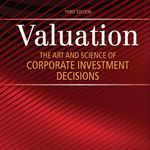
Want to learn more, get this best valuation guide for free
Valuation The Art and Science of Corporate Investment Decisions
lnkd.in/dEtpRNt8


How to master your Finance Interview
Use these handy tips to land the job you want
Here’s what you’ll learn:
• What are the three main financial statements?
• How would you assess a company's financial health?
• How would you value a company?
Source: CandiMentor.com

Company valuation is not just about looking at the stock price or P/E ratio.
A good analyst needs to look at the total value of the operating business and how it compares across different capital structures.
Key concepts every analyst should know about EV/EBITDA:
🔹 Enterprise Value (EV) Breakdown
🔹 EBITDA as Operating Cash Proxy
🔹 EV/EBITDA Valuation Formula
🔹 Capital Structure Neutrality
🔹 Comparable Company Analysis (Comps)
🔹 M&A & Private Transaction Multiples
🔹 Growth & Margin Premiums
🔹 Depreciation Policy Differences
🔹 Peer Group & Historical Benchmarking
The goal is simple:
Value the core business. Strip out financing and tax distortions. Price companies on true operating power.
Want to learn more get this EBITDA Guide for Free Here
linkd.kit.com/54ccb46155


🚨 13 Red Flags to Watch in Financial Statements
Financials may look strong on the surface — but here are signs that something could be off:
🔻 Inconsistent Revenue or Expenses
🔻 Declining Profitability
🔻 Unexplained Transactions
🔻 Buildup of Inventory
🔻 Unusual Accounting Practices
...and 8 more red flags you can’t afford to miss!
Smart investors and analysts don’t just read the numbers — they interrogate them. 🕵️♂️
Credit - 365 Financial Analyst
Want to learn more? Grab this 50 Investing Visuals PDF Free here:
lnkd.in/dMTds_ms


📚 How to Give Yourself an MBA Without Business School
Want to build business knowledge on your own? Start with these 15 books covering the essentials:
🌐 Technology: The Coming Wave — Mustafa Suleyman
🤝 Negotiation: Getting to Yes — Roger Fisher & William Ury
💬 Communication: Leadership Is Language — L. David Marquet
👥 Leadership: Dare to Lead — Brené Brown
🧠 Behavioral Economics: Influence — Robert Cialdini
🎯 Performance: Peak — Anders Ericsson & Robert Pool
🏷️ Brand Building: Building Strong Brands — David Aaker
🚀 Entrepreneurship: Zero to One — Peter Thiel
💰 Venture Capital: Venture Deals — Brad Feld & Jason Mendelson
🏢 Founder Mindset: The Hard Thing About Hard Things — Ben Horowitz
🤖 AI for Business: All-In on AI — Thomas H. Davenport & Nitin Mittal
🌍 Global Economy: The Industries of the Future — Alec Ross
📈 Team Performance: Multipliers — Liz Wiseman & Greg McKeown
🧑💼 Management: Welcome to Management — Ryan Hawk
⚙️ Operations: The Goal — Eliyahu M. Goldratt
The real MBA: Read, think critically, and apply what you learn.
Get more recommendation here - lnkd.in/dBYMzA82


