

Partner @fcollective. Lead/Seed @coupang,@suno_ai_,@shieldaitech, @seatgeek,@pillpack,@olo. Co-founder IS @nttdata_inc. Try build most aligned VC for founders
Boston, MA
Joined October 2009
- Tweets10.5K
- Following3.4K
- Followers36.7K
- Likes18.9K








Pinned Tweet
After 11 years of admiration and friendship, I relished the live studio session in London, together with the legendary @HarryStebbings @twentyminutevc!!
We covered the gamut!
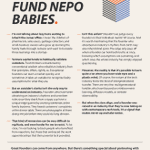
Including why you need to really love each investment, how "the right kind" of nepo baby can make an exceptional founder and why photonic computing may be the next great computing platform ...
youtube.com/watch?v=PDaGwInq…

Fertility Brand @birdandbeco Raises $13M To Double Down On Its "Both Partners" Approach
beautyindependent.com/?p=197…
#proudfirstinvestor

1
8
1,312
David Frankel retweeted

The year is 1854. Cholera is killing thousands in London. John Snow traces an outbreak to a contaminated water pump. Everyone blames bad air. Eventually cities separate sewage from drinking water. Clean water and sanitation will save more lives than almost anything medicine invents.
The year is 1867. Surgery is often more dangerous than the disease it treats. Joseph Lister starts cleaning instruments and wounds with antiseptic. Other surgeons ridicule him. Infections plummet.
The year is 1890. Your daughter has diphtheria. A thick membrane is forming in her throat, slowly suffocating her. The doctor injects a new antitoxin. She survives. A disease that killed tens of thousands of children will become almost unheard of in America.
The year is 1922. Your 14-year-old son has diabetes. He is starving to death no matter how much he eats. The only treatment is a starvation diet. The doctor injects insulin. His blood sugar falls. Children who would have died within months will grow up and have children.
The year is 1943. Your daughter has pneumonia. Before antibiotics, doctors could do little but hope. Now they give her penicillin. The fever breaks. Infections that routinely killed healthy adults become treatable.
The year is 1955. Parents are terrified of polio. Swimming pools close. Children become paralyzed. Some spend their lives in iron lungs. Jonas Salk develops a vaccine, tested in more than a million children. Within decades, polio disappears from America.
The year is 1960. Your wife is giving birth, and something goes wrong. A century earlier, she might have died. Now there are blood transfusions, antibiotics, safer cesarean sections, and anesthesia. Maternal mortality has fallen dramatically. Millions of women survive childbirth who otherwise wouldn’t have.
The year is 1978. Your blood pressure is 180 over 110. You feel fine. The doctor prescribes a pill. Clinical trials show that treating hypertension prevents strokes, heart failure, and death. You take it every morning. Nothing happens. That’s the point.
The year is 1980. The WHO declares smallpox eradicated. A disease that killed hundreds of millions in the twentieth century has disappeared from nature. Not treated. Not managed. Eliminated.
The year is 1996. Your brother has HIV. A decade earlier, the diagnosis was effectively a death sentence. Now doctors combine antiretroviral drugs. People who had months to live begin living for decades. Many will have near-normal life expectancies.
The year is 2014. Your father has hepatitis C. For decades, the infection has meant liver failure and cancer. Now he takes pills for twelve weeks. The virus disappears. A lifelong infection becomes curable in more than 95% of patients.
The year is 2019. Your daughter has cystic fibrosis. Her lungs are slowly failing. For decades, treatment meant managing infections and delaying the inevitable. Now doctors have a drug that corrects the underlying protein defect. Her breathing improves. Hospitalizations plummet. Predicted median survival rises from roughly 40 to more than 60 years.
The year is 2026. Your doctor has ten minutes and a screen. Your blood pressure is high, so the tablet is for life. Your cholesterol is high, so another tablet is for life. Your weight is high, so she offers an injection. The drugs have side effects. Not everyone needs them. But clinical trials show that appropriate treatment prevents heart attacks, strokes, kidney disease, and death.
None of these treatments is perfect. None needs to be.
For most of human history, parents buried their children, infections killed healthy adults, and childbirth killed young women.
Today, global life expectancy has more than doubled since 1900. Child mortality has collapsed.
Medicine has made terrible mistakes. We should remember them.
We should also remember the hundreds of millions of people alive because somebody got it right.

The year is 1873. Your wife tires easily and reads too much. The doctor prescribes the rest cure: six weeks flat in bed, no books, no visitors, fed on milk, forbidden to sit up without his permission. The man who devised it is the most famous nerve specialist in America, and the women come out of it quieter, which is taken as the cure.
The year is 1915. The hospital has a new way of delivering your child. Morphine, then scopolamine, and the mother wakes two days later with a baby she cannot remember having. They call it twilight sleep. The women are strapped into padded cots so they do not hurt themselves while they scream, and the straps are the modern part. The babies arrive blue and slow to breathe.
The year is 1945. The truck comes down your street fogging DDT, and the children run behind it in the white cloud because the man on the back says it is harmless. At the beach it is sprayed over the bathers on their towels. It goes on the cattle, over the barn, and across the kitchen table.
The year is 1948. Your son has trouble with his ears. The doctor slides a rod tipped with radium up each nostril and holds it there for the best part of ten minutes, and you bring him back three more times. Hundreds of thousands of American children get the same treatment. The cancers arrive in their fifties.
The year is 1962. The health visitor tells you breastfeeding is old-fashioned and the formula is scientific. By 1972 fewer than one American baby in four is breastfed at all. The formula is skimmed milk and sugar, with the milk fat taken out and vegetable oil put in.
The year is 1971. The family planning clinic fits a small plastic crab called the Dalkon Shield. Its tail is a bundle of fibres that wicks bacteria up into the womb. 2.8 million are fitted in America before it is withdrawn, and the company goes bankrupt under the claims. It had been sold as safe and superior.
The year is 1983. The doctor says your arteries are the butter's fault. The dripping tin goes in the bin, the yolks go to the dog, the margarine goes in the fridge, and you have the heart attack anyway, on skimmed milk, having done everything right.
The year is 2001. Your 15-year-old is low, and the doctor prescribes Paxil, because the trial in the journal says it is effective and well tolerated in adolescents. The raw data, reanalysed 14 years later, shows more suicidal thinking on the drug than on the sugar pill. The company pays $3 billion to settle. Nobody rings the house.
The year is 2009. The government has spent around £500 million stockpiling Tamiflu for the pandemic, on the strength of the manufacturer's trials. When the trials are finally prised loose five years later, the drug shortens flu by about half a day and nothing shows it keeps anyone out of hospital. The stockpile goes out of date in a warehouse.
The year is 2026. The doctor has ten minutes and a screen. The number is high, so the tablet is for life. The weight is high, so the injection is for life. The meat is bad for the planet and the oil is good for the heart, and the person in the chair is as certain as everyone who ever sat in it.
Every one of those was settled, by a committee, in a journal, with a doubter somewhere being laughed at. The rest cure, the straps, the fog, the rod, the formula, the crab, the margarine, the trial, the stockpile. All of it certain, all of it printed, all of it done to somebody who had asked for help.
You were never the one who was wrong. You were the one it was done to, and the only person in the story who did as they were told every single time.
The apology comes a generation late, in a footnote, addressed to nobody.
The next one is being drafted now.

2 photos:
- 2016: Post my meeting @brandontseng2, @rtsengusa @shieldaitech demo'd this to us in the Los Angeles hotel passage
- 2026: X-BAT
This team is the definition of non-stop innovation and forward momentum
🙏👏 from all of us @fcollective


Shield is acquiring Echodyne to expand our Mission Systems business with software-defined radars, engineering expertise and manufacturing capacity.
The $5.3B transaction is supported by a $2.5B raise, including Series H funding at a $28.8B valuation, and will accelerate our efforts to meet growing demand for multi-mission capabilities.
Echodyne’s industry-leading technology is used in hundreds of counter-drone and security systems worldwide, where it helps track drones, secure airspace, and protect people and infrastructure.
Full release: bit.ly/4iYGLWc
Funding includes a structured equity investment from @Blackstone and a Series H co-led by @disruptivetech and Innovation X Capital, with participation from @adventintl, the Strategic Investment Group of JPMorganChase's Security and Resiliency Initiative, @SnowpointVC, Apandion, Center15 Capital, and others.
Autonomy for the world. The greatest victory requires no war.

David Frankel retweeted

Today we’re announcing a collaboration with @Roche, a leader in AI-driven drug discovery.
Roche will apply @chaidiscovery's platform to help accelerate discovery programs across a number of targets in its therapeutic areas.
David Frankel retweeted

Every other Monday, I do an onboarding session with new hires that covers down on Shield AI's mission and values. Yesterday, I was happily surprised to see 3 returning teammates among the class of 44 new hires. These returning teammates had left Shield for a couple of years, then came back...Shield AI boomerangs; this happens a handful of times throughout the year and speaks to our strong culture.
BUT what made yesterday special was to see Shield AI's (Software) cofounder Andrew Reiter ("Madsci") return. Madsci was with us for 7 years before exploring an opportunity in nuclear power, and now hes back at Shield working on Hivemind and XBAT. Welcome back Madsci, stoked to have you back!
We feel beyond lucky to have met these 3 exceptional founders of @shieldaitech a decade ago
Thank you @rtsengusa, @brandontseng2 & Andrew Reiter for including @fcollective in your very first financing
You have co-defined the "defense tech" sector and it still feels like we're in the early days ....
Shield is acquiring Echodyne to expand our Mission Systems business with software-defined radars, engineering expertise and manufacturing capacity.
The $5.3B transaction is supported by a $2.5B raise, including Series H funding at a $28.8B valuation, and will accelerate our efforts to meet growing demand for multi-mission capabilities.
Echodyne’s industry-leading technology is used in hundreds of counter-drone and security systems worldwide, where it helps track drones, secure airspace, and protect people and infrastructure.
Full release: bit.ly/4iYGLWc
Funding includes a structured equity investment from @Blackstone and a Series H co-led by @disruptivetech and Innovation X Capital, with participation from @adventintl, the Strategic Investment Group of JPMorganChase's Security and Resiliency Initiative, @SnowpointVC, Apandion, Center15 Capital, and others.
Autonomy for the world. The greatest victory requires no war.


David Frankel retweeted
US Navy thank you for the opportunity. We will make you proud. 💪 🇺🇸
V-BAT joins the fleet.
The @USNavy selected V-BAT to provide ISR services, positioning us to compete for $800 million in task orders over the next five years. From ships at sea to land-based operations, V-BAT will expand ISR reach across the fleet.
“V-BAT has delivered more operational outcomes than any other Group 3 VTOL UAS. We’ve interdicted over 100,000 lbs of narcotics in the Caribbean and Pacific. V-BAT has executed hundreds of targeting operations in Ukraine, where GPS and communications are jammed during every mission, and we have delivered substantial outcomes in the Middle East and with our allies and partners. We aren’t just bringing the V-BAT product and service to the Navy; we’re bringing a world-class team with a wealth of operational experience and the ability to produce undeniable outcomes for our warfighters.” - @brandontseng2, Shield AI’s co-founder, president and a former Navy Surface Warfare Officer and SEAL
Read the full press release: shield.ai/shield-ai-selected…
Autonomy for the world. The greatest victory requires no war.

David Frankel retweeted
BOOM! Couldn't be more excited about the future of @shieldaitech, Welcome to the team @EchodyneCorp !
bloomberg.com/news/articles/…

Olo CEO Noah Glass: the right to be known youtu.be/Q3_7WGyPOgk?si=8U_r… via @YouTube
1
4
1,447
David Frankel retweeted

Introducing Suno MCP Beta
Create songs from wherever you get inspired. No tab-switching needed.
Get early access:
sunomusic.typeform.com/to/JM…
🤖 Made with AI
Just getting started ....
@elliotcohen @tjparker @GeneralMedicine
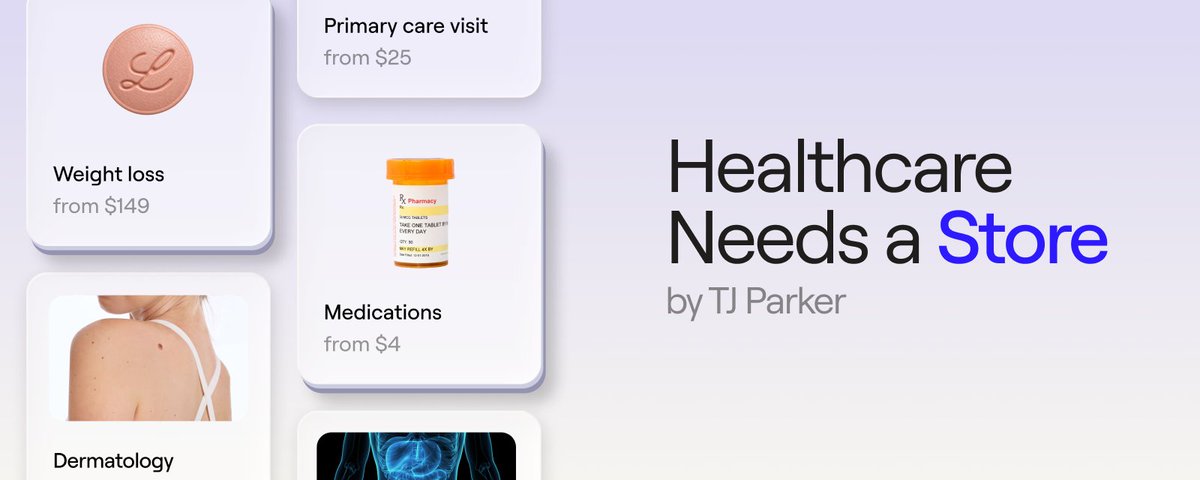
"Today we’re launching the new Walmart Better Care Services, a healthcare store powered by General Medicine."

Nearly nine years ago, @TJParker and I went to Bentonville to talk to @Walmart about building a different kind of pharmacy.
While we were there, we visited The Walmart Museum. If you haven’t been, go! I loved seeing the history of a company that started with a single store and changed what people everywhere could buy and afford. We were building PillPack at the time, and spent much of that trip talking about what healthcare could learn from retail.
Today we’re launching the new Walmart Better Care Services, a healthcare store powered by General Medicine. Starting today, customers can browse more than 900 products and services across a dozen different provider groups, compare cash and estimated insurance prices, and get what they need. Walmart defined the experience, chose the products, services, and providers. Our technology makes it all shoppable.
A lot has happened since that first trip. We sold PillPack, built Amazon Pharmacy, and started @GeneralMedicine. We’ve spent most of our working lives trying to make getting healthcare easier. And somehow it still feels like we’re just getting started.
We have incredible clinicians and treatments in this country. But finding the right care, figuring out what something costs, and actually getting it remains convoluted and complicated. Something that should have been a quick purchase becomes a project. Too often, people just put it off altogether. And when the problem is serious, all that hassle lands on top of what’s already hard. When transactions are easy, you take a whole layer of complexity off the table.
We launched General Medicine a year and a half ago. A few weeks ago, we wrote about the idea behind it: healthcare needs a store. Helping Walmart build one for its customers is that idea reaching the scale we’ve been aiming at since PillPack.
I love that we have our own store. We get to build things we’ve wanted to exist for years, hear directly from customers, and keep making them better. But I’m just as excited about helping other companies build theirs. We learned at PillPack how much more you can do when you work with companies that already serve millions of customers. Tech platforms, retailers, health systems, payers, and manufacturers all bring something different. There’s a lot more we can do together than any of us could do on our own. With Walmart, we get to work with a retailer and pharmacy that’s part of everyday life all across the country.
This one is particularly special to me. We walked into Bentonville nine years ago hoping to build something together. It took a little longer than we expected, but here we are.
Build the store. Then build more stores.

ALT Me and TJ in Bentonville, 2017

ALT TJ and me in Bentonville, 2026


David Frankel retweeted
The first healthcare store we built was amazon.
The second healthcare store we built was @GeneralMedicine.
So it only felt appropriate that the third would be @Walmart.
Announcing Walmart Better Care Services, a healthcare store powered by General Medicine.
The story behind it, from @elliotcohen, below.
Nearly nine years ago, @TJParker and I went to Bentonville to talk to @Walmart about building a different kind of pharmacy.
While we were there, we visited The Walmart Museum. If you haven’t been, go! I loved seeing the history of a company that started with a single store and changed what people everywhere could buy and afford. We were building PillPack at the time, and spent much of that trip talking about what healthcare could learn from retail.
Today we’re launching the new Walmart Better Care Services, a healthcare store powered by General Medicine. Starting today, customers can browse more than 900 products and services across a dozen different provider groups, compare cash and estimated insurance prices, and get what they need. Walmart defined the experience, chose the products, services, and providers. Our technology makes it all shoppable.
A lot has happened since that first trip. We sold PillPack, built Amazon Pharmacy, and started @GeneralMedicine. We’ve spent most of our working lives trying to make getting healthcare easier. And somehow it still feels like we’re just getting started.
We have incredible clinicians and treatments in this country. But finding the right care, figuring out what something costs, and actually getting it remains convoluted and complicated. Something that should have been a quick purchase becomes a project. Too often, people just put it off altogether. And when the problem is serious, all that hassle lands on top of what’s already hard. When transactions are easy, you take a whole layer of complexity off the table.
We launched General Medicine a year and a half ago. A few weeks ago, we wrote about the idea behind it: healthcare needs a store. Helping Walmart build one for its customers is that idea reaching the scale we’ve been aiming at since PillPack.
I love that we have our own store. We get to build things we’ve wanted to exist for years, hear directly from customers, and keep making them better. But I’m just as excited about helping other companies build theirs. We learned at PillPack how much more you can do when you work with companies that already serve millions of customers. Tech platforms, retailers, health systems, payers, and manufacturers all bring something different. There’s a lot more we can do together than any of us could do on our own. With Walmart, we get to work with a retailer and pharmacy that’s part of everyday life all across the country.
This one is particularly special to me. We walked into Bentonville nine years ago hoping to build something together. It took a little longer than we expected, but here we are.
Build the store. Then build more stores.
ALT Me and TJ in Bentonville, 2017
ALT TJ and me in Bentonville, 2026
🙏 @gokulr

The AI Bubble will create Roadkill
@DaFrankel (David Frankel), Managing Partner, @fcollective (Founder Collective), interviewed by @HarryStebbings (@20VC)
Summary: David Frankel has written seed checks into Uber, Coupang, PillPack, SeatGeek, Whoop, Shield AI and Suno across 18 years at Founder Collective, and he expects this AI wave to leave more wreckage behind it than any wave he has seen. The money at the top of the market is competing for a handful of trillion-dollar names while the returns math sits far below that, in companies nobody is bidding on yet. His case is for getting in early, staying patient, and holding your frameworks loosely enough that they don't cost you the deal of the decade.
1. The $2.6 Billion Median. Fewer than 100 companies created in the last 25 years are sustainably worth over $10 billion. The median of the top 500 companies from that period is $2.6 billion, and owning 5% of one of those returns a seed fund. Frankel says venture has narrowed into a pyramid because Cambridge Associates and the funds of funds are selling access, and a fund that misses the $3 trillion names gets hard to sell. The returns math works at a fraction of that scale, which is why he says you don't have to be in the one.
2. Hollywood Odds. 95% of the companies riding this wave will not be there. Frankel believes OpenAI, Anthropic and SpaceX are the Metas and Googles of this era, and that the wreckage around them will be enormous. He has heard "this time is different" from Harry Stebbings and everyone else for 11 years, across the internet, SaaS and mobile waves that produced fewer than 100 companies over $10 billion between them. Asked whether another crash is coming, his answer is definitely, and nobody knows when.
3. Everyone Is AI Now. Saying you're not an AI company today is like saying you don't use the internet. Frankel's live example: a founder who spent 20 years in SAP consulting, built a platform, knew which part of it was still bad, started playing with Claude Code alongside his CTO, and came back raising at a $20 million cap. Founder Collective does those deals all day long. The AI label stopped carrying information, so what matters is what the founder knows that nobody else does.
4. The Insurance Policy. Founders are inviting small seed funds into $8 to $9 million rounds for $500K to $1 million as protection against being abandoned. The junior partner who championed you at the big fund leaves, starts their own fund, or moves, and your mandate goes with them. Nobody is left to argue for turning over another card, and the partnership goes back to its real winners. Frankel hates thinking of Founder Collective that way, and says the last 20 deals looked exactly like it.
5. Fewer Entrepreneurs. There are more founders than ever and fewer entrepreneurs. YC professionalized company founding into a norm for people leaving certain colleges, and Frankel thinks many of them lack the fortitude for the learning curve that follows. He watches the trajectories of CEO and CTO split: a good co-founding CTO stays useful in different roles up to 50 people, while the CEO has to learn to manage and to put bums on seats. Mikey Shulman told him 30% to 40% of his time at Suno is recruiting, and Jeff Bezos told a lunch table decades ago that it was 50% of his.
6. CEO-CTO Alchemy. Frankel wants the CTO to be a magician and the CEO to be a good salesperson. In 18 years he has seen that alchemy 4 or 5 times, and it comes from the interplay between 2 specific people rather than from either resume. He prefers co-founders who are different from each other, aligned on direction, and confident in each other's competence. He has said no more often than yes when the second founder looked weak, and he regrets some of those.
7. Ownership Cost Hundreds Of Millions. Founder Collective passed on ElevenLabs, Granola, StarCloud and Fractile purely because the ownership would have been 1% to 2%. Frankel calls it hundreds and hundreds of millions of dollars of lost returns, and it is the mistake he names first. He has never turned a founder down over percentage when he was all in: with Shulman he took the dilution the founder was willing to give, wrote every cent of the first round, and showed the deal to other people. His rule now is that when you meet the right people, you get what you get.
8. I Love It Because. Every Founder Collective team meeting starts with someone completing the sentence "I love it because." If you can't finish it, you can't invest. Valuation comes last in the sequence, after opportunity, market and founders, and Frankel says the price is rarely comfortable. The endings that work sound like insight into a vertical, or an edge nobody else can match in a commoditized business.
9. Vertical Nepo Babies. Frankel is writing a piece on why he loves funding nepo babies, and his definition is founders who grew up inside a vertical. TJ Parker was working in his father's pharmacy at 14, years before PillPack. Evan at Rebar worked for his uncle's HVAC company, one of 10 rolled up by private equity, was told to go find the AI for blueprint quoting, found none existed, and started the company. Over 100,000 US mechanical engineers make at least $100K a year doing that quoting by hand.
10. The Theme Before The Theme. Founder Collective's second fund reads as an applied AI fund today, and applied AI was not a theme when those checks were written. Shield AI was already called Shield AI in 2016. Drones, video cameras and the rest of that hardware are commoditized now, some of it down to $20, and the value came from putting AI around commoditized platforms. Frankel's job is to be in the next theme 5 or 10 years early, and he points out those companies are never the expensive ones.
11. The Last 5%. The SaaS apocalypse is overdone for embedded software and real for everything else. Frankel's test is what runs inside your system: billions of orders in real time, or mission-critical biotech research. Veeva and Olo are much harder to rip out than a horizontal tool a customer can rebuild in Claude over a weekend, which is why he thinks the market threw the baby out with the bathwater. The contrarian trade he does not run would be buying a basket of top SaaS stocks that have lost most of their market cap.
12. Disruption Comes From China. OpenAI and Anthropic will be disrupted, and Frankel thinks there is an excellent chance it comes from China. He is watching the strength of the Chinese open models and notes those labs have not had time to establish incumbency before being taken down. Underneath that, he expects photonic computing to come for Nvidia, because every connectivity piece in a data center that can be fiber already is, and the chip is the last piece that isn't. His broader worry is that the US has cut DARPA and university R&D, which is the money that produced all of this in the first place.

5
5
1,715
David Frankel retweeted

The @JoinOdin Top 50 uses a fairly contrarian methodology, in that it does not simply reward AUM.
What matters is a firms exposure to the value created by generational companies, relative to managed capital.
So, the list features a number of firms who aren’t ranked as frequently as they likely deserve. For example:
#15 Founder Collective — @fcollective
#17 Granite Ventures — @GraniteVentures
#22 Romulus Capital — @RomulusCap
#24 Gemini Israel — @GeminiVC
#27 Amplify Partners — @AmplifyPartners
#30 Highway 12 Ventures — @hwy12
#33 Red Swan — @redswanventures
#37 Section 32 — @S32_VC
#38 Flybridge — @flybridge
#41 Altos Ventures — @altosvc
#42 JVP — @JVPVC
#44 Celesta Capital — @CelestaCapital
#46 Madrona — @MadronaVentures
#47 Cathay Innovation — @Cathayinnov
#48 Revel Partners — @RevelPartners
Check out the full report: top50.joinodin.com


If there was an "on-base percentage" for venture capital, what would it look like?
It might involve looking at a firm's exposure to the world's most consequential tech companies.
Not just an arbitrary mark at an exit, where they may or may not have taken liquidity, but the subsequent compounding of those investments over time; using public markets as a sorting mechanism for quality.
For this ranking, we started with venture's greatest success stories, and worked backwards to find out who invested, when, and what fraction of their managed funds the investment represented.
The resulting list reflects the long-term performance of each firm's most successful portfolio companies, relative to capital deployed.
Other interesting features:
• Two firms in the top 10 were founded by the Draper dynasty (@shv and @DFJvc).
• Luke Nosek is a co-founder of two of the firms in the top 10 (@foundersfund and @gigafund).
• Founders Fund created more value than the bottom 22 firms put together, at $95.2B, primarily thanks to @SpaceX and @PalantirTech.
• If you rank by value alone, the top five firms are: Founders Fund ($95.2B), @sequoia ($82.6B), @Accel ($56.0B), @BessemerVP ($48.4B), @NEA ($33.0B).
• Seven out of the ten best performing funds were technically emerging managers, and four were debut funds.
(@iaventures I, @FirstMarkCap I, @Techstars Bullet Time I, @Lowercase I, Founders Fund II, @firstround II, Founders Fund III)
The top 10 firms are:
1 — Sutter Hill Ventures, founded by Paul M. Wythes and Bill Draper (William H. Draper III), in 1964
2 — Founders Fund, founded by Peter Thiel (@peterthiel), Ken Howery (@KenHowery), and Luke Nosek (@LukeNosek), in 2005
3 — IA Ventures, founded by Roger Ehrenberg (@infoarbitrage), in 2010
4 — Gigafund, founded by Luke Nosek (@LukeNosek) and Stephen Oskoui (@oskoui), in 2017
5 — Lowercase Capital, founded by Chris Sacca (@sacca), in 2010
6 — Pelion Venture Partners, founded by Jim Dreyfous (as Utah Ventures / UV Partners), in 1986
7 — Union Square Ventures, founded by Fred Wilson (@fredwilson) and Brad Burnham (@BradUSV), in 2003
8 — Benchmark, founded by Bob Kagle, Bruce Dunlevie, Andy Rachleff, Kevin Harvey, and Val Vaden, in 1995
9 — Bessemer Venture Partners, founded by Henry Phipps Jr. (as Bessemer Securities; VC arm formalized later), in 1911
10 — Draper Fisher Jurvetson, founded by Tim Draper (@TimDraper), in 1985
Read the write-up here:
blog.joinodin.com/p/the-top-…
Read more about the methodology and get the full report here:
top50.joinodin.com/

I was so lucky to participate in the seed funding for Trialpay (sold to @Visa) - courtesy of these 2 exceptional founders @terryangelos @arampell @a16z.
They have both gone on to do even more amazing work!
🙏🙏👏👏
This is tee'd to listen tonight!

The wallet wars are here.
Very Good Security chief strategy officer Terry Angelos joins a16z's Alex Rampell, his TrialPay co-founder from back in 2006 (TrialPay was later acquired by Visa), to discuss how agents are learning to spend money.
"Agents have all of a sudden become significantly more helpful and useful because they effectively have arms and legs, which are payment credentials."
VGS holds the payment credentials behind about 1/3 of all e-commerce, and now it's helping AI agents pay merchants. If you've bought anything online, there's a good chance VGS has already helped keep your card safe.
In the last three months, Terry says agents went from "spectators to actors." Once an agent has your payment credentials, it can book the piano teacher it previously could only find and recommend.
Now Stripe's Link, Shopify's Shop Pay, and PayPal are racing to connect to agents. It's all headed toward open standards from the card networks: agentic tokens that let an agent pay with your actual card.
VGS went from zero agentic tokens to a few million a week in three months.
0:55 From TrialPay to Visa to VGS
2:05 How VGS vaults 1/3 of e-commerce
6:05 Why big merchants use 3-5 processors
9:55 Why AI agents need a payment vault
12:15 Agents go from "spectators to actors"
13:40 The wallet wars, old and new
19:55 Walled gardens vs open standards
23:55 How agents can pay with your real card
26:40 Your saved card goes multiplayer
29:40 How do you trust an agent's purchase?
32:35 Who pays when your agent gets it wrong
35:40 Why Amazon blocks agents
39:50 What's overhyped and underhyped
43:35 When merchants get agents too
45:40 Why agents could break card rewards
47:00 VGS's eras: vault, updates, network
@terryangelos @arampell
This conveys a normalcy which is so abnormal. Chillingly so. Very fast paced (need to watch again).
Even more disturbing if watched since Chapter 1.
An absolute labor of love from @ronnieapteker & his team in @Ukraine
Kyiv of Mine : Chapter 4 – The light that remains youtu.be/5kOTmNxKRnY?si=ocZo… via @YouTube

10
14
1,296