

Author, filmmaker, consultant, keynote speaker, researcher: expert in the Exceptionally and Profoundly Gifted.
White Rock, BC, Canada
Joined January 2012
- Tweets672
- Following457
- Followers531
- Likes1.3K







P. Susan Jackson retweeted

The great equalizer in life is uncertainty
Everyone has the same amount - no one can tell the future
Much of success boils down to how you face that uncertainty, day in, day out
I think this is why bravery and courage are the virtues most celebrated in fairy tales
It's interesting to me these aren't virtues we talk about as we age
P. Susan Jackson retweeted

“Since we were children, so many of us have told ourselves that we would not stand by if we were ever witnesses to genocidal violence,” Naomi Klein said. “We told ourselves that we would raise our voices. We told ourselves we would put our bodies on the line. We pledged that such horrors would never again happen on our watch.”
Thousands Of Jewish Protesters In Washington Call For Cease-Fire In Israel-Hamas Conflict huffpost.com/entry/jewish-pr…
P. Susan Jackson retweeted
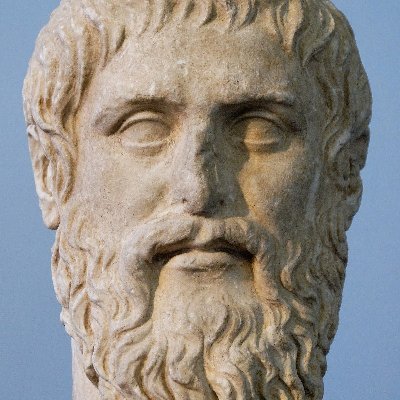
12 Reasons Why Cities Need More Trees:
1. Temperature Control
One large tree is equivalent to 10 air conditioning units, and the shade they provide can reduce street temperature by more than 30%.
2. Noise Reduction
Trees can reduce loudness by up to 50%. In urban areas filled with the sound of cars, construction, sirens, aeroplanes, and music, trees are essentially the best way to block noise and keep cities — along with the homes and workplaces in them — quieter.
3. Air Purity
Trees remove an astonishing amount of harmful pollutants and toxins from the air. In urban areas air quality is often disastrously bad — with severe consequences for our health. Trees make the air we breathe much cleaner.
4. Oxygen
And, while absorbing all those pollutants, trees also put more oxygen back into the urban environment. Oxygen levels are significantly lower in cities compared to the countryside; trees help to solve that problem.
5. Water Management
Trees do more than just shelter us and our buildings from rain — which is, in fact, extremely important. They also absorb huge quantities of water, reduce run-off, neutralise the severity of flooding, and make flooding more unlikely altogether. Not to forget that their roots absorb pollutants and prevent them from feeding back into a city's water supply.
6. Psychological Health
Studies have proven what we instinctively know to be true: that human beings are significantly happier when surrounded by nature rather than sterile urban environments. Our emotions, behaviour, and thoughts are shaped by the places we spend time — and trees have a profoundly positive effect on our psychology. The consequential benefits of being happier and more peaceful — as individuals and as a society — are immense.
7. Physical Health
Beyond all the other ways in which trees improve air quality and the urban environment, much to the benefit of our health, they also encourage people to go outside. Cycling, running, and walking are all more common in urban areas with plenty of trees. A knock-on effect of people spending more time outdoors is also social integration and stronger communities.
8. Privacy
A simple point, but not inconsequential, is that trees provide privacy.
9. Economics
The total economic benefit of urban trees is hard to calculate. There are costs, of course, including the repair of infrastructure damaged by roots and maintaining the trees themselves. But the total economic benefit — a consequence of everything else in this list and more — far outweighs the expenditure. Trees make cities wealthier.
10. Wildlife
Trees are miniature cities all of their own, serving as a habitat for hundreds of different species, including birds and mammals and insects.
11. Light Pollution
Trees don't only block the light shining down, therefore keeping us and our cities cooler — they also disrupt light shining up, from street lighting, cars, houses, and billboards. Skies are clearer in cities with more trees.
12. Aesthetics
And, finally, trees are beautiful. They break up the potential monotony of urban environments — the sharp geometry, the greyscale roads and buildings, the endless rows of cars — with their trunks, boughs, canopies, and flowers.
Just think: the gold and red of falling leaves in autumn, the white and pink blossom of spring, the vast green canopies of summer, and the branches lined with hoar-frost in winter. Every single tree is a myriad of intricacy and texture, of colour and scent, of dappled light on the pavement, mottled bark, knotted roots, of clustered leaves and delicate petals and stern boughs.
Few streets would not be improved by the kaleidoscopic aesthetic delights of a tree, not to mention the many different species of tree, all over the world, whether willow, oak, lime, cherry, aspen, maple, birch, horse chestnut, dogwood, hornbeam, ash, sycamore... the list goes on.
There are some drawbacks to urban trees, most of them context-specific, and they are not — of course — universally appropriate. But it seems fair to say that many cities would benefit from at least a few more trees here and there.

P. Susan Jackson retweeted

Intervju s Patricio Susan Jackson o izzivih nadarjenosti, škodljivih mitih o priviligiranosti ter možnih rešitev v šolskem sistemu. Vabljeni k 🎧! @DaimonInstitute
prvi.rtvslo.si/podkast/aktua…

P. Susan Jackson retweeted

How often it is that a young person’s pain (self-harm; eating problems) is a desperate attack, via the self, on a dysfunctional family, idea, school or wider system; a plea for systemic change. But we rarely see it like that - instead we pathologise them & treat *their* disorder.
P. Susan Jackson retweeted
You shouldn't have to make a Faustian bargain with the DSM or ICD to access mental health support; you shouldn’t have to accept the stigmatising & depoliticising idea you have internal disorder as a precondition for getting help. Make a non-pathologising path open for all. Agree?
P. Susan Jackson retweeted

Rarely do we see experts pushing anything this misguided. The repercussions on social trust will stretch well beyond the issue of gender itself.
P. Susan Jackson retweeted

We are devastated to learn that our friend Eli Wolff passed away this week. A kind person, passionate mentor and activist, Eli will be greatly missed. He was an instructor in the @UConnSPM program & generously gave of his time to #sport & #peace. @UConn
fal.cn/3xeqo

ALT Eli Wolff
P. Susan Jackson retweeted

Poetry is not a luxury. It is a vital necessity of our existence. It forms the quality of the light within which we predicate our hopes and dreams toward survival and change, first made into language, then into idea, then into more tangible action. Poetry is the way we help give name to the nameless so it can be thought. The farthest horizons of our hopes and fears are cobbled by our poems, carved from the rock experiences of our daily lives.
#audrelorde #poetry
P. Susan Jackson retweeted

Hey @Olympics if one nation genociding another (and their athletes) is not enough to get banned from your precious event what’s the actual bar?


P. Susan Jackson retweeted

The whole attitude of "theyll be fine" is wrong. I find difficulty reconciling that a place w a mission to foster love of learning does the opposite while highlighting other characteristics that have little to do w learning. Even gifted support orgs do this...contd
P. Susan Jackson retweeted

Can someone in authority pls patiently explain how in this world it makes any sense to prepare for oncoming surge of illness by assuring enough emergency centres but not at the same time, doing everything possible to prevent the onslaught?
cbc.ca/news/canada/british-c…
P. Susan Jackson retweeted

"Talent is evenly distributed, opportunity is not." - Lual Mayen, our 2022 Spirituality Award winner.
@lualmayen fled civil war in South Sudan, became a self-taught coder, and is now CEO of Junub Games.
#AliAwards

P. Susan Jackson retweeted

“If a profoundly gifted learner is denied access to fitting educational opportunities…there can be deleterious developmental injury.”
What does creating access look like? Let’s dream!
Via P. Susan Jackson @DaimonInstitute
@DavidsonGifted @jimdelisle3 @JonathanPlucker
#GTChat
P. Susan Jackson retweeted

Understanding learner variability to personalize learning is key and emphasizes the value of fostering the whole child. Excellent learning session with our Lowell staff, highlighting the work of @DaimonInstitute! @JerryAlmendarez @BiancaBarquin @DrLorrainePerez @MiriamlgpSAUSD


P. Susan Jackson retweeted

I made an interactive intro to why mathematicians care about group theory! Figure out the difference between seemingly similar crystals and see a new, visual way to understand groups in Clear Crystal Conundrums!
explanaria.github.io/crystal…
P. Susan Jackson retweeted

In light of the discussion of G&T programs, consider this conversation between @DaimonInstitute and @jlmannisto about the role of class - and of luck - in getting gifted kids to bloom.
thirdfactor.org/luck-class-a…
P. Susan Jackson retweeted

Interested in equity, diversity, & inclusion? #SENG has numerous articles on these topics in the SENG Library. Follow this link to learn more: sengifted.org/equity


P. Susan Jackson retweeted

Thank you @jlrgifted, @tylermath12, EC, speakers, & to ALL involved in delivering this brilliant virtual conference and sharing professional understandings about gifted education! This sets a high bar and gold standard moving forward for future virtual learning meetings! #gtchat

That's a wrap on the 2021 Virtual World Conference! Check out our closing video at youtu.be/Y8UbZrf-Ukg
Thanks for joining us! #WCGTC21 #gtchat #edchat #gifted #giftededucation #talentdevelopment #creativity
