

Service-Disabled Veteran | VA Policy Advocate Fighting for 54,000 combat-injured veterans
United States
Joined February 2026
- Tweets1.2K
- Following211
- Followers166
- Likes2.9K




Pinned Tweet
All this week the House is in a District work period.
It’s the perfect opportunity to contact your representatives while they are back in their home district.
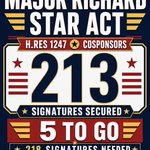
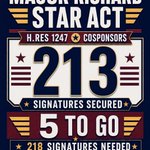
Urge them to sign the H.Res 1247 discharge petition.
#MajorRichardStarAct #Veterans

David Warren | Veterans Policy retweeted

This multi-part thread masquerades as a myth-busting piece but is actually a paid promotion for a bill that, while containing many excellent provisions, represents one of the largest cuts to veterans' benefits in history. Until the House Committee on Veterans Affairs and @ConcernedVets for America address the problematic issues with sections #101 and #108 of this proposed legislation, their analyses cannot be taken seriously.


David Warren | Veterans Policy retweeted

The act is pitting the nation’s largest veterans groups against one another over its proposal to pay for billions of dollars in new benefits for seriously ill and injured veterans by taking away future compensation from other disabled veterans.
stripes.com/veterans/2026-07…

David Warren | Veterans Policy retweeted

54kveterans.org/vso-contact
TCAVA supporters say Congress must lock projected VA savings into law because the money could otherwise return to the Treasury. So instead of fighting VSOs / Orgs like WWP, The American Legion, MOAA folded.
But Senator Blumenthal offered a clean alternative: use $13 billion from $111 billion in actual unobligated Department of Defense funds—money that could also ultimately lapse back to the Treasury.
Senator Thom Tillis blocked it.
So unused Defense money is protected, but disabled veterans are expected to finance the bill?
That is not fiscal responsibility. That is choosing wounded veterans as the pay-for.
No 50% cap.
No VA cuts.
No “lesser of.”
No wounded veterans paying for wounded veterans.
Pass the real Major Richard Star Act.
Send your notice now:
54kveterans.org/vso-contact
🤖 Made with AI

Congresswoman @RepNancyMace @NancyMace, You’ve been an original cosponsor of the Major Richard Star Act (H.R. 2102) since March 2025.
Yet, your public accounts have only mentioned it twice—most recently in March around the VSO hearings. Meanwhile, your office has received multiple inquiries from constituents like me asking where you stand on recent updates.
Since the introduction of the Take Care of America’s Veterans Act (H.R. 9237) in June, constituents need to know your position on:
• H.Res. 1247 (Discharge Petition)
• H.R. 2102 (Major Richard Star Act)
• H.R. 9237 (TCAVA) Section 108
• H.Res. 1377 (The Closed Rule)
Veterans deserve to know where their Representative stands before these issues are decided—not afterward.
Will you publicly share your position on these four items?
#MajorRichardStarAct #TCAVA #Veterans #SC01


David Warren | Veterans Policy retweeted

Americans stood firm and Republicans blinked. They knew they couldn’t push through a bill to water down and strip benefits from millions of veterans, and backed down. We need real solutions, like the Major Richard Star Act, to give them what they’re owed! govexec.com/management/2026/…

David Warren | Veterans Policy retweeted
The Take Care of America’s Veterans Act is pitting the nation’s largest veterans groups against one another over its proposal to pay for new benefits for seriously ill and injured veterans by taking away future compensation from other disabled veterans.
stripes.com/veterans/2026-07…
David Warren | Veterans Policy retweeted
@Militarydotcom, @DavidWarrenVet makes some excellent points concerning the types of questions that need to be asked about the Take Care of America's Veterans Act.
Your 7/3 published article did a good job presenting Senator Jerry Moran's one-sided talking points, as if his comments would "finally set the record straight."
However, questions like "What really happened to the Major Richard Star Act?" and "What would really be the actual consequences for veterans if section 108 were to be implemented?" still remain and need to be addressed.
In addition to politicians with an interest in this legislation, please take the time to interview actual veterans and veterans' service groups who speak for the people who will be affected by it.
A good place to start would be: @54KVeterans, @VFWHQ, @DAVHQ, and @iava.

THE QUESTION CONGRESS STILL HASN’T ANSWERED
If you believe the Major Richard Star Act deserves to become law, why not let the House vote on it as a standalone bill?
The Major Richard Star Act (H.R. 2102) has attracted 337 House cosponsors—an overwhelming bipartisan majority.
Yet only 213 Members signed H.Res. 1247, the discharge petition that would force the bill to the House floor.
That leaves one obvious question:
If you publicly support the bill, why not sign the petition that would allow it to be voted on?
WHAT CHANGED?
As the discharge petition gained momentum and came within five signatures of success, Congress shifted its attention to the Take Care of America’s Veterans Act (H.R. 9237).
Instead of allowing a clean vote on the Major Richard Star Act, it was incorporated into a 554-page omnibus that also includes Section 108, which would codify revised disability rating criteria for future sleep apnea and tinnitus claims as part of the package’s offsets.
For many VSOs and veterans, that changed the conversation entirely.
THE SENATE ARGUMENT
One of the most common arguments against completing the discharge petition is that a clean House bill would simply stall in the Senate.
But consider the numbers.
The Senate version of the Major Richard Star Act already has 79 bipartisan cosponsors.
Those Senators represent 44 states and approximately 304.5 million Americans.
That does not guarantee passage.
It does demonstrate broad bipartisan support.
The challenge has not been the number of supporters—it has been getting the legislation scheduled for a vote.
A House-passed standalone bill would significantly increase the pressure for the Senate to address the legislation.
THIS IS ABOUT ACTION
Cosponsoring a bill tells veterans you support it.
Signing a discharge petition demonstrates you’re willing to act when the normal legislative process has stalled.
Those are not the same thing.
Veterans are not asking Members to choose between veterans.
We support the many bipartisan provisions contained in TCAVA.
But many veterans also believe the Major Richard Star Act deserves to stand or fall on its own merits—not be tied to a larger package that includes Section 108.
The House is just five signatures away from allowing that to happen.
If you have already cosponsored the Major Richard Star Act but have not yet signed H.Res. 1247, veterans are asking one simple question:
If not now, when?
#MajorRichardStarAct #Veterans #TCAVA
@RepMikeLawler @ZachNunn @RepMackenzie @repgabeevans @CongressmanKean
David Warren | Veterans Policy retweeted
June 18. Help is still needed ..........

🚨 WE NEED YOUR HELP 🚨
Make sure your Members of Congress know the true impacts of this hurtful bill and tell them to VOTE NO on H.R. 9237 / S. 4744 when it comes to the Floor
Take action: iavaaction.secure.nonprofits…
#IAVA
David Warren | Veterans Policy retweeted

🚨 WE NEED YOUR HELP 🚨
Make sure your Members of Congress know the true impacts of this hurtful bill and tell them to VOTE NO on H.R. 9237 / S. 4744 when it comes to the Floor
Take action: iavaaction.secure.nonprofits…
#IAVA
David Warren | Veterans Policy retweeted
June 16 press conference.
Today, IAVA Director of Policy & Advocacy Jessica Finucan joined VSOs, advocates, and lawmakers at the "Don't Cut Veterans Benefits" press conference to oppose the Take Care of America's Veterans Act (H.R. 9237 / S. 4774).
#IAVA


David Warren | Veterans Policy retweeted

Two veterans. Same injuries. Different compensation. Simply because one served later.
That's the principle at stake.
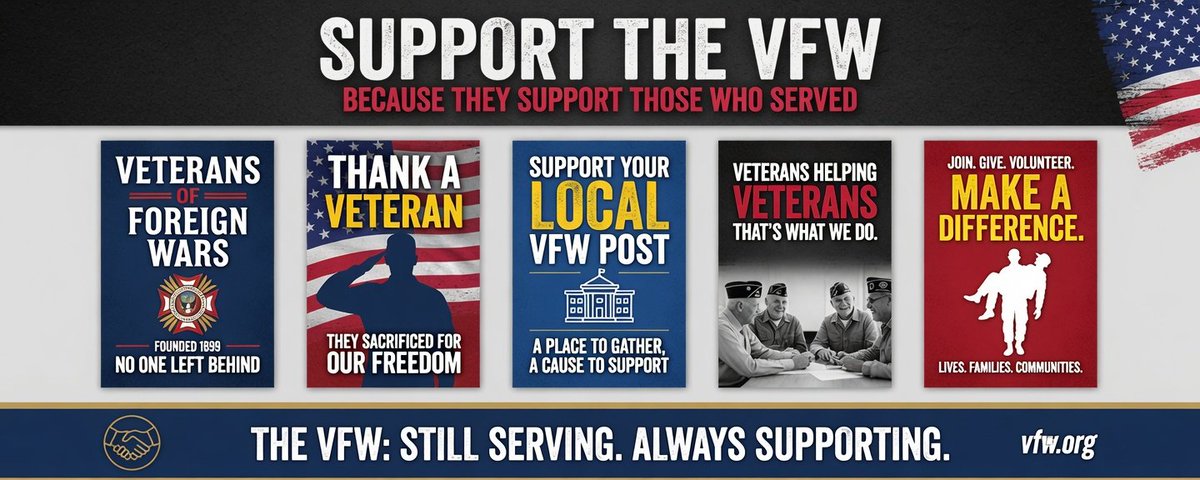
The VFW supports improving benefits for veterans, service members, retirees, caregivers and survivors. We also support updating the VA rating schedule through the normal regulatory process.
What we don't support is asking one generation of veterans to pay for another's benefits.
A grateful nation keeps its promises. votervoice.net/VFW/Campaigns… #HonorTheContract #VFW #KeepThePromise @VFW_OfficeDC
David Warren | Veterans Policy retweeted

Myth: The only way to balance the VA budget is by cutting benefits from future veterans. Call the U.S. Capitol Switchboard at 202-224-3121 and tell your Member of Congress to not sign the Take Care of America's Veterans Act until cuts to earned benefits are removed.
David Warren | Veterans Policy retweeted

"A grateful nation pays its debts. It does not send veterans the bill." Craig Romanovich, the Executive Director of the @unionveterans, spoke out against the Take Benefits from America's Veterans Act. Veterans like Craig shouldn't have to fight for the benefits they are owed.
THE QUESTION CONGRESS STILL HASN’T ANSWERED
If you believe the Major Richard Star Act deserves to become law, why not let the House vote on it as a standalone bill?
The Major Richard Star Act (H.R. 2102) has attracted 337 House cosponsors—an overwhelming bipartisan majority.
Yet only 213 Members signed H.Res. 1247, the discharge petition that would force the bill to the House floor.
That leaves one obvious question:
If you publicly support the bill, why not sign the petition that would allow it to be voted on?
WHAT CHANGED?
As the discharge petition gained momentum and came within five signatures of success, Congress shifted its attention to the Take Care of America’s Veterans Act (H.R. 9237).
Instead of allowing a clean vote on the Major Richard Star Act, it was incorporated into a 554-page omnibus that also includes Section 108, which would codify revised disability rating criteria for future sleep apnea and tinnitus claims as part of the package’s offsets.
For many VSOs and veterans, that changed the conversation entirely.
THE SENATE ARGUMENT
One of the most common arguments against completing the discharge petition is that a clean House bill would simply stall in the Senate.
But consider the numbers.
The Senate version of the Major Richard Star Act already has 79 bipartisan cosponsors.
Those Senators represent 44 states and approximately 304.5 million Americans.
That does not guarantee passage.
It does demonstrate broad bipartisan support.
The challenge has not been the number of supporters—it has been getting the legislation scheduled for a vote.
A House-passed standalone bill would significantly increase the pressure for the Senate to address the legislation.
THIS IS ABOUT ACTION
Cosponsoring a bill tells veterans you support it.
Signing a discharge petition demonstrates you’re willing to act when the normal legislative process has stalled.
Those are not the same thing.
Veterans are not asking Members to choose between veterans.
We support the many bipartisan provisions contained in TCAVA.
But many veterans also believe the Major Richard Star Act deserves to stand or fall on its own merits—not be tied to a larger package that includes Section 108.
The House is just five signatures away from allowing that to happen.
If you have already cosponsored the Major Richard Star Act but have not yet signed H.Res. 1247, veterans are asking one simple question:
If not now, when?
#MajorRichardStarAct #Veterans #TCAVA
@RepMikeLawler @ZachNunn @RepMackenzie @repgabeevans @CongressmanKean
David Warren | Veterans Policy retweeted
“What’s dangerous is when veteran benefits are being aimed at by Congress and by anyone else. It is dangerous to veterans who rely on those benefits often as a primary source of income.” - VFW Director of Public Affairs and Strategic Outreach Robert Couture stripes.com/veterans/2026-07…
#HonorTheContract #VFW #ProtectVeteransBenefits

David Warren | Veterans Policy retweeted
This is what I have said about each of you all along! @NancyMace and @RepRalphNorman aren’t returning to Congress, but veterans deserve better than for each of you to try to pretend veterans aren’t savvy to what’s going on! Do the RIGHT thing on this! We want a clean Major Richard Star Act and no added fees to refinancing a VA loan. The silence we hear from each of you is deafening!
@NancyMace @NancyMace @NancyMace @RepJoeWilson @RepJoeWilson @RepJoeWilson @RepSheriBiggs @RepSheriBiggs @RepSheriBiggs @VoteTimmons @VoteTimmons @VoteTimmons @RepRalphNorman @RepRalphNorman @RepRalphNorman @RussellFrySC @RussellFrySC @RussellFrySC

Of course, Republicans are ALLOWED to support the clean version of the Major Richard Star Act (H.R. 2102). The reality for them, though, is that the consequences for doing so could be brutal (loss of committee assignments and leadership roles, withheld campaign funding from NRCC and aligned donors, stalled bills, primary challenges, peer ostracism, and public labeling as disloyal). Those are the kinds of things that party leadership (on both sides of the aisle) does to those who "step out of line."
The voting public's support and the massive bipartisan cosponsorship of H.R. 2101 show that veterans and their supporters back the clean version of the Major Richard Star Act over the omnibus Take Care of American Veterans Act.
We need Republicans who have the cojones to be free thinkers, to listen to their constituents (the American voting public) and not party leadership, and refuse to tacitly support the TCAVA - a bill that represents the largest cut to veterans' benefits since the Great Depression.
David Warren | Veterans Policy retweeted

Of course, Republicans are ALLOWED to support the clean version of the Major Richard Star Act (H.R. 2102). The reality for them, though, is that the consequences for doing so could be brutal (loss of committee assignments and leadership roles, withheld campaign funding from NRCC and aligned donors, stalled bills, primary challenges, peer ostracism, and public labeling as disloyal). Those are the kinds of things that party leadership (on both sides of the aisle) does to those who "step out of line."
The voting public's support and the massive bipartisan cosponsorship of H.R. 2101 show that veterans and their supporters back the clean version of the Major Richard Star Act over the omnibus Take Care of American Veterans Act.
We need Republicans who have the cojones to be free thinkers, to listen to their constituents (the American voting public) and not party leadership, and refuse to tacitly support the TCAVA - a bill that represents the largest cut to veterans' benefits since the Great Depression.