



еmоtiоnа𐍘𐍘у dеаf retweeted

The government is the armed gang you're afraid would take over if there were no government.

Когда-то давно Герман Стерлигов призывал ученых истреблять...

Two American bioethicists have published a paper arguing that a tick which makes people allergic to red meat ought to be helped to spread.
It appeared in the journal Bioethics in July 2025 under the title Beneficial Bloodsucking. The authors are Parker Crutchfield and Blake Hereth of the medical school at Western Michigan University.
The tick is the lone star tick. Its bite can leave you with alpha-gal syndrome, after which beef, lamb and pork bring on hives, vomiting and, in the bad cases, a closing throat, usually some hours after dinner and often in the middle of the night. Milk can do it too. So can the gelatine in a tablet. The CDC thinks as many as 450,000 Americans have it, and last year doctors reported the first confirmed death, a man in New Jersey who had eaten a hamburger.
The paper looks at all that and sees a teaching aid. If eating meat is wrong, it reasons, then spreading the syndrome is "strongly pro tanto obligatory", and it notes that editing ticks for the purpose is already feasible.
Dr Crutchfield has form. In 2019 he argued that making the public more moral by medical means should be done covertly.
Asked about the tick, he said it was a thought experiment, and that he is not himself a vegetarian.
It passed peer review. The tick was not consulted, but is understood to be willing.

1
1
35


Выйду ночью в поле с котом
Ночкой тёмной тихо пойдём
Мы пойдём с котом по полю вдвоём
Мы пойдём с котом по полю вдвоём
Ночью в поле звёзд благодать
В поле никого не видать
Только мы с котом по полю идём
Только мы с котом по полю идём

17
У прогрессистов нет цели, только путь

Why does the left frame every social issue - from war to employment contracts - as a struggle between oppressor and oppressed? Far from a fad, it is the product of a philosophical method that has shaped the left for more than two centuries: the dialectic.
Georg Wilhelm Friedrich Hegel started it. In the early nineteenth century, he argued that history advances through conflict between opposing forces - a thesis and its antithesis - which are then resolved in a higher synthesis. This movement, he believed, was the progressive unfolding of human freedom and reason.
Karl Marx retained the method but discarded its idealism, replacing the clash of ideas with the clash of economic classes. For Marx, history was driven by material contradictions within modes of production. Capitalism, he held, contained the seeds of its own destruction through class struggle, which would eventually produce a communist synthesis. The dialectic was no longer to be merely a way of understanding history; it became a justification for revolutionary action.
Of course, classical Marxism failed to generate the expected proletarian revolution in the West, but the Frankfurt School adapted the dialectic once more. Thinkers such as Adorno, Horkheimer and Marcuse shifted the focus from the economic base to the cultural superstructure. They developed Critical Theory as a form of permanent negative critique, aimed at exposing and undermining the contradictions they identified within liberal capitalist society - in family structures, sexuality, education and language.
This framework continues to shape progressive politics today. Identity-based activism follows a familiar pattern: identify an oppressive structure (thesis), mobilise a marginalised group against it (antithesis), and demand systemic transformation toward equity (synthesis). Because the dialectic treats conflict as the necessary engine of historical progress, it has little interest in stable institutions, incremental reform or the preservation of existing social order.
This is why progressive movements frequently set aside liberal norms of debate and tolerance. When politics is understood as an endless series of contradictions that must be resolved through struggle, the goal is no longer peaceful coexistence or mutual accommodation but the permanent transformation of society through continuous agitation. The dialectic has proved effective precisely because it supplies both a method of analysis and a standing justification for never-ending conflict.

13
еmоtiоnа𐍘𐍘у dеаf retweeted

Lo confirmo: es idioma persa. Ella dice:
Shesh 6
Panj 5
Chahar 4
Se 3
Do 2

еmоtiоnа𐍘𐍘у dеаf retweeted

FYJT! substack.brownstone.org/p/th… @jeffreytucker @brownstoneinst The Fauci Diaries: Three Volumes, Fully Indexed -- free downloads

"Южный Поток" рубежа XIX-XX вв
Багдадская железная дорога

REMEMBRANCE SUNDAY
The Berlin to Baghdad railway needed to be stopped by the Rothschild-British Royal Family cabal for them to control the oil routes and production. The Berlin to Baghdad Railway was a cooperation project between the German Empire (1871-1918) and the Ottoman Empire (1876-1918). Newspaper article from Sep 26th 1915:

28
еmоtiоnа𐍘𐍘у dеаf retweeted

One island, two countries, and a gap in per capita GDP so wide you could lose a civilization in it. The Dominican Republic sits at roughly $10,000 USD per capita. Haiti hovers around $1,700. Same geography. Same hurricanes. Radically different institutions.
Property rights explain most of this story. The Dominican Republic, for all its imperfections, built a functional legal system around private land ownership. Haitian governments, by contrast, spent two centuries treating property as something the state grants and revokes at pleasure. When you cannot secure title to your land, you cannot borrow against it, improve it, or sell it credibly. Hernando de Soto estimated in the early 2000s that Haitians held roughly $5.2 billion in informal, legally unrecognized assets. That capital sits frozen, unable to do what capital does.
The state is always a coercive institution. The question is whether its coercion remains constrained enough to let people produce and trade. Haiti never solved that question. Since independence in 1804, it cycled through dictators, foreign occupations, and kleptocratic governments that treated the treasury as personal income. François Duvalier murdered his opposition and taxed the productive class into emigration. His son Jean-Claude burned through foreign aid while infrastructure collapsed. The pattern repeated because the incentives for rulers never changed.
The Dominican Republic had brutal governments too, Rafael Trujillo chief among them. Trujillo, monstrous as he was, kept basic commercial infrastructure functioning because he wanted an economy to loot. Sometimes predators preserve their prey. Haiti's governments skipped even that minimal calculation.
Geography handed both nations identical starting conditions, and institutions determined everything after that.

еmоtiоnа𐍘𐍘у dеаf retweeted
James Madison built a government that distrusts itself. He arrived at the 1787 Convention with a plan, he wanted a republic that checks factions and divides power so no single group can run it.
After the Constitution passed, he went back to Congress and drafted the Bill of Rights.
In February 1791, Madison stood in the House and argued that Hamilton's national bank was unconstitutional, because the Convention had declined to give Congress the power to charter corporations. In his last official act as president, he vetoed the Bonus Bill, which would have funded roads and canals, because Congress had no power to build them. The bill was popular, he vetoed it anyway.
Hamilton read the same document and found a loophole big enough for a central bank. His bank copied European central banks and was capitalized at $10 million, a sum larger than all the hard money in the country. He proposed the first federal tax on a domestic product, a whiskey excise, and when frontier farmers resisted, he urged Washington to send force.
Roughly 13,000 militia marched into western Pennsylvania, more troops than Washington commanded in the Revolution, with Hamilton riding at the head of the army. Two men were convicted of treason, and Washington pardoned them.
At the 1787 Convention, Hamilton floated an executive who held office for life.
Madison envisioned a government that obeyed its limits, but Hamilton wanted one that outgrew them.
Today, Little Jimmy never gets the credit he is due.


еmоtiоnа𐍘𐍘у dеаf retweeted
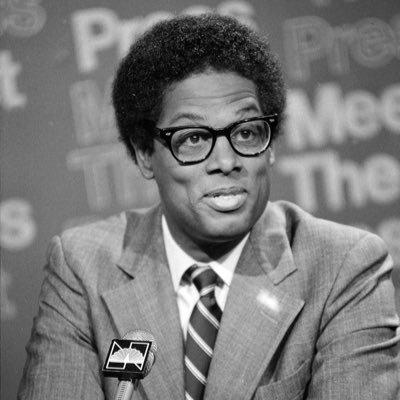
"It is fascinating to see how some people — in both politics and the media — can depict their own narrow self-interest as a holy crusade for the greater good of society. The ability of the human mind to rationalize is one of the wonders of the world."
— Thomas Sowell
еmоtiоnа𐍘𐍘у dеаf retweeted

«Было бы смешно, если бы не было так грустно»
Со стороны «агрессора» России:
Владимир Мединский - уроженец города Смела📍 Черкасская область 🇺🇦
Кирилл Дмитриев - уроженец города Киев📍🇺🇦
Владимир Алексеев - уроженец Винницы📍 🇺🇦
Представители «Незалежной» «чистокровные» украинцы:
Давид Арахамия - мегрел, уроженец города Сочи.📍🇷🇺
Рустем Умеров - узбек, уроженец Самарканда📍🇺🇿
Вова Зеленский - еврей
«Памʼятай чужинець, тут господар українець»😂
Тут прям как начало анекдота - "Встретились как-то раз мегрел, узбек и монгольский еврей и как начали украинцев защищать…"

еmоtiоnа𐍘𐍘у dеаf retweeted

This is the new White House Chief of Staff @StephenM, who said “torture is a celebration of life and human dignity” and called for cutting off the fingers of Iraqi officials.
That’s not something you’d expect from someone raised on the New Testament.
Oh wait…
еmоtiоnа𐍘𐍘у dеаf retweeted

Randy Fine flew to Israel with Ron DeSantis and Mike Caruso, (who was recently charged with molesting his own grandson), to sign an anti-speech bill making criticism of Israel illegal in the state of Florida. They gifted Netanyahu the pen. Here are examples from the bill:


еmоtiоnа𐍘𐍘у dеаf retweeted

Capitalism is perhaps the most misunderstood economic system in history, largely because it is routinely blamed for the consequences of violating its own principles.
Capitalism means private property, individual rights, voluntary trade, and a government limited to protecting those rights. It is a system in which individuals are free to produce, compete, trade, and prosper without requiring political permission or favoritism.
Cronyism, by contrast, means government granting economic privileges through subsidies, bailouts, tariffs, regulations designed to protect favored businesses, and other forms of political favoritism.
Socialism, communism, fascism, theocracy, absolute monarchy, feudalism, mercantilism, corporatism, and cronyism differ in their doctrines, methods, and objectives. Yet all have permitted political authority or privileged groups to override individual economic freedom.
The fundamental distinction is between voluntary exchange and political coercion.
Under capitalism, economic success depends on creating value that others voluntarily choose to purchase. Under cronyism, political influence can substitute for earning that success through trade.
This brings us to the mixed economy, where elements of capitalism coexist with government intervention, redistribution, regulation, and political favoritism.
When intervention produces unintended consequences, critics routinely attribute those failures to capitalism simply because they occurred in an economy containing private businesses and markets.
That is a fundamental error of causation.
The existence of private businesses does not make every government policy capitalist. Nor does the existence of wealthy businessmen make political favoritism a product of free markets.
A businessman who earns a fortune through voluntary trade and one who obtains privileges through political coercion are operating on fundamentally different principles.
Pure laissez-faire capitalism has never been fully implemented. Yet to the extent economic freedom has existed, it has demonstrated its extraordinary capacity to create wealth, increase productivity, encourage innovation, and raise living standards.
And here lies the great irony.
The remaining economic freedom continues to generate much of the wealth that makes government intervention and redistribution possible, while helping cushion society against their destructive consequences.
Critics then demand further intervention to remedy problems caused or aggravated by previous interventions, perpetuating a cycle in which political power expands while capitalism receives the blame.
Before blaming capitalism for any economic problem, establish whether that problem arose from voluntary exchange or the coercive exercise of political power.
You cannot reasonably condemn a system for the consequences of violating its principles while ignoring the benefits produced when those principles are respected.
🧐

From the opening to my article “A Civil Law to Common Law Dictionary,” La. L. Rev 54, no. 5 (May 1994): 1265–1305 (now a book, Gregory W. Rome & Stephan Kinsella, Louisiana Civil Law Dictionary (Quid Pro Books, 2011))"
"Alone in the common-law ocean of these United States, Louisiana is an island of civil law. Louisiana’s civil law is embodied in the Louisiana Civil Code, much of the text of which was derived in part from the Code of Napoleon of 1804. American common-law lawyers often encounter Louisiana’s civilian terms and concepts when dealing with lawsuits or transactions in Louisiana. No doubt they (and even Louisiana lawyers) are sometimes confused. How many common-law lawyers know of naked owners, usufructs, virile portions, vulgar substitutions, synallagmatic contracts, mystic testaments, antichresis, whimsical conditions, or lesion beyond moiety? Even many Louisiana-trained attorneys are unfamiliar with terms such as amicable compounder, jactitation, mutuum, and commodatum. Thus a dictionary of these and other civil law terms might come in handy to some practitioners."
The dictionary also helpfully defines coonass and bateau.
stephankinsella.com/2025/02/…

24