Your health and diet Doctor 💊🏥

Joined October 2025
Which procedure is this ..?
7
6
45
9,506
Doctor Med retweeted
Urea
Which of the following does not cross blood-brain barrier? A) Insulin B) Urea C) Testosterone D) Glucose
1
1
2
38
Richard Asher's "7 Medical Sins" published in The Lancet back in 1949 remain an incredible masterclass in clinical humility. It is fascinating how timeless these pitfalls are—they serve as a brilliant diagnostic checklist not just for our patients, but for our own clinical habits. Out of the seven, "chasing zebras while missing common problems" (Love of the rare) and "blindly following protocols" (Common stupidity) are constant temptations in busy hospital wards, especially when a dramatic or unusual case catches everyone's attention. Which of these do you think is the easiest one for modern clinicians to slip into today?
7 MEDICAL SINS In 1949, physician Richard Asher listed 7 medical sins. They still hold up:- 1. Obscurity - hiding behind jargon instead of speaking clearly. 2. Cruelty - doing unnecessary procedures. 3. Bad manners - forgetting basic courtesy. 4. Overspecialization - treating the organ, not the person. 5. Love of the rare - chasing zebras while missing common problems. 6. Common stupidity - blindly following protocols without thinking. 7. Laziness - not looking deeper or double-checking. Still true 75 years later.
1
2
170
Based on the clinical presentation provided, the most likely diagnosis is Grover's disease (also known as transient acantholytic dermatosis or persistent acantholytic dermatosis). Key Diagnostic Clues: Clinical Presentation: Pruritic, papular eruptions that are notoriously heat-exacerbated (often triggered by sweating, hot showers, or high ambient temperatures). Distribution: Typically affects the trunk (such as the chest, rib cage, and back) and extremities (like the posterior and bilateral thighs). Diagnostic Pitfall: The small, firm papules are frequently mistaken clinically for viral warts (verrucae), leading to ineffective treatments like cryotherapy or topical steroids (such as triamcinolone) which fail to resolve the underlying acantholytic process.
A woman in her 40s presented w/ a chronic, relapsing, heat-exacerbated pruritic papular eruption involving the posterior thighs, B/L thighs, & L rib cage. Lesions persisted despite topical triamcinolone & multiple sessions of cryotherapy for presumed verrucae. Pruritus was intermittent (4/10), w/ lesions impairing grooming & clothing tolerance. What’s the diagnosis❔
1
130
The correct answer is C. Impaired immune control may make viral clearance more difficult. Why This Occurs: Inadequate Immune Response: Immunocompromised individuals (such as those with advanced HIV, patients on immunosuppressive therapy post-transplant, or those undergoing chemotherapy) have weakened or depleted immune defenses—particularly T-cell-mediated immunity and neutralizing antibody production. Failure of Viral Clearance: Because the immune system cannot effectively mount a robust enough response to eradicate the virus, the pathogen persists in tissues and continues to replicate over extended periods, frequently leading to chronic infections or prolonged viral shedding.
Why can some immunocompromised people experience prolonged viral infections? A. Their viruses cannot replicate B. They never encounter pathogens C. Impaired immune control may make viral clearance more difficult
1
92
Based on the clinical appearance, the diagnosis is Rhinophyma (an advanced phymatous subtype of Rosacea). Key Features Observed: Nasal Hypertrophy & Lobulation: Bulbous, nodular enlargement of the nasal tissue, particularly involving the lower third and nasal tip. Pilus Expansion: Prominent, dilated follicular pores (sebaceous hyperplasia). Erythema & Telangiectasias: Persistent central facial redness and superficial vascular ectasia extending across the nose and cheeks.
🚨🚨🚨و انت ماشي في الراوند، لقيت المريض هذه. من اول نظرة ايش التشخيص اللي شايفه؟؟؟
73
The correct answer is A. First Expiry, First Out. What is FEFO? FEFO (First Expiry, First Out) is an inventory management and logistics principle where products with the earliest expiration dates are selected for sale, distribution, or use first—regardless of when they actually arrived at the warehouse or facility. Key Applications: Pharmaceuticals & Healthcare: Crucial in hospital pharmacies, medical stores, and drug distribution to ensure medications and vaccines are dispensed before reaching their expiration dates, preventing toxicity or loss of therapeutic efficacy. Perishable Goods: Widely used in the food and beverage industry (e.g., dairy, meats, packaged foods) to minimize spoilage and waste.
🚨 What does FEFO mean in inventory management? A. First Expiry, First Out B. First Entry, First Order C. Final Expiry, Final Out D. First Evaluation, First Observation
1
111
The first and most critical action is to check the patient's blood glucose level (if a glucometer is immediately available) and treat for hypoglycemia (low blood sugar) right away without waiting for the reading if hypoglycemia is suspected. Emergency Management Steps: Administer Fast-Acting Carbohydrates (The Rule of 15): If the patient is conscious, alert, and able to swallow safely, give 15 to 20 grams of fast-acting simple carbohydrates immediately. Examples: 3 to 4 glucose tablets, half a cup (120 ml) of fruit juice or regular (non-diet) soda, 1 tablespoon of sugar or honey. Recheck and Repeat: Wait 15 minutes and recheck the blood glucose level. If it remains low (< 70 mg/dL or 3.9 mmol/dL), repeat the dose of fast-acting carbs. Follow Up with Complex Carbs: Once blood glucose returns to normal range and symptoms resolve, provide a small snack containing complex carbohydrates and protein (e.g., crackers with peanut butter or cheese) if their next meal is more than an hour away, to prevent a rebound drop.
A diabetic patient is sweating, confused, and trembling. What is the first action?
65
This radiological finding shows an ingested/impacted foreign body in the upper digestive tract (esophagus / hypopharynx), specifically a removable partial denture. Key Findings: Radiopaque Metallic Clasp & Acrylic Plate: The anteroposterior (AP) and lateral neck X-rays show a dense, irregularly shaped, radiopaque metallic framework with characteristic clasps lodged at the level of the lower cervical spine / hypopharynx / upper esophagus. Anatomical Location: It is impinging on the upper esophageal sphincter (cricopharyngeus muscle area).
A 52-year-old man presents to the emergency department with throat pain, dysphagia, odynophagia, and drooling for several hours. AP and lateral soft-tissue neck radiographs demonstrate a metallic framework with lateral clasps anterior to the lower cervical vertebrae, at the level of the hypopharynx or cervical esophagus. What is the most likely diagnosis?
67
The correct answer is A) Heparin. Pathophysiology: Heparin-Induced Thrombocytopenia (HIT) This presentation is the classic description of Heparin-Induced Thrombocytopenia (HIT Type II), a life-threatening, immune-mediated adverse reaction: Platelet Drop (Thrombocytopenia): Autoantibodies (IgG) form against the complex of Heparin and Platelet Factor 4 (PF4). These immune complexes bind to Fc receptors (Fc\gamma RIIa) on platelets, causing widespread platelet activation, aggregation, and consumption. New Blood Clot (Thrombosis): Platelet activation triggers a massive release of microparticles and procoagulant factors, leading to a severe hypercoagulable state (HIT with Thrombosis, or HITT). Counterintuitively, this causes new arterial or venous blood clots (e.g., DVT, PE, stroke, limb ischemia) despite the drop in platelet count.
A patient develops a new blood clot and a significant platelet count drop after receiving an anticoagulant. Which drug is the likely trigger? A) Heparin B) Aspirin C) Warfarin D) Clopidogrel
63
✨ Answer: Interstitial Cystitis (Bladder Pain Syndrome) Key Clinical Features Relief Upon Voiding: This is the classic hallmark feature that helps distinguish Interstitial Cystitis (IC/BPS) from standard bacterial cystitis or lower urinary tract infections (UTIs). Patients typically feel worsening pressure/pain as the bladder fills, which is characteristically relieved or diminished after emptying the bladder. Frequency & Urgency: Patients often experience marked urinary frequency (sometimes up to 20+ times a day) and a severe, sudden urge to void, accompanied by negative urine cultures.
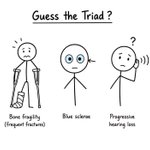
✨ TRIAD OF THE DAY ✨ • Urinary frequency • Urinary urgency • Suprapubic pain relieved by voiding What is the most likely diagnosis? ✨✨
1
4
219
Diagnosis Emphysematous Cholecystitis (complicated by perforation and localized biliary peritonitis) The Culprits: Gas-Forming Organisms The hallmark feature of this condition—gas within the gallbladder wall and lumen—is caused by gas-forming (aerogenic) pathogens thriving in an ischemic, glucose-rich environment. The primary organisms responsible for turning this into a critical surgical emergency include: Escherichia coli (the most common aerogenic pathogen isolated) Klebsiella pneumoniae Clostridium species (such as Clostridium perfringens, notorious for rapid gas production and tissue necrosis) Enterobacter and Pseudomonas species
A 68-year-old man with diabetes arrives with severe right upper abdominal pain, fever, and falling blood pressure. CT reveals gas within the gallbladder wall. During emergency laparoscopy, the surgeon discovers a blackened gallbladder with a perforation leaking bile into the abdomen. What is the diagnosis—and which organisms can turn this infection into a race against time?
86
Vitamin D supplementation is recommended for exclusively breastfed infants primarily for the following physiological reasons: 1. Low Vitamin D Content in Human Breast Milk While breast milk provides complete and optimal nutrition for newborns, it naturally contains very low levels of Vitamin D (typically ranging from 20 to 80 IU per liter). This falls far short of an infant's daily requirement, which is 400 IU per day. 2. Limited Sun Exposure Infants can synthesize Vitamin D naturally when their skin is exposed to ultraviolet B (UVB) sunlight. However, routine direct sun exposure is strongly discouraged for infants under 6 months of age due to the high risk of sunburn, skin damage, and long-term skin cancer risk. 3. Prevention of Rickets and Hypocalcemia Without sufficient Vitamin D, an infant's body cannot effectively absorb calcium and phosphorus from the gastrointestinal tract. This can lead to: Nutritional Rickets: A deficiency disease characterized by impaired bone mineralization, soft or weak bones, delayed growth, and skeletal deformities such as bowed legs, a "rachitic rosary" along the ribs, and delayed closure of the fontanelles. Hypocalcemia: Abnormally low blood calcium levels, which can manifest as irritability, muscle twitching, or neonatal seizures.
Why is Vitamin D supplementation recommended in exclusively breastfed infants?
64
The substance that forms the stomach's main protective barrier is mucin (specifically gel-forming mucins secreted by surface mucous cells, primarily MUC5AC and MUC6), which works hand-in-hand with secreted bicarbonate to create a crucial physicochemical mucous-bicarbonate barrier. Key Components of the Gastric Mucosal Barrier: The Mucus Layer: A viscoelastic gel layer composed of heavily glycosylated proteins (mucins) that traps bicarbonate secreted by epithelial cells. This creates a pH gradient, maintaining a neutral to alkaline pH (\sim 6 to 7) right at the cell surface while the gastric lumen remains highly acidic (pH \sim 1 to 2). Surface Epithelial Bicarbonate Secretion: Actively secreted HCO_3^- neutralizes hydrogen ions diffusing inward, preventing acid-peptic injury to the mucosa. Tight Junctions & Rapid Cell Turnover: Form an impermeable barrier between epithelial cells, backed by high physiological regeneration rates (prostaglandin-mediated) to repair minor surface damage rapidly.
Which substance forms the stomach's main protective mucus barrier?
70
Based on the clinical presentation and the image provided in the video, here is the diagnosis and breakdown: Correct Answer: B) Thoracic aortic aneurysm Clinical Breakdown: Presentation & Image: The image demonstrates a massive, pulsatile anterior chest wall swelling resulting from an abnormal, localized dilatation of the thoracic aorta (specifically involving the ascending aorta or aortic arch) that has eroded through the chest wall structures. Pathophysiology: Chronic atherosclerotic changes, weakening of the medial layer of the aortic wall, and long-standing hypertension lead to progressive pathological dilatation of the vessel. When it reaches a massive size like this, it presents as a pulsatile mass and carries an extreme risk of rupture.
Spot the diagnosis ❓
74
Here is the breakdown of the remaining warning signs, completing the 7 common heart attack symptoms that people frequently mistake for acidity or indigestion: 2. Upper Abdominal or "Gas" Pain Pain or a deep, burning discomfort localized in the upper pit of the stomach (epigastrium) is easily confused with severe acid reflux, gastritis, or indigestion. Unlike typical acidity, heart-related abdominal pain often feels heavy, squeezing, or aching rather than sharp or gnawing. 3. Nausea, Indigestion, or Vomiting Women, older adults, and individuals with diabetes are particularly prone to presenting with nausea, severe indigestion, or vomiting during an ischemic cardiac event. Because these symptoms mirror acute gastroenteritis or food poisoning, they are frequently ignored until more severe complications arise. 4. Radiation of Pain to the Jaw, Neck, or Back Heart attack pain does not always remain in the chest. Ischemic pain signals can travel along shared neural pathways, radiating up into the lower jaw, neck, throat, shoulders, or upper back. Patients often mistake jaw tightness for dental issues or back discomfort for muscle strain. 5. Unexplained Sweating ("Cold Sweats") Sudden, profuse sweating without physical exertion or an warm environment—especially when accompanied by mild chest or epigastrium discomfort—is a hallmark sign of sympathetic nervous system activation during cardiac stress. Acidity rarely, if ever, causes sudden cold sweats. 6. Shortness of Breath (Dyspnea) Feeling winded, breathless, or unable to catch your breath while resting or performing minimal activity can occur with or without chest pain. This occurs when the pumping function of the heart is compromised, leading to transient pulmonary congestion.
HEART ATTACK: 7 WARNING SIGNS PEOPLE OFTEN MISTAKE FOR ACIDITY A heart attack doesn't always look like it does in movies. Some symptoms are subtle. Some come and go. And waiting too long can be dangerous. Here are 7 warning signs you should know. 1. CHEST DISCOMFORT
67
To determine the correct diagnosis, we need to check her Blood Pressure reading (which seems to have been omitted or cut off at the end of your question, e.g., "Below is her BP..."). However, based on standard clinical practice and her clinical presentation, we can evaluate the options: Key Clinical Assessment Presentation: Occipital headache, insomnia, and dizziness after stopping antihypertensive medication for 2 weeks. Symptoms Analysis: These are non-specific, mild-to-moderate symptoms commonly associated with severely elevated blood pressure. Crucially, there are no signs of acute, progressive end-organ damage described (e.g., focal neurological deficits, acute chest pain, dyspnea, acute visual loss, or altered mental status).
A 50 year old woman, a know hypertensive patient for 10 years, presented with occipital headache, insomnia and dizziness. She did not take her medications for 2 weeks m Below is her BP What is your diagnosis? a) Severe Hypertension b) Hypertensive urgency c) Hypertensive emergency d) Stroke
61
It is a common scenario, but stopping blood pressure medication just because your reading is normal today can be very risky. Why Normal BP Can Be Deceiving Control, Not a Cure: High blood pressure (hypertension) is usually a long-term condition managed by treatment, not cured by it. A normal blood pressure reading simply means the medication is working as intended. The "Silent" Nature of High BP: Hypertension rarely causes noticeable symptoms until it reaches dangerous levels. Feeling healthy or having normal readings on a home monitor does not mean the underlying condition has disappeared. The Rebound Risk: Abruptly stopping blood pressure medication can lead to a sudden spike in blood pressure (rebound hypertension), significantly increasing the risk of severe complications like strokes, heart attacks, or kidney damage.
The blood pressure trap Your blood pressure is normal today. Does that mean you can stop taking your BP medication? Many people mistake controlled blood pressure for a permanent cure. Have you ever stopped a medicine because you started feeling better? What happened?
1
2
164
The correct answer is A. Leukemia. Key Information Clinical Triad: The presentation of recurrent infections (due to neutropenia), pallor/fatigue (due to anemia), and easy bruising/bleeding (due to thrombocytopenia) reflects bone marrow failure caused by pancytopenia. Diagnostic Hallmark: The presence of blasts (immature blood cell precursors) replacing normal hemopoiesis in the bone marrow is the definitive finding for acute leukemia. In children, Acute Lymphoblastic Leukemia (ALL) is the most common subtype.
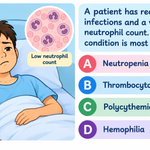
A child develops recurrent infections, pallor, and easy bruising. Blood tests show blasts in the bone marrow. What should be suspected? A. Leukemia B. Iron deficiency C. Hemophilia D. Sickle cell trait
1
1
79
The clinical triad of Fever + Abdominal pain + Relative bradycardia (Faget sign) is classic for Typhoid Fever (Enteric Fever), caused primarily by Salmonella enterica serovar Typhi (or Salmonella Paratyphi).
#USMLE Triad of the day: Fever + Abdominal pain + Relative Bradycardia ⬇️⬇️⬇️ ❔❔❔
1
1
1
104
Based on the clinical presentation and endosopic findings, the patient has Candida esophagitis (Esophageal Candidiasis). Diagnosis & Pathophysiology Clinical Presentation: Painful swallowing (odynophagia), retrosternal burning/chest pain, white plaques, and oral thrush in an adult with significant constitutional symptoms (unintentional 8 kg weight loss) strongly point to an opportunistic fungal infection. Causative Organism: Candida albicans (a dimorphic yeast forming pseudohyphae and budding yeast forms). Endoscopic Hallmark: Confluent, raised, cottage-cheese-like white/yellow pseudomembranous plaques adherent to an underlying erythematous, friable, and easily bleeding mucosa.
🚨 “Doctor… even swallowing water feels like fire.” A 42-year-old man presents with progressive painful swallowing and retrosternal burning. Over the past week, he has barely eaten. He has lost 8 kg over three months and reports recurrent oral thrush. Upper GI endoscopy reveals the striking appearance shown above: extensive, confluent white plaques covering friable, inflamed esophageal mucosa, with narrowing of the lumen. What is your diagnosis—and which underlying condition must you urgently investigate?
80