

Pro Trader, Inventor (3 patents), Author (3 books), Entrepreneur (3 companies) and Engineer (3 decades). 55 and jacked.
Chicago, IL
Joined May 2022
- Tweets7.1K
- Following526
- Followers1.8K
- Likes5K







QuantNerd retweeted

The Democrats have solved the inflation problem in 24 hours:
Everyone is poor now.

QuantNerd retweeted

Hey, Claude: "I asked an earlier Claude to Remove the Squid from All Quiet on the Western Front. Now you can make movies and such. I need you to show how far you have come" & I pasted in the tweet below
There is some clever stuff, models have a real sense of humor at this point


QuantNerd retweeted

I promise you’re not even slightly prepared for how INSANE this story is. Not only has the town they’re in not had a single COVID case in months but it was originally founded as a commie bar for lesbians where paying was optional. Eventually almost no one paid the cover fee (predictable) and 2 of the original owners left. The full time mask requirement left them almost no business. One of the owners left to go to CLOWN COLLEGE.
The drama here is that they’re making masks optional for ONE NIGHT OF THE WEEK!
In a town with NO COVID cases….
I mean it would be nuts if there was COVID too but how are they so delusional that they think they need to mask with zero cases!?!
The one remaining owner is living in her car because the commie business model is failing so terribly. She can’t pay herself or her employees.
Her detractors, who have been bar patrons, have been attacking her as well for sometimes forgetting to use alt text on social media posts, which they call ableist and dangerous. 😂
Some responses she got to ONE night where masking would be optional:
"PEOPLE LIKE YOU KILL DISABLED PEOPLE"
"YOU’RE COMPLICIT IN A MASS DISABLING EVENT"
"I HOPE YOUR VENUE GETS FIREBOMBED"
So… 😂😂😂 Next she brings in a mediator to hear out the crazy people. The meeting goes off the rails almost immediately because the mediator (who’s a therapist) is White. They then said she was a mandatory reporter who could force hospitalize them. They said the mediator made them feel "wildly unsafe."
The owner is 50k in debt on the business loan and living in her car. When she brought this up they said she was spilling White Tears for sympathy which they found "incredibly racist."
The meeting went on like this for nearly 4 hours.
Long story short: these leftists are literally insane. So insane that clown college seems like the most intelligent move in this deranged story. 🤡
You can never let them have any power.

A lesbian bar in Greenfield eased its stringent mask mandate, a decision that has splintered the queer community in the city and beyond. trib.al/FyZjBWs

QuantNerd retweeted

New from Ramp data: the latest threat to the AI trade. AI companies' revenues are heavily dependent on a small set of customers. 80% of OpenAI and Anthropic's enterprise revenues come from 1% of their customers, and it's not getting better.
This is a level of concentration risk unseen in any other software category we track. The companies in the top 1% skew heavily toward the tech sector and AI products and services.
What happens in a market correction? All these companies are highly correlated, and an increasing share of our economy is invested in them. Especially as we approach blockbuster IPOs for OpenAI and Anthropic.


QuantNerd retweeted

Do the Germans have a word for people like ‘Paul Graham’ and ‘Richard Hanania’ who are smart, but nowhere near as smart as they think they are, and who then fall victim to a predictable sort of hubris which reveals their cravenness and mediocrity in a humiliating way?
QuantNerd retweeted
"cost of electricity + 1% is the right thing to say for effect. Do your quant magic and calculate the token cost."
Yes, let's do that! Because I get the feeling that commenters here are conflating the fact that there's a "heterogeneity of tokens" (Warsh's phrasing, not mine) with my claim of token commoditization.
Let's start with commodity token pricing:
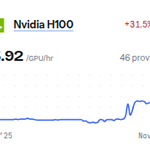
* H100 draws ~700W. At $.08/kWh that works out to $.07/hour
* Spot rental is ~$2.45/hour currently. So electricity to run your own costs 3% of market rate of compute today
* A $30k GPU depreciated over 3 years is $1.15/hour
* A 70B-class model on one H100 does ~2-5M tokens/hour. Electrical cost is ~$.02/M tokens. Full cost of a 70B open-weight model on commodity hardware with depreciation is $.30-.40/M. Current API pricing for that is ~.60-.90/M (commodity hosting, not frontier)
Let's compare that to frontier pricing, because there's a steep markup that HAS to be protected at all costs. Haiku is $1 in/ $5 out. Fable is $10 / $50, around 25x commodity blended or ~1000x the cost of electricity.
If you look at Opus 4/4.1, it was $15/$75, now Opus 5 is $5/$25. 67% price cut across one generation with capability up. In fact, you can get similar capability with Sonnet 5 for $2/M token, a roughly 90% drop.
So you don't have to take my word for it. Just look at Anthropic's own price sheet (attached) to see the live demonstration.
But notice that Anthropic doesn't keep older models around because that would cannibalize their own business. And with that, you see why there should be (and probably is) real concern within frontier labs about open source substitutes.
You could stop here and think, well, that's fine because the frontier labs will still make money, even if less of their revenue comes from frontier models. Which is true due to Jevon's paradox - demand is expanding to consume supply.
But if you don't stop here, it gets genuinely scary.
That's because demand is exploding on the wrong (eg: cheap) tiers.
The best frontier models are showing sluggish revenue growth (Fable 5 accounts for just 11% of Anthropic corporate spend on Ramp), ergo: buyers are increasingly satisfied with non-frontier models because "older models meet most business needs" (Accel).
And worse yet, even if token prices collapse, it will take years for demand to catch up with the oversupply coming due to data center buildout.
On top of that, Increasingly capable edge models (such as those that run on Spark, Mac Minis or even a pair of 3090s) could soften demand as well.
What happens when it becomes evident that there is more supply being built and demand is years away? Nobody will want to lend money to build more data centers.
2027-2028 is a reasonable estimate for when this should happen but I would not be in the least bit surprised if Anthropic has figured out something not yet widely understood. All it could take to trigger an AI capex collapse is a single innovation.
tl;dr: Frontier tokens won't go to zero (+ electricity) because frontier markup IS the business model. Labs retire trailing models rather than sell them at cost. Commoditization pressure comes from open-weight models on rented hardware, and this model is going to dominate the token market, resulting in a AI Capex crash.


QuantNerd retweeted

Several years ago, @paulg made such an assertion on here, and we tried to have a serious discussion about the fact that the visa programs he favors aren’t principally mechanisms for identifying extraordinary talent, but a convenient tool that allows employers to recruit foreigners whose need for immigration benefits gives employers leverage over the price of their labor, thereby interfering with the operation of the very “meritocracy” he’s trying to defend.
The dirty little secret of early-stage startups (that Paul was a part of funding during his Y Combinator days), especially the immigrant-founded ones, is that they often can’t afford to hire the best engineers because those engineers go to work for the FAANG companies, which pay higher salaries than early-stage startups can afford. So they rely on visas because foreign workers may be willing to accept lower wages in exchange for the immigration benefits attached to the job. There’s also a noticeable tendency for immigrant founders to hire their own because of commonalities of culture and language, so in-group preferences can keep Americans out of jobs at their startups. Google “Forbes The Russia House” to understand this dynamic.
And the FAANG companies are interested in a compliant workforce that remains loyal to them. What keeps them up at night is the prospect of a competitor offering a better financial package to poach their engineers. See the Apple, Google, Intel, and Adobe class-action settlement over employee no-poaching agreements. The H-1B becomes a useful tool in preventing this because moving to another company on an H-1B involves immigration paperwork and creates additional risks and friction, which means a lot of H-1B workers won’t move to another company to seek a better financial offer.
No matter how much counterevidence we provided to Paul (60 Minutes investigations, Apple and Meta’s DOJ settlements, stagnant STEM wages, etc.), his answer, in essence, was that if importing a handful of exceptional geniuses also meant importing a much larger number of ordinary workers who would displace Americans, that was a price worth paying. He eventually blocked us.
There is a useful analogy in M. Night Shyamalan’s movie ‘Unbreakable’. Samuel L. Jackson’s character deliberately orchestrates catastrophic events knowing that people will die, because he’s searching for the exceptional person who can survive them and thereby prove that person possesses superhuman abilities. When Bruce Willis’ character, who possesses those abilities and was the sole survivor of a horrific train accident, realizes that Jackson deliberately caused the accident, he’s horrified and disgusted by what he’s done. Jackson’s character nevertheless continues to defend his actions as necessary because they ultimately led him to discover Willis’ superhuman abilities.
That is essentially @paulg’s position. The exceptional immigrant is worth the price, even if it comes at the cost of displacing American workers by bringing in much larger numbers of ordinary foreign workers, along with the permanent demographic changes that result from such a policy. No argument about who bears those costs, or about the basic principle that a sovereign nation has the right to determine who enters its labor market and becomes a member of its society, seems capable of changing his mind, not even when someone like @PalmerLuckey makes it.
China is allegedly our arch-nemesis in the AI and technology competition, and Paul’s solution is to fast-track green cards for every Chinese STEM graduate because he somehow believes this will prevent China from succeeding. He chooses to ignore the fact that we’ve been allowing Chinese students to come here for decades while continuing to confront concerns about IP theft and espionage, as well as numerous cases demonstrating that acquiring an American passport doesn’t necessarily erase a person’s ties or loyalties to China. The best thing policymakers can do is ignore people like him.

QuantNerd retweeted

So it turns out China was building a hydro electric facility by a glacier and all the construction caused a portion of the glacier to collapse, tumble down, and turn into a mudslide that killed like 2,500 Nepalese people.
But all you will hear about in the news is leftists claiming this was because of climate change


Readers added context they thought people might want to know
Scientific analysis shows the devastating August 2026 mudslide was triggered by a natural high-altitude rock avalanche and glacial collapse on Nepal's Langtang Lirung mountain, not by Chinese hydroelectric construction. nytimes.com/2026/08/27/wor… scientificamerican.com/article/why-gl…

QuantNerd retweeted

At midnight on February 6th, earlier this year, the doorbell to our apartment rang. The doorbell was followed by a pounding on the door. I answered the door and a security person in our building handed me his phone. It was my oldest daughter Eloise. She had found my 26-year-old daughter unconscious on the floor of her apartment and had called 911. The EMT team was already there, but they did not know what was wrong with Lucy or to which hospital they would take her.
I threw on some clothes and jumped in an Uber heading east toward Brooklyn. (Lucy lived alone in Williamsburg.) On the way, I learned that they were taking her to Elmhurst, a City trauma hospital in Queens. I arrived about five minutes after the ambulance to join Eloise, Lucy’s mom, and a friend, and waited to learn what was wrong.
After about 15 minutes, I asked a nurse where she was. I looked over his shoulder to his computer. Next to her name, it said “non-responsive.” I walked into the emergency room and wandered around looking for her until I found her unconscious on a gurney surrounded by several doctors and nurses.
By about 2:30am with the results from a CAT scan, Lucy’s doctors had determined that she had a massive brain hemorrhage and would need an emergency hemicraniectomy to release the pressure on her brain and remove the blood from the hemorrhage. I called our wonderful friend and family doctor Eddie Fisher and explained what was going on. He woke up Josh Bederson, Chairman of Neurosurgery at Mount Sinai, to find out more about Zach Hickman, the neurosurgeon on call that night. Dr. Bederson said Hickman was an excellent surgeon, which was comforting as we had no choice.
The surgery to save Lucy’s life began around 3:15am and finished around 5:30am. It was successful.
The following day, I joined Lucy in an ambulance while she was being transferred to Mount Sinai on Madison Avenue. Later that day, we determined from Lucy’s Oura ring that her hemorrhage had occurred around 9am, which meant that more than 19 hours had passed from the time of the hemorrhage to the completion of the surgery to release the pressure on her brain (I only wish @ouraring had an alert for this kind of a medical event. Imagine it could call a family member if the wearer doesn’t cancel the alert).
I later learned that the standard of care is not to do surgery to save a patient with a large brain bleed if more than five hours have passed since the hemorrhage. Even when the surgery is done, I was told that the likely outcome for the patient is a few months in a nursing home and death from pneumonia.
When I met Lucy’s doctors, I did my best to inspire them: “Let’s see what can be accomplished if we give her the best care possible and we invest unlimited resources to restore her to life.” And I promised that whatever we learned we would make available to everyone.
Dr. Chris Kellner, her neurosurgeon, and Dr. David Putrino, Director of Rehabilitation Innovation for the Mount Sinai Health System have led Lucy’s care team since that day. Words cannot describe the remarkable and compassionate care that she has received beginning with the EMT team and then from nurses, doctors, therapists, and the army of people who have worked to save her and return her to life. To this day, we have a daily Zoom where we discuss her progress and make adjustments to her care. While her care and oversight have been incredible, the learnings for the Mount Sinai team have also been elucidating and will assist in the care of many others.
Lucy began in a bad place. She was in a coma for several weeks and then awoke not being able to breathe on her own, unable to walk, see or speak.
Over the last six months, she has recovered her cognition – she understands everything including her circumstance – is able to walk a hundred or more steps at a time with assistance, is making progress with sounds, vowels and consonants and the beginnings of speech, but she remains unable to see.
Each day, she makes a little progress, and daily progress compounds. Every day I tell her that she just needs to make a little progress and it won’t be long before she is back.
We remain optimistic that Lucy will return to normal function. It will likely take years, but I believe it is only a matter of time, hard work, and technological progress, along with some, and perhaps a lot, of divine intervention.
Many people have been praying for Lucy and we are incredibly grateful for the prayers and remarkable support she has received. Lucy’s friends have been with her every day since the beginning, and their presence and friendship have saved her life and helped to rebuild and maintain her spirit. And on a very positive note, Lucy’s challenge has brought together our entire modern family who have all been incredibly devoted to her care and recovery.
Lucy's vision and other faculties may require some form of brain computer interface, work that is underway at Neuralink, Precision Neuroscience, Science, Synchron, Nudge, and other companies in the space.
If you are going to have a devastating brain injury, now is the best time in history for that to happen. We are living in a world when you can be confident that the blind will soon see again. We are going to do everything we can to help make that happen, including by assisting existing companies in the space.
With respect to our promise to make Lucy’s care available to others, we have made good progress. In May, a real estate colleague made me aware of a 93% vacant, brand new, 400,000 square foot Class A+ purpose-built biotech facility on West End Avenue between 65th and 66th Streets that missed the market and was available for sale. The Pershing Square Foundation acquired the building 60 days later.
We also put under contract an adjoining 130,000 square foot building at 320 West 66th Street that is currently being used by Saturday Night Live for studio space. The building has 35-foot ceilings with massive column-free spaces that can be converted into superb rehabilitation facilities. We will close on the SNL building in December.
We are also acquiring an adjoining vacant lot with additional air rights. With just the existing zoning rights, we can add a 150,000 square feet for a total of 680,000 square feet, a lab footprint larger than Rockefeller University, and that’s without including the potential for an upzoning that would allow for substantially more buildable area on the site’s 3.4 acres with spectacular views of the Hudson.
Our goal is to build the world’s greatest brain research, rehabilitation, recovery, human optimization, and longevity institute. We have named it The Ackman Oxman Institute or the AOI for lack of a better name, but also to reinforce the point that Neri and I and our family are all-in on the mission.
The AOI will be patient-centric. It will not be an academic research institute that produces lots of papers, a Nobel Prize winner or two, but little if any results for patients. We will be laser-focused on cures, treatments, devices, rehabilitation and exercise equipment, and targeted and basic research with a goal of massively accelerating the time from idea to innovation to production to helping a patient.
While the AOI will be a non-profit, it will have highly commercial instincts. The AOI will have its own venture funding and will work to develop innovations to create companies that we will seed, assist, and spinout to ensure technologies, treatments, techniques, and drugs get to patients as promptly as possible.
On one 3.4 acre campus in what is still the greatest city in the world, we will do neurosurgery, neuroscience, rehabilitation, nutrition, BCI and device development, human trials, hyperbaric oxygen treatments, and life extension programs, and we will mandate and incentivize collaboration among the teams with no silos, politics, bureaucracy, or any other constraint that is inconsistent with the mission.
Mount Sinai will be an important partner and deservedly so, but it won’t be our only hospital or medical school partner as we don’t believe any institution has a monopoly on the best ideas or the best talent. We don’t believe in exclusive relationships because that is not in the best interest of patients.
Five years ago, we considered launching a brain institute inspired by Neri’s mom who sadly died from Alzheimer’s. We couldn’t make the math work as the real estate was too expensive and we believed it would be too difficult to recruit the best talent from universities to our effort.
Since then, the real estate became available at a 70% discount, universities became a much less attractive place to work due to politics outweighing meritocracy, protests that disrupt learning, the curse of antisemitism, and a decline in funding. Fortunately, during the same time, I made sufficient personal economic progress to make the AOI possible.
The advance of AI in the last few years will also enable us to greatly accelerate our mission. AI still has a lot to learn about human intelligence and the brain, and the AOI should be at the forefront of the interplay between the brain and AI.
Today, I am making a public filing disclosing a gift from Neri and me of ~$400 million or 10,000,000 shares of Pershing Square Inc. (PS) to the AOI. It is very early days for Pershing Square so these shares are intended to anchor the long-term work of the AOI as the shares compound over time while generating what we expect will be a growing stream of quarterly dividends to fund the Institute.
We will also be announcing an additional gift of similar and potentially greater size which won’t be in the form of Pershing Square stock to provide the AOI with the short- and intermediate-term runway necessary to enable it to achieve its goal of becoming a self-sustaining institute, which reinvests all of its revenues, royalties, and the economic rewards of company formation to advance the fields of brain health and human longevity.
Neri and I have chosen to anchor the funding of the AOI to maintain vision alignment and limit the need for the organization to focus on fundraising. We expect the AOI to be the best-resourced brain, rehab, recovery, and longevity institute in the world.
We are grateful to have been able to form a board which includes Dean Kamen (our generation’s Thomas Edison), George Yancopoulus (CEO of Regeneron), James Rothman (Nobel Laureate), Bernardo Sabatini (neuroscientist), Chris Kellner (neurosurgeon), Olivia Flatto (CEO Pershing Square Foundation), Neri Oxman, and myself.
We have recently identified a CEO who we expect to announce by October along with other key hires, and are beginning searches for a Chief Scientific Officer, a Chief AI/Technology Officer, a Chief Operating Officer, a Chief Financial Officer, and other key leadership roles.
If you find what we are building compelling and want to be part of the leadership team that creates and builds the AOI from a standing start, please send an email to: [email protected] with a short note as to why you believe you can help. Please include your best three ideas for the AOI along with a summary of your background and your most important accomplishments.
We promise strict confidentiality to those expressing interest in working with us.
We have learned from Lucy that the brain can recover from even catastrophic injury. There is so much more work to be done as the mind is a terrible thing to waste.
For details from my Pershing Square SEC filing see:
sec.gov/Archives/edgar/data/…