

Economist at @WorldBankECA Chief Economist Office | @Mercatus Senior Affiliated Scholar | PhD @MasonEconomics | #Macedonian | Firms, AI, Data | Tweets are mine
Washington, DC, USA
Joined April 2009
- Tweets4K
- Following713
- Followers1.3K
- Likes3K




Filip Jolevski retweeted

I'm thrilled to be launching Econvitals today. It's been the main way in which I have been tracking and understanding the economy over the last several months. And I decided I might as well share it with all of you--for free.
Has a combo of website, email lists & social media.

Filip Jolevski retweeted

The AI infrastructure race is becoming a foreign policy question. And the United States may have more leverage over where the world’s computing capacity is built than we realize.
My latest here: rationalreasoning.substack.c…
Filip Jolevski retweeted

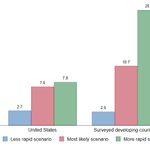
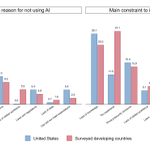
African firms seem to be adopting AI faster than firms in other middle-income countries (India, Jordan, Mexico, Thailand)

We have a new paper with @elwyndavies @DFDC11 @Gaurav__Nayyar @KathAStapleton and Shu Yu that looks at firm adoption of AI across 7 countries (India, Jordan, Kenya, Mexico, Nigeria, Thailand, and the U.S.). We present 10 stylized facts from the data we collected (1/12)

Filip Jolevski retweeted

How can countries in Europe and Central Asia make AI work for jobs and growth?
The @WorldBankGroup’s @FilipJole breaks down five areas for action from our latest #ECAUpdate ➡️ bit.ly/3VsOy5v
Filip Jolevski retweeted
New publication in #JEBO: Revealing Tax Evasion in Indonesia. We started this work with Chris Hoy & @obscary in 2022. Excited to see it finally out.
Our findings show a quarter of formal firms in Indonesia don't pay their full share of taxes, losing ~2% of GDP in revenue. Link ⬇️

Filip Jolevski retweeted

Assorted things I've been mulling over regarding agents in the economy:
• Companies are in some sense the original superintelligence. It's often the case that they can use their amortized cognitive surplus to advance their interests against those of certain consumers: relative to the optimization capacity of companies, consumers can be inattentive, underinformed, irrational, etc. (Think, say, of some of the classic insurance upsells at the end of a booking process, which is typically priced substantially above what a regular policy would cost.) Herbert Simon introduced the idea of bounded rationality, and firms often end up benefiting from it. Thanks to personal agents, we will probably get somewhat more rational in how we engage with companies.
• How exactly will outcomes change? Well, certain kinds of price discrimination will work less well (how do coupons work if every agent hunts fastidiously for them?), and certain kinds of customer cross-subsidy will change (today, people who forget to cancel subscriptions subsidize those who don't). Taken across the economy as a whole, I'm not sure what the incidence of all of this will be.
• In corporate strategy, people have long debated the relative importance of distribution and product quality. Perhaps you've made something better, but does anyone know about it? Won't people just continue to buy the ACME Corp Mousetraps? Personal agents will, I think, act as a kind of structural subsidy for product quality. How would markets look different if individuals always spent at least 10 hours researching their purchases? On the margin, focusing on making a product better is, I think, going to become a more effective strategy for companies. This is good!
• It true, a corollary is that information about product quality will become more important and impactful. Today, most people have very limited ability to aggregate and integrate such data, but agents will have insatiable thirst for such signals. (It's often said that data is becoming more valuable because it helps in the training of models. That's obviously true, but I think there's a secondary way in which it's more valuable simply as a complement to cheaper intelligence.)
• A big question is whether agents will increase superstar effects (rational agents all settle on the same product) or increase dispersion (because everyone has slightly different tastes and preferences, which agents are good at eliciting, finally overcoming the artificial clustering we've been subjected to).
• Many internet companies have monetized demand routing, which is in turn often predicated on short attention spans. "I'll click on the first thing I see." This has led to some amount of inefficiency, as companies try to propitiate capricious ranking algorithms and incur various placement fees. It's not all deadweight loss (willingness to pay is itself a kind of signal, which is valuable to buyers), but it's not great. How will the nature and value of this routing change in a world of personal agents? I don't know the answer, but I think that the effects might be pretty big.
• Much of what I'm writing hinges on the assumption that personal agents will be on the consumer's side. I suspect that that will be the winning strategy, but whether it's true, and what it means to be true, involves a lot of other questions.
Taken as a whole, the market is a massively parallelized, decentralized, and highly imperfect value attribution machine, and, taking stock of all of the effects, it seems to me that the quality point may well be the biggest: that agents will change the nature of the backpropagation such that the rewards for better products increase. Maybe this is too optimistic, but I suspect (and hope) that companies that make things that they're proud of will feel that the universe is a little more partisan in their favor.
Filip Jolevski retweeted

Growth in Europe and Central Asia is set to slow this year, then recover modestly through 2028. Resilience maintained, but at a cost. Read our latest Economic Update: worldbank.org/en/region/eca/…

Filip Jolevski retweeted
stocks: record highs
bonds: crisis of faith
oil: $100
bitcoin: $84k
economists: so there are a few crosscurrents
Starting in 30 minutes. Join us for the launch of the @WorldBankECA Fall Economic Update on AI to hear from our fantastic panel: @agarmora @IvailoIzvorski @andonians @luukasilves @WBG_Digital

TOMORROW: AI presents a real opportunity to offset declining productivity, boost jobs, and reinvigorate growth across Europe and Central Asia.
But is the region ready?
Join our upcoming panel discussion to find out:
📅 October 7
🕣 8:30AM ET
bit.ly/4y2HAS5 #ECAUpdate

Take a look at the latest ECA Economic Update: Making AI work. This was put together with the brilliant team of @IvailoIzvorski, @ivantorrewb, and others. Link to the report is in the comments
How can countries in Europe and Central Asia make AI work for jobs and growth?
The @WorldBankGroup’s @FilipJole breaks down five areas for action from our latest #ECAUpdate ⬇️
Filip Jolevski retweeted

How can countries in Europe and Central Asia make AI work for jobs and growth?
The @WorldBankGroup’s @FilipJole breaks down five areas for action from our latest #ECAUpdate ⬇️
Filip Jolevski retweeted

The @WorldBankGroup focuses on AI’s potential in developing & emerging economies. We are seeing opportunities across all regions - for growth, productivity, innovation, faster & better services to citizens. Below our assessment for the Europe and Central Asia region.
Are the developing economies of Europe and Central Asia capitalizing on AI’s potential to create jobs and boost growth?
The @WorldBankGroup’s new #ECAUpdate outlines how firms and governments across the region are adopting this tech and ways forward: bit.ly/4hFPWJo


Filip Jolevski retweeted
Are the developing economies of #Europe and #CentralAsia capitalizing on AI’s potential to create jobs and boost growth?
Our latest #ECAUpdate outlines how firms and governments across the region are adopting this tech and ways forward: bit.ly/3VsOy5v

Filip Jolevski retweeted
TOMORROW: AI presents a real opportunity to offset declining productivity, boost jobs, and reinvigorate growth across Europe and Central Asia.
But is the region ready?
Join our upcoming panel discussion to find out:
📅 October 7
🕣 8:30AM ET
bit.ly/4y2HAS5 #ECAUpdate
Filip Jolevski retweeted
Are the developing economies of Europe and Central Asia capitalizing on AI’s potential to create jobs and boost growth?
The @WorldBankGroup’s new #ECAUpdate outlines how firms and governments across the region are adopting this tech and ways forward: bit.ly/4hFPWJo
The fantastic @allisonreichel strikes again. Check out her piece on industrial policy and manufacturing: rationalreasoning.substack.c…
Filip Jolevski retweeted
AI presents a real opportunity to offset declining productivity, boost jobs, and reinvigorate growth across Europe and Central Asia. But is the region ready?
Join this @WorldBankECA panel discussion to find out:
📅 October 7
🕣 8:30AM ET
bit.ly/4y2HAS5 #ECAUpdate
