

A volte combattendo, di tanto in tanto incassando, talvolta rischiando, spesso tacendo...
Europe 🇪🇺 Italy 🇮🇹
Joined April 2013
- Tweets99.5K
- Following3K
- Followers5.3K
- Likes242K





Pinned Tweet
Sailing training ships #ItalianNavy
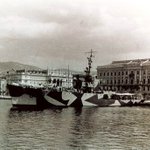
Sailing Ship #ITSAmerigoVespucci
Built 1931🇮🇹 Service 1931÷present
Schooner #ITSPalinuro
Built 1934🇫🇷 Service 1955÷present
Brig #ITSItalia
Built 1993🇮🇹 Service 2007÷present
@ItalianNavy 🇮🇹


Michele Florio retweeted

L'Unità di ricerca #Alliance ha aperto le sue porte in occasione delle Giornate FAI, offrendo ai partecipanti un’opportunità unica per scoprire da vicino il mondo della #RicercaScientifica in mare.
L’iniziativa ha rappresentato un momento di incontro e divulgazione, valorizzando il patrimonio marittimo e sensibilizzando il pubblico sull’importanza della conoscenza e della tutela dell’ambiente marino.
#IlGrandeEquipaggio


Michele Florio retweeted
Dall'Oceano Indiano alle coste dell'India. 🇮🇹🇮🇳
L'Unità combattente multi-missione #GiovanniDelleBandeNere è approdata a Mumbai per una nuova tappa della Campagna di proiezione operativa nel quadrante Indo-Pacifico.
Al suo arrivo, l'Unità ha ricevuto il caloroso benvenuto del Console Generale d'Italia a Mumbai, Dott. Walter Ferrara, che ha incontrato il Comandante e salutato l'equipaggio riunito in assemblea generale. Un momento di vicinanza e orgoglio nazionale che conferma il valore della cooperazione, del dialogo e della diplomazia navale della #MarinaMilitare in questo strategico quadrante marittimo. ⚓️🌏
#IlGrandeEquipaggio


Michele Florio retweeted
SMEREX 2026: l’esercitazione raccontata attraverso gli occhi di un Palombaro del Submarine Parachute Assistance Group (SPAG). ⚓️🌊
✍️Articolo completo su Substack ➡️
marinamilitare.substack.com/…

Michele Florio retweeted

●設計案協議中。
日本橋蛎殻町一丁目にオープンする新店舗の工事内容をサー・ダインコートと打ち合わせ中です。
Mk.Ⅰ 40.6cm主砲の代わりにMk.41VLS(Strike-Length)の搭載を予定しています(笑)
(店主)

Michele Florio retweeted

Une division franco-espagnole conduite par Julien Marie COSMAO-KERJULIEN commandant le PLUTON contre-attaque les Anglais victorieux la veille à Gibraltar et parvient le 22 octobre 1805 à reprendre les vaisseaux SANTA ANNA et NEPTUNO.
tableau de Jean-Baptiste Henri DURAND-BRAGER

Michele Florio retweeted

OTD in 2008: New Hampshire (SSN 778) moored at Portsmouth Naval Shipyard prior to commissioning
𝘓𝘪𝘷𝘦 𝘍𝘳𝘦𝘦 𝘰𝘳 𝘋𝘪𝘦

Michele Florio retweeted

The best American airplane of WW2 was the Grumman F6F Hellcat. It's the plane that killed the Zero's legend, and it's one most people forget about.
Everyone thinks of the P-51 Mustang. The Mustang was great. But no American fighter piled up a record like the Hellcat.
Back in 1941, the Navy's main carrier fighter was the F4F Wildcat. Rugged, reliable, and badly outclassed by the Zero. Wildcat pilots survived by teamwork and tactics, not by having the better airplane.
Grumman was already working on a replacement. And after the first months of the war, they did something smart. They talked to the pilots actually fighting the Zero and asked what they needed.
The answer was simple. More power. More speed. More climb. More armor. More ammunition.
So Grumman built the Hellcat around a massive 2,000-horsepower Pratt & Whitney engine. It was big, heavy, and tough. Armor plate protected the pilot. Self-sealing fuel tanks kept it from going up in flames. Six .50-caliber machine guns.
And here's a myth worth busting. You'll often hear that the Hellcat was designed by copying the Akutan Zero captured in Alaska. It wasn't. The Hellcat prototype first flew on June 26, 1942. American forces didn't even find the Akutan Zero until July. The tests on that Zero helped pilots learn how to fight it. The Hellcat was already in the air.
It reached the fleet in 1943 and entered combat that summer. Then Grumman's factory on Long Island started pumping them out at an incredible pace. Over 12,000 Hellcats were built in about two and a half years.
Japan's veteran pilots were dying off. The Hellcat was arriving in waves.
The peak came in June 1944, at the Battle of the Philippine Sea. Japan launched hundreds of planes at the American fleet. Hellcats met them far out from the carriers and shredded them.
One pilot, Alex Vraciu, shot down six Japanese dive bombers in about eight minutes. Commander David McCampbell shot down seven in one day. Pilots coming back to their carriers said it felt like an old-time turkey shoot. The name stuck: "the Great Marianas Turkey Shoot."
Four months later at Leyte Gulf, McCampbell and his wingman took on a formation of around 60 Japanese planes by themselves. McCampbell shot down nine in a single mission, still an American record. He finished the war as the Navy's top ace with 34 kills.
By the end of the war, Hellcats were credited with more than 5,000 enemy aircraft shot down. That's the most of any American fighter. Roughly three out of every four Navy air-to-air kills. Hellcat pilots claimed about 19 enemy planes for every Hellcat lost in aerial combat.
The Navy produced over 300 aces flying Hellcats, more than any other American plane.
It wasn't the fastest fighter in the war. It wasn't the prettiest. Pilots joked that Grumman didn't build planes, it ran an "iron works." But it was tough enough to bring its pilot home, and there were enough of them to fill every carrier deck in the Pacific.
The Zero was built for a short war. The Hellcat was built to win a long one.

Michele Florio retweeted
A U.S Marine inspects a Japanese-captured F6F-5 in Yokosuka in September 1945.

Michele Florio retweeted
Le lendemain de la bataille de Trafalgar, la flotte rescapée de la flotte combinée franco-espagnole se regroupe et rentre en rade de Cadix le 22 octobre 1805 sous le commandement du vice-amiral espagnol Federico GRAVINA (grièvement blessé).
Une partie des bâtiments avait rallié Cadix dès la nuit du 21 au 22 octobre, tandis que les navires les plus endommagés complètent leur rentrée au port dans la journée du 22 octobre.

Michele Florio retweeted

On this day in 1944, a Japanese plane deliberately flew into an Australian warship off the Philippines, killing dozens of men including her captain. It was a horrifying glimpse of a terrible new weapon about to be unleashed, the suicide attack. This is the ordeal of HMAS Australia.
By October 1944 Japan was losing the war and running out of ships, planes, and trained pilots. As the Americans and their allies closed in on the Philippines in the vast operation that became the Battle of Leyte Gulf, the Japanese grew increasingly desperate. HMAS Australia, a heavy cruiser of the Royal Australian Navy, was there in the thick of it, part of the enormous allied fleet supporting the invasion of Leyte.
On the morning of October 21, a Japanese aircraft came at the Australia. Instead of dropping its bomb and flying away, the plane bore in and smashed directly into the cruiser, striking her upper works in a deliberate crash that tore through the ship and sprayed burning fuel and wreckage across her decks. The blow was devastating. Around thirty of her crew were killed or later died of their wounds, among them her commanding officer, Captain Emile Dechaineux, who was mortally hurt. Many more were wounded. The battered Australia had to withdraw from the battle and sail away for lengthy repairs.
Historians still argue about exactly how to classify that attack, whether it was truly the first of its kind or an individual pilot's desperate act just days before the practice became official. Because within days, the Japanese would formally unleash the Kamikaze, the Divine Wind, organized units of pilots deliberately crashing bomb laden aircraft into allied ships, trading their lives to inflict damage no ordinary attack could. In the battles around Leyte, the kamikazes began in earnest, and they would torment the allied fleets for the rest of the war, sinking and damaging ship after ship and killing thousands of sailors.
What happened to HMAS Australia on this day in 1944 was a grim herald of that nightmare to come, one of the earliest times allied sailors watched an enemy pilot choose to turn his own aircraft into a guided weapon and die to kill them. The Australia survived, was repaired, and incredibly went on to be struck by kamikazes again and again in later battles, becoming one of the most suicide attacked ships of the war, her long agony beginning here, off the Philippines, on this day in 1944.

Michele Florio retweeted

'Allies resume the offensive'
This clip from a British newsreel from the Second World War documents the appalling conditions in which the Allies advanced on Rome in 1943.
Film: IWM S15 37
Michele Florio retweeted

La antiguas fragatas británicas HMS Montrose (F236) y HMS Northumberland (F238) esperan a ser desmanteladas en Aliağa, Turquía

Michele Florio retweeted
In the spring of 1940, the German army barely slept on its way into France. And the reason why is one of the strangest stories of the war.
In 1938, a Berlin pharmaceutical company called Temmler started selling a new pill called Pervitin. It was methamphetamine. You could buy it over the counter. It was marketed as a pick-me-up for tired workers and housewives, and it took off fast.
The German army noticed. A military physiologist named Otto Ranke tested it on medical students and found they could stay awake and keep working through exhaustion. He saw the potential right away. He also started taking it himself to get through his own long workdays.
When Germany invaded Poland in 1939, soldiers were already using it. A 22-year-old private named Heinrich Böll kept writing letters home asking his family to send him more. Decades later, he won the Nobel Prize for Literature.
Then came France. Between April and July 1940, the Wehrmacht and Luftwaffe were shipped around 35 million tablets. Troops nicknamed it "tank chocolate" and "pilot salt."
When the panzers punched through the Ardennes, some units kept moving for days with almost no sleep. The French had assumed nobody could get an armored force through that forest quickly. They were wrong, and France fell in about six weeks.
The cost showed up soon after. Reports of heart failure, collapse, and soldiers wrecked by exhaustion once the drug wore off started reaching Berlin. The Reich's health chief pushed to restrict it, and by 1941 it was legally controlled. The army kept using it anyway.
Germany wasn't alone.
Britain issued around 72 million Benzedrine tablets during the war, and American bomber crews used it on long missions.
Japan gave its own methamphetamine, Philopon, to pilots and factory workers grinding through endless shifts. After the surrender, huge military stockpiles leaked onto the civilian market, and Japan spent the next decade fighting one of the first national meth epidemics in the world.
World War II was fought with tanks, planes, and ships. But a lot of the men running them were running on speed.

Michele Florio retweeted
●本日入荷!
『丸スペシャル 軽巡川内型』
潮書房 '79年
5,500トン級軽巡の最終グループの三隻(川内、神通、那珂)を収録。
4本煙突に象徴されるクラシカルなスタイルが人気。
太平洋戦争で全艦戦没。
B5サイズ 68ページ
経年劣化ですが、程度良好。
オンラインストア販売中。

Destroyers Tender
AD #HMSTyne A194 (1941-1961)
Hecla Class
📷 March 1955 as Flagship for Commander in Chief Home Fleet #LaValletta #Malta @I_W_M
@RoyalNavy 🇬🇧

Michele Florio retweeted

Moja ocena typu Bretagne : siła ognia to największy atut tych okrętów, Włochy i Austro-Węgry miały w tym czasie tylko okręty z działami 305mm,340mm typu Bretagne robi różnicę. prędkość minimalnie spadła w porównaniu z poprzednimi, pancerz był podobny do poprzedników.


Michele Florio retweeted
The best Italian ship class of WW2 was the Littorio-class battleship. Fast, beautiful, and among the most powerful battleships in the world. And their story ends with one of them becoming the first warship ever sunk by a guided bomb.
In the 1930s, Mussolini wanted a navy that could rule the Mediterranean, the sea he liked to call "Mare Nostrum." Our Sea.
The naval treaties of the time capped new battleships at 35,000 tons. Italy officially followed the rules. In reality, the Littorios came out well over 40,000 tons.
What Italy got for cheating was impressive.
Nine 15-inch guns in three triple turrets, among the longest-range naval guns of the war. A top speed of 30 knots, as fast as many cruisers. A clever underwater protection system built around a hollow cylinder along each side of the hull, designed to absorb torpedo blasts. And sleek, elegant lines. A lot of people still consider them the best-looking battleships ever built.
Three were completed: Littorio, Vittorio Veneto, and Roma.
On paper, they were better than most of the battleships the British had in the Mediterranean. In practice, they spent the war fighting against problems that had nothing to do with design.
Italy had no aircraft carriers. Its ships had no radar until late in the war. And above all, Italy was always desperately short of fuel. Every sortie burned oil the country barely had.
Then came the punches.
November 1940. Taranto. British Swordfish biplanes from the carrier Illustrious attacked the Italian fleet at anchor at night. Littorio took three torpedoes and settled to the bottom of the harbor. She was raised, repaired, and back in service within months.
March 1941. Cape Matapan. Vittorio Veneto was hit by an aerial torpedo that left her dead in the water with thousands of tons of seawater pouring in. Her crew got her moving again, and she escaped. Three Italian heavy cruisers that stayed behind to help another ship were caught that night by British battleships and destroyed.
In 1942, Littorio fought at the Second Battle of Sirte against British cruisers and destroyers guarding a convoy to Malta. In 1943, American bombers caught the battleships in port and hit them again. They survived again.
Tough ships. A navy that rarely had the fuel to use them.
Then September 1943. Italy surrendered to the Allies. The fleet was ordered to sail to Malta and hand itself over.
On September 9, the three battleships sailed out together. The Germans, furious at Italy's betrayal, sent bombers after them. Those bombers carried something new: the Fritz X, a radio-controlled armor-piercing bomb that the bomb aimer could steer onto its target.
Roma was hit twice. The second bomb set off one of her forward magazines. A massive explosion tore the ship apart. She broke in two and sank. Around 1,400 men were killed, including the fleet commander, Admiral Carlo Bergamini.
Roma became the first warship ever sunk by a precision-guided weapon. The future of naval warfare arrived in a single afternoon.
The two surviving battleships reached Malta and surrendered. Littorio, by then renamed Italia, and Vittorio Veneto sat at anchor under the guns of the island they had been built to help conquer.
After the war, both were scrapped.
Roma's wreck sat lost on the bottom for nearly 70 years, until it was finally found in 2012 off Sardinia, about 3,000 feet down.
The finest ships Italy ever built, undone not by enemy battleships, but by empty fuel tanks, enemy aircraft, and a bomb from their former ally.

Michele Florio retweeted
●再入荷!
『第二次世界大戦海戦図解』HJ軍事選書
マーカス・フォークナー著 宮永忠将 訳
5,500円
第二次世界大戦の帰趨を決したのは連合国による大規模な海洋覇権の確立だった。
主要な海戦をカラー図解付きで網羅。海戦の様相が手に取る様に分かる。
著者マーカス・フォークナー博士はロンドン、キングスカレッジの戦争学上級講師。
第二次世界大戦史研究家。
海軍史研究の皆様への一冊です。
オンラインストア販売中。

Michele Florio retweeted

Buongiorno dal Parco Nazionale del Matese (CE)
#Carabinieri #PossiamoAiutarvi #Difesa #ForzeArmate #22ottobre
