

Warships & Submarines
Joined May 2021
- Tweets43.5K
- Following3.6K
- Followers40.3K
- Likes32.9K





Pinned Tweet
I am very excited to announce that my first book, Bismarck: From Glory to the Abyss, is now available for purchase on Amazon! a.co/d/0fIpWMfH

Type VIIC U-753 was commissioned on 18 June 1941, she served with 3rd U-boat Flotilla until 30 November as a training boat, and as a front boat until 13 May 1943 under the command of Fregattenkapitän Alfred Manhardt von Mannstein.
On her sixty-five-day fourth Patrol, U-753 sank two vessels and damaging a further two in the West Indies. Her first victim was twenty-eight days into her voyage, an American merchant vessel, the George Calvert on 20 May 1942. George Calvert was destroyed by three torpedoes off the coast of Cuba, killing three of her fifty-one man crew.
Two days later, E.P. Theriault, a British sailing ship, was attacked by U-753. She did not sink, however, and was taken back to Cuba and repaired. On the morning of 25 May, the Norwegian tanker Haakon Hauan was hit by one of U-753's torpedoes. This vessel also survived and was repaired. The Norwegian tanker Hamlet, however, did not escape when she encountered the U-boat two days later. Three torpedoes were fired between eleven o'clock and noon. All thirty-six crewmembers survived the sinking and were rescued by nearby fishing boats.
U-753's sixth patrol had her patrolling the North Atlantic, on the European side. Twenty-five days into her forty-two-day voyage on 22 February, U-753 found the ON 166 convoy in the mid-Atlantic, her target: the Norwegian Whale ship N.T. Nielsen-Alonso. The vessel had in fact been abandoned earlier that day after an attack from U-92. U-753 fired two coups de grâce but only hit the ship with one of the torpedoes, failing to sink it. The submarine was forced to leave after a Corvette took notice.
On the morning of 16 March 1942, U-753 sighted a lone ship, south-west of the Rockall Bank, it was the Irish Willow and prepared to sink her, until they saw her neutral markings (the Irish tricolour and the word "EIRE"). At 2 pm U-753 surfaced and signaled "send master and ship's papers". As Captain Shanks was born in Belfast, and could be regarded as British, this was considered unwise. Chief Officer Henry Cullen, with four crew as oarsmen went instead. In the conning tower, he explained that his 39-year-old Captain was too elderly for the small boat. He reminded them that the next day would be Saint Patrick's Day. Tumblers of Schnapps were produced, along with a bottle of Cognac, for the crew.
Fate
U-753 set off on her seventh and final patrol on 5 May 1943. Eight days in, she was discovered 10 nautical miles (19 km) away from convoy HX 237 by a Sunderland aircraft of No. 423 Squadron RCAF. After a twenty-minute exchange of fire with the aircraft, U-753 dove when the corvette HMCS Drumheller joined the engagement. The aircraft dropped two depth charges immediately after. An aircraft from the escort carrier Biter marked the location of the submarine with smoke flares. HMS Lagan caught up to the Drumheller and the two dropped depth charges, finally sinking U-753; all 47 crewmen were lost at sea.

Hidden History retweeted

"Her sides are made of iron!" a sailor shouted as British cannonballs bounced off the USS Constitution in 1812. They weren't. They were made of Georgia live oak, and getting that wood nearly killed the men who cut it.
When Congress ordered six new frigates built in 1794, designer Joshua Humphreys wanted them bigger and tougher than any frigate in the world. That meant one tree: the southern live oak.
Live oak is a strange tree. It doesn't grow tall and straight. It grows low and wide, with massive limbs that twist out sideways. That's exactly what shipbuilders wanted. A warship's skeleton is full of curves, the ribs and the braces that hold the decks to the hull. Cut those curves from straight lumber and you slice across the grain and weaken the wood. With live oak, you could find a limb that had already grown into the shape you needed, grain and all. It's also one of the densest, hardest, most rot-resistant woods in North America.
The best stands were on the Georgia coast. So starting in 1794, the government sent crews of New England axmen and shipwrights to St. Simons Island to cut it.
It was brutal. The trees grew in swampy coastal ground. The heat was crushing, it rained constantly, and the mosquitoes carried fever. Men got sick by the dozen and some died. The work fell far behind schedule.
And they couldn't just cut any tree. Shipwrights went into the woods carrying wooden patterns, templates of each rib and brace in the ship, and searched tree by tree for limbs that matched the shapes. The rough timbers were hacked out, hauled to the water, and shipped north to Boston.
There, they were combined with white oak from New England for the keel and planking, and tall white pine for the masts. The finished hull was around two feet thick at the waterline, with live oak ribs packed close together. She launched on Oct 21, 1797.
Fifteen years later, in August 1812, she fought the British frigate HMS Guerriere off Nova Scotia. Sailors watched enemy shot hit her side and drop into the sea. She tore the Guerriere apart in about half an hour, and she's been Old Ironsides ever since.
The Navy understood what it had. In 1828 it set aside a live oak forest near Pensacola, Florida, as a timber reserve for future warships, often called the first federal tree farm. And in 1976 it set aside a grove of white oaks in southern Indiana, named Constitution Grove, for one purpose: repairing her.
She's still afloat in Boston today, the oldest commissioned warship in the world still able to sail. Not because of iron. Because of trees.


The best Italian ship class of WW2 was the Littorio-class battleship. Fast, beautiful, and among the most powerful battleships in the world. And their story ends with one of them becoming the first warship ever sunk by a guided bomb.
In the 1930s, Mussolini wanted a navy that could rule the Mediterranean, the sea he liked to call "Mare Nostrum." Our Sea.
The naval treaties of the time capped new battleships at 35,000 tons. Italy officially followed the rules. In reality, the Littorios came out well over 40,000 tons.
What Italy got for cheating was impressive.
Nine 15-inch guns in three triple turrets, among the longest-range naval guns of the war. A top speed of 30 knots, as fast as many cruisers. A clever underwater protection system built around a hollow cylinder along each side of the hull, designed to absorb torpedo blasts. And sleek, elegant lines. A lot of people still consider them the best-looking battleships ever built.
Three were completed: Littorio, Vittorio Veneto, and Roma.
On paper, they were better than most of the battleships the British had in the Mediterranean. In practice, they spent the war fighting against problems that had nothing to do with design.
Italy had no aircraft carriers. Its ships had no radar until late in the war. And above all, Italy was always desperately short of fuel. Every sortie burned oil the country barely had.
Then came the punches.
November 1940. Taranto. British Swordfish biplanes from the carrier Illustrious attacked the Italian fleet at anchor at night. Littorio took three torpedoes and settled to the bottom of the harbor. She was raised, repaired, and back in service within months.
March 1941. Cape Matapan. Vittorio Veneto was hit by an aerial torpedo that left her dead in the water with thousands of tons of seawater pouring in. Her crew got her moving again, and she escaped. Three Italian heavy cruisers that stayed behind to help another ship were caught that night by British battleships and destroyed.
In 1942, Littorio fought at the Second Battle of Sirte against British cruisers and destroyers guarding a convoy to Malta. In 1943, American bombers caught the battleships in port and hit them again. They survived again.
Tough ships. A navy that rarely had the fuel to use them.
Then September 1943. Italy surrendered to the Allies. The fleet was ordered to sail to Malta and hand itself over.
On September 9, the three battleships sailed out together. The Germans, furious at Italy's betrayal, sent bombers after them. Those bombers carried something new: the Fritz X, a radio-controlled armor-piercing bomb that the bomb aimer could steer onto its target.
Roma was hit twice. The second bomb set off one of her forward magazines. A massive explosion tore the ship apart. She broke in two and sank. Around 1,400 men were killed, including the fleet commander, Admiral Carlo Bergamini.
Roma became the first warship ever sunk by a precision-guided weapon. The future of naval warfare arrived in a single afternoon.
The two surviving battleships reached Malta and surrendered. Littorio, by then renamed Italia, and Vittorio Veneto sat at anchor under the guns of the island they had been built to help conquer.
After the war, both were scrapped.
Roma's wreck sat lost on the bottom for nearly 70 years, until it was finally found in 2012 off Sardinia, about 3,000 feet down.
The finest ships Italy ever built, undone not by enemy battleships, but by empty fuel tanks, enemy aircraft, and a bomb from their former ally.

Hidden History retweeted

In December 1950, the UN was evacuating the port of Hungnam in North Korea. Chinese armies were closing in. Tens of thousands of terrified North Korean civilians crowded the docks, begging to get out.
One of the last ships there was the SS Meredith Victory, a merchant cargo ship. It was built to carry only 12 passengers.
Its captain, Leonard LaRue, looked at the crowd and made a decision. He ordered his crew to throw out cargo and load people.
They packed refugees into every space on the ship: cargo holds, decks, anywhere a person could fit. When they were done, there were about 14,000 people on board.
There wasn't enough food, water, toilets, heat, or medicine. The ship sailed through waters that might have been mined, with no escort.
It took three days to reach safety in South Korea. They arrived on Christmas Day.
Not one person died on the voyage. Five babies were born on the way. The crew nicknamed them Kimchi 1 through 5.
It went into the record books as the largest rescue from land by a single ship.
Among the refugees was a couple whose son would grow up to become the President of South Korea, Moon Jae-in.
And Captain LaRue? A few years later, he left the sea and became a Benedictine monk.

Hidden History retweeted

#OnThisDay 221 yrs ago in 1805 @RoyalNavy was successful in defeating the Franco-Spanish Fleet at #Trafalgar confirming British superiority of the seas. Lord Nelson died before the end, having done his duty, handing over Command to another great commander Admiral Collingwood.


On this day in 1944, a Japanese plane deliberately flew into an Australian warship off the Philippines, killing dozens of men including her captain. It was a horrifying glimpse of a terrible new weapon about to be unleashed, the suicide attack. This is the ordeal of HMAS Australia.
By October 1944 Japan was losing the war and running out of ships, planes, and trained pilots. As the Americans and their allies closed in on the Philippines in the vast operation that became the Battle of Leyte Gulf, the Japanese grew increasingly desperate. HMAS Australia, a heavy cruiser of the Royal Australian Navy, was there in the thick of it, part of the enormous allied fleet supporting the invasion of Leyte.
On the morning of October 21, a Japanese aircraft came at the Australia. Instead of dropping its bomb and flying away, the plane bore in and smashed directly into the cruiser, striking her upper works in a deliberate crash that tore through the ship and sprayed burning fuel and wreckage across her decks. The blow was devastating. Around thirty of her crew were killed or later died of their wounds, among them her commanding officer, Captain Emile Dechaineux, who was mortally hurt. Many more were wounded. The battered Australia had to withdraw from the battle and sail away for lengthy repairs.
Historians still argue about exactly how to classify that attack, whether it was truly the first of its kind or an individual pilot's desperate act just days before the practice became official. Because within days, the Japanese would formally unleash the Kamikaze, the Divine Wind, organized units of pilots deliberately crashing bomb laden aircraft into allied ships, trading their lives to inflict damage no ordinary attack could. In the battles around Leyte, the kamikazes began in earnest, and they would torment the allied fleets for the rest of the war, sinking and damaging ship after ship and killing thousands of sailors.
What happened to HMAS Australia on this day in 1944 was a grim herald of that nightmare to come, one of the earliest times allied sailors watched an enemy pilot choose to turn his own aircraft into a guided weapon and die to kill them. The Australia survived, was repaired, and incredibly went on to be struck by kamikazes again and again in later battles, becoming one of the most suicide attacked ships of the war, her long agony beginning here, off the Philippines, on this day in 1944.

Hidden History retweeted

October 21, 1942. Somewhere over the vast emptiness of the central Pacific, a B-17 bomber runs out of fuel and ditches in the open ocean, and eight men scramble into tiny rubber rafts with almost no food and water, thousands of miles from anywhere. One of them is Eddie Rickenbacker, America's greatest hero of the First World War. What follows is one of the most famous survival ordeals of the Second, twenty-four days adrift on the Pacific.
Rickenbacker was already a legend. In the First World War he had been America's "ace of aces," the top-scoring American fighter pilot, a national hero. By 1942 he was a civilian, a prominent airline executive, and he had been asked to undertake a special mission for the War Department, touring Pacific bases and carrying a confidential message, reportedly to General MacArthur. His plane, a B-17 being used as a transport, went badly off course over the trackless central Pacific, could not find its destination island, ran its tanks dry, and ditched in the sea.
The crew got out as the bomber sank and crowded into three small life rafts lashed together, eight men in rafts meant to hold far fewer, with pitifully few supplies, a little water, a few oranges, and then nothing. And there they drifted, under the brutal equatorial sun by day and the cold by night, for day after day after day. They had no way to signal, no idea if anyone was even looking in the right place, and the ocean around them was an immensity of nothing.
The ordeal became a test of endurance almost beyond belief. They ran out of food within days. They were tormented by thirst, catching rainwater in the brief squalls when they could. In one of the most famous moments of the story, a seagull landed on Rickenbacker's head as he dozed; he slowly reached up, caught it, and they ate it and used its remains for bait to catch fish, a stroke of luck that kept them alive a little longer. Rickenbacker, the oldest among them and the toughest, took charge, bullying, encouraging, and shaming the younger men into holding on, keeping their will to live from collapsing, leading prayers, refusing to let anyone give up. He was, by all accounts, the iron core that held the group together.
They drifted for twenty-four days. One of the eight died during the ordeal and was buried at sea. The rest, against all odds, survived. After more than three weeks, search planes finally spotted the rafts, and the emaciated, sun-blistered survivors were picked up, near death, having drifted hundreds of miles. Rickenbacker, who had cheated death as a fighter pilot and in crashes before, had cheated it again, and his survival became a sensation back home, a story of grit and endurance that captured the public imagination in the dark middle period of the war.
It is a different kind of war story from the battles and the massacres, not about killing or strategy but about ordinary men, and one extraordinary one, enduring the indifferent cruelty of the sea. The war was full of these too, the sailors adrift after their ships went down, the airmen in their dinghies, the castaways on jungle islands. Rickenbacker's twenty-four days on the Pacific, begun with the ditching on the 21st, became the most famous of them, a reminder that some of the hardest fights of the war were simply against thirst, hunger, despair, and the open ocean.


Casualties on a warship in World War 2 were handled by the crew itself, often in the middle of a fight that was still going on, with very limited medical help and nowhere to go.
Medical care depended heavily on the size of the ship. A battleship or fleet carrier had a proper sick bay with several doctors, an operating room, and a staff of hospital corpsmen, which the US Navy called pharmacist's mates. A destroyer often had no doctor at all, just one or two pharmacist's mates who might be in their early twenties and were expected to handle everything from amputations to severe burns. During general quarters, ships didn't rely on the sick bay alone, since a single hit could wipe it out. Instead they set up battle dressing stations spread around the ship. On many ships the officers' wardroom was converted into an emergency surgery, and the dining table became an operating table.
Getting wounded men to treatment was its own problem. Warships are a maze of narrow passageways, steep ladders, and small watertight hatches. Men were strapped into wire basket stretchers called Stokes stretchers so they could be hauled vertically through hatches and up ladders. Corpsmen carried morphine syrettes and frequently marked a man's forehead with the dose so the next person wouldn't overdose him.
The signature wound at sea was the burn. Bombs, shells, torpedoes, and later kamikazes ignited fuel, ammunition, and anything else that would burn, and steam lines ruptured. Sailors were told to keep sleeves rolled down and collars buttoned in action, and the British issued anti-flash hoods and gloves for exactly this reason. Late in the war, ships hit by kamikazes off Okinawa or carriers like the Franklin and Bunker Hill generated hundreds of burned men at once, far beyond what the ship's medical staff could manage. Ordinary sailors with almost no training ended up doing triage and first aid. The worst cases were transferred to other ships, sometimes by being swung across in a stretcher on a line between two moving vessels, and eventually to hospital ships or bases ashore.
The dead were handled according to circumstances. If the ship was close to port, bodies might be kept in refrigerated storage spaces normally used for food so they could be brought ashore and identified. If the ship was going to be at sea for a while, which was common in the Pacific, the answer was burial at sea. The body was sewn into canvas or a mattress cover and weighted, usually with something heavy like a spent shell or a projectile. By long naval tradition the sailmaker or whoever did the stitching put the last stitch through the nose, partly to make absolutely sure the man was dead. The crew assembled, a chaplain or the captain read the service, and the body slid off a board from under a flag into the sea. After a big attack these were mass burials, with rows of shrouded bodies on the deck.
Identification was often grim work. Dog tags helped, but men who were badly burned or caught in an explosion could be hard or impossible to identify, and sometimes all that could be recovered was partial remains. Personal effects were gathered, inventoried, and sent home to families.
Cleanup fell to the crew, usually the same men who had just been through the fight. Damage control parties fought fires, shored up bulkheads, and pumped out flooding, and once things were under control the decks and compartments had to be cleared and hosed down. Some compartments couldn't be reached for days. One of the hardest realities was flooding: to save the ship, damage control sometimes had to seal off flooding compartments while men were still inside. Bodies were sometimes found only when a ship reached a shipyard and those spaces were finally pumped dry. And in cases like the USS Arizona at Pearl Harbor, the ship itself became the grave.
Then the ship went back to work. Watches still had to be stood, guns manned, and the next attack might come that afternoon. Men often went back to their stations within hours of carrying their friends to the rail, which is a big part of why so many veterans of the naval war, especially the kamikaze campaign, never talked about it afterward.

Oct 21, 1797. Boston. Sixteen years after Yorktown, the young United States launches the warship that would become the most famous in its history. And it was built by the generation that won the Revolution.
After the war ended, the country got rid of its navy. The Continental Navy's last ship was sold off in 1785. For nearly a decade the United States had no warships at all.
That turned out to be a mistake. Pirates from the Barbary states of North Africa started seizing American merchant ships in the Mediterranean and holding American sailors for ransom. The Royal Navy had protected colonial ships before the war. Now nobody did.
So in 1794 Congress passed the Naval Act and ordered six new frigates built. They were designed by Joshua Humphreys of Philadelphia to be bigger, stronger, and more heavily armed than any ordinary frigate in the world, but fast enough to outrun anything bigger.
One of them was built at Edmund Hartt's shipyard in Boston, where Revolutionary War veterans and Boston's best craftsmen worked on her. Her hull was made largely of live oak from the coast of Georgia, a wood so dense and hard that it would later make her famous. Paul Revere, the old silversmith and patriot, supplied copper fittings from his foundry.
Getting her into the water wasn't easy. The first attempt to launch her in September 1797 failed. She slid a short way down the ramp and stuck. A second try failed too. On Oct 21 she finally slid into Boston Harbor.
Her name was Constitution, after the document the country had adopted ten years earlier.
In the War of 1812 she fought the British frigate HMS Guerriere off Nova Scotia. Sailors watching British cannonballs bounce off her thick oak hull reportedly shouted that her sides were made of iron. She's been called Old Ironsides ever since.
She's still afloat today in Boston, the oldest commissioned warship in the world still able to sail. The Revolution's sons built her, and she's outlasted every one of them.

USS New Mexico with Camo Mea 32 Design 3D, Puget Sound Navy Yard, Bremerton, Washington, United States, 21 October 1944


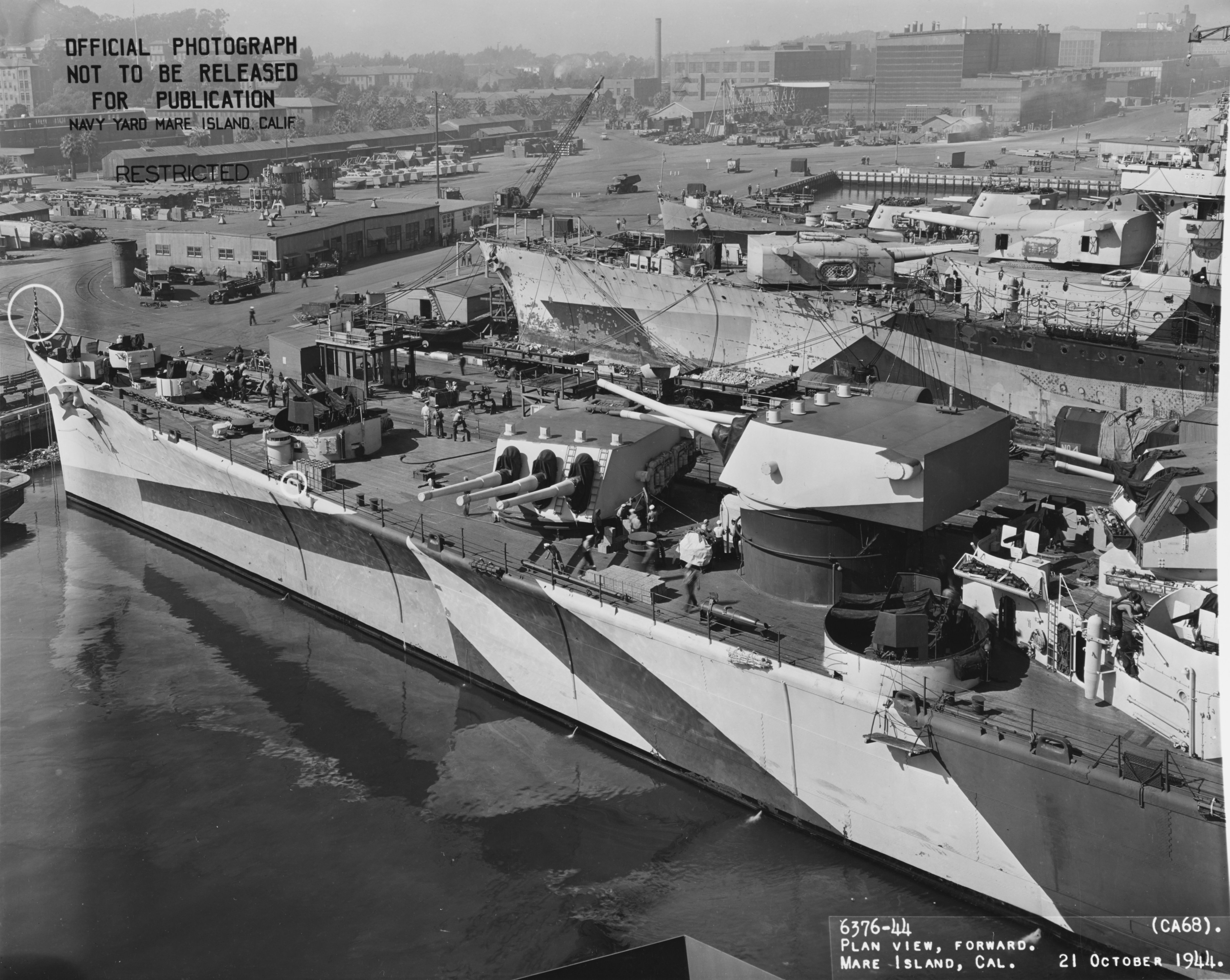
USS Montpelier at Mare Island Navy Yard, California, United States following overhaul, 21 October 1944; USS Indianapolis in background

USS Baltimore undergoing overhaul work at Mare Island Navy Yard, Vallejo, California, United States, 21 October 1944; note cruiser USS Indianapolis in background
Hidden History retweeted
Battleships
BB #HMSNelson 28 (1927-1948)
Nelson Class
📷 #WW2 April 1943 Force H Flagship #MediterraneanSea @I_W_M
@RoyalNavy 🇬🇧

Hidden History retweeted

HMS Courageous, jeden z 3 dużych lekkich krążowników adm. J. Fishera. Na tym ujęciu wygląda niesamowicie.
HMS Courageous w zamyśle miał być szybki (32kn), oferować solidny punch (4 działa 15"/42cal - 381mm), a dzięki niewielkiemu zanurzeniu (7.9m), móc operować na Bałtyku i z bliska wspierać wojska podczas lądowania.
Według opisu zdjęcie pochodzi z 1923. Oznacza to sam koniec służby okrętu, jako artyleryjskiego, bowiem rok później rozpoczęta została jego przebudowa na lotniskowiec.
📷© National Maritime Museum, Greenwich, N6999


Hidden History retweeted

The Fletcher class destroyer USS Brown (DD-546) maneuvers inside the wake of the Essex class aircraft carrier USS Oriskany (CVA-34) during the early 1960s.
The warships were conducting an exercise that simulated refueling at speeds in excess of 25 knots.

Hidden History retweeted
Destroyers
#USSMorris DD271 (1919-1936)
Clemson Class
📷 1919-1922
@USNavy 🇺🇸
