




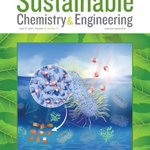





ALT Regenerated silk fibroin (RSF) has acquired enormous attention because of its exceptional toughness, strength, and biocompatible nature. These properties make RSF a potential candidate for the fabrication of different types of materials. However, processing even a dilute aqueous solution of RSF leads to a conformational transformation from a random coil/helix-rich (silk I) to a β-sheet-rich (silk II) state. As a consequence, RSF tends to form aggregates and loses its toughness. Working in a direction to address this problem, an aqueous solution of regenerated silk fibroin has been modified with a dual layer of polyethylenimine (PEI) and a PEG-based polymer surfactant (PS). Upon freeze-drying, the RSF–polymer complex forms a solvent-free RSF bioconjugate system and exhibits a soft solid to liquid melting transition at ∼45 °C. The sequential modification with PEI and PS preserves the native-like random coil conformation of RSF up to at least 8 months of storage by not allowing interchain


ALT An image introducing a New Associate Editor for Soft Matter. A picture of Professor Kumaraswamy is in a circle on the left and a box has the details of Professor Guruswamy Kumaraswamy from Indian Institute of Technology Bombay. There is also a box with a quote from Professor Kumaraswamy: "Soft materials are likely to become even more pervasive in our experience. With increasing usage comes great responsibility, to ensure that we do not overwhelm the environment. Therefore, I anticipate that our community will emphasize research that optimizes use, and increased functionality of soft materials"