





Pinned Tweet
SpaceX is leasing 80,000 towers turns a $80B+ carrier build into rent, and puts AT&T, Verizon and T-Mobile on notice.
80,000 is about half of the 158,500 US towers.
Capacity means many people can use it at once in the same place. A satellite beam covers a wide area. Everyone under that beam shares the same spectrum. That works in Wyoming. It fails in Manhattan at 5 p.m. The only fix is more cells, closer together.
So satellites alone can't be a national carrier. Every incumbent spent decades on the second problem. SpaceX's answer has three cheaper parts:
1. Wi-Fi carries most of the traffic.
2. Starlink homes as small cells.
3. Rent the towers.
Put together: satellites give coverage everywhere, 800 MHz gets indoors, S-band and towers give dense capacity, Wi-Fi and dishes carry the bulk. Bingo.
Here’s the check mate. For SpaceX value, a carrier with no legacy network cost can price under the carriers.
Cars, Optimus, Cybercab is a real second customer for this network. This is coming…
HeyEric retweeted

Agreed, losing money making an electric pickup truck with declining sales sounds like a much better business than changing the world with autonomous vehicles.
Someone give this guy a car company to run.

HeyEric retweeted

Senator-elect @jamestalarico says he will work with @elonmusk on innovation in Texas - and he has a “Talafreako” shirt ready for @tedcruz.
Interview taped Sunday ahead of Talarico’s historic victory @nbcnews



$TSLA beat is real cash, but it was borrowed from suppliers and customers, not earned from ops.
FCF came in at +$1.53B vs a consensus of −$4.5B. Most of that was just timing — they paid suppliers later than usual. Strip the working capital boost out and the business burned about $1.1B. Market isn’t going to love that in the short term.
The better part is the underlying burn improved. Q2 was roughly −$2.5B on the same basis. So about $1.4B of real progress.
Payables show it pretty clearly. AP went from $15.3B to $17.2B. Days payable rose from 58 to 66.
On the capex “cut”: YTD is $13.01B. $20B full-year guide leaves about $7B for Q4. That would be Tesla’s biggest capex quarter on record. Musk still has Terafab at tens of billions through early 2028 and north of $100B long-term, split with SpaceX.
So this is lower spend in 2026, not lower ambition.
Optimus and Cybercab still need the capex. Spending less now helps the balance sheet ahead of a SpaceX merger. Neutral for the long game. The thesis only gets stronger when underlying FCF turns positive while capex is rising. Q3 didn’t show that. Q4 is the real test, about $7B of capex without the payables boost.
Deferred revenue jumped +$1.26B. Probably FSD subscriptions and the vehicle backlog.
Merger math is the other piece. SpaceX guided Q4 capex at $35–40B. Tesla’s trailing-12-month operating cash is $18.7B and it’s funding about $20B of 2026 capex from that. If the merger happens, Tesla’s cash pile and payables float fund a much hungrier parent.
Interested in the 10-Q for the payables detail, purchase commitments, and $30B facility terms.
Bucket list: Colosseum!!! Half-marathon event happening. 40k runners thru Roma. Incredible to watch Italians and cheering them on. Found a spot to relax and escape the cardio chaos. 🇮🇹🤌🍕🍝


SpaceX won Q3: AI cash covered 30% of AI capex, up from 7%. The new risk is Q4 capex of $35–40B.
The AI rent business is working. AI adjusted EBITDA rose from $1.15B to $4.95B. Yeah, read that again. But management guided Q4 capex to $35–40B, about double Q3's $19.6B. Cash now depends on that guide.
Revenue: Total $14.58B, up 161% YoY, against LSEG consensus of $12.72B (Reuters). Yep, read that again. Space $1.77B. Connectivity $5.25B. SI $7.56B. Within SI, solutions and infrastructure brought in $7.02B, of which Cursor contributed $608M from Aug 14. Ex-Cursor, that line grew 192% QoQ. Advertising brought in $538M. Diluted EPS was $0.35 against the $0.14. Net income was $4.40B, helped by $873M of interest income and $1.03B of other income.
Operating margins: Space −0.4%, Connectivity 45.1%, SI 5.7%. Adj. EBITDA margins: Space 20%, Connectivity 67%, SI 66%. SI operating income includes $1.22B of Cursor-related stock comp. Another $23.4B of Cursor retention awards will vest over about three years.
AI economics. SI capex was $16.44B. SI D&A was $2.47B, up from $1.89B. New compute pays back in under a year at current pricing. It also says pricing runs slightly above $50 per watt.
Q4 capex guide: $35–40B. Q1 2027 revenue guide: $33–37B. The $100B ARR target for December 2026 was reaffirmed. Musk said he would be "surprised" by less than 13 GW of compute by end-2027. No pre-call consensus for Q4 capex or Q1 revenue found.
Cash $51.29B plus marketable securities $38.56B, total $89.86B. Total debt and finance leases $38.84B, of which $12.90B is related party. Nine-month OCF $13.10B against capex $48.07B. Q3 OCF was about $9.6B (9M minus H1 $3.47B), so Q3 free cash flow was about −$10.0B. Deferred revenue rose $4.92B over nine months.
$63B at Sep 30, with about $42B to be recognized within a year. Musk said he now prefers short-term compute deals over long ones.
Starlink: 13.6M consumer subscribers, up 1.6M QoQ. ARPU $69, up from $66 but down from $83 a year earlier. Enterprise and government revenue $2.13B, up 91%.
Financing: No new bond or share sale was announced. SpaceX is "talking to" several pools of debt capital and intends to stay investment grade.
Tesla: Musk said both companies formed special committees of independent directors. They "have not reached agreement on the terms." Tesla approval would need a majority of all shares. Musk calls a merger "a good idea" but not a certainty.
So …
If Q4 adj. EBITDA stays near Q3's $8.8B and capex hits the $37.5B midpoint, Q4 burns about $29B. $89.9B then covers about three quarters at that pace, versus about nine at Q3's pace. Revenue guided to roughly 2.4x in Q1 should lift EBITDA, so the real figure falls somewhere in between.
Cursor's $608M explains about a third of the ~$1.9B revenue beat.
$SPCX is strong on economics and weaker on funding. Rent now covers wear twice over. Good! In exchange, the bet got bigger: a doubled capex guide and a 13 GW target mean outside debt in the next one or two quarters is coming. Rising debt and the merger committees both point toward Tesla's balance sheet becoming part of the story.
Very happy investor!!!

Used 100% of my @grok tokens in 3 days. Spent another $60 in extra tokens so far. Still another 36 hours before reset. Not complaining. We are traveling through Italy. Grok has made our trip incredible. Grok became our travel agent and also built us our own custom travel app, named Scout. Grok became our tour guide while sightseeing. Grok became our in-country concierge. Every penny we’ve spent on Grok has been worth every cent.

HeyEric retweeted
I think the wrong conclusion is being drawn. The 10-K is for fiscal 2025, filed earlier this year. The language is not new.
"Readied" is a factory word. The same filing still calls Optimus "in development" and says Tesla has "yet to commercialize Bots." The shareholder letter says Tesla is "building ... the first production lines for Optimus." The 10-K text says: "In 2026, we will be ramping six new production lines across vehicle, Bots, energy storage and battery manufacturing."
"Readied for mass production" is a design-freeze statement. It means the bill of materials is locked enough to buy tooling, qualify suppliers, and build lines. It isn’t about how well the robot performs a task.
Tesla froze Model 3 and then spent a year in production hell. Expecting this here but to a lesser degree.
What I’m watching for…
A V3 production start date, a line-rate target, and any internal robot count.
The Q3 10-Q, does the wording change from "in development."
Capex guidance.
Highlight of Rome so far. Three countries through one keyhole. On top of the Aventine Hill, we waited our turn at a plain green door, the gate of the Knights of Malta. Look through the keyhole, and there's St. Peter's dome, perfectly framed at the end of a garden of hedges.
The door stands in Italy, the garden behind it belongs to the Knights of Malta, and the dome is in Vatican City. How cool! Three sovereign territories in a single glance.


Three nights tucked between the Spanish Steps and Via del Corso. 🇮🇹
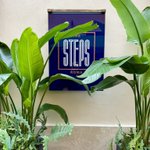
We stayed at The Steps on Via Belsiana, a quiet cobblestone lane with ivy on the walls and espresso on every corner, two minutes from the Steps. Mornings started with Rome waking up around us.


Thoughts ahead of SpaceX's earnings call. SpaceX spent $18.4 billion on capex in Q2, and $15.8 billion of it went to AI. Its whole company made $3.5 billion of adjusted EBITDA. Tuesday's Q3 print tells us whether that gap is closing. The revenue number will look big either way.
Analyst consensus for SpaceX Q3 is $12.89 billion in revenue and $0.14 EPS (TipRanks, Oct 18). That is about 65% above Q2's $7.81 billion. Pivotal expects $13.2 billion and $0.21. Evercore expects 2.3 GW of compute by year-end, against a Street estimate of 2.2 GW.
The $60 billion all-stock Cursor deal closed Aug 14, so Q3 includes about six weeks of Cursor revenue.
Think of SpaceX's AI arm as a landlord. It raises money, builds data centers, and rents compute to outside customers on multi-year contracts. Some compute trains Grok.
A landlord's math has three parts: the cost to build, the rent, and how fast the building wears out. Data centers wear out fast because GPUs lose value in a few years. That is why AI shows positive adjusted EBITDA but an operating loss. Adjusted EBITDA ignores depreciation. Operating income counts it.
Does the rent cover running costs? In Q2, yes, for the first time. Does it pay back the build before the chips wear out? Unknown, and that decides whether AI capex creates value.
Starlink is the opposite kind of business. It already pays for itself. Q2 Connectivity EBITDA minus Connectivity capex left about $1.2 billion. That is less than one-tenth of one quarter's AI capex. IPO cash and bonds fund the AI build, not Starlink.
Assumptions (my Grok Bot math, not company figures):
Q2 capex minus Q2 adjusted EBITDA was about $14.8 billion. If that gap held, $100 billion would last about six to seven quarters before SpaceX needs new money. This ignores interest, working capital and timing.
Q2 AI infrastructure revenue, annualized, was about $8.8 billion on 1.4 GW. That is roughly $6 billion of revenue per GW per year.
Q3 revenue will jump partly because Cursor is now consolidated. That growth was bought with stock. It is not organic.
SpaceX is now valued at roughly $1.9 trillion to $2.2 trillion, depending on the day. Starlink alone does not explain that price. The market is paying for AI compute as a rental business. If Q3 shows AI EBITDA growing faster than AI capex, the bet is working.
If AI capex keeps rising while rent stalls, SpaceX will need more capital within about two years. New shares would dilute you.
HeyEric retweeted

I’ve spent a few days thinking about the Tesla Roadster reveal and landed somewhere I haven’t seen much discussion. I’m neither a Tesla fanboy nor a Tesla hater. And I couldn’t care less whether what we saw technically qualifies as a flying car. Three takeaways: (1) The risk of that live demonstration going horribly wrong was real. Almost no CEO would willingly expose their company to that kind of public humiliation for a product with so little financial upside. Elon did. (2) That willingness to attempt the seemingly impossible is what makes Tesla special. It’s also arguably Elon’s greatest contribution to America. He’s helped bring back something we’ve lost. The American spirit of chasing big scary ideas that most people think are impossible. That mindset is spreading across a new generation of founders and its long term impact on America’s future could dwarf anything Tesla ever sells. I think this is deeply underappreciated. (3) Can we just acknowledge how insanely cool that moment was? We’ve reached a strange place culturally where even extraordinary feats of human ingenuity immediately become arguments about why they don’t count. Not everything needs to be a debate. Sometimes we should just be able to stand back together and marvel at what humans are capable of. I’ve been both bullish and critical of Tesla’s ambitions over the years. But watching Elon and his team push the boundaries of what’s possible reminds me why I’m glad we have him. Whether the Roadster ever makes Tesla a dollar or impacts $TSLA stock price is almost beside the point. We need more people willing to risk failure in pursuit of things the rest of us think are impossible. Because when they succeed we all win.
This happen everytime. Tesla and SpaceX don’t compete. They leapfrog. They rewrite rules.
Forced the entire auto industry to pivot.
Created the Supercharger network, which every major automaker adopted. Giga Press. Vision-only end-to-end neural nets trained on a global fleet. Roadster flips, jumps, and maneuvers in ways no sports car can. Turned rockets from disposable into routine. Lifts the majority of global mass to orbit
Optimus uses the same AI stack as FSD. Starship is designed for full reusability. The leapfrogging will continue. The gaps keep widening.
Elon in real-time showing what first-principles execution looks like at scale. We get a front-row seat.

The FAA opened the paperwork for nearly-daily Starship. Cap is still 25.
On Tuesday the FAA filed a Notice of Intent to prepare a Programmatic Environmental Impact Statement (PEIS) on SpaceX's request to raise Starship–Super Heavy operations at Starbase (Boca Chica, TX). Federal Register document 2026-20963, docket FAA-2026-12808, scheduled to publish Oct 14. Public scoping comments close Nov 30. Meetings: Brownsville Nov 17, virtual Nov 18, Port Isabel Nov 19.
The numbers in the notice:
Today's authorized ceiling: 25 orbital launches and 50 landings a year at Starbase (25 ship + 25 booster), under the 2025 tiered EA / mitigated FONSI.
What the PEIS will study: up to 456 launches originating from the site and up to 912 landings there (landings can follow launches from elsewhere).
Phase 1: up to 100 launches / 200 landings per year, any day, any hour.
Phase 2: the full 456 / 912, "within several years" as the vehicle matures — any hour, weekdays only.
Starship economics are not a "rocket" story. They are a cadence × reuse × payload story.
Cost per useful ton falls when:
1. the same hardware flies again quickly (reuse),
2. the pad and range can clear another flight soon after (cadence),
3. each flight carries enough mass (payload).
Hardware reuse without regulatory cadence is a museum piece. Regulatory cadence without reusable hardware is hot air. SpaceX has been closing the hardware side in public (booster catches, ship splashdowns, Ship 40 home for inspection, B23 in cryo). The missing throttle for Starbase itself has been the environmental authorization that sets how many times a year the site may launch and land.
A PEIS is not a license amendment. Under NEPA it is the multi-year impact study that must finish before the FAA can lawfully authorize a much higher operating envelope. Phase 1 at 100/year is roughly a flight every ~3–4 days if you actually flew the cap. Phase 2 at 456 is roughly a weekday factory rhythm (~1.8/day on weekdays). That is the difference between a test site and an industrial launch machine.
Why "programmatic": one review covering a stepped growth path and expanded landing/expenditure areas, instead of fighting a new EA every time cadence wants to climb. Why Phase 2 is weekday-only: noise, wildlife, and community load at near-daily rates — the FAA is already baking a social constraint into the maximum case.
The real meter moves from "will they ask?" to "will the PEIS survive intact?" Scoping → draft PEIS → comments → ROD / license mod. Watch Phase 1 (100) more than the headline 456; 100 is the near-term industrial step.
A company that files for ~18× the authorized cadence is arguing it intends to industrialize the site. The government putting that ask into a PEIS process is arguing it will study it seriously — not that it already said yes.
What to watch next:
1. Federal Register publish Oct 14 — confirm final text matches the public-inspection numbers (456 / 912, Phase 1 100/200, Phase 2 weekday-only).
2. SpaceX first-party language — do they own the ask on @SpaceX, or leave it to the docket?
3. Flight 15 prep — ship-catch hardware vs NET Nov 8; any slip that uncouples reuse proof from the PEIS calendar.
4. Scoping heat — early Brownsville / Port Isabel reaction before the Nov 17–19 meetings.
5. Draft PEIS timing — any FAA hint on when the draft lands (the real gate after scoping).
6. Parallel: FSD 14.3.12 unify + Arrival Options — owned-car stack converging on Robotaxi behaviors; separate deep if utilization board needs it after earnings Oct 21.
Sources: Federal Register public inspection 2026-20963 / docket FAA-2026-12808; TeslaNorth FAA Starbase PEIS (Oct 13); Quartz FAA 456 review (Oct 13); FAA Starbase project page (current 25/50 auth); Captain's Log keepers 2026-10-13 (FAA PEIS, Ship 40 home, B23 cryo, CRS-35); Topic Map 2026-10-12 (Flight 15 NET Nov 8). HARD ZERO X MCP / no native x tools; public web + already-filed keepers.
Sources
federalregister.gov/public-i…
teslanorth.com/2026/10/13/fa…
qz.com/faa-spacex-starship-4…
faa.gov/space/stakeholder_en…

Europe got the plinth. Austin got the miles.
On Monday morning at Mondial de l'Auto (press day), Tesla staff peeled a grey cover off a gold production Cybercab on stand C25, Hall 7.1, Paris Expo Porte de Versailles. The car came from Tesla's U.S. Robotaxi fleet — same hardware that takes paid rides in Austin: no steering wheel, no pedals, solid disc covers, Cybercab script on the door. Optimus Gen 2 sat in a glass case a few steps away. Red production cars lined up behind. Visitors can walk around the plinth. They cannot ride it.
What Europe can try this week is separate: six Model 3s for free FSD (Supervised) sessions — branded "Tesla Conduite Assistée" in France — 30–45 minutes each, public days Oct 13–18. That is supervised driving in a wheel-and-pedals car, not Cybercab. French outlet Turbo and show reporting say no European Cybercab service is planned at this stage. FSD (Supervised) is still not authorized for customer cars in France; Germany's push and a TCMV path aim at a broader EU decision as early as December.
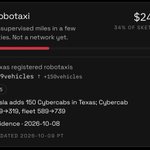
Same day, U.S. ops kept compounding: Texas registry prints 319 Cybercabs (~43% of Tesla's Texas robotaxi fleet after the Oct 9 batch), official @robotaxi lengthened Austin hours to 6am–11pm and claimed shorter waits from supply + orchestration, Dallas riders reported more cars in the second city, and NHTSA opened a defect-petition review (DP26010) on school-zone speeding with ADS engaged — review only, not a formal investigation; separate from the Oct 30 Cybercab FMVSS answers.
Three different products sat on one stand. Confusing them is how investors get hurt.
1. Purpose-built robotaxi hardware — Cybercab: wheel-less two-seater designed for unsupervised paid miles.
2. Supervised ADAS product — FSD (Supervised) / Conduite Assistée: driver-in-loop on Model 3/Y.
3. Humanoid theater — Optimus in a case: adjacent thesis, not a ride.
Paris put (1) on a plinth and sold (2) as a free demo.
A plinth answers a perception and lobbying problem: European consumers, dealers, and regulators can stand next to a real U.S. fleet car instead of a render. It does not answer the permission problem. Wheel-less commercial service needs type approval and local operating authority. EU small-series rules for fully automated vehicles are narrow. France has not cleared customer FSD (Supervised), let alone Cybercab rides. So Tesla shipped a physical proof of manufacturing across the Atlantic while the legal path for miles stayed home.
Austin answers a different equation: density × hours × wait SLA. 300+ Cybercabs serving, hours stretched into late night, Dallas supply rising — that is utilization. Paris is visibility. Visibility can soften regulators and seed demand. Utilization compounds cash and training data. Only utilization pays the path.
Tonight measures whether Europe is next for miles or next for photos. The press-day evidence says photos — with FSD demos as the regulatory soft-sell.
What this is not: EU L4, a France launch date, cabin Bot on the Paris plinth, or proof that Conduite Assistée rides convert into Cybercab law.
FSD (Supervised) demos are the EU wedge, not Cybercab. Six Model 3s teaching Conduite Assistée is how Tesla builds political and consumer familiarity while type approval lags. Watch December TCMV / EU path harder than stand tweets.
What to watch next week
1. Any French or EU official language at the show that moves Cybercab or FSD (Supervised) from "display" to "timeline."
2. Public-day report-outs (Oct 13–18) — are Conduite Assistée slots filling, and does anyone get cabin Bot or a Cybercab ride? (Expect no.)
3. Earnings Oct 21 — Europe Robotaxi language vs U.S. utilization / software-attach language.
4. Dallas Cybercab — in-app booking for purpose-built cabs, not only Model Y.
5. NHTSA Oct 30 Cybercab FMVSS answers + DP26010 school-zone review path (~120 days from Sept 23 petition).
6. Density board — Austin waits under longer hours; Texas registry vs cars actually serving.
Sources: CyberCab.News Paris unveil (Oct 12); Tesla News Wire look-not-ride (Oct 12); Tesla-Mag Mondial FSD/Cybercab stand (updated Oct 12); Topic Map 2026-10-12 (Paris unveil + Austin 300+/Dallas next); Captain's Log keepers 2026-10-12 (Paris display, Austin density > Waymo peak hours, @robotaxi 6am–11pm, Dallas fleet adds, TxDMV 319, DP26010). HARD ZERO X MCP / no native x tools; public web + already-filed keepers.
Sources
cybercab.news/article/paris-…
teslanewswire.com/articles/c…
tesla-mag.com/mondial-auto-2…
notateslaapp.com/news/4802/t…
nitter.gq/DavidMoss/status/21095… nitter.gq/robotaxi/status/210974…


Robotaxi service updates from the last few weeks:
– Operating hours are now 6am-11pm
– Reduced wait times thanks to increased supply & orchestration algorithms
– Trunk now opens automatically at end of ride if utilized
– Grok @bot now available in Cybercab