

Philosophy, poetry, @UpsPolitics, ELTE RCH, @CBPhull. An Aristotelian Philosophy of Civility. Culture and Politics (Palgrave Macmillan/Springer Nature, 2026)
Budapest
Joined October 2019
- Tweets32K
- Following4.1K
- Followers7.5K
- Likes26.9K






Pinned Tweet
"Civility is the form of socially acceptable behaviour, consisting in essence of a set of constraints slowly developed by social cohabitation. These norms of civility, or practical virtue are valid for all interpersonal communications..."
My book (2026) is beyond 1.000 accesses.

"I belong neither to the revolutionary party nor to the conservative party; but nevertheless, and after all, I am more attached to the latter than to the former."
(Antoine Redier, Comme disait Monsieur de Tocqueville…, 1925.)

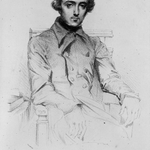
My first guide, in writing the first part of my book 'In Defence of the Local': Alexis de Tocqueville, statesman, local representative, traveller, thinker and writer.

ALT Alexis Charles Henry de Tocqueville, Représentant du Peuple by Théodore Chassériau.
Ferenc Hörcher retweeted
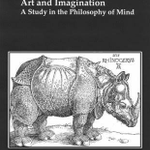
Roger Scruton’s theory of the imagination and aesthetics as a formulation of Aristotelian virtue ethics
by Jack Haughton
tandfonline.com/doi/full/10.…


Ferenc Hörcher retweeted

Habemus cover! All you ever wanted to know about the classics, Cicero, Burke, and the British Empire in the eighteenth century. Coming from Boydell & Brewer in April 2027.
More details, including the chapter list and a summary, here:
boydellandbrewer.com/book/ed…

Ferenc Hörcher retweeted

‘A man needs a little madness, or else he never dares cut the rope and be free.’
Nikos Kazantzakis - Zorba the Greek, 1946
Anthony Quinn & Alan Bates dancing the Sirkati in Zorba the Greek, 1964

Ferenc Hörcher retweeted

“Never forget” is a familiar instruction on historical anniversaries. But how can young people remember something they were never taught to understand?
mindingthecampus.org/2026/10…

Roger Scruton’s theory of the imagination and aesthetics as a formulation of Aristotelian virtue ethics
by Jack Haughton
tandfonline.com/doi/full/10.…
Ferenc Hörcher retweeted

While I was studying there, I observed—not without curiosity and a certain sense of surprise—how people maintained their place in the bus queue in a civil manner, without trying to cut ahead of others.
Ferenc Hörcher retweeted
"the “Realist” Enlightenment thought of Hume and Hamilton is more relevant than ever. Above all, instead of fetishizing democracy, it can help us to appreciate the necessity of constitutional limits to political power."

My new essay in @LawLiberty: "The force of partisan strife in modern politics should make us appreciate the need for checks and balances." lawliberty.org/honest-men-tu…

Ferenc Hörcher retweeted
LIPSIUS on "patientia":
"the true mother of constancy is patience,...which is a voluntary sufferance without grudging of all things whatsoever can happen to or in a man.... regulated by the rule of right reason is the very root whereupon is settled... that fair oak constancy."

ALT Patience, 1591 by Eisenhoit, Antonius (1553/54?- 1603) (https://www.phgraphics.fr/estampes/4461.htm)
Ferenc Hörcher retweeted
Shakespeare's perspective is perhaps wider, less dependent on personal experience? But I might be wrong, I agree. This is why I said this was an awkward question. I really like her, to be sure. Philosophically, too.
Ferenc Hörcher retweeted
If Hume, why not Smith?

Classical liberals, libertarians, and some progressives have embraced Adam Smith, but how about conservatives? I will address this question in my @Penn talk this Wednesday. Join us!

Ferenc Hörcher retweeted
An awkward question: can female readers better understand Austen, than males?

It’s sort of remarkable that Jane Austen has become probably the central figure in English literature after Shakespeare, and arguably the most beloved. All the more so because she never traveled far from home; her life was largely lacking in drama. Early critics accused her of leading an insular existence, ignoring the great issues of the day and limiting the scope of her stories to the home. And yet, as Eudora Welty has noted, “The interesting situations of life can take place, and notably do, at home.” Such was Austen’s genius that within her limited sphere she saw the whole of human nature. All of life is contained within her six novels. She remains our greatest psychologist and one of our wisest philosophers. To read her books is a first step towards acquiring wisdom.

Ferenc Hörcher retweeted
Gentleness is a major building block of civilisation.


An awkward question: can female readers better understand Austen, than males?
It’s sort of remarkable that Jane Austen has become probably the central figure in English literature after Shakespeare, and arguably the most beloved. All the more so because she never traveled far from home; her life was largely lacking in drama. Early critics accused her of leading an insular existence, ignoring the great issues of the day and limiting the scope of her stories to the home. And yet, as Eudora Welty has noted, “The interesting situations of life can take place, and notably do, at home.” Such was Austen’s genius that within her limited sphere she saw the whole of human nature. All of life is contained within her six novels. She remains our greatest psychologist and one of our wisest philosophers. To read her books is a first step towards acquiring wisdom.
"the “Realist” Enlightenment thought of Hume and Hamilton is more relevant than ever. Above all, instead of fetishizing democracy, it can help us to appreciate the necessity of constitutional limits to political power."
My new essay in @LawLiberty: "The force of partisan strife in modern politics should make us appreciate the need for checks and balances." lawliberty.org/honest-men-tu…