
🎓 Adjunct Professor @SciencesPo Paris School of International Affairs, President @CIRSD, former President @UN General Assembly, Senior Advisor @EurasiaGroup
Belgrade / Paris / New York
Joined September 2012
- Tweets23.1K
- Following1.8K
- Followers166K
- Likes58.2K





Pinned Tweet
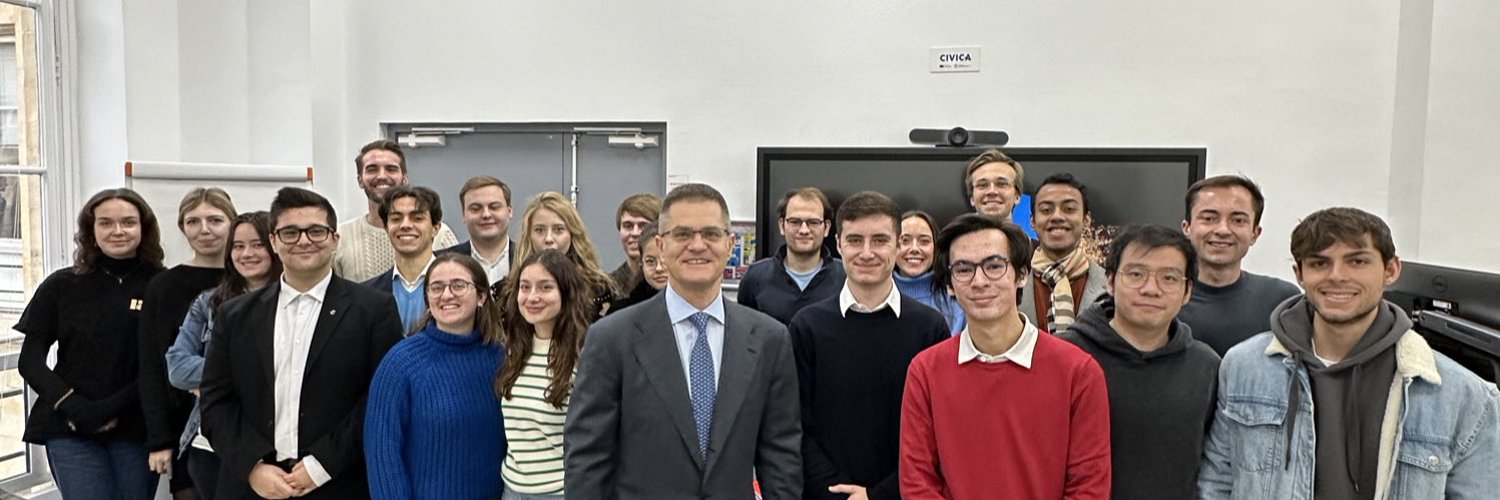
It was an extraordinary privilege to teach for the second consecutive year at the renowned Sciences Po Paris School of International Affairs @PSIASciencesPo, one of the best schools in the world.
My graduate course “OADI 2325: Introduction to Contemporary Geopolitics - A Practitioner’s View” addressed over 24 lectures some of the most pressing global issues of today.
Students also had a chance to learn how to compose professional policy and decision making memos, as well as how diplomatic negotiations, campaigns and elections in the UN and other international organizations are conducted in reality.
It was a pleasure working with such astonishingly smart and dedicated young people from around the world. They will always be able to count on my support and guidance, if they ever need it!
De-risking vs. win-win: Can Europe and China reconcile their competing visions of the future?
The stakes are enormous—and the answers far from obvious.
Explore the latest issue of @CIRSD Horizons, featuring an absolutely outstanding lineup of leading global thinkers!
Read it FREE: cirsd.org/horizons/
Vuk Jeremić retweeted

In January 2026, Washington moved to withdraw from 66 international organizations.
A year earlier in Paris, China and the EU had signed a statement on inclusive AI that the United States and Britain did not.
Li Cheng and Zhao Xiuye argue that the democracy-autocracy binary no longer predicts who agrees with whom.
On crisis management, AI labeling, the green transition, and development, Beijing and Brussels converge—from a €4.1 billion CATL–Stellantis battery plant in Zaragoza to EU-funded trials in China that kept maize yields steady while cutting nitrogen by 37.5 percent. Like-mindedness is no longer a matter of political systems. It is a matter of what can be done together.
Read more:
cirsd.org/horizon-article/sh…

Vuk Jeremić retweeted
HORIZONS INTERVIEW | Arancha González Laya: It’s All In The Proportions
youtu.be/J-JhU9LczFQ?si=9EHC…

Vuk Jeremić retweeted
Taiwan makes 95 percent of the world’s most advanced semiconductors. An F-35 carries 920 pounds of critical minerals, most likely sourced from China, and China builds 53 percent of the world’s commercial ships against America’s 0.1 percent.
@RobinNiblett argues that the post-Cold War order did not build interdependence; it built overdependencies—and the United States is now dismantling them itself. Canada and Mexico send three-quarters of their exports to one market and are learning what that means.
Eighty years was a good run for a world order. Middle powers, he warns, were not ready for its end.
Read the article here:
cirsd.org/horizon-article/it…

Vuk Jeremić retweeted
William Hague has warned that Europe may be sliding toward the fate of the late Qing dynasty.
Feng Zhongping takes the talk of European decline seriously—the EU’s share of world GDP has fallen from 25 percent in 2008 to 17—but reports that Beijing’s mainstream view is unmoved: Europe remains a global power, anchored by its single market and its role in climate and global governance.
Bilateral goods trade reached €759 billion in 2025, and the two have no direct geopolitical contradictions. It is often said that China and America will decide the twenty-first century. Feng counts three.
cirsd.org/horizon-article/ch…

Vuk Jeremić retweeted
Between 2010 and 2022, the cost of utility-scale solar electricity fell by nearly 90 percent; battery packs went from well over $1,000 per kilowatt-hour to below $140.
Chong-En Bai argues that subsidies helped make that possible—and that the same subsidies, left in place once an industry matures, breed overcapacity, depressed prices, and retaliation. His remedy reverses current practice: the exporting country, not the importer, should levy a tariff offsetting only the excess subsidy, as measured by an independent body at the WTO.
An importer that imposes the duty profits twice; an exporter pays for its own restraint. The hard part of industrial policy is not starting. It is stopping.
cirsd.org/horizon-article/in…

Vuk Jeremić retweeted
The European Union runs a trade surplus with the world and a deficit of roughly €360 billion with a single partner.
In conversation with Vuk Jeremić, Arancha González Laya, former Spanish foreign minister, dismisses comparisons with German cars or Italian fashion: China holds over a third of global industrial capacity, heading toward 40 percent, its advantage amplified by state support and an undervalued currency.
Partner, competitor, rival still holds; it is all in the proportions. Nor is de-risking aimed at China alone—Beijing’s dual circulation was de-risking too. Everybody is playing the game.
Her new book imagines Europe in 2049, alone in the world. That future, she insists, is still a choice.
cirsd.org/horizon-article/it…

HORIZONS Vol.36 Autumn 2026
De-Risking the Win-Win?
The Trillion-Euro Question
EDITORIAL @CIRSD
TWO buzzwords have come to dominate the discourse surrounding Europe–China relations. Brussels speaks of de-risking: reducing potentially dangerous dependencies without cutting ties. Beijing speaks of win-win: cooperation in which both sides come out better off. To Chinese ears, de-risking sounds like protectionism with diplomatic finesse. To European ears, win-win increasingly sounds like China winning twice. This issue of Horizons examines whether the two can be reconciled, and what happens to one of the world’s most consequential commercial partnerships if they cannot.
SOME of the stakes can be measured. Two-way trade in goods and services exceeded €880 billion in 2025 and is edging toward a trillion. Europe’s goods deficit with China reached roughly €360 billion that same year. A relationship that large cannot remain that lopsided for long.
THAT imbalance is a symptom of something deeper: the nature of exchange itself has changed. For decades, the bargain was complementary: European capital goods and premium manufactured products traded for Chinese consumer goods. Today, the two economies compete head-on in automobiles, batteries, machinery, and clean technology—the sectors that anchor European industry. Our contributors disagree on the causes of this “second China shock.” Some point to state subsidies, overcapacity, and weak household demand that pushes China’s surplus output onto world markets. Others blame Europe’s own high energy costs, fragmented capital markets, and regulatory burdens. Few dispute that tariffs can buy time but cannot replace competitiveness.
NOR is the contest purely economic. Rare-earth export controls, the dispute over the chipmaker Nexperia, and the world’s reliance on Taiwanese semiconductors have shown how quickly interdependence can turn into leverage. For several authors, China’s role in sustaining Russia’s war economy places a hard ceiling on European trust. Chinese contributors push back against the “New Cold War” narrative. They argue that the two ends of Eurasia have no fundamental geopolitical conflicts of interest and are converging on multilateralism and climate action just as Washington retreats from both.
BETWEEN these poles, a more practical agenda takes shape. De-risking need not mean subtraction alone. It can also mean adding options: more suppliers, Eurasian corridors running through Central Asia, and financial bridges such as Hong Kong. Industrial policy could be disciplined by distinguishing between subsidies that help young industries learn and those that distort markets once those industries have matured. Chinese plants in Hungary and Spain could become channels for technology transfer rather than outposts to be resisted, and Brazil’s experience suggests that Chinese firms adapt when the rules are clear. In fields such as cancer research, cooperation under European standards may serve patients better than reflexive suspicion.
ALL of this unfolds inside a geopolitical triangle that Europe cannot control. Washington is increasingly transactional and Beijing increasingly confident, pushing Europe toward the pursuit of strategic autonomy it has long debated but only recently begun to build. In such a setting, neither buzzword seems entirely plausible. De-risking that builds no capability only preserves weakness, while win-win that ignores imbalance only breeds resentment. The trillion-euro question, then, is whether Europe and China can turn mutual dependence into a relationship balanced enough for both sides to call it fair.

Vuk Jeremić retweeted

A family photo from the XXXVII High-Level Meeting “Rebuilding Trust, Cooperation and Global Stability for a Shared Future”
@I_Serageldin @BY @volkan_bozkir @DrTedros @WHO @MladenIvanic @BorutPahor @LagumdzijaZ @Zaktweet @Csaba_Korosi_ @valstsgriba @AmreMoussaPR @tkesho3 @MelanneVerveer @PScotlandKC @MiguelMoratinos @aguribfakim @AmbElliott @jeremic_vuk @GPapandreou @Tzipi_Livni @ivojosipovic @KerryKennedyRFK @AnaBirchall @KatyaYushchenko @tfajon @moamersi

Vuk Jeremić retweeted
One week. One stage. Many voices.
Follow the action from the UN General Assembly in these languages!
Arabic: @UNarabic
French: @ONU_fr
Hindi: @UNinHindi
Kiswahili: @UmojaWaMataifa
Portuguese: @NacoesUnidas
Russian: @UnitedNationsRU
Spanish: @ONU_es

Back at the Paris School of International Affairs at Sciences Po @PSIASciencesPo for my fourth year as Professor of Practice in International Governance and Diplomacy, teaching the graduate course “Introduction to Contemporary Geopolitics.”
One of the highlights of the course is our simulation of the election of the @UN Secretary-General. This year, it carries an added sense of excitement—and an unusual learning opportunity—as it coincides with the real selection process unfolding in New York.
This year’s cohort is made up of astonishingly smart young people, who threw themselves into the simulation, fully inhabiting their assigned roles as candidates and members of the UN Security Council.
After two days of rollercoaster developments, frenetic negotiations, and six rounds of voting, they managed—at the very last moment—to elect the next UN Secretary-General!
I very much hope the exercise succeeds in reality as well!


Vuk Jeremić retweeted

🌍 𝗖𝗮𝗻 𝘁𝗵𝗲 𝗶𝗻𝘀𝘁𝗶𝘁𝘂𝘁𝗶𝗼𝗻𝘀 𝗯𝘂𝗶𝗹𝘁 𝗳𝗼𝗿 𝗮𝗻𝗼𝘁𝗵𝗲𝗿 𝗲𝗿𝗮 𝘀𝘁𝗶𝗹𝗹 𝗰𝗮𝗿𝗿𝘆 𝘁𝗵𝗲 𝘄𝗲𝗶𝗴𝗵𝘁 𝗼𝗳 𝘁𝗵𝗲 𝘄𝗼𝗿𝗹𝗱 𝘁𝗼𝗱𝗮𝘆?
Today in Vienna 🇦🇹, Global Neighbours and the @CIRSD - Center for International Relations and Sustainable Development will come together for a discussion marking the launch of the Summer 2026 issue of Horizons — Journal of International Relations and Sustainable Development, titled “𝗧𝗵𝗲 𝗨𝗻𝗯𝗲𝗮𝗿𝗮𝗯𝗹𝗲 𝗟𝗶𝗴𝗵𝘁𝗻𝗲𝘀𝘀 𝗼𝗳 𝗚𝗹𝗼𝗯𝗮𝗹 𝗚𝗼𝘃𝗲𝗿𝗻𝗮𝗻𝗰𝗲.”
Global Neighbours Founder and Chairwoman Jovanka Porsche and CEO @sidchat1 will contribute to a conversation taking its starting point from their new essay, “The Architecture of Survival: Why the World Cannot Wait for Governments Alone,” which poses a fundamental question: 𝗛𝗼𝘄 𝗱𝗼 𝘄𝗲 𝗿𝗲𝗻𝗲𝘄 𝗶𝗻𝘁𝗲𝗿𝗻𝗮𝘁𝗶𝗼𝗻𝗮𝗹 𝗰𝗼𝗼𝗽𝗲𝗿𝗮𝘁𝗶𝗼𝗻 𝗳𝗼𝗿 𝗮 𝘄𝗼𝗿𝗹𝗱 𝘁𝗵𝗮𝘁 𝗵𝗮𝘀 𝗽𝗿𝗼𝗳𝗼𝘂𝗻𝗱𝗹𝘆 𝗰𝗵𝗮𝗻𝗴𝗲𝗱?
At a time of growing geopolitical fragmentation and declining trust, governments and multilateral institutions remain indispensable—but they cannot carry the weight alone. Think tanks, civil society, business and other independent actors can help build trust, keep channels of dialogue open and prepare the ground for official diplomacy.
Ms. Porsche and Mr. Chatterjee will be joined by H.E. Prof. Dr. Igor Lukšić, former Prime Minister of Montenegro and former Fellow of Global Neighbours. The conversation will be opened and moderated by H.E. @jeremic_vuk, President of CIRSD, Editor-in-Chief of Horizons and President of the 67th Session of the United Nations General Assembly.
𝗜𝗻 𝗮 𝗳𝗿𝗮𝗴𝗺𝗲𝗻𝘁𝗲𝗱 𝘄𝗼𝗿𝗹𝗱, 𝗺𝘂𝗹𝘁𝗶𝗹𝗮𝘁𝗲𝗿𝗮𝗹𝗶𝘀𝗺 𝗰𝗮𝗻𝗻𝗼𝘁 𝘀𝗶𝗺𝗽𝗹𝘆 𝗯𝗲 𝗱𝗲𝗳𝗲𝗻𝗱𝗲𝗱. 𝗜𝘁 𝗺𝘂𝘀𝘁 𝗯𝗲 𝗿𝗲𝗻𝗲𝘄𝗲𝗱.
We look forward to a candid and substantive exchange in Vienna.
📖 𝗥𝗲𝗮𝗱 𝘁𝗵𝗲 𝗳𝘂𝗹𝗹 𝗮𝗿𝘁𝗶𝗰𝗹𝗲 𝗵𝗲𝗿𝗲: cirsd.org/horizon-article/th…
#GlobalNeighbours #Horizons #CIRSD #Multilateralism #GlobalGovernance #Diplomacy #Track2Diplomacy #InternationalCooperation #Vienna

Vuk Jeremić retweeted
🌍 “𝗧𝗵𝗲 𝗨𝗻𝗯𝗲𝗮𝗿𝗮𝗯𝗹𝗲 𝗟𝗶𝗴𝗵𝘁𝗻𝗲𝘀𝘀 𝗼𝗳 𝗚𝗹𝗼𝗯𝗮𝗹 𝗚𝗼𝘃𝗲𝗿𝗻𝗮𝗻𝗰𝗲” — 𝗮𝗻 𝗶𝗺𝗽𝗼𝗿𝘁𝗮𝗻𝘁 𝗰𝗼𝗻𝘃𝗲𝗿𝘀𝗮𝘁𝗶𝗼𝗻 𝗼𝗻 𝘁𝗵𝗲 𝗳𝘂𝘁𝘂𝗿𝗲 𝗼𝗳 𝗺𝘂𝗹𝘁𝗶𝗹𝗮𝘁𝗲𝗿𝗮𝗹𝗶𝘀𝗺 𝗶𝗻 𝗩𝗶𝗲𝗻𝗻𝗮. 🇦🇹
Global Neighbours and @CIRSD - Center for International Relations and Sustainable Development came together for the Vienna launch of Horizons — Journal of International Relations and Sustainable Development, Summer 2026, Issue No. 35, bringing together distinguished voices from diplomacy, politics, business and academia.
The discussion took its starting point from “𝗧𝗵𝗲 𝗔𝗿𝗰𝗵𝗶𝘁𝗲𝗰𝘁𝘂𝗿𝗲 𝗼𝗳 𝗦𝘂𝗿𝘃𝗶𝘃𝗮𝗹: 𝗪𝗵𝘆 𝘁𝗵𝗲 𝗪𝗼𝗿𝗹𝗱 𝗖𝗮𝗻𝗻𝗼𝘁 𝗪𝗮𝗶𝘁 𝗳𝗼𝗿 𝗚𝗼𝘃𝗲𝗿𝗻𝗺𝗲𝗻𝘁𝘀 𝗔𝗹𝗼𝗻𝗲,” an article by Jovanka Porsche, Founder and Chairwoman of Global Neighbours, and @sidchat1, CEO of Global Neighbours and former United Nations Resident Coordinator in China. Their central argument is clear: renewing multilateralism will require governments to lead—but also a wider ecosystem of actors willing to build trust, create partnerships and turn dialogue into practical cooperation.
The conversation was opened and moderated by H.E. @jeremic_vuk, President of CIRSD - Center for International Relations and Sustainable Development, Editor-in-Chief of Horizons and President of the 67th Session of the United Nations General Assembly, and joined by H.E. Prof. Dr. Igor Lukšić, former Prime Minister of Montenegro and Visiting Fellow of Global Neighbours.
From 𝗧𝗿𝗮𝗰𝗸 𝟮 𝗮𝗻𝗱 𝗧𝗿𝗮𝗰𝗸 𝟭.𝟱 𝗱𝗶𝗽𝗹𝗼𝗺𝗮𝗰𝘆 and public-private partnerships to Europe’s role in an increasingly multipolar world and the post-2030 development agenda, the discussion moved beyond what is wrong with the international system to 𝘄𝗵𝗮𝘁 𝘄𝗲 𝗰𝗮𝗻 𝗮𝗰𝘁𝘂𝗮𝗹𝗹𝘆 𝗱𝗼 𝗮𝗯𝗼𝘂𝘁 𝗶𝘁.
As Ms. Porsche emphasised, Global Neighbours is a “think-and-do tank”—not simply creating spaces for conversation, but working to translate those conversations into relationships, partnerships and action.
𝗜𝗻 𝗮 𝘄𝗼𝗿𝗹𝗱 𝗶𝗻𝗰𝗿𝗲𝗮𝘀𝗶𝗻𝗴𝗹𝘆 𝗱𝗲𝗳𝗶𝗻𝗲𝗱 𝗯𝘆 𝗴𝗲𝗼𝗽𝗼𝗹𝗶𝘁𝗶𝗰𝗮𝗹 𝗱𝗶𝘃𝗶𝗱𝗲𝘀, 𝘁𝗵𝗲 𝗮𝗻𝘀𝘄𝗲𝗿 𝗰𝗮𝗻𝗻𝗼𝘁 𝗯𝗲 𝗹𝗲𝘀𝘀 𝗲𝗻𝗴𝗮𝗴𝗲𝗺𝗲𝗻𝘁. 𝗜𝘁 𝗺𝘂𝘀𝘁 𝗯𝗲 𝗺𝗼𝗿𝗲 𝗺𝗲𝗮𝗻𝗶𝗻𝗴𝗳𝘂𝗹 𝗲𝗻𝗴𝗮𝗴𝗲𝗺𝗲𝗻𝘁.
Our sincere thanks to CIRSD, our speakers and everyone who joined us for a candid and substantive exchange in Vienna.
📖 Read “The Architecture of Survival” in Horizons Issue No. 35
#GlobalNeighbours #Horizons #CIRSD #Multilateralism #GlobalGovernance #Track2Diplomacy #Diplomacy #InternationalCooperation #Vienna


Vuk Jeremić retweeted
The third edition of the Hili Forum 2026 in Abu Dhabi was the first major international gathering in the Gulf since the outbreak of the war, bringing together over 1,000 senior policymakers, diplomats, experts and thought leaders at a moment of exceptional regional and global uncertainty.
The Forum opened with remarks by Dr. Anwar Gargash, Diplomatic Adviser to the President of the United Arab Emirates, who set the tone for the discussions by addressing the urgent need for de-escalation, regional stability and a sustainable diplomatic framework for the period ahead.
@jeremic_vuk , President of CIRSD, former President of the UN General Assembly and former Foreign Minister of Serbia, participated in the Forum’s closing plenary, “Role of Middle Powers in a Ruptured Global Order,” alongside Carl Bildt, former Prime Minister and Foreign Minister of Sweden and Co-Chair of the European Council on Foreign Relations, and Zhandos Shaimardanov of the Kazakhstan Institute for Strategic Studies.
Jeremić stressed that strategic autonomy requires countries to diversify trusted partnerships, maintain good relations with their neighbours, avoid being drawn into other countries’ conflicts, and strengthen resilience at home.
He also highlighted the growing importance of technological and strategic partnerships as traditional security guarantees become less certain, arguing that middle powers are likely to play an increasingly important role in shaping the emerging international order.
The Hili Forum brings together policymakers, experts and researchers to discuss the geopolitical, economic and technological transformations shaping the Gulf and the wider international order.


Vuk Jeremić retweeted

Key highlights from the remarks of H.E. Vuk Jeremić, Former Minister of Foreign Affairs, Serbia, during the Plenary Session “Role of Middle Powers in a Ruptured Global Order” at the third edition of #HiliForum:
- Strategic autonomy requires diversifying trusted relationships, avoiding involvement in other people’s wars, and maintaining good relations with neighbours. It also depends on strengthening domestic resilience and expanding technological and other partnerships as traditional security guarantees become less certain.
#HiliForum2026
#theecssr

Belgrade and Non-Alignment: 65 Years of a Grand Idea @CIRSD
cirsd.org/opinions/belgrade-…

Heartfelt congratulations to my dear friend @KatalinBogyay on her election as President of @WFUNA!
Katalin is one of the most competent diplomats I have had the privilege of meeting during my career.
I’m delighted to see her take on this important responsibility and very much look forward to working with her in her new capacity.
Wishing her every success!

Opening speeches at the Jubilee World Congress of @WFUNA - The Global People’s Movement for the @UN founded 80 years ago ! Honored to become the President of this noble organisation! W/ @DrTedros @UNGeneva @jeremic_vuk @pobee_martha

1
7
4,101
Vuk Jeremić retweeted

Opening speeches at the Jubilee World Congress of @WFUNA - The Global People’s Movement for the @UN founded 80 years ago ! Honored to become the President of this noble organisation! W/ @DrTedros @UNGeneva @jeremic_vuk @pobee_martha – at Geneva, Switzerland
Vuk Jeremić retweeted
Carolyn Rodrigues-Birkett, Guyana’s Permanent Representative to the UN and former Foreign Minister, is a leading candidate for the next UN Secretary-General.
In her vision statement, she calls for a more effective and proactive United Nations, firmly grounded in the UN Charter and multilateralism. Her priorities include stronger conflict prevention and mediation, faster progress on sustainable development, protection of human rights, reform of the UN system and deeper cooperation with Member States and regional organizations.
Rodrigues-Birkett argues that the next Secretary-General must combine principled leadership with pragmatism and ensure that the UN delivers tangible results for people around the world.
Read the full article here: cirsd.org/horizon-article/re…

Deeply grateful to @CEBRI for bringing together an exceptional group of thinkers and practitioners from around the world for the inaugural Paraty Dialogues.
At a moment of profound geopolitical change, the quality, candor, and diversity of the exchanges made this a genuinely meaningful discussion on global affairs—and a powerful reminder of the value of dialogue across regions and perspectives.
My warmest thanks to our Brazilian hosts for their vision, as well as for the extraordinary hospitality and generosity throughout our time in beautiful Paraty. I very much look forward to seeing this important initiative grow in the years ahead.


