

Engineer's logic with a racer's sense of urgency. Mortgages || Finance || Technology
Joined December 2014
- Tweets1.8K
- Following1.8K
- Followers217
- Likes466






1/ Buffett paid $8.5B for Taylor Morrison last week. Here's what that bet actually says about the housing market.
1
73
7/ Smart money sees the resale market as structurally impaired. That's what an $8.5B bet on new construction says. Credit unions hold a lot of that frozen paper. The members want to move. The math says no.
1
25
Mortgage rates are easing on (take your pick) geo-politics/oil/tariff/employment volatility.
Housing Twitter is celebrating.
Quick math check: someone at 3% needs rates to fall below 4.0% to break even on a move.
We're still at 6.5%.
The ceiling isn't in sight. 👇
1
1
59
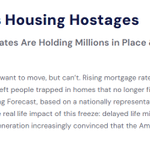
30 million homeowners have been told "wait for rates to drop" since 2022.
They waited.
Rates went from 8% to 6.5%.
This isn't a rate problem. The rate would have to fall to where it almost never goes.
The freeze is structural.
1
30
Jonathan Arad retweeted

Mortgage rates started the year falling. By the end of March they were soaring.
Whipsawing rates are now threatening to chill the spring home-buying season. on.wsj.com/4bNaKNm

Jonathan Arad retweeted

Mortgage rates in the US rose for a fifth straight week, dampening hopes for the key spring homebuying season bloomberg.com/news/articles/…
Jonathan Arad retweeted

Open Letter on Housing, Fannie & Freddie
@realDonaldTrump @pulte @SecScottBessent @FHFA @USTreasury $fnma $FMCC
We studied housing square footage per capita adequacy, and found that there is no problem there. The US in fact has more residential square footage per capita than any other country in the world. This is not a housing shortage, despite what so many say.
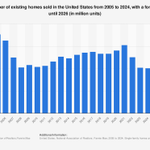
The problem is that bigger houses are inefficiently housing fewer people. The post-COVID low rate environment locked people into a lifecycle real estate position. Empty nesters can't sell, first time home buyers cannot buy. Second-hand home inventory is near all-time lows due to record low supply, not record demand. Prices are high due to the same reason.
Home equity is now a record $35 trillion, nearly doubling pre-COVID levels. 40% of homeowners own their homes free and clear - a record. And about 30% of all home buyers pay for homes without borrowing. Older homes were upgraded at a record pace during COVID, extending and refreshing the usefulness of residential real estate.
Artificially low interest rates, ~$6-7 trillion in helicopter cash and forgivable loans helped drive both the home updates and high housing prices.
Work from home moved the office into the home, often expensed or deductible. People with white collar jobs and means chose to live/work in exotic or remote locations.
All of this together does not speak of a housing shortage, or a housing problem.
Instead it is a problem of current residential space allocation and mobility, and this problem was created by government manipulation of interest rates, cash money supply, and COVID lockups that went on too long and changed work/home behavior.
Government created the problem and now maintains policies that prevent free markets from reaching a solution, not the least of which is keeping the GSEs inefficiently run while in conservatorship. Recall Pulte's video upon arriving at Fannie Mae - no one was in the office buildings. The companies have become atherosclerotic, inefficient government programs, while a decade of financial engineering optimized for homeowner wealth accumulation rather than housing market velocity/mobility/fluidity.
Government must fix this problem by facilitating efficient re-allocation of housing stock with higher housing velocity/mobility through the release of the GSEs into free markets.
This is a problem made for the GSEs. Through well-targeted programs, the GSE can help the free market find spaces to intelligently reallocate , and help US citizens with housing mobility.
Building more new overpriced, poorly built homes in increasingly dangerous flood zones and other hazardous fringe areas is not the solution. It adds to the problem through high maintenance burdens on new homeowners with little equity in their homes.
Rather, to build mobility/velocity of homeowners and housing space, the GSEs need to be recapitalized and retain easy access to capital markets. They also need to be run by real mortgage executives, not government functionaries.
To achieve this they need to exit conservatorship in a manner that excites markets to fund these companies, now with guidelines to prevent risk-taking outside of their purpose, and grow their purchases of mortgages of well-targeted specification.
I should have written this into the Recurrence piece itself.
Jonathan Arad retweeted

An excellent analysis on housing and Fannie and Freddie.

Open Letter on Housing, Fannie & Freddie
@realDonaldTrump @pulte @SecScottBessent @FHFA @USTreasury $fnma $FMCC
We studied housing square footage per capita adequacy, and found that there is no problem there. The US in fact has more residential square footage per capita than any other country in the world. This is not a housing shortage, despite what so many say.
The problem is that bigger houses are inefficiently housing fewer people. The post-COVID low rate environment locked people into a lifecycle real estate position. Empty nesters can't sell, first time home buyers cannot buy. Second-hand home inventory is near all-time lows due to record low supply, not record demand. Prices are high due to the same reason.
Home equity is now a record $35 trillion, nearly doubling pre-COVID levels. 40% of homeowners own their homes free and clear - a record. And about 30% of all home buyers pay for homes without borrowing. Older homes were upgraded at a record pace during COVID, extending and refreshing the usefulness of residential real estate.
Artificially low interest rates, ~$6-7 trillion in helicopter cash and forgivable loans helped drive both the home updates and high housing prices.
Work from home moved the office into the home, often expensed or deductible. People with white collar jobs and means chose to live/work in exotic or remote locations.
All of this together does not speak of a housing shortage, or a housing problem.
Instead it is a problem of current residential space allocation and mobility, and this problem was created by government manipulation of interest rates, cash money supply, and COVID lockups that went on too long and changed work/home behavior.
Government created the problem and now maintains policies that prevent free markets from reaching a solution, not the least of which is keeping the GSEs inefficiently run while in conservatorship. Recall Pulte's video upon arriving at Fannie Mae - no one was in the office buildings. The companies have become atherosclerotic, inefficient government programs, while a decade of financial engineering optimized for homeowner wealth accumulation rather than housing market velocity/mobility/fluidity.
Government must fix this problem by facilitating efficient re-allocation of housing stock with higher housing velocity/mobility through the release of the GSEs into free markets.
This is a problem made for the GSEs. Through well-targeted programs, the GSE can help the free market find spaces to intelligently reallocate , and help US citizens with housing mobility.
Building more new overpriced, poorly built homes in increasingly dangerous flood zones and other hazardous fringe areas is not the solution. It adds to the problem through high maintenance burdens on new homeowners with little equity in their homes.
Rather, to build mobility/velocity of homeowners and housing space, the GSEs need to be recapitalized and retain easy access to capital markets. They also need to be run by real mortgage executives, not government functionaries.
To achieve this they need to exit conservatorship in a manner that excites markets to fund these companies, now with guidelines to prevent risk-taking outside of their purpose, and grow their purchases of mortgages of well-targeted specification.
I should have written this into the Recurrence piece itself.
"Wait for rates to drop" was the plan.
Markets now pricing a 50% chance of a rate HIKE in October.
30 million homeowners. Still waiting. Still stuck.
When does the industry admit the exit has to be built, not waited for?
housingwire.com/articles/mor…
#mortgagelockin #housingmarket

46
1/10:
Hey everyone, as someone who's been digging deep into housing markets, I've heard the debates: Is mortgage rate lock-in overhyped? Some point to rising pre-COVID tenure, 40% of homes being mortgage-free, and first-timers keeping things moving. Solid arguments - respect to those views, but data tells me it's real and pumping up prices.
Here's my breakdown:
#HousingMarket #MortgageLockIn

1
62
10/10:
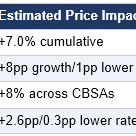
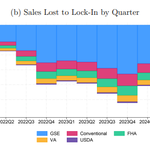
Wrap-up: Structural stuff matters, but lock-in's suppressed 1.7M+ sales, boosted prices 7-8%. Respect to differing takes - let's chat!
Denmark points to smarter paths.
Your thoughts? DM or reply. Full doc linked next comment
#HousingEconomics
1
1
46