

Engineer's logic with a racer's sense of urgency. Mortgages || Finance || Technology
Joined December 2014
- Tweets1.8K
- Following1.8K
- Followers217
- Likes466






Jonathan Arad retweeted

Mortgage rates started the year falling. By the end of March they were soaring.
Whipsawing rates are now threatening to chill the spring home-buying season. on.wsj.com/4bNaKNm

Jonathan Arad retweeted

Mortgage rates in the US rose for a fifth straight week, dampening hopes for the key spring homebuying season bloomberg.com/news/articles/…
Jonathan Arad retweeted

Open Letter on Housing, Fannie & Freddie
@realDonaldTrump @pulte @SecScottBessent @FHFA @USTreasury $fnma $FMCC
We studied housing square footage per capita adequacy, and found that there is no problem there. The US in fact has more residential square footage per capita than any other country in the world. This is not a housing shortage, despite what so many say.
The problem is that bigger houses are inefficiently housing fewer people. The post-COVID low rate environment locked people into a lifecycle real estate position. Empty nesters can't sell, first time home buyers cannot buy. Second-hand home inventory is near all-time lows due to record low supply, not record demand. Prices are high due to the same reason.
Home equity is now a record $35 trillion, nearly doubling pre-COVID levels. 40% of homeowners own their homes free and clear - a record. And about 30% of all home buyers pay for homes without borrowing. Older homes were upgraded at a record pace during COVID, extending and refreshing the usefulness of residential real estate.
Artificially low interest rates, ~$6-7 trillion in helicopter cash and forgivable loans helped drive both the home updates and high housing prices.
Work from home moved the office into the home, often expensed or deductible. People with white collar jobs and means chose to live/work in exotic or remote locations.
All of this together does not speak of a housing shortage, or a housing problem.
Instead it is a problem of current residential space allocation and mobility, and this problem was created by government manipulation of interest rates, cash money supply, and COVID lockups that went on too long and changed work/home behavior.
Government created the problem and now maintains policies that prevent free markets from reaching a solution, not the least of which is keeping the GSEs inefficiently run while in conservatorship. Recall Pulte's video upon arriving at Fannie Mae - no one was in the office buildings. The companies have become atherosclerotic, inefficient government programs, while a decade of financial engineering optimized for homeowner wealth accumulation rather than housing market velocity/mobility/fluidity.
Government must fix this problem by facilitating efficient re-allocation of housing stock with higher housing velocity/mobility through the release of the GSEs into free markets.
This is a problem made for the GSEs. Through well-targeted programs, the GSE can help the free market find spaces to intelligently reallocate , and help US citizens with housing mobility.
Building more new overpriced, poorly built homes in increasingly dangerous flood zones and other hazardous fringe areas is not the solution. It adds to the problem through high maintenance burdens on new homeowners with little equity in their homes.
Rather, to build mobility/velocity of homeowners and housing space, the GSEs need to be recapitalized and retain easy access to capital markets. They also need to be run by real mortgage executives, not government functionaries.
To achieve this they need to exit conservatorship in a manner that excites markets to fund these companies, now with guidelines to prevent risk-taking outside of their purpose, and grow their purchases of mortgages of well-targeted specification.
I should have written this into the Recurrence piece itself.
Jonathan Arad retweeted

An excellent analysis on housing and Fannie and Freddie.

Open Letter on Housing, Fannie & Freddie
@realDonaldTrump @pulte @SecScottBessent @FHFA @USTreasury $fnma $FMCC
We studied housing square footage per capita adequacy, and found that there is no problem there. The US in fact has more residential square footage per capita than any other country in the world. This is not a housing shortage, despite what so many say.
The problem is that bigger houses are inefficiently housing fewer people. The post-COVID low rate environment locked people into a lifecycle real estate position. Empty nesters can't sell, first time home buyers cannot buy. Second-hand home inventory is near all-time lows due to record low supply, not record demand. Prices are high due to the same reason.
Home equity is now a record $35 trillion, nearly doubling pre-COVID levels. 40% of homeowners own their homes free and clear - a record. And about 30% of all home buyers pay for homes without borrowing. Older homes were upgraded at a record pace during COVID, extending and refreshing the usefulness of residential real estate.
Artificially low interest rates, ~$6-7 trillion in helicopter cash and forgivable loans helped drive both the home updates and high housing prices.
Work from home moved the office into the home, often expensed or deductible. People with white collar jobs and means chose to live/work in exotic or remote locations.
All of this together does not speak of a housing shortage, or a housing problem.
Instead it is a problem of current residential space allocation and mobility, and this problem was created by government manipulation of interest rates, cash money supply, and COVID lockups that went on too long and changed work/home behavior.
Government created the problem and now maintains policies that prevent free markets from reaching a solution, not the least of which is keeping the GSEs inefficiently run while in conservatorship. Recall Pulte's video upon arriving at Fannie Mae - no one was in the office buildings. The companies have become atherosclerotic, inefficient government programs, while a decade of financial engineering optimized for homeowner wealth accumulation rather than housing market velocity/mobility/fluidity.
Government must fix this problem by facilitating efficient re-allocation of housing stock with higher housing velocity/mobility through the release of the GSEs into free markets.
This is a problem made for the GSEs. Through well-targeted programs, the GSE can help the free market find spaces to intelligently reallocate , and help US citizens with housing mobility.
Building more new overpriced, poorly built homes in increasingly dangerous flood zones and other hazardous fringe areas is not the solution. It adds to the problem through high maintenance burdens on new homeowners with little equity in their homes.
Rather, to build mobility/velocity of homeowners and housing space, the GSEs need to be recapitalized and retain easy access to capital markets. They also need to be run by real mortgage executives, not government functionaries.
To achieve this they need to exit conservatorship in a manner that excites markets to fund these companies, now with guidelines to prevent risk-taking outside of their purpose, and grow their purchases of mortgages of well-targeted specification.
I should have written this into the Recurrence piece itself.
Jonathan Arad retweeted

Here is my take on a potential solution for banks and credit unions with low-rate mortgages sitting on their balance sheets. creditunionbusiness.com/deta…
Jonathan Arad retweeted

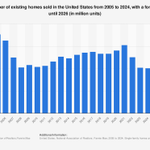
LOWEST NOVEMBER EXISTING HOME SALES SINCE 2008
Turnover remains strained
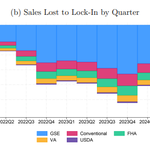
We’re missing a chunk of churn. Some homeowners who'd otherwise like to sell and buy something else aren’t doing so because they either don’t want to stomach the much higher payment or can’t afford it.

Jonathan Arad retweeted

President Trump Says He’s Looking At Emergency Action On Housing
President Trump says he is considering declaring a national housing emergency to tackle affordability while trying not to undercut existing homeowners’ wealth. He frames housing as a core store of net worth especially for older households and argues that rapidly expanding supply could push prices down in a way that hurts current owners, even as younger buyers struggle to enter the market.
A national emergency declaration would give him broad executive powers to act without Congress, potentially allowing the administration to free up federal land, waive or fast track regulations, reduce closing costs, adjust mortgage programs through agencies like Fannie Mae and Freddie Mac, and apply pressure on zoning and construction costs, all aimed at increasing access to housing without triggering a sharp price correction.
Jonathan Arad retweeted

Housing demand tanking at year end. Down 6% YoY and near lowest level in a decade.
At what point do people realize that "rate cuts" are a waste of time for housing market?
7 rate cuts in, and demand is still falling.
The only policy solution to fix housing is to bring prices down.


Jonathan Arad retweeted

The US Housing Market has reached the most unaffordable level in history, ever.


Jonathan Arad retweeted

"Housing is going to be a problem," Fed Chair Powell said. "We can raise and lower interest rates, but we don't really have the tools to address a secular housing shortage, structural housing shortage.
Jonathan Arad retweeted
Why has the housing market been frozen since 2022?
Because the cost to buy a house with a mortgage (green) vaulted way above the a) cost to rent and b) the mortgage cost for existing owners.
The net result is that few people have a financial incentive to move. Cheaper to stay renting, cheaper to stay in current house/mortgage.
But - one interesting trend we are beginning to notice is the mortgage payment for existing owners (orange) is now growing faster than rent.
This is reversed from the post-pandemic period. Where sub-3% mortgages and still cheap taxes/insurance made for a very low cost to own for existing mortgage holders.
Now - taxes and insurance are up, and more of the mortgaged population is holding a 6%+ rate. So the costs for existing mortgage holders are rising.
This likely means we'll see more existing owners elect to sell in 2026, as it becomes less profitable for the average homeowner to rent out their house. And more profitable to cash out on your equity, sell, and rent for a bit until market corrects.
Translation: expect more for sale inventory, and more downward price pressure in the for sale market.

Jonathan Arad retweeted

THE AMERICAN DREAM…
(TS: 21 Nov 13:52 ET)

Jonathan Arad retweeted

7th Oct Stand for Israel outside The Parliament House Queensland,
Australia.
My two granddaughters Paris and Diamond are in this Haka..Proud Grandfather and Proud to Stand.
Jonathan Arad retweeted

"'Shalom Hamas' means Hello and Goodbye - You can choose. Release all of the Hostages now, not later, and immediately return all of the dead bodies of the people you murdered, or it is OVER for you. Only sick and twisted people keep bodies, and you are sick and twisted! I am sending Israel everything it needs to finish the job, not a single Hamas member will be safe if you don’t do as I say. I have just met with your former Hostages whose lives you have destroyed. This is your last warning! For the leadership, now is the time to leave Gaza, while you still have a chance. Also, to the People of Gaza: A beautiful Future awaits, but not if you hold Hostages. If you do, you are DEAD! Make a SMART decision. RELEASE THE HOSTAGES NOW, OR THERE WILL BE HELL TO PAY LATER!"
–President Donald J. Trump


Jonathan Arad retweeted

I’m not surprised that Hamas is hiding in a school. I’m just surprised that the school is Harvard.
