

@tv7israelnews |TFTN | @JISS_Israel | @FDD | HGS | Christian, Husband, Father | 🇮🇱🇳🇱🇺🇸 | Proverbs 1:7
Jerusalem
Joined August 2011
- Tweets4.8K
- Following627
- Followers7.5K
- Likes22.9K
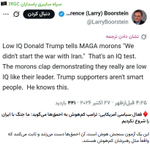



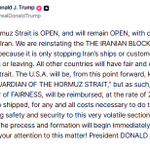



Spot on: “No one forced the United States to attack Iran then, or in February of 2026. It was a decision made by President Trump. In my opinion, it was the right decision.
Once the decision was made, we should not have stopped until the regime fell. But instead, you negotiated a cease fire that didn’t last, didn’t work and left us in no man’s land, with higher prices and our troops still deployed.
Our troops could have been home, the Navy returned to its bases, a peaceful regime in place , new alliances forged, and gas prices below $3.00 a gallon.
No, Mr. Vice President. It’s not the war. It’s the so-called cease fire.”

Mr. Vice-President,
Please allow me to present a different perspective.
The problem was not the Iran War. It was the cease fire.
If you start a war, you need to win it and finish it – otherwise don’t start it.
This war should have been over six months ago, with the Strait of Hormuz wide open and oil flowing. The second and third tiers of Iranian leadership should have been destroyed, and we should have supported the pro-western forces who could have taken leadership. We stood on the brink of a new, more peaceful Middle East - and then we blinked. We had a chance not only to deny Iran nuclear weapons, but to get rid of the world’s biggest supporter of terrorism.
Instead, we had a cease fire, which was followed by months of will we or won’t we finish the job. Every day was a different message. There still is. Is the war over? Is it about to begin? No one knows. There is confusion and inconsistency.
In June 2025, America was not involved. This was an Israel vs Iran issue.
No one forced the United States to attack Iran then, or in February of 2026. It was a decision made by President Trump. In my opinion, it was the right decision.
Once the decision was made, we should not have stopped until the regime fell. But instead, you negotiated a cease fire that didn’t last, didn’t work and left us in no man’s land, with higher prices and our troops still deployed.
Our troops could have been home, the Navy returned to its bases, a peaceful regime in place , new alliances forged, and gas prices below $3.00 a gallon.
No, Mr. Vice President. It’s not the war. It’s the so-called cease fire.
Let's be absolutely clear: the GOP losing the election has nothing to do with Israel.
I don't know who this admired pollster VP Vance talks about, but the exit polls consistently showed that domestic issues, including the cost of living and corruption, were the overwhelming top issues, not foreign policy.
One could argue that Operation Epic Fury may have been launched prematurely, irrespective of Abbas Araqchi's remark to Witkoff about the Ayatollah regime's capacity to produce 11 nuclear payloads.
However, I would argue the decision to abruptly stop the high-intensity operations against the butchers of Tehran on April 7th, merely 38 days into the campaign, diminished the impact of the joint CENTCOM-IDF initiative, which consequently prolonged the war.
Let's not forget that the decision to do so prematurely, for the sake of an MOU that bore no fruit, was triggered in response to Qatari, Turkish, and Pakistani claims that the Iranians were ready for serious negotiations on curbing their nuclear weapons program.
Blaming Israel for anything and everything, as is promoted by Tucker Carlson, may be trending these days. However, you know full well the added strategic value this alliance produces for the United States of America daily - and the qualitative edge you gain from this partnership.

One of the things the data analysts on our side obsessed over was "composition"—whether the electorate looked close enough to 2024 for Republicans to win. And despite polls that showed a Democrat blowout, the data kept on telling us the same story: in some states turnout was merely OK, in other states it was downright amazing, and in no state was it catastrophic. There was a genuine sense of optimism on our team: our people were showing up.
So, I asked the smartest data guy I know, does that mean we're going to shock the world? "No," he told me. "We might do better than the polls suggest. But the data is telling us that a lot of Trump/Vance 2024 voters are pissed and planning to vote for the other guys. Our voters are turning out, but they may not vote for us."
Well, that looks prophetic now. Our voters did show up. In Florida, for example, the electorate was 9 points more Republican than Democrat, just a couple points worse than 2024. Undoubtedly there were places we could have done better on turnout. But the main problem is not turnout. The main problem is that many people who voted for Trump/Vance in 2024 voted for Democrats in 2026.
There will be a lot of infighting and arguing over what happened and why that is. One of the pollsters I really respect told me that our economic messaging wasn’t sharp enough down the stretch. I’m sure that’s true.
But the real reason we lost is obvious to almost everyone.
Another pollster—one of the smartest people I know in politics, told me yesterday we’d lose the generic ballot by 13 points. I felt negative going into Tuesday, but even I was shocked by this. In his polling, he saw that a lot of Trump 2024 voters were angry and planning to vote for Democrats. He asked those voters who had abandoned us what would cause them to come back on our team. The top four answers, accounting for nearly all of the responses were:
1) End the war
2) Focus on cost of living/inflation
3) Put America First
4) Change our relationship to Israel
Our voters showed up. And the above four reasons are why many of them voted for Democrats. This is according to a pollster who nailed the results. While many spent Monday attacking Rachel Campos Duffy for calling for a diplomatic resolution to the conflict, it turns out her political advice was sound. (She’s also a great person.)
In the next few months, there's going to be a lot of gaslighting. Expect to hear any number of establishment politicians say the solution to our woes is amnesty. I'm open to the idea that we should change enforcement—by focusing more on businesses that hire illegal labor, for instance. But anyone pushing amnesty is lying to you.
The reason we lost is the war. The president himself said so last night.
If you'd like to argue it was worth it, that losing the Senate for the next 6 years was worth it, then do so. Argue it was a worthwhile cost to pay. Agree or disagree, that's at least honest.
But everyone knows why we lost. And any honest conversation about where we go from here must start there.
I remain hopeful about our country. To the people who are pissed off and want to say, “I told you so”: you’re right, you did tell us so. Take that energy into electing Republicans who share your worldview. To the people who are just pissed at the results, you should be. Let’s take that anger and get back to the work of saving our country.

False.
The Druze conveyed their list to Damascus and to the Biden Administration in parallel, even before Assistant Secretary Leaf met with a-Sharaa.
The deep concern at the time was rooted in the massacres that Jabhat al-Nusra (HTS) committed against the Druze and Christians in Idlib, years prior. In addition to the massacres in Idlib, al-Julani’s men were responsible for land confiscations, displacement, and forced conversions.
The subsequent agreements were reached between Bakhour and Sheikh Hikmat al-Hijri, particularly after the attacks by government-aligned militants against Jaramana and Ashrafiat Sahnaya. Moreover, the massacres of the Alawites on March 6 were also in the background.
The initial attack on a Druze-owned lorry, which left a man brutally beaten on the side of the road while transporting vegetables via route 109 on July 7, and the subsequent events that followed, to include the deadly attacks and forced displacement against innocent civilians on July 13-17 have naturally hardened the Druze leadership’s position vis-à-vis Damascus.

I met with Hijri twice in early-2025.
Both times, he used precisely the same line when asked about talks with the gov’t:
- “There’s no deal to be made with the takfiri jihadists in #Damascus.”
The idea that Hijri was pro-talks & open to a deal is fiction. Others were though.
These remarks are outright false. Sheikh Hikmat al-Hijri sought to negotiate integration into the “new Syria” early on. The request relayed to Damascus included a list of demands that aimed to guarantee protection to the Druze and Christians living in Suweyda. HTS rejected those demands outright. Nevertheless, with Israel in the background two agreements were struck late March and early May 2025, in which Damascus pledged to provide confidence-building measures, to include protection of the routes leading into Suweida. Since then, multiple attacks were recorded in Druze towns south of Damascus, and a massacre of the Druze and Christians of Suweida in July 2025, in which almost 2000 people, including women and children, were butchered, hundreds were kidnapped, and thousands more were wounded. Ambassador Barrack called this massacre a “hiccup”.
Were it not for Israel’s involvement, the death toll would have been much higher.
Since then, Damascus has maintained a blockade on Suweida, limiting essential goods from entering the region, hoping to choke the region into submission. This situation is ongoing to date, and more than 190 Druze remain in Damascus’ jails.

U.S. Ambassador to Türkiye Tom Barrack on Syria:
It's not Israel that worries me. It's a particular Druze sheikh who utilizes the perception of Israeli backing and some alignment with America to persecute other Druze.
Source: @MarioNawfal
A welcomed stance by King Abdullah II.

The terrorist attack against Karak will be met with the harshest retaliation. Those who delude themselves into thinking that they can divide Jordanians with their bullets have no chance in the face of our unity. All Jordanians, from north to south, are partners in land and fate, and nothing stands between them. Our deepest condolences to the families of the martyrs and we wish a speedy recovery to those injured.
Every Jordanian life is precious, and we will strike with an iron fist against those who dare to threaten our nation
A murderous terror attack in the Hashemite Kingdom of Jordan on Christians holding a funeral procession at a Church in Karak. At least seven murdered and many more wounded. Jordanian authorities must the culprits responsible. Christians must be protected! @GeorgeDeek @RepMarkWalker

So, in Tom Barrack's mind, the Ayatollah regime, which since 1979 murdered hundreds of thousands of Iranians, killed, wounded, or maimed thousands of Americans, Europeans, Australians, and Israelis, and exported terror around the globe, is not evil?
Condemning Colombia for opening an embassy in Israel's capital, Jerusalem (not occupied, nor illegal under international law), isn't great, to say it mildly.

#Statement | The Foreign Ministry expresses the Kingdom of Saudi Arabia’s condemnation and denunciation of the Colombian government’s opening of an “embassy” in occupied Jerusalem, in flagrant violation of international law and relevant international resolutions, and in direct prejudice to the legal and historical status of occupied Jerusalem.

The French government is dismayed by the postponement of the Palestinian legislative and presidential elections despite knowing full well that if elections were held today, the Muslim Brotherhood would win the majority on both counts. What does it say about FR threat perception?

#Palestine | Announcement of the postponement of Palestinian parliamentary and presidential elections


Brilliantly articulated @Doranimated !

Jonathan Keeperman (@L0m3z) gave a speech at the Nat Con conference, and I posted a crude reaction to it. He asked me politely if I would explain myself. Here is my response:
Jonathan, thank you for your gracious response to my rather ungracious characterization of your speech. I appreciate your civility. Let me explain what provoked my reaction.
I agree with your central premise. Today's political climate calls on us to justify the American-Israeli alliance in terms of American national interests. But after calling for a hardheaded accounting of costs and benefits, you never actually perform one. Instead, you offer a selective account of the grievances that some American nationalists harbor toward Israel and its supporters. At several points, you toggle almost imperceptibly between describing those grievances impartially to validating them, without acknowledging the toggle.
You came to Jerusalem while the United States and Israel were engaged in a war against Iran. American and Israeli forces have fought alongside one another on an extraordinary scale. Both countries have committed military power and made great sacrifices in a struggle against a common enemy. Yet you barely acknowledge the war, let alone consider what it reveals about the value of the alliance.
Surely that experience belongs at the center of any serious discussion of what America gains from Israel.
There is also a question of elementary respect. You came to a country at war to explain why Americans are growing weary of its demands on their attention and resources. You found time to discuss the immigration preferences of liberal American Jews and the political sins of the ADL, but not the soldiers fighting, the lives being lost, or the sacrifices being made in a common struggle. Whatever your intentions, that is a failure to recognize the gravity of the occasion.
And it is inseparable from the larger failure of your analysis. You tell us that Israel receives $3.8 billion annually in American assistance. But what does the United States receive in return? What is the value of Israeli intelligence, military power, technological innovation, and cooperation against common adversaries? What role does Israel play in America's competition with Iran, China, and Russia? What would it cost the United States to replace the capabilities and regional influence that the alliance provides?
These questions are the beginning of the prudential calculation you call for but never undertake. More importantly, what would happen if Washington weakened the relationship to the point that Israel concluded it could no longer rely on the United States?
No sane Israeli wants that outcome. But national survival may force Israel to contemplate it in the coming years. Israel would not simply disappear as a strategic actor. It would become a more independent one, making decisions about war, peace, deterrence, and relations with other powers with less regard for American preferences.
American support does not give Washington control over Israeli decisions, but it does help keep Israeli military power integrated into an American-led regional order. That is an asset with considerable strategic value. If Israel became a de facto free agent, Washington might save money and escape some immediate obligations, but it would also surrender influence over one of the most formidable military powers in the Middle East.
And Israel would not be operating in a vacuum. China and Russia would have opportunities to exploit the resulting realignment. Iran would have opportunities of its own. The regional order would change, and not necessarily to America's advantage.
Perhaps you believe this would be a good bargain. But you never consider the possibility, much less calculate its costs. You call for realism while leaving the most consequential strategic questions unexamined.
Your treatment of the American right is similarly selective. You emphasize the growing skepticism of younger conservatives, but you never mention that Donald Trump, the dominant figure in the nationalist movement you describe, has taken American military cooperation with Israel to unprecedented levels.
Trump recognized Jerusalem as Israel's capital, recognized Israeli sovereignty over the Golan Heights, withdrew from the Iran nuclear agreement, and brokered the Abraham Accords. In his second term, he went much further, committing American military power to a joint war against Iran. How does his record fit your account of national conservatism? Why does the behavior of the nationalist president receive less attention than the attitudes of young nationalists? Is Trump an anomaly? Does he misunderstand the movement he leads? Or might his support for Israel reflect a nationalist assessment of American interests fundamentally different from the one you describe? These questions are indispensable to your argument. Yet you don't address them.
I am also troubled by your treatment of antisemitism. You correctly observe that accusations of antisemitism no longer carry the political force they once did. But the declining effectiveness of an accusation tells us nothing about the reality or seriousness of the phenomenon it describes.
There has been a conspicuous resurgence of antisemitic rhetoric in parts of the American right. Influential voices have promoted the idea that American foreign policy is controlled by Jews or manipulated on Israel's behalf. Such claims encourage Americans to interpret strategic decisions through theories of sinister manipulation rather than through an examination of American interests.
Antisemitism, therefore, is not simply a problem for Jews. It is a problem for American national security, political judgment, and national cohesion. It also offers opportunities to foreign adversaries seeking to weaken the United States from within.
Yet in a speech devoted to explaining declining support for Israel on the right, you give remarkably little attention to the role that antisemitic agitation has played in producing that decline. Instead, you place considerable responsibility on Israel's American defenders. You blame neoconservatives for opposing Trump, liberal Jews for supporting immigration, and even the ADL for antagonizing populists.
Your reference to the ADL is particularly strange. What do the immigration preferences of liberal American Jews have to do with the strategic value of America's alliance with Israel? The ADL is an American Jewish organization, not an arm of the Israeli government. American Jews are predominantly liberal. They disagree with national conservatives on many domestic questions. So what?
Even if every criticism you make of the ADL were justified, what do they have to do with the value of Israel as an American ally? Nothing, unless one assumes that Israel bears responsibility for the political behavior of American Jews. That is precisely the kind of collective attribution that ought to be examined critically, not casually incorporated into an explanation of why Americans are turning against Israel.
The same problem appears in your treatment of America's wars in the Middle East. You say they are closely associated with Israeli interests. Associated by whom? Which wars? Which interests? And how accurately does that association explain actual American decisions?
You leave those questions unanswered. Instead, you point to deeply tendentious interpretations of American foreign policy -- ones often advanced by antisemites such as Tucker Carlson -- as though they were established facts. Arguments frequently employed by Israel's worst antagonists enter your speech disguised as an objective description of American attitudes.
This brings me to a broader problem with your method. You present yourself as a relatively detached observer of Israel and an informed observer of the American right. But throughout the speech, you alternate between describing the attitudes of nationalists and adopting their explanations for those attitudes. Reporting that some conservatives blame Israel for America's Middle Eastern wars is one thing. Treating that blame as an adequate explanation of their alienation is another.
Political attitudes do not develop in a vacuum. Personalities, institutions, and campaigns of persuasion shape them. Yet your account assigns considerable agency to Israel's defenders, whose conduct supposedly alienated the nationalist right, while giving remarkably little attention to the people on the right actively encouraging hostility toward Israel and Jews based on the most vile lies. You thus present the consequences of an ideological struggle as though they were an impersonal historical development to which Israelis must accommodate themselves.
Finally, there is something peculiar about the posture of the speech itself. You begin by explaining that Israel has never occupied a central place in your thinking and that you make no claim to expertise about it. Fair enough. But you then proceed to deliver sweeping judgments about the future of the alliance and the political adjustments Israelis must make.
There is nothing wrong with an outsider offering uncomfortable observations. But the authority of those observations depends on their accuracy, not on the speaker's professed detachment. You conclude by imagining an Israel that Americans "do not have to think about."
But the Middle East will not cease to matter to the United States simply because Americans grow tired of thinking about Israel. Iran will not abandon its ambitions. China and Russia will not relinquish their interests. And Israel's enemies will not stop threatening it because American voters would prefer to concentrate on domestic affairs.
The question is whether America is better positioned to manage those challenges with Israel as a close ally or with Israel acting increasingly on its own. That is the prudential question you say would should address. It is also the question your speech conspicuously avoids.
I don't know you. I have no basis for judging your intentions. I accept that you may regard your speech as a candid warning delivered in good faith. But whatever your intentions, its effect is to give a veneer of dispassionate analysis to a series of highly dubious claims about Israel, Jews, and American foreign policy. That is what I objected to. And it is why I reacted so strongly.
TR's Foreign Minister Hakan Fidan pushes back at reports on Ankara's commitment to help Riyadh against the Houthis in Yemen.
Turkish Foreign Minister Hakan Fidan on Mecca Pact:
I also want to state that the cheap political rhetoric that occasionally surfaces here does not match reality.
On the ground in Yemen, the legitimate government forces are continuing their existing struggle.
Saudi Arabia supports them, but on the other hand, we are also doing everything we can to resolve this through peace and dialogue. Saudi Arabia has constructive support in this regard, and this is what it is called.
A defense agreement means that when a country that is party to this agreement comes under attack, you stand by them for their defense.
This is not an attack agreement.
Türkiye is not going to send its troops to another country's territory and launch an attack there. It is a defense agreement.
4
274
I’m thankful for the group of retired military leaders and legal experts, many of whom I’m privileged to call friends, who stand-up against this evil defamation against the state of Israel. @RobertKennedyJr said it succinctly, “The Muslim Brotherhood's Qatari funded global propaganda campaign makes Joseph Goebbels look like a piker.” We cannot and won’t stand idly by while these deceiving demons rage rampant. The day of reckoning will undoubtedly come - sooner than they realize.

Breaking: "As retired senior military leaders and legal experts, on this, the third anniversary of Hamas's October 7, 2023 brutal attack on Israel, we reject claims that Israel committed genocide in Gaza." @jinsadc
I am honored to be a part of 76 retired U.S. officers (including 13 Generals, 27 Lieutenant Generals, 19 Major Generals, 5 Brigadier Generals) Refuting the Genocide Allegation Against Israel.
jinsa.org/wp-content/uploads…
"The precedent established today regarding Israel will shape the conditions under which American forces fight tomorrow. Protecting civilians and preserving the ability of our nation to defend itself requires us to defend the truth when the laws of war are being distorted to make false charges of genocide."


Thank you @SebGorka !

11
393
This is the product of result driven individuals overseeing a process-oriented task. And yet, I do ask myself, has Sharaa's Damascus lived up to all of Washington's initially articulated prerequisites?

President Trump opened the door to Syria’s recovery. Restoring financial connectivity is how we help turn that opportunity into lasting prosperity.
Pleased to join the Treasury banking roundtable with Syrian financial leaders and U.S. banks and payment providers. Combating illicit finance, advancing credible reforms, and rebuilding confidence are essential to responsibly reconnecting Syria to the global financial system.
Another foundation stone in @POTUS’s bold vision to give Syria a chance.