

Professor of Psychology, Neuroscience, and Cognitive Science. Rants and raves about cognitive control and computational neural models mostly
Indiana, USA
Joined August 2016
- Tweets462
- Following487
- Followers911
- Likes2.9K




Annual reminder that gratitude is good for you

Gratitude has lasting effects on neural activity. Happy Thanksgiving all!
scholar.google.com/citations…

2
122
With Thanksgiving approaching, a new article featuring our research on gratitude theepochtimes.com/health/gra…

39
A pleasure to do a long-form podcast with Matt @MightyPursuit on my new book Proving a Miracle

3
4
93
from the Cornell report: "Students also remarked on this pressure with respect to their use of AI. Almost every student we heard from expressed a sincere aversion to using AI to do their classwork for them. Nevertheless
1
161
Why do we think we have free will? The perception of free will correlates with activity in the cingulate and middle frontal gyrus. New biorxiv preprint with @ModakPriyamvada

Note this does not prove we have or don't have free will, but it does show brain regions involved in the perception that we have free will. biorxiv.org/content/10.64898…
1
46
Our study of prayer effects on pain/anxiety in the news

Just 5 minutes of prayer could have surprising health benefits, study finds | Khloe Quill, Fox News
Adult patients experienced significant relief from pain and anxiety after just five minutes of in-person prayer, as found in a randomized controlled trial.
The study, led by researchers at the University of Maryland School of Medicine’s Department of Family and Community Medicine, compared the effects of direct prayer to the effects of listening to music, revealing that prayer provided greater and more sustained relief for both symptoms.
"Prayer is powerful and beneficial on many levels," Jesse Bradley, pastor of Grace Community Church in Washington, told Fox News Digital.
According to statistics cited in the study, prayer is the most used form of complementary medicine in the United States, relied on by 43% of Americans.
The researchers focused on a practice known as proximal intercessory prayer (PIP), which is defined as in-person, face-to-face prayer directed toward another individual’s well-being.
The research team recruited 180 adult patients from a family medicine waiting room, according to a press release. All participants had previously reported experiencing moderate to severe pain, anxiety or both.
Following their standard medical appointments, the patients were randomly assigned to one of two groups: the prayer group, in which participants received five minutes of in-person Christian prayer delivered by a trained volunteer, and the music group, where they spent five minutes listening to music.
The researchers then tracked changes in the participants' self-reported pain and anxiety levels at multiple intervals: immediately after the five-minute session, at two weeks and at six weeks.
"It was very well-received," Katherine Jacobson, MD, assistant professor of family and community medicine at the University of Maryland School of Medicine, told Fox News Digital. She noted that 97% of participants said they were "neutral or supportive" when asked about having this kind of prayer available as part of their medical visits.
The study, which was published in The Annals of Family Medicine, revealed that while patients in both groups showed improvements, those in the prayer group reported substantially greater relief.
Bradley, who was not involved in the study, described the transformative power of prayer through "healing and comfort," and shared that he himself once went through a long, painful recovery process.
"Daily prayer was essential in my healing journey," he shared.
For pain reduction, the individuals who received in-person prayer experienced greater drops in pain intensity immediately following the session. This superior level of relief remained evident during the two-week follow-up compared to the music group, the researchers found.
For anxiety reduction, the benefits of prayer were even longer-lasting. The prayer recipients reported significantly greater reductions in anxiety immediately after the session, and these positive effects remained statistically significant at both the two-week and six-week checkpoints.
"We expected that patients who expected prayer to work would benefit more, but that wasn't what we found," Jacobson said.
"Religious affiliation, religious intensity and expectancy of healing did not predict who improved," he went on. "Benefits appeared across a wide range of patients, including those not of the Christian faith and those who did not expect the intervention to help them."
The study had some limitations, the researchers acknowledged, primarily that it could not prove that prayer itself caused the improvements.
The team also noted that patients receiving prayer had human contact, while the music control group did not. The eye contact and gentle laying of hands from the prayer volunteers may have had an impact, as that type of contact is known to reduce pain.
The authors hope to conduct future studies with a control group that receives interpersonal contact but no prayer.
"For physicians and health systems, the study supports continuing to ask patients about spiritual care preferences as part of whole-person care, and considering whether trained Christian volunteer prayer practitioners could be integrated into outpatient settings for interested patients," Jacobson said.
The researchers suggest that PIP could serve as a low-cost, non-pharmacologic and effective complement to standard medical care.
Rather than replacing traditional treatments, the authors indicate that this type of brief, faith-based intervention could be integrated into primary care settings to help manage pain and anxiety.
foxnews.com/health/5-minutes…
Our new research on spiritual practices, pain, and anxiety, full story in my new book Proving a Miracle foxnews.com/health/5-minutes…

Medical science make new cures possible that previously would have been miracles. My new book Proving a Miracle explores what cures are possible. christianpost.com/news/elon-…

2
86
Functional neurological disorders, placebo effects, and healing prayer - My recent podcast with @mindbodygreen podcasts.apple.com/us/podcas…

1
94
Our new randomized controlled trial of in-person healing prayer for pain and anxiety in a medical setting – five minutes of healing prayer vs. music control causes improvements lasting weeks annfammed.org/content/24/3/1…
2
135
Most of you know me as a professor working on computational and cognitive neuroscience, but today I’m announcing a new project, one very personal. Over 20 years ago I was diagnosed with a brain tumor. I thought my life would end within a few years, but that started me on a path of looking for a miracle. Since then I’ve seen many remarkable healings around the world, including my own, and that led me deep into a research direction of investigating miraculous healing claims, analyzing them from the perspective of neuroscience and psychology, including placebo effects, conversion disorder and more. Some of what I found may surprise you. The story of that journey is in my new book Proving a Miracle, on sale today from @HarperCollins . joshbrownneuro.com/

Hey fellow neuroscientists, find me @joshbrownneuro (dot) bsky (dot) social
thetransmitter.org/community…
2
259
awesome to see the Nobel prizes in both physics and chemistry this year going to neural network pioneers.
5
287
📢Open-rank faculty search in the Neuroscience of Aging at Indiana University. Apply by 10/21 - come be my colleague!
Junior: indiana.peopleadmin.com/post…
Senior: indiana.peopleadmin.com/post…
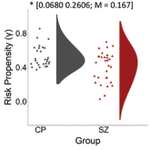
New paper out today w/ @EmmaHerms -- schizophrenia associated with lower risk taking propensity and altered risk perception doi.org/10.1093/schbul/sbae1…


1
1
190
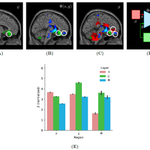
New paper out today - our work on non-invasive deep brain stimulation with temporal interference methods. TI can safely cause fMRI BOLD activation in human orbitofrontal cortex, without stimulating the overlying cortex. doi.org/10.1016/j.brs.2024.0…


congrats Rick! we'll miss you for sure here!
This Post is from an account that no longer exists. Learn more
1
358
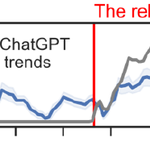
Congrats @huzicheng for the shout-out to your paper on LLM use in scientific papers in @ScienceMagazine science.org/content/article/…
1
5
370
How to detect LLM use in scientific papers - new preprint by @huzicheng doi.org/10.1101/2024.03.25.5…


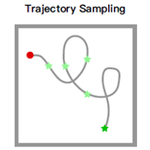
How does goal-directed behavior work? New deepGOLSA computational model and fMRI results with @huzicheng outperforms deep reinforcement learning (1/4) biorxiv.org/cgi/content/shor…
