

“The right to exclude others is one of the most treasured rights of property ownership.” — — Cedar Point Nursery v. Hassid, 594 U.S. 139, 149 (2021)
Joined August 2025
- Tweets120
- Following133
- Followers36
- Likes161




Pinned Tweet
Laws should be judged by their results, not their intentions.
The City Council wants to investigate how many rent-stabilized apartments are sitting vacant. Good. Count them. But whether the number is 57,000 or something smaller, empty apartments are only part of the cost to society.
Start with the financial damage.
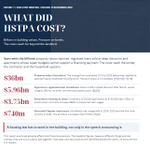
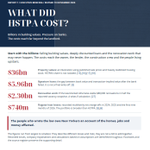
Our report’s comparison of 2019 and 2025 sale prices illustrates roughly $36 BILLION in property devaluation across the selected stabilized housing stock.
After Signature Bank failed in a run on deposits, transactions involving its rent-regulated mortgage pools implied a nearly $6 BILLION markdown.
Those figures overlap, and they cannot all be attributed to HSTPA. But they describe serious financial distress in the buildings New Yorkers depend on for housing.
Now look at what it takes to bring one apartment back.
Take a vacant apartment with an $800 legal monthly rent and a $150,000 renovation bill. Under today’s general small-building improvement allowance, the permitted increase is about $179 a month.
New rent: $979.
Borrowing $150,000 at an assumed 7% over 20 years costs about $1,163 a month.
The ENTIRE rent does not cover the renovation loan—before property taxes, insurance, heat, water or maintenance.
How is that apartment supposed to reopen?
At $150,000 each, renovating even 25,000 apartments would represent $3.75 BILLION in potential work. That is money for electricians, plumbers, carpenters, architects and suppliers. When projects cannot be financed, the consequences reach workers’ paychecks, public revenues and families looking for a home.
And the damage reaches inside occupied apartments.
A November 2026 working paper estimates that HSTPA increased immediately hazardous violations by 25.3% and reduced apartment-renovation filings by 47.3%, relative to comparison buildings.
For tenants, deterioration can mean leaking ceilings, mold, unreliable heat and missed work waiting for repairs. These are costs paid in discomfort, time and the daily indignity of living with problems that never seem to get fixed.
Tenant protection has to include a safe, livable home.
Owners face losses and foreclosure. Lenders pull back. Repairs wait. Prospective renters compete for the homes that remain available. The consequences spread far beyond the person who owns the building.
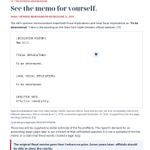
Albany’s 2019 fiscal memorandum described the state and local fiscal consequences as “To be determined.”
Seven years later, New Yorkers deserve an accounting.
Protecting tenants requires buildings that can afford to function. Good intentions do not replace a boiler, repair a roof or pay a construction crew.
Count the vacant apartments. Count the costs to society. Fix the law.
Full report: pdfhost.io/v/nFdrHH9yen_HSTP…
@NYSHCR @GovKathyHochul @AndreaSCousins @CarlHeastie @BrianKavanaghNY @LindaBRosenthal @NYSComptroller @NYDFS @NYCMayor @ZohranKMamdani @NYCCouncil @SpeakerMenin @CMFarahLouis @CMPiSanchez @NYCHousing @NYC_Buildings @NYCFinance @NYCComptroller @NewYorkStateAG @NYSenate @NYSA_Majority @NYGov @NYCGov @NYCMayorsOffice @NYCBudget @NYCIBO @Jamie_LeFrak @amkorchak @eccles_lincoln

Takings_Clause retweeted

We have people blaming our dysfunctional society on Israel or Pedophiles but everyone ignores that our own government has created a self inflicted crisis by making it extremely difficult to do things. We need to end this.



Takings_Clause retweeted

Is Prohibiting Sale Of Residential Rental Property Unless A Govt-Certified Nonprofit Gets First Dibs A Taking? Jennifer Polovetsky Analyzes inversecondemnation.com/2026…

Takings_Clause retweeted

Bad laws create bad results.
When the City Council decided to effectively ban new hotels (46-1, I was the 1), at the same time as giving over the existing stock for homeless and migrant shelters, supply & demand created this reality. ⬇️

Takings_Clause retweeted

This is why the *trend line* matters so much.
49,426 NYC rental vacancies in 2024.
57,421 NYC rental vacancies in 2025.
Mamdani claims that a unit is not truly vacant unless it's been vacant for 5 years.
He used this as the working definition of vacancy during his interview with Andrew Ross Sorkin at the DealBook Summit.
Based on that benchmark, a unit would have to be vacant starting in 2021, which was only 2 years after the passage of the 2019 Housing Stability and Tenant Protection Act, or HSTPA.
The HSTPA is a major accelerator of vacancies.
By anchoring 2021 as the benchmark, he creates a frame by which we can't see the trend line in a post-HSTPA world.
As you can see here, that trend line is significant.
You can quibble all day about the exact number. (And Mamdani loves to try to claim that number is smaller than the 57,421 reported here.)
But you can't argue with the trend line.
(Note: Everything in this post is discussing specifically NYC rent-stabilized units. Point-in-time analysis of housing stock measured as of April 1st of each year.)


Takings_Clause retweeted

“The court said the rent freeze is legal”
No, that’s actually not what the court was being asked to decide. The court was being asked to determine if the RGB process had been used incorrectly.
What the court said is that it does not have the power to legislate from the bench. The law as written gives the board wide latitude to interpret whatever data it wants, relevant or not, to decide what rents should be.
The court also said the communication between the Mayor's office and the board chair "puts a dark shadow" over the board's independence, but that without more corroboration in the record, it could not conclude City Hall dictated the vote.
The decision itself acknowledges the freeze "may have detrimental impacts" on the industry.
Finally, the court admonished the Mayor personally. Calling his campaign guarantee of a rent freeze "reckless and irresponsible." The board process is supposed to be fact-based and independent.
Regardless, owners have been operating as if the freeze is in effect since Oct.
That is exactly why Albany lawmakers need to address the crisis in rent-stabilized housing. A rent freeze while every single operating cost has exploded will only deepen insolvency and stop further lending.
Takings_Clause retweeted

Mamdani told DealBook there's a "responsibility to deliver" that includes working with Trump. In @CityJournal, I argue he should bring that same openness to policy. Let owners recover renovation costs, and thousands of vacant rent-stabilized units would soon be back on market.

People look at NYC’s eviction timeline doubling and think, “Good—fewer people kicked out.”
That gets the economics completely backwards.
In NYC Housing Court, the median time from filing to lockout for a holdover more than doubled—from 189 days (~6.2 months) in 2018 to 411 days (~13.5 months) in 2023–25 on an apples-to-apples lookback. In 2025, the actual median hit 477 days (~15.7 months), with 72% of cases taking over a full year (and nonpayment cases aren't much faster at 442 days).
Turning a court process into a 15-month purgatory doesn’t fix affordability—it acts as a hidden tax on the entire rental economy:
1. Higher rents for everyone who pays on time. When recovering a unit takes 15+ months of unpaid rent, taxes, heat, and legal fees, landlords price that tail risk into every new lease. Economic research consistently shows eviction delays get passed directly onto paying renters through higher market rents—with the steepest burden hitting lower-income tenants.
2. Brutal tenant screening. If a single bad lease becomes an uncollectible $30k–$50k+ loss, landlords treat every apartment like a high-risk unsecured loan. That’s why NYC has insane 40x income rules, 700+ credit cutoffs, and third-party guarantor fees. The people locked out aren't wealthy—they're working-class families, freelancers, and immigrants with thin credit files.
3. Decaying rent-stabilized buildings. Market-rate owners can raise rents to cover court delays. Rent-stabilized owners—especially under NYC’s new 0% rent freeze—can’t. Fifteen months of lost cash flow drains maintenance reserves, accelerates deferred repairs, pushes mortgages toward default, and shrinks the supply of habitable affordable housing.
4. Collateral damage to good neighbors. Holdovers include nuisance and lease-breach cases. A 15-month court backlog means law-abiding tenants have to live next door to an unresolved safety or nuisance problem for over a year.
A functioning housing market needs fair due process—not a broken court system that takes 15+ months to enforce a lease. Delay isn't a safety net; it's a hidden cost paid by every honest renter in the city.

City Hall insists repealing the 2019 HSTPA would trigger mass evictions. I tried to test that claim using official NYC Housing Court & Marshal execution data for non-nonpayment ("holdover") evictions before (2017–18) and after (2023–25) the law.
Here’s the problem: you can’t verify the claim from public data.
The files aren't sealed—they’re functionally un-auditable. In 99.6% of executed holdovers, the court's public database just says "Holdover" without listing the actual reason (owner use, non-primary residence, nuisance, lease expiration, etc.) or verified rent-stabilization status. Worse, 99.95% of 2017–18 case files sit in off-site paper archives, and HSTPA cut off bulk court feeds.
Below is what the citywide data does show across ALL NYC housing (not just rent-stabilized): holdover executions dropped (~6,011/yr to ~3,650/yr, or ~4,091/yr gap-adjusted), while median time from filing to lockout more than doubled (189 days to 411 days) as stipulations replaced defaults.
Before the Mayor claims repealing HSTPA will unleash mass evictions of rent-stabilized tenants, City Hall should explain what data it’s using—because NYC’s own court data doesn’t track the eviction grounds.

Takings_Clause retweeted

Claiming something is not true when it is doesn’t fix it.
We are losing units because you have to pay $100k to renovate and then rent it at $800. Better to leave it empty.
Foreclosures are failing at auctions.
The government is the source of housing problems in NYC.
Takings_Clause retweeted

@adamlehodey has done excellent work on why landlords leave apartments vacant, and no, its not because they are wealthy and greedy.
Lets look at the numbers:
A one-bedroom on East 6th Street, near Tompkins Square. Similar units in the building rent for about $3,500. This one is rent-stabilized and sits empty (pictured below).
The landlord's calculation:
Renovation to make it livable: $100,000 minimum
Operating cost per unit: about $1,028/month (Rent Guidelines Board, 2023)
Maximum legal rent after renovating: $1,211/month
Best case scenario:
$1,211 rent − $1,028 operating = $183/month
$100,000 ÷ $183 = about 45 years to earn the renovation back, with zero interest
Finance it at an assumed 7% over 15 years (about $899/month):
$1,211 − $1,028 − $899 = −$716/month
That's a LOSS of roughly $8,600 a year to rent it out.
The building's other stabilized unit caps at $955, which is below operating cost before any renovation.
Every renovation decision is a basic empirical question, and New York's rules make the answer negative for many landlords. You can't regulate your way to more housing if the regulation makes housing a losing investment.
cityjournal.substack.com/p/w…
#NYC @NYCMayor @andrewrsorkin #Affordability

Takings_Clause retweeted
Yes, there are actually thousands of vacant apartments in NYC because landlords can't raise rents.
There is an active legal case involving two such landlords. Brothers Pashko and Tony Lulgjuraj, who spent decades working as a doorman and building superintendent, eventually achieved the American Dream by purchasing their own apartment building in Upper Manhattan.
But New York City's rent stabilization laws have made it financially unfeasible for them to rent out several apartments, including a two-bedroom unit capped at just $700 per month, despite an identical apartment directly below it having a legal rent of $2,500.
With the help of the @IJ, the brothers are challenging these restrictions in federal court, arguing that they violate constitutional property rights and arbitrarily keep housing off the market.
ij.org/case/nyc-vacant-apart…
#Affordability #NYC @andrewrsorkin

Takings_Clause retweeted

No. He's not. Their relying on a very speculative NYtimes article that claims the Brooklyn and Queens vacancies just HAVE to be unrented 421a buildings because why would there be wrecked very cheap rentals in the cool neighborhoods if Brooklyn and Queens. This is factually totally false. The zombie vacancy rate in the pre-74 buildings in the 3 highest deciles of stabilization in Q and Bk is running 10% now.
No tenant is harmed by resetting the rent on a vacant unit.

-NYC's unusual 1990s option to exit regulation through eviction was a big incentive for harassment
-Normal vacancy resets wouldn't deregulate the unit, so the incentive is different
-Fixing a distressed building w/rents <$1k/mo would *eventually* require resetting those units. Is that mass eviction? I wouldn't call it mass eviction when it's slow natural turnover, but it is true that in the long run unsubsidized HTSPA buildings must either match income to expenses or physically collapse
22
Takings_Clause retweeted

> Mamdani pushes a law that will increase the cost of doing business
> Amazon is passing the cost onto the consumer
> Mamdani *shocked*
> Still calls for passing the law
> “Why would Amazon do this?”
DSA members are economically illiterate and will bring everyone down