

The Kempner Institute for the Study of Natural and Artificial Intelligence at @Harvard University. RTs ≠ Endorsements
Cambridge, Mass
Joined November 2022
- Tweets1K
- Following360
- Followers4K
- Likes370




Pinned Tweet
What is the #KempnerInstitute? Watch a short video feature to dive deeper into our mission and meet the researchers behind it: bit.ly/49ODO2K #AI #ML #NeuroAI #neuroscience @Harvard

✨NEW: RAX, an agentic robotics system that learns by scaling online exploration, with #KempnerInstitute's @du_yilun and led by @RunhanH and @xczhangxx.

Robotics has spent years scaling demonstration data and model size. What happens when we scale EXPLORATION for robot agents?
We're incredibly excited to share RAX, an agentic robotics system that learns by scaling online exploration.
A coding agent connects directly to the robot’s perception and control APIs, learns from feedback, and builds programs that perceive, plan, and act. The model stays frozen. As exploration scales, the agent improves its programs and builds up reusable skills.
The results:
• ZERO teleoperation or action demonstrations on real robots—from insertion with 0.1 mm clearance and air-fryer manipulation to deformable objects and long-horizon mobile whole-body control.
• +37 percentage points on average over leading learned policies across five simulation benchmarks: RoboDojo, BEHAVIOR-1K, HumanoidArena, DexJoCo’s bimanual tasks, and LIBERO-Pro.
• One framework spanning single-arm, bimanual, dexterous, humanoid, and mobile robots, with new embodiments connected through APIs.
The craziest part: on each real-world embodiment, going from scratch to mastering the tasks took roughly two hours. No teleop. No model finetuning.
We’re open-sourcing the full framework AND every experiment session. We can’t wait to see what people build with it!
Project + sessions: robot-agent-exploration.com/
Paper: assets.robot-agent-explorati…
GitHub: N
Project fully led by @RunhanH and @xczhangxx who are absolutely awesome.
How it works, experiments, and robot videos below 🧵
(1/N)
Kempner Institute at Harvard University retweeted

🚨New preprint: Interference Beyond Geometry in Concept Extraction
Interference between learned features is almost always measured as geometric overlap. But geometry only tells you what could interfere. Co-activation tells you what does!
We introduce effective interference: geometry × co-activation statistics. It captures not just how features overlap, but how they are actually used together.
Why it matters for sparse autoencoders (SAEs): the encoder produces the codes, so how you build an SAE changes which interference it learns.
This is a work with Valérie Costa (@_valerie_costa_) done at @UAlberta/@AmiiThinks. Valérie is now at @Harvard/@KempnerInst for her PhD studies. 1/
paper: arxiv.org/abs/2609.35351
#KempnerInstitue researchers consider how market-like rules can help groups of AI agents solve hard problems together... check out the animation below and our recent article about the preprint: bit.ly/4wOAwrI


Leonard Read's pencil story: no one knows how to make a pencil from scratch, yet millions are made without a central manager. Each worker knows only their part. Incentives, not central control, coordinate their efforts.
Current multi-agent AI seems to work the opposite way. A central manager does everything: assigns roles, writes the workflow, and decides who acts next. As agents increase and tasks get harder, that manager might become the bottleneck: it should understand every agent and every task, and adaptation becomes inefficient.
So how can a group of machine agents organize themselves into something none of them could achieve alone? Further, how can that society of agents keep improving itself over time?
In Economy of Minds (EoM), we show that simple local incentives can drive global self-coordination and self-improvement for modern LLM agents. We let agents live in a minimal economy: they compete for work, earn by helping others succeed, and go broke when they don't. Workflows, specialists, and improvement naturally emerge, with no one in charge.
Across 5 domains (math reasoning, financial research, scientific research, accelerator design, and distributed-system optimization), limited agents grow into strong societies.
The whole idea in a 90-second cartoon👇
Kempner Institute at Harvard University retweeted

This is a joint search with the @KempnerInst . Great opportunities and computational resources


📢 Meet the fall 2026 cohort of KURE undergraduate student researchers! We're so excited to welcome them this fall and see what they'll discover at the #KempnerInstitute. 🔗 Learn more about their projects and mentors here: kempnerinstitute.harvard.edu…

✨NEW: check out work from #KempnerInstitute's @Jaeyeon_Kim_0, @sitanch, @du_yilun and collaborators on a simpler way to build and train one-step models👇

Today, we introduce Priming Models, a new paradigm for training one-step generative models from scratch.
No diffusion teacher. No flow map. No CFG. No JVP.
We believe this work will challenge how we think about building one-step models.
Joint work with @sitanch, @du_yilun, @parkwbin03, Bohyung Han.
🔥 1.19 FID one-step on ImageNet 256×256 while using substantially less compute, e.g., 12X less than Drifting-B, 6X less than Drifting-L
🎨 Scales to text-to-image generation (GenEval 0.82)
🤖 World modeling on RT-1 / Bridge-V2
Priming Model is built on one core message: [Reconstruction pretraining --> Distributional post-training].
If you're wondering how much representational diversity exists around a trained network, check out new work from #KempnerInstitute's @AnnHuang42 @KanakaRajanPhD and collaborators 👇


📢✨Excited to announce this year's lineup for the 2026-27 Kempner Seminar Series, which kicks off Oct. 16! Check out the full speaker lineup for what promises to be a great series on the latest research related to natural and artificial intelligence! bit.ly/4j7PeHf

Do language models compute with the shapes in which they internally store numbers? Check out newest preprint from #KempnerInstitute researchers to learn more... @OrgadHadas @sumedh_hrs @thomas_fel_ Demba Ba

📢 #KempnerInstitute is hiring! We are recruiting for two new faculty roles: Tenure-Track Professor in Computer Science as well as Assistant Professor of Neurobiology. Learn more: bit.ly/4ACLdki @ShamKakade6 @blsabatini

SFT learns better than you think!! #KempnerInstitute researchers find it often generalizes better and forgets less than RL and OPSD... From @aakaran31 @sitanch @du_yilun 👇

New work from #KempnerInstitute explores when biological reasoning models use their biological inputs ... authored by @AdaFang_ Nikitha Thoduguli, @LukasF212 @_hanlin_zhang_ @ShamKakade6 @marinkazitnik

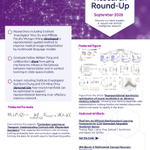
NEW: Kempner Research Roundup: September 2026! 🧠💡 Discover the latest research in natural and artificial intelligence from the #KempnerInstitute: bit.ly/4hZNdM9

#KempnerInstitute's @marinkazitnik talks to @Nature about #AI-agent collaboration in wet lab experiments... more on verification of AI outputs in biology from Kempner researchers here: preprints.org/manuscript/202…


AI titan Anthropic has launched a biology ‘wet lab’ where human scientists and AI agents will work together to design and conduct experiments. The company has released one of the team’s first finds: a peculiar pattern of DNA in the genomes of several giant viruses.
go.nature.com/46K4qmC

Kempner Institute at Harvard University retweeted

EoM has been accepted to #NeurIPS2026 @NeurIPSConf 2026 🎉🚀
See you in Atlanta! ♥️
Paper: arxiv.org/pdf/2606.02859
Imagine a population of machine agents. Each might be strong on certain tasks but fundamentally limited: partial tools, partial observations, finite context, bounded compute.
How can these agents self-orchestrate and self-evolve into stronger collective intelligence to solve tasks beyond any single agent's capability?
Instead of designing the multi-agent system itself, we propose designing the incentives that govern it.
We put agents in an economy. They compete, trade, get wealthy, go bankrupt, and mutate, forming an alive society where coordination and adaptation automatically emerge in a decentralized manner.
Kempner Institute at Harvard University retweeted
LOTION 🧴 has been accepted to #NeurIPS2026!! 🎉🚀

✨NEW: mechanistic evidence linking creativity & hallucinations ... from #KempnerInstitute's @OrgadHadas and collaborators... on it's way to @COLM_conf ... check it out 👇

Check out our new work, to be presented at @COLM_conf!
We find mechanistic evidence that creativity and hallucinations are tied together.
Working on this made me realize that some of the same mechanisms that make LLMs useful may also create failures.
🎉Congratulations to outgoing #KempnerInstitute Research Fellows @WangBinxu and @d_g_clark , who will be continuing their journeys at Howard Hughes Medical Institute and the Flatiron Institute respectively! 🧠Read more about their work/next steps here: bit.ly/4jhbo9Y

Interested in how the different paradigms of discrete diffusion compare? Check out new work from #KempnerInstitute associate faculty member Sitan Chen (@sitanch)...

How do we build biomedical world models that predict what happens when we intervene? Learn more in new work from #KempnerInstitute researchers and colleagues, including @AdaFang_ @ayushnoori @LukasF2122 @marinkazitnik...
Biology does not need models that just describe the world. It needs models that predict what happens when we intervene.
In @CellCellPress Focus on AI in Biology, we lay out how to build biomedical world models, from the data they need to how they should be trained and evaluated.
