Physicist; Accelerators, Vacuum Science & Technology, Thin-Films, Synchrotron Radiation and Vacuum Modeling, Nuclear Transmutation, Nuclear Energy, and more...
Joined July 2018
- Tweets124K
- Following771
- Followers5.1K
- Likes50.1K








Pinned Tweet
#nucleare
Gli antinucleari de noantri, impossibilitati (salvo casi limite) a difendere la indifendibile Energiemerde🇩🇪, sono passati al role model Spagna.
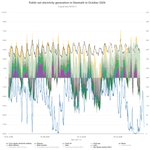
Qui stellare prestazione delle rinnovabili intermittenti solare+eolico in 🇪🇸, 2025
Ricordiamo il blackout mortifero, 28/4/25!

#nucleare
Meme antinucleare farlocco:
"Il nucleare è troppo lento a decarbonizzare ed ad aumentare l'energia generatah!"
Realtà:
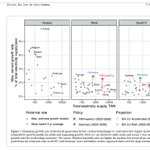
Spagna, Svezia, Belgio, Finlandia da 6% a 7% di copertura della domanda ALL'ANNO, Francia a 9,5%↙️
Magggiche fottoV e eolico al massimo al 3%↘️↘️

#BullshitVerde
"Ehi! Con il solare si diversifica la generazione elettrica e non si dipende da paesi potenzialmente nemici"
... e anche eolico non scherza! 82% da Cina e India?
E la famosa "rinascita" dell'industria EU, quella "verde" in particolare? Citofonare von der Ladren?

#Hormuz
Interessante rapporto/analisi di CapGemini su costi e tendenze del settore energetico come reazione alla crisi del blocco di Hormuz a danneggiamenti alle infrastrutture fossili nell'area.
colette.lewiner.org/wemo2026…


Robert O'Kersevan retweeted

Chomsky was wrong.
Researchers found your brain doesn’t store language the way every textbook since 1957 claims.
For decades, the undisputed rule of linguistics, led by Noam Chomsky, was that human language is hierarchical.
We were told our brains process language using complex "grammar trees." That we secretly build deep, abstract, mathematical rules in our heads before we speak.
This new paper proves that is completely wrong.
Researchers at Cornell University analyzed how people actually process and produce language in real time.
They found sequences. Linear chunks.
When we speak, we aren't calculating deep syntactic rules. We are just predicting the next most logical sequence of words based on the context of the words right before it.
We string linear chunks together.
If this sounds familiar, it should.
This is exactly how Large Language Models like ChatGPT work.
For years, critics have dismissed AI as "just a next-token predictor." They said it isn't truly intelligent because it doesn't understand deep grammatical hierarchies like humans do.
But this paper suggests humans don't use those hierarchies either.
We are just predicting the next chunk.
Language isn't a rigid tree of mathematical rules. It's a linear stream of contextual predictions.
We thought we were building AI to mimic the complexity of the human brain.
It turns out, the human brain was just running a simpler algorithm all along.

Robert O'Kersevan retweeted

Exploiter des mines en France c’est d’abord un facteur de souveraineté mais c’est aussi bon pour l’environnement (normes strictes).

Bonne nouvelle pour la souveraineté 🇫🇷 :
les réserves de la future mine de lithium d'Echassières dans l'Allier sont 3 fois plus importantes que prévues.
Opérée par l'industriel français Imerys, la mine permettra de fournir du lithium pour produire 700.000 batteries de voitures par an.
Le gisement de lithium se situerait dans le top 5 mondial et la mine pourrait être exploitée pendant 50 ans. L'investissement est évalué à 1,8 Md€.
À ce jour, la production de lithium est très concentrée, dans 3 pays extra-européens : l’Australie, le Chili et la Chine qui fabrique également 79% des batteries


Robert O'Kersevan retweeted
1/10
🇸🇮 Slowenien prüft die Tiefbohrloch-Endlagerung von Brennstoff aus Krško und dem Forschungsreaktor TRIGA II.
Eine Kostenstudie von 2024 wird jetzt neu aufgegriffen: Eigenes TRIGA-Endlager rund 98 Mio. €, Mitentsorgung in einem Krško-Endlager nur 1,8 Mio. € zusätzlich. 🧵
Robert O'Kersevan retweeted

The IAEA sys that nuclear generation could more than triple by 2060. One reason being "“more than 60 new reactors are under construction and the projections for future nuclear capacity have shifted dramatically upward.” Article link in reply.
Perhaps the pledge to triple nuclear by 2050, made by a large number of nations is more than an empty, aspirational desire.

#grazieTrump
Analisi del CREA dei costi addizionali, pro capite e totali, per i primi 20 paesi, causati dalla crisi dei combustibili post-Hormuz, 1 marzo - 14 ottobre 2026.
xitter.cf/laurimyllyvirta/status…


#jackassonate
Noi ci lamentiamo di giggino @LuMo71 e sue mitiche sparate anti⚛️ ma anche giggino è inarrivabile rispetto a mark jackasson🤡
Qui dice che solare+eolico+idro (WWS) in California generano piu' del ⚛️
Si "dimentica" di dire che ci sono >45 GW di WWS e solo 2,4 GW di⚛️


#braviSSSSimi!
Ricordiamoci che, come ha sottolineato piu' volte il menager di successo @g_rizzo76, quelli TERNA e di ARERA sono bravissimi!... vengono a vederli e chiedere consiglio da tutto il mondoh!

#segnatevelo!
Giorno di gloria energiemerde:
40 gCO2/kWh, record?
Tanto vento su praticamente tutta EU
Prezzo MWh spot bassissimo durante gran parte della giornata, ovviamente UN DISASTRO per il settore elettrico.
Il troll @FranFerrante ha già scritto un post demente su questo?🤡

Robert O'Kersevan retweeted
The US Navy has selected Radiant's 1 MW high-temp. gas-cooled transportable microreactor (Kaleidos) for its Naval Weapons Station in Crane, Indiana. Article link in reply.

Robert O'Kersevan retweeted

Ein Brennstoffpellet kleiner als ein Gummibärchen liefert etwa so viel Energie wie 480.000 Liter Erdgas. Harald Lesch nennt das veraltet.
Unser Fachreferent Florian Blümm @tech_for_future hat 26 seiner Kernkraft-Behauptungen debunkt. ⚛️
tech-for-future.de/kernkraft…

Robert O'Kersevan retweeted

Japan is months away from running out of yttrium, a Japanese official told the Financial Times. China shipped Japan 4 tonnes of yttrium oxide in September, down from 51 tonnes a year earlier.
Every AI data center needs power and every gas plant needs a turbine. The first rows of blades sit right behind the burner, in gas hotter than the melting point of their metal. Part of what protects them is a ceramic coat of zirconia a few tenths of a millimeter thick. Pure zirconia changes crystal shape as it cools, swells about 5%, and cracks off the blade. Adding 6 to 8% yttrium oxide stops that. Jet engines use the same coat, and the US has told Beijing it will not export the engines for China’s C919 airliner because the yttrium shortage has constrained production.
Chip toolmakers coat the inside of etch chambers with yttrium oxide too, because it resists the fluorine plasma that erodes other materials. China exported about 1,600 tonnes of yttrium last year. At China’s price of $9 a kilo, that is about $14M. Argus prices it at $1,150 a kilo outside China.
Coating makers are now revisiting zirconia mixed with magnesium and calcium, recipes from the 1970s and 80s. They make a less tough coat. I build chemical plants. Outside China, almost no one separates yttrium at commercial scale. A new plant takes 18 to 36 months or longer to build.
ft.com/content/ebd3244a-9120…

ALT Mitsubishi Power gas turbine rotor on a crane during factory assembly

ALT Plasma spray gun applying a ceramic coating to a turbine blade (Progressive Surface)

ALT Cross-section of a turbine blade’s thermal barrier coating: yttria-zirconia top coat, bond coat, nickel superalloy (Padture, Gell & Jordan, Science 2002)
Robert O'Kersevan retweeted

📸 Photo du jour
12 septembre 1986 : Vue aérienne du chantier de construction de la centrale nucléaire de Golfech (Tarn-et-Garonne).
La centrale comprend deux réacteurs à eau pressurisée (REP) de 1 300 MWe chacun, qui divergent en 1990 et 1993.

Robert O'Kersevan retweeted

An diesem Interview sind gleich zwei Dinge traurig:
1) Ausgerechnet ein Physiker erzählt Unsinn über Kernkraft.
2) Es zeigt, wie die deutsche Öffentlichkeit bei Zukunftstrends Experten zuhört, die diese (ob nun Kernkraft oder KI) nur mit spitzen Fingern anfassen, während Leuten mit Kontakt zur Praxis in den Bereichen selbst erst mal misstraut wird, und in der feinen Gesellschaft (ÖRR etc.) sind sie schon rein quantitativ ohnehin unterrepräsentiert.
Zu den Aussagen von Harald Lesch:
»Niemand, der bei Verstand ist, baut heute noch Kernkraftwerke – außer Staaten, die sie für die Plutoniumproduktion für Atombomben brauchen.«
Völliger Unsinn, weil Staaten ohne Atomwaffenprogramm Kernkraftwerke bauen und Atomwaffen-Staaten über genug Plutonium oder spezielle Produktionsreaktoren dafür verfügen. Die Behauptung von Harald Lesch ist eine typische Lüge der Anti-Atomkraft-Bewegung, mit der die Kernkraft diskreditiert werden soll.
»Die Franzosen denken über neue Kernkraftwerke nach, und in der Schweiz gibt es dieselbe Diskussion. Kernkraftwerke aber sind eine völlig veraltete Technologie, die machen im Grunde nur Wasser heiß. Leider sagen uns die Klimaprojektionen, dass wir in Zukunft mit Wasser viel sorgfältiger umgehen müssen. Es wird auch in Europa knapp.«
Kernkraftwerke können ohne nennenswerte externe Kühlwasserzufuhr betrieben werden, wenn das technisch gewünscht ist. Das gilt übrigens auch für Rechenzentren.
Man kann sogar Kernkraftwerke bauen, die für keinen ihrer Kühlkreisläufe überhaupt Wasser benötigen.