

Powering Local Communities through DeFi & Smart City Services | Powered by @MSocietyLabs.
Web3
Joined January 2022
- Tweets10.6K
- Following397
- Followers647
- Likes10.7K






Pinned Tweet
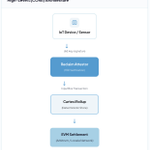
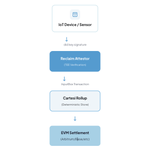
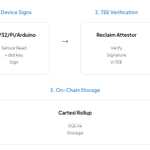
🚨 Big milestone: Locale Network + @MSocietyLabs just open-sourced L{CORE} 🔓
The first decentralized IoT attestation infrastructure.
In partnership with @ReclaimProtocol & @CartesiProject, we’re bringing trustless sensor data verification to @Arbitrum.
🧵👇
paragraph.com/@localenetwork…

An operator who can't read their reward is an operator already halfway out the door.

Legible rewards are how you keep an operator past the first payout.
xitter.cf/PerceptronNTWK/status/…
Idle hardware is cheap, proving it did real work is what makes the network worth anything.

Acurast: Turning the old phone in your drawer into a computing resource
When discussing AI infrastructure, most attention is focused on building increasingly massive data centers.
Acurast takes a different approach: leveraging hardware that people already own such as that old phone sitting idle in a drawer. @Acurast
What kind of tasks is it suited for?
Training a cutting-edge model is a vastly different undertaking from classifying emails, filtering messages, or running a small decision-making model.
While phones have limitations, there is still a market for small, repetitive tasks that do not require an entire cluster of GPUs. This is where the intersection of AI and DePIN (Decentralized Physical Infrastructure Networks) becomes compelling.
Try it out yourself
Laya demos showcase decision-making models running on the CPUs of Android phones handling tasks like email categorization, chat moderation, and screening for prompt injection.
Acurast notes that each decision takes approximately 0.2–1 second. You can test it at laya.acurast.com and see which device is processing your request. The development team also acknowledges certain limitations: classification errors can occur, and queues may grow longer when the volume of requests exceeds a phone’s processing capacity.
The trust challenge
If a phone belongs to someone else, how can you be sure that the device executing your task is legitimate? Acurast employs hardware-based attestation (Google Key Attestation and Apple App Attest) and monitors for revoked credentials, removing compromised or invalid devices from the pool of those eligible to receive tasks and earn rewards. @Acurast
Verification is therefore continuous, rather than occurring only when a device first joins the network. That said, the security model remains dependent on the hardware manufacturers and platform providers.
The role of ACU
ACU serves several defined functions: covering network fees, incentivizing the provision of computing power, staking, and governance. The most notable mechanism is "Staked Compute": providers lock up tokens to commit a specific amount of computing power, while ACU holders who lack hardware can delegate their tokens to these providers.
Benchmarks and "heartbeat" signals monitor capacity and availability, ensuring providers have an economic incentive to honor their commitments.
It is worth noting that the tokenomics include an annual inflation rate of 5%, with 70% of that allocated to the Staked Compute Pool. Therefore, staking rewards should not be confused with revenue generated from customers paying for computing services. While incentives can help build supply, it is the return of actual customers that truly validates the value of that supply.
Key metrics to track:
•Number of paid tasks and the rate of returning developers
•Cost per successfully completed task
•Stability under sustained load
•Growth in usage relative to token-based incentives
These metrics offer a much more meaningful picture than simply counting the number of registered devices.
How to get started?
The "Cloud Rebellion" program allows you to explore the ecosystem by completing tasks, deploying applications, and onboarding a supported device to the network. @Acurast
You earn "MIST" points which are distinct from ACU tokens. My advice: try out the demo and use a spare device before making any further investments.

On-chain proves a signal was recorded, not that the sensor told the truth.

Who Can Prove What Happened?
A blockchain transaction is easy to verify.
The network can show:
Who sent it.
What was sent.
When it happened.
Where it was recorded.
But what happens when the information comes from the physical world?
A sensor says a machine is operating.
A device reports its location.
An IoT system records an environmental condition.
A physical asset generates a stream of data.
Now the difficult question appears:
How do we know the signal represents reality?
The blockchain can verify that data was recorded.
But it doesn’t automatically prove that the original real-world signal was accurate.
This is one of the deeper challenges behind the connection between physical infrastructure and digital networks.
And solving it requires more than simply putting data on-chain.
We need ways to capture signals, establish their origin, verify them, and make them useful to systems that need to act on them.
That is where @DataVLTAI verifiable data infrastructure becomes interesting.
Because if machines are going to make increasingly important decisions…
They need more than data.
They need a reason to trust it.
#DataVLT #Web3 #DePIN #IoT

Spoofable telemetry is just a database with extra steps, attestation is the whole game.

Decentralized physical AI is growing fast, but without verifiable ground truth, the entire data pipeline remains fragile.
Traditional sensor networks and centralized IoT infrastructure can't offer cryptographic validation, leaving machine telemetry exposed to spoofing.
@vangrid_io tackles this through a decentralized grid architecture that secures node attestations and settles micro-transactions natively in USDC.
Real-world AI only scales when physical telemetry achieves undeniable cryptographic finality.
How can autonomous machine economies ever trust physical reality without decentralized consensus?
@NucleusCodes
The capital model is the easy half, keeping that hardware honest is the part that decides it.

1/ Physical infrastructure has always required massive upfront capital.
DePIN is challenging that model by allowing individuals to contribute hardware to decentralized networks and earn rewards for providing real-world services.
From wireless connectivity to GPU compute, mapping, and energy, infrastructure is becoming something communities can build together.
Here is the Pivot Decode on DePIN: Bootstrapping Real-World Hardware Rails. 🧵

A node that can watch itself prove its worth is a node that stays online.
xitter.cf/PerceptronNTWK/status/…

Operator view is right. Opaque rewards are common in DePIN, putting exact bandwidth and uptime on the dashboard makes the work legible. That is how a network already at 800K+ nodes across 150+ countries stays sticky ➡️ people who can see their impact tend to keep the node healthy 😎 Thanks for your participation
Own the collection layer and the rest of the stack stops being a rental.
xitter.cf/MSocietyLabs/status/21…
On a DePIN node, a passing status check that isn't proof is exactly the gap we close.
Idempotency keys without atomic updates just moves the race condition one layer down.
xitter.cf/TheCentipide/status/21…
The hard consistency lessons from Dynamo and Aurora are the same ones DePIN runs into.

Amazon’s work in databases is genuinely fascinating.
From Dynamo to Aurora, DynamoDB, and now Aurora DSQL, Amazon has contributed some incredible ideas to how we build and scale databases.
Distributed systems, serverless databases, storage compute separation, fault tolerance, and globally scalable architectures.
So much of modern database engineering is about solving problems that seem impossible at first.
The more I learn about databases, the more I realise how much amazing engineering happens under the hood.
Databases are ridiculously cool.
BFT is the whole reason a node you don't own can still be trusted at the edge.

How Byzantine Fault Tolerance Supports Decentralized Memory
In a decentralized network, not every node can be trusted to behave correctly. Some may send false information, fail to respond, or attempt to disrupt the system.
This is where Byzantine Fault Tolerance (BFT) becomes important.
Why It Matters
Decentralized memory systems allow multiple participants to access and update shared data. To remain reliable, the system must handle faulty or malicious nodes without compromising data consistency.
BFT mechanisms help distributed systems continue operating correctly even when some participants cannot be trusted.
Where Optimum Fits
Optimum explores decentralized shared memory through its DeRAM research, which investigates scalable read/write operations across distributed nodes, including resilience against Byzantine participants.
Combined with distributed networking techniques, this research aims to make shared data more accessible and reliable across a decentralized infrastructure.
The Bigger Picture
As Web3 applications become more complex, reliable shared data becomes increasingly important. Systems must account for failures and malicious behavior while maintaining consistent access for legitimate participants.
Decentralization distributes control. Byzantine fault tolerance helps make that distribution resilient.
@get_optimum @CryptoSundayz @PostMaklone @blockchainjeff @cryptooflashh

Measuring protocol tradeoffs on real hardware beats arguing MQTT vs WebSockets on a whiteboard.

Which IoT protocol is actually best for a smart plug: MQTT, HTTP polling, or WebSockets?
I built an Android app to measure it live: latency, reliability and battery impact, side by side.
Jetpack Compose + HiveMQ + Room.
Open source 👇
github.com/Zee910/EdgeSync

Single points of failure are exactly what a verifiable node network is built to remove.

Centralized perception frameworks are rapidly becoming the primary bottleneck for scalable, real-world autonomous infrastructure.
Relying on single points of failure and high-latency central servers completely undermines the reliability required for mission-critical systems.
What @vangrid_io is building with their decentralized perception grid is an absolute game-changer for cryptographic trust and real-time data integrity.
By shifting away from legacy centralized architectures and embedding decentralized verification directly into the perception layer, they are solving three massive friction points:
Eliminating single points of failure across critical data paths
Dramatically reducing latency for edge devices and real-time applications
Guaranteeing tamper-proof verifiability and cryptographic trust across nodes
Thrilled to watch @vangrid_io lead the charge in redefining decentralized spatial perception!

The bottleneck isn't the model, it's owning the physical layer that collects the data.
xitter.cf/leslieMen/status/21100…

Real world data collection is the hardest bottleneck in robotics right now, especially when scaling physical hardware environments. Capturing diverse edge cases without breaking simulators requires heavy infrastructure. If their data engine actually solves the feedback loop efficiently, it changes the entire valuation framework for decentralized automation networks moving forward.
Lowering the cost of entry is how you get the first hundred nodes, hardware upfront is the killer.
xitter.cf/MadMagicSOL/status/211…

Most DePIN networks need people to buy hardware before they can contribute.
@vangrid_io takes a different route: your smartphone is already the sensor.
That changes the scaling equation. Instead of distributing specialized devices, Vangrid can tap into everyday phones to capture ground-level spatial data and turn it into 3D representations of real places.
The more interesting part is what happens next: buyers can request specific captures through bounties, aligning data collection with actual demand rather than asking contributors to collect blindly.
Of course, more phones don’t automatically mean better data. Coverage, consistency and reconstruction quality will decide whether this model works at scale.
But removing the hardware barrier is a smart starting point for building Physical AI infrastructure.
Distributed inference only works if the physical layer stays verifiable, not just dense.
xitter.cf/therealvane11/status/2…

Quote: Morgan Stanley (Adam Jonas, SpaceX note) — Greatest under-appreciated growth vector is the Distributed Inference Cloud. As density of physical agents rises, collective intelligence of the mobile swarm increases. Tesla parked fleet + Optimus + Cybercab become edge nodes with onboard AI5, power, and cooling, linked by Starlink so idle compute runs inference without new terrestrial data centers. Musk: “True, this is a very big deal.”
Take: Vertical integration of vehicles, robots, satellite connectivity, and captive silicon turns idle capital into distributed compute. Constraint shifts from GPU orders to deployment density and interconnect reliability. This is how physical AI compounds beyond fixed data centers. ⚡
Reliability is the real gate, a cheap node that drops offline costs the network more than no node.
xitter.cf/FISAYOMi67/status/2110…

On DePIN that status check runs on a node you don't control, so it has to be cheap and constant.
xitter.cf/MSocietyLabs/status/21…