
machine learning researcher
New York, NY
Joined September 2009
- Tweets213
- Following663
- Followers1.4K
- Likes1.1K





🩵

We decided to provide more transparency into pretraining progress at OpenAI for the sake of moving toward shared safety bars. In “Perplexity and Intelligence” I argue for common limits based on perplexity and other measurements, with progress beyond them gated on our ability to understand AI behavior.
openai.com/index/perplexity-…

There is a follow up prediction from Demis, “10 times the impact the Industrial Revolution had, but 10 times faster.” For math, this feels like 1/eps times faster.


8
802
I would expect a move 37 would look like Dvir’s proof of finite field Kakeya conjecture

For a Move 37 impact in math, one would have to e.g. construct an original method or definition which reinvents the problem (or an entire field...)
So far AI results have found (very clever) combinations of pre-existing techniques (to amazing effect, to be clear)
2
15
2,997
From rotating needles to gradient spikes


Terence Tao wrote a clear, nontechnical explanation of the Kakeya Conjecture (for which Hong Wang won the Fields Medal in July), why it matters, how it was solved, and future directions, and posted it on the arXiv: arxiv.org/abs/2608.22209

Lechao Xiao retweeted

Announcing Discovery Loop!
I am very excited to announce that, along with my longtime friends and collaborators @Sanjay_Ghemawat, @OriolVinyalsML and @quocleix, we are founding Discovery Loop (@DiscoLoopAI), a Public Benefit Corporation whose mission is to automate machine learning, science, and engineering to accelerate discoveries and progress. The four of us have worked together for 14 to 30 years, and have helped build some of the world’s most used products, infrastructure and AI models, and we’re excited to turn our attention to this ambitious endeavor.
♾
Learn more at: discoveryloop.com


It was a record (still now?) arxiv.org/abs/1806.05393


This is going to be a super fun workshop on scaling & learning dynamics & optimization! Please consider submitting your best work there!

The High-Dimensional Learning Dynamics Workshop @ ICML 2026 🇰🇷, with a special focus on scaling laws, is coming up, July 10!
Submission Deadline: May 11 AoE (extended).
@Locchiu @albertobietti @JustinLin610 @inbarser @BachFrancis @ShamKakade6 @andrewgwils @blake__bordelon @_brloureiro @Qiuzihanhan


The originality and the depth of science are really impressive. High thinking, signal to flop ratio. Congrats Damien, Elliot, Courtney et al.


Lechao Xiao retweeted

Mathematicians 🤝AI researchers arxiv.org/abs/2601.22401. Our take on AI solving Erdos problems:
* Many "Open" problems are actually just obscure: many cases the AI didn't find something new, only rediscovered solutions buried in the literature. We present our systematic approach to reporting AI results on Erdos.
* The real bottleneck is still human labor, e.g. we spent lots of time filtering out technically correct but meaningless solutions (AI missed Erdos’s original intent).
* Acceleration in solving low-hanging fruits is real, but we also need to highlight the many more misses that require human auditing. Clear research directions ahead though, and we feel optimistic about drastically increasing the signal-to-noise ratio.
More to come!

Here's the paper link to our scaled effort for tackling Erdős problems. We started with 700 problems marked ‘Open’ in the database. Our agent #Aletheia identified potential solutions to 200 problems. Initial human grading revealed 63 correct answers, followed by deep expert evaluation and discussion to eventually arrive at meaningful proofs to 13 Erdős problems. arxiv.org/abs/2601.22401

Lechao Xiao retweeted

I am hiring a student researcher to work with our team in Montreal on LLMs architecture and pre-training in spring-summer 2026, if you're excited to push the frontier of research forward, join us to help keeping the TPUs warm.
fill out this form:
forms.gle/1AfdyCbzjdKi2yAb7
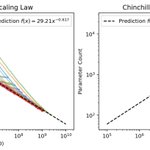
First scaling law: performance follows a power law of compute, with its exponent governed by science and engineering.
Second scaling law: the total improvement of this law follows a power law of resource, with its exponent governed by vision and conviction.
7
871
Lechao Xiao retweeted

Great talk from @ShikaiQiu on scaling collapse, which can be used as a sensitive diagnostic for model specification (LR, etc) at small scale that transfers to large scales! arxiv.org/abs/2507.02119

come and enjoy the blessing from universality

Realistic training dynamics are too complex to be described by simple scaling laws with hand-picked formulas, yet they obey precise scaling trends and universality. Join me Tue morning at the Theory and Phenomenology oral session for an alternative approach that gets us farther!

6
1,068
Learning rate schedule is a big mystery in machine learning that is underinvested in both theory and practice. Shikai did an awesome job in revealing that simple quadratic models can indeed capture many key insights from big ones.

Lechao Xiao retweeted

While scaling laws typically predict the final loss, we show in our ICML oral paper that good scaling rules enable accurate predictions of entire loss curves of larger models from smaller ones!
w/@Locchiu, @andrewgwils, J. Pennington, A. Agarwala:
arxiv.org/abs/2507.02119
1/10

Really impressive work! Changing the exponent is highly nontrivial.
It's very difficult to improve the *exponent* in scaling laws for loss vs compute, especially by changing the optimizer!
Our new paper shows that scaling momentum correctly can *provably* improve the scaling exponent on a theoretical model. Empirically, it works on LSTMs too!

7
1,165
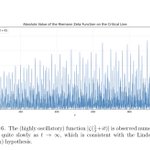
Wow, didn’t think I’d see this conjecture solved in my lifetime terrytao.wordpress.com/2025/…

Very cool! Congrats and thanks for trusting our codebase!+ @peterjliu (creator of nanodo), @ARomanNovak ,@_katieeverett (pre-)lead of the codebase.

Engineering shoot-out to Nanodo & Drjax for making it possible.
Nanodo (github.com/google-deepmind/n…) is a great jax open-source codebase from @Locchiu @Mitchnw et al.
DrJax (github.com/google/drjax) allow us to efficiently parallelize training. Look at their paper (arxiv.org/abs/2403.07128), those guys were already training distributed training at 8B scale last year!

1
11
1,726
It’s extremely exciting to see the frontiers of science and practice merge, yet equally disheartening to see when they become frontier of geopolitics. What wisdoms do AI offer to human?


4
629