

Former Endangered Species Branch Chief with the US Fish and Wildlife Service and writer focusing on the Sixth Mass Extinction, human behavior, and deep time.
Joined May 2022
- Tweets770
- Following323
- Followers507
- Likes2.6K





Pinned Tweet
Some ecological changes are easy to see.
Wolves returned to Yellowstone and became an international story.
Lake trout arrived in Yellowstone Lake and quietly reorganized an ecosystem.
One became a symbol. The other remained largely invisible.
My latest for Mongabay:


For those interested in the ramifications of El Niño in Western North America, a worthwhile listen.
El Niño: What Could It Mean for the US and the World? I Global Climate S... youtu.be/qZFGvCgynok?is=DMZP… via @YouTube
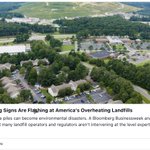
Mountaintop removal. Garbage mountain creation.
Geologically, it’s give and take.
Ecologically, it’s take and take.


Bears, whales, sea turtles, albatrosses, shearwaters. All documented dying from our garbage.
We throw things away. But there is no away.
Global plastic waste projected to nearly triple by 2060, creating an increasingly dangerous world for everything.


Free recipes!
Introducing The Climate Cookbook — delicious new ways to make the most of a warming planet. Bon appétit!
New essay on Substack.


First we threw rocks.
Then we set fires.
Then we threw spears.
Then we fired guns.
Then we dropped bombs.
Then we created AI.
Two and a half million years of technological progress.
The weapons change. The animal wielding them doesn’t.

The Sixth Mass Extinction began when a primate picked up a rock and realized it worked.
Sometimes we go back to our roots.

Lyle Lewis retweeted

Trumps Top 10 Worst Environmental Attacks This Week xitter.cf/i/broadcasts/1oKMvNZLk…

Pangolins are among the most trafficked mammals on Earth.
But wildlife trafficking affects more than 2,200 spices already considered threatened or Near Threatened.
Apparently there is almost nothing alive that humans cannot turn into a commodity.

Oil-sands expansion. Jasper and the Rockies. Salmon watersheds. A new deepwater terminal near Vancouver. More tankers through endangered killer-whale habitat.
We have a remarkable talent for calling economic benefits “national interest” and ecological costs “impacts.”

Enchiladas have now joined parking spaces, loud music, video games and chicken sandwiches on the list of things humans have killed one another over.
Homo sapiens remains one of the more aspirational names in taxonomy.

Lyle Lewis retweeted

“We assume intelligence will produce wisdom. It does not. We assume knowledge will produce restraint. It does not.
We assume recognizing a danger means humanity will avoid it. History repeatedly demonstrates otherwise. None of this means restraint is impossible.”
We cannot uninvent ourselves.
We cannot uninvent what we already know.
The central problem of the technological age may be that every generation inherits more powerful tools—but essentially the same animal.
New Essay: The Animal Holding the Bottle

Since 2012, at least 2,375 people have been killed or disappeared defending land and the environment.
Sometimes protecting wildlife means protecting it from habitat loss, mining, logging or poaching.
Sometimes it means protecting it from other people.
