

We're a mission driven R&D institute dedicated to advancing fundamental discoveries and carrying them to real-world impact. https://nitter.gq/t.co/ITVo4NcEVP
Worldwide
Joined June 2020
- Tweets552
- Following40
- Followers419
- Likes397




Manifold Research retweeted

We're releasing RealCUA, the first computer-use dataset of open-ended work in evolving environments.
600+ hours (and growing!) of real multi-objective work with interleaved tasks across thousands of steps in realistic desktops.
11-hour sample & access: data.fig.inc/realcua
Manifold Research retweeted

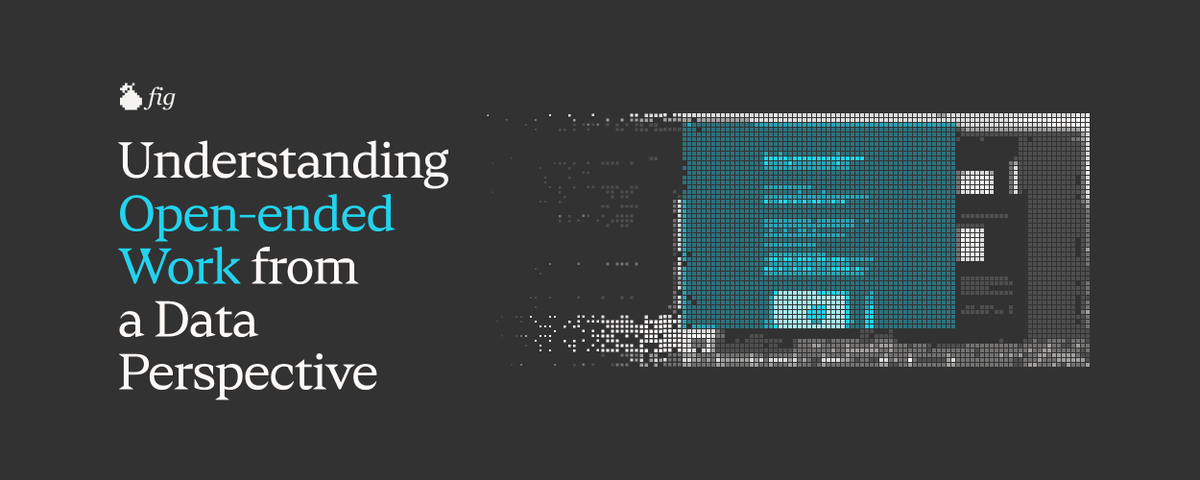
The Data Research team @figbrains has been tackling open endedness head on, and has learned a lot about knowledge work’s intricacies.
If you’re interested in an early preview of Fig’s new approach to open ended environments, reach out here: data.fig.inc/preview
great work from @joehabibii and @dippogriff


Manifold Research retweeted
Our latest writeup shares what hundreds of hours of real, open-ended work taught us about the learning signals missing from today’s computer-use data.
We'll be sharing new datasets and environments in the coming weeks, reach out for an early preview!
Manifold Research retweeted

Headed to the Asilomar Conference on Signals, Systems and Computers tomorrow!
I'll be there for @figbrains and @ManifoldRG, presenting GUI-Perturbed.
If you're into agents, continual learning, memory, self-improvement, or multi-agent learning, come say hi. I'd love to grab a coffee and talk!
Poster TP8a2.24, Tue 1:30pm, Merrill Hall
Technical report: fig.inc/blog/domain-randomiz…
Paper: arxiv.org/abs/2604.14262
#Asilomar2026

Manifold Research retweeted
There are few people who are as thoughtful about the frontier of intelligence and capabilities in as comprehensive a way as @Yangyue_Wang - I definitely recommend joining next Tuesday if you’re free @ lunch

Frontier model performance is not uniform across tasks at all, despite what benchmarks say.
On October 13, @Yangyue_Wang from @figbrains joins us to unpack performance across web, driving, robotics, assembly, and other agentic tasks.
Astra leads overall at 78.5%, yet lower-scoring models still solve tasks it misses.
Join us live at 12 PM PT! Registration below ↓
Manifold Research retweeted
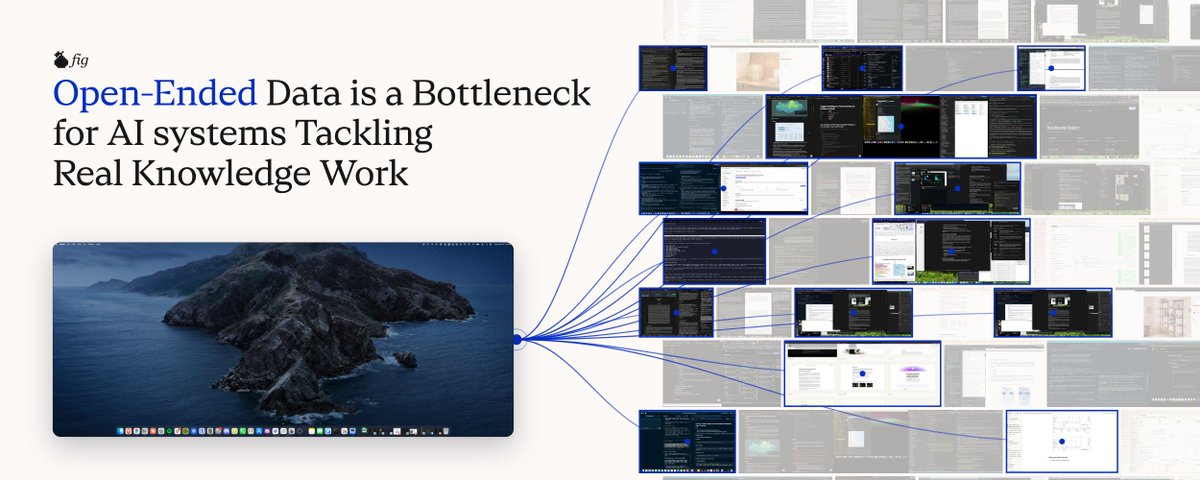
After talking to several of other frontier lab and neolab teams (+ lots of agent companies), we've realized there is an elephant in the room that comes w/ environment driven data gen for useful computer use.
The @figbrains team writes about it here (and has an entirely new data paradigm to share soon👀) but I wanted to share a few other perspectives that might be useful for you all
Manifold Research retweeted
The shape of frontier-model capabilities over task space has major implications for continual learning, self-recursive agents, agent evaluation, and more. In our recent work, we explore these models’ high variance on multimodal agentic tasks. Check it out! If you would like to learn more, I’m also doing a talk @ManifoldRG: luma.com/74kdretn?tk=oBwiVh

We ran GPT-6 Astra, Opus 5.5, Fable 5 and four other frontier models on a variety of agentic tasks across digital and physical domains: web tasks, driving, robot manipulation, industrial procedures and assembly.
We’re releasing a technical report, sharing details for an invited talk, and releasing a new dataset of frontier traces and item level results you can use in your research.
Every model is jagged on every axis we tested. Astra has the top score at 78.5%, yet Fable 5 and Opus 5.5 each solve 10 tasks Astra fails. In all 21 model pairs, the lower-scoring model solves at least 3 tasks the higher-scoring one misses.
The map places each VWA task on a circle. Similar instructions sit together, harder tasks sit closer to the center, and failure clusters rise as hills.
Manifold Research retweeted
The huge infrastructure wave in space requires a new coordination and construction layer.
But space is hard! The best intelligence approaches do not transfer well.
The team at @ManifoldRG, led by @sikka35262 is doing n of 1, pioneering work to make this happen.
Manifold Research retweeted
A Realtime System Atlas for Agents
Inspired by @fleetingbits atlas for software, I was curious how a visual system design could be made dynamic + useful for deployed agents
then I applied it to Athena, which is like a bootstrapped Jarvis I use to run various key parts of my life.
3 main ideas:
- semantically meaningful visual designs & dependency graph
- deep dive dataflow diagrams for a given module you click into
- realtime requests streaming in and going through real module dataflow
Manifold Research retweeted
i'm going to sporadically tweet lessons, learnings, and principles from the frontier when it comes to building models, evals, and insert other sota topic here (harnesses, etc)
comes from work w/ various smart people from places like @figbrains @ManifoldRG @GeorgiaTech and beyond
unstructured and raw, hopefully useful!
first dump:
IQ tests for Models are still a thing, and they should be. Model capabilities matter, and when you realize you have to measure them, you have to be able to define them concretely
There are new scaling laws to be discovered, but they won't necessarily mirror chinchilla scaling laws - that is ok! the secular trend matters vs mimesis
living benchmarks matter. you can choose to think of these as environments, but they aren't exactly the same thing. living (read: continously updating) environments matter too
Manifold Research retweeted
Space is rapidly getting built out in front of us - but it is literally a new (and final!) frontier.
The environment is complex, and building large scale infrastructure for datacenters, stations, observation platforms, requires an unprecedented level of deployed intelligence in the one place humans cannot survive easily.
Intelligence and control are keys to the future of built space. A team led by @sikka35262 at @ManifoldRG pioneering this!
Join them for a virtual seminar tomorrow on the research challenges and solutions for this rapidly evolving domain
Link in the comments so the algo doesn't muffle this

Manifold Research retweeted

Tomorrow, we’re giving a live talk on autonomous self-repair in modular spacecraft.
We’ll show how ideas from wound healing inspired a decentralized repair strategy where modules spread local distress signals and reorganize toward damaged regions without a central controller.
Manifold Research retweeted
The hard secret is that this is actually true for a lot of "digital" domains as well - if you view OS + internet as a constantly shifting, diverse set of intersecting environments, you realize a lot of the lessons from robotics actually apply to anything reasonably useful in CUA


Manifold Research retweeted
This Friday, we’re giving a live talk on autonomous self-repair in modular spacecraft.
We’ll break down our bio-inspired approach to decentralized fault repair, what happens when structures sustain severe damage, and the path toward machines with homeostatic capabilities.
Manifold Research retweeted
The biggest challenge evals face is keeping up with model capabilities in a measurable and fair way.
The @figbrains team has been working on building evaluations that scale to fundamentally assessing models as the capability tree expands.
Preview coming soon!
Manifold Research retweeted
here is a simple maze on an 8x8 grid, you can probably solve it in 1 second
🟦🟦🟦🟦🟦🟦🟦🟦
🟦🤖⬜🔑⬜⬜⬜🟦
🟦🟦🟦🟦🟦🟦⬜🟦
🟦⬜⬜🚪⬜⬜⬜🟦
🟦⬜🟦🟦🟦🟦🟦🟦
🟦⬜⬜⬜⬜⬜⬜🟦
🟦🟦🟦🟦🟦🟦🏁🟦
🟦🟦🟦🟦🟦🟦🟦🟦
Can frontier reasoners (Fable, Sol, K3) solve mazes like this?
20%100% of the time
30%>50% of the time
40%<50% of the time
10%0% of the time
10 votes • Final results Manifold Research retweeted
Last week, I shared our new preprint on autonomous self-repair for modular spacecraft.
On August 14, I’ll give a live talk on how damaged structures can reorganize through local, decentralized control.
Frontiers: Can a Spacecraft Heal Itself?
Manifold Research retweeted
A machine that cannot recover from damage is fundamentally limited.
Our new research shows how modular robotic structures can reorganize after failures, consolidate their surviving components, and autonomously restore connectivity through decentralized control.
Manifold Research retweeted
Living systems can grow, maintain themselves, and recover from damage. We’re working toward machines that can do the same.
Manifold’s Rapid Reconfiguration project explores how modular robotic collectives can quickly and reliably morph into new configurations in real time.
We’re looking for researchers to help develop the mathematical foundations behind these systems.
Manifold Research retweeted
Sidh and the Orbital Yard team are leading the frontier for how large scale space infrastructure will be built.
It’s incredible to see their progress @ManifoldRG each week 🚀
Building things in space is inevitable.
With private space stations and space-based data centers entering the zeitgeist, we’re going to need ways to build far larger than anything we can launch in one piece. In-space construction via robotic swarms is one of the technologies we're developing at @ManifoldRG.
I wrote this article in partnership with Existential Hope to explore just how awesome that future could be.