

Neuroscience PhD | Postdoc at @PENLab6 |
Joined December 2020
- Tweets245
- Following264
- Followers178
- Likes576






Maria Suñol retweeted

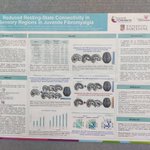
This week’s #PAIN Featured Image comes from @MariaSunol92 et al.’s study of resilience in juvenile fibromyalgia. Clusters represent global connectivity increases in the JFM subgroup; psych term associations visualized via wordcloud. Learn more in #PAIN bit.ly/46FWeF4

Maria Suñol retweeted

Such a tremendous loss. Frans de Waal showed us that animals are individuals, with their own personalities and interests, who live in society with their own rules, and he did it at a time when many scientists and philosophers were still debating about whether chimpanzees are...
Maria Suñol retweeted

Our new paper outlines how neuroscience can be used to:
(1) study the impact of climate change on the brain
(2) identify ways to adapt
(3) study the neural substrates of environmental decisions & outcomes
(4) create better communication & interventions nature.com/articles/s41558-0…

Maria Suñol retweeted
“There is nothing either good or bad, but thinking makes it so.”
In our new paper, we find that people judge the exact same action very different if they are judging it through a moral, pragmatic or hedonic lens.
So be careful which lens you use! osf.io/preprints/psyarxiv/es…


Maria Suñol retweeted

Very impressive! A huge meta-analysis of personality and prosocial behaviour: "770 studies reporting on 3,523 effects of 8 broad and 43 narrow personality traits on prosocial behavior in…economic games…correlations ranged between -.18 ≤ ρ ≤ .26" 👏👏👏doi.org/10.1037/bul0000217

Maria Suñol retweeted

Pro-sociality should be a public health priority: nature.com/articles/s41562-0…
Maria Suñol retweeted

🚨When it comes to pain, social factors MATTER 🔥🔥
Ostracism is associated with depression, suicidality, & PAIN👇🏼👇🏼
People who are ostracized experience ⬆️ pain sensitivity + may be more prone to developing chronic pain 👎🏼
#MedTwitter #MedEd
jpain.org/article/S1526-5900…

Maria Suñol retweeted

Children often have stronger moral concerns about eating animals than adults, who generally find it acceptable to farm animals for food.
New research suggests this shift in moral attitudes towards eating farmed animals takes off and peaks during adolescence.
⬇️⬇️⬇️

🚨 new pre-print w. @nsfaber exploring differences between adolescents and adults in speciesism psyarxiv.com/6z2nc
Maria Suñol retweeted

New paper alert 🚨 In this study we investigated the brain processes supporting clinician empathy and how it affects pain, using fMRI hyperscanning 🧠🧠 pnas.org/doi/abs/10.1073/pna… @VitalyNapadow @grahlarvina @ale_anzolin and others @ the amazing hyperscanning team at @MGHMartinos

Maria Suñol retweeted

The latest version of FSLeyes fsl.fmrib.ox.ac.uk/fsl/fslwi… makes it easier to view effect sizes modulated by statistical significance, as recommended by @afni_pt &co in pubmed.ncbi.nlm.nih.gov/3711…
Here's a step-by-step illustrated guide to do this with your data.

Q1. How does data presentation affect how we understand neuroimaging results? Visualization matters for interpretation and comparison *from the start*. Discussed more here:
sciencedirect.com/science/ar…

Maria Suñol retweeted

📘Multisensory sensitivity differentiates between multiple chronic pain conditions and pain-free individuals
👉La sensibilidad multisensorial distingue entre el dolor crónico múltiple y las personas sin dolor
journals.lww.com/pain/fullte…
#Dolorcrónico

Maria Suñol retweeted

🔬 New paper from our lab! We've developed a neuroimaging marker for rumination, a typical cognitive pattern in depression. Our findings highlight the significant role of the dmPFC in this process. nature.com/articles/s41467-0…
Maria Suñol retweeted

The impact of the human thalamus on brain-wide information processing
nature.com/articles/s41583-0…

Maria Suñol retweeted
Exciting update from our lab: Our latest preprint delves into the brain representations of affective intensity and valence across pain and pleasure. biorxiv.org/content/10.1101/…


Excited to share our work on the brain representations of affective valence and intensity in sustained pleasure and pain! Now available in Biorxiv: biorxiv.org/content/10.1101/…
Maria Suñol retweeted
El dolor crónico es ya la enfermedad más frecuente en España mtr.cool/jhxheotdsc a través de @OndaCero_es #dolorcrónico #SEDOLOR23

Maria Suñol retweeted
Congreso #SEDolor23📍El dolor visible. Actualización.
▶️"Procesamiento del dolor en el cerebro en desarrollo"
María Suñol Rodrigo. @MariaSunol92
📆Viernes 25 Mayo. ⏰ 12.30 hs.
#Dolor #Cerebro @UABBarcelona @CincyChildrens @StanfordMed
Maria Suñol retweeted

🚨Nos vemos el miércoles 10/05 a las 18h en el directo de Facebook del @UPF_CAE para charlar sobre nuevas formas de diálogo y activismo por los demás animales.
¡Vente y participa en el directo, responderemos a vuestras preguntas!

🔴| CAE-Talk: "Podcasts antiespecistas: Nuevas formas de diálogo y activismo por los demás animales"
La próxima semana conversaremos con María R. Carreras (@eca_podcast), María Suñol y Sergio González (@infovegana).
🗓️10 de mayo a las 18.00h
💻Directo en nuestro Facebook

ALT UPF-Centre for Animal Ethics presenta: CAE TALKS Podcasts antiespecistas: Nuevas formas de diálogo y activismo por los demás animales Olatz Aranceta Reboredo (UPF-Centre for Animal Ethics) conversará con María R. Carreras (ECA Podcast) y María Suñol y Sergio González (Infovegana) Miércoles, 10 de mayo a las 18.00h
Maria Suñol retweeted

#NCS_2023 | Prof. Mathieu Roy will examine how our brain learns to predict and avoid #pain 🧠⚡
📅 Tuesday, 21 March
🕙 at 12:00h
🏢 Aula 11, Faculty of Medicine and Health Science @CampusClinicUB

Maria Suñol retweeted

📌 Delighted our article is now published! In this paper we have leveraged insights from philosophy, psychology, and neuroscience to shape a main idea: a strong life purpose might enhance cognitive resilience to age-related brain changes already observable in middle-aged adults.


