

Adjunct Senior Research Fellow at the University of Western Australia working on ecology of fishes and tropical marine ecosystems
Perth WA
Joined July 2014
- Tweets2K
- Following1.5K
- Followers2.6K
- Likes4.1K




Mark Meekan retweeted

Major academic publishers are getting sued for unlawfully appropriating billions of dollars.
Prof. Lucina Qazi Uddin, a neuroscientist at UCLA, has sued these six academic publishers Elsevier, Wolters Kluwer, Wiley, Taylor & Francis, Sage, and Springer Nature.
The lawsuit claims that these publishers violate antitrust laws on the following three grouds:
1. The publishers have colluded to fix the price of peer review at zero.
2. These publishers agree to not compete with each by making it obligatory for researchers to submit their work to only one journal at a time.
3. These publishers prohibit scholars from sharing scientific advancements while they are under peer review, which can take up to a year.
Here's a comparison of the publishers' revenue and what they pay authors and reviewers
Elsevier: $3.9 billion
Springer Nature: $2 billion
Wolters Kluwer: $1.6 billion
Wiley: $1.8 billion
Taylor & Francis: $800 million
Sage: $500 million
They pay:
Authors: $0
Peer reviewers: $0
Mark Meekan retweeted

An international and multidisciplinary team, striving toward results of the greatest possible impact in the global rebuilding of the #oceans like @MarkMeekan #RalphChami #KarenMcGlathery #BorisWorm
@PeterMacreadie

The mis-management of fisheries. Taking stock of global fisheries | Science science.org/doi/full/10.1126…
Mark Meekan retweeted

New study published in @ScienceMagazine reveals how a reduced shark population can impact #biodiversity and ecosystem health. #UWA @UWAresearch @FIU @MarkMeekan @uwaoceans @SharkRayFund
uwa.au/a1yw30

Mark Meekan retweeted

If you dove into the ocean in the 1800s, you would have been treated to a complex symphony of sound: raindrops falling, seals moaning, staccato snapping of shrimp, undersea vents bubbling & love songs of humpback whales.
Today the sea sounds different.
science.org/doi/10.1126/scia…

This is amazing!

It’s finally out! 🥳 Today @cellcellpress we report non-mineral fossils of ancient chromosomes in skin from a woolly mammoth that died in Siberia, 52,000 years ago.
🦣💨
Don’t miss our thread below! 🧵👇🏽

Mark Meekan retweeted

New paper by lead author and OI member @MarkMeekan with a team of international researchers has discovered a new method of imaging free-swimming whale sharks using underwater ultrasound.

Amazing new technique enables researchers to give whale sharks a health check! 🌊 #UWA @UWAresearch @aims_gov_au @uwaoceans @MarkMeekan
uwa.au/rpxg4j
Future generations will look at us and ask the question "how could they possibly let this happen?"

🚨 NEW SEABIRD PAPER 🚨
Landing on #WorldSeabirdDay new study compiling seabird bycatch data & estimates for all fishing gears in European waters shows:
➡️ ~200,000 seabirds/year die as bycatch
Significant data gaps prevent a full picture
doi.org/10.1111/acv.12948
🧵1/6

Mark Meekan retweeted

🚨 NEW SEABIRD PAPER 🚨
Landing on #WorldSeabirdDay new study compiling seabird bycatch data & estimates for all fishing gears in European waters shows:
➡️ ~200,000 seabirds/year die as bycatch
Significant data gaps prevent a full picture
doi.org/10.1111/acv.12948
🧵1/6
Mark Meekan retweeted

Woolly mammoths survived on Wrangel Island until 2000 BC!
But why did they go extinct?
Were they doomed once stuck on the island?
We went to Siberia, collected bones & teeth, and sequenced 21 complete genomes.
Here is what we found (🧵)
Paper in Cell: cell.com/cell/fulltext/S0092…

Mark Meekan retweeted

Bolca is a sort of Paleo-Eldorado of the Eocene, one of the earliest discovered fossil sites in the world, known for over 500 years! Here, I have reconstructed some of its species, with remains so complete that they preserve traces of color, internal organs and cartilage


Mark Meekan retweeted

NEW STUDY: Directed conservation of the world’s reef sharks and rays
Goetze et al. evaluate the efficacy of marine protected areas combined with fisheries management in conserving elasmobranch populations on coral reefs worldwide.
doi.org/10.1038/s41559-024-0…

Mark Meekan retweeted

New #WhiteShark #openaccess paper alert! We used #biologging tags to record the movements of sharks in California, finding habitat was key to shaping their swimming patterns and routine... 1/3
murdoch.edu.au/news/articles…


Mark Meekan retweeted

How do #stingrays produce blue, nature's rarest color?
Our paper tinyurl.com/stingblue in @AdvOpticalMat shows the mechanism: a combo of melanin + a unique #structuralcolor cell, with a #coreshell #photonicglass structure
@MasonDeanlab M Blumer
@FindingAMcIvor @shahrouzamini


Mark Meekan retweeted

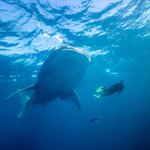
🚨My first PHD chapter titled “Links between the three-dimensional movements of whale sharks (Rhincodon typus) and the bio- physical environment off a coral reef” is out TODAY 🚨
Read it #OpenAccess !
🔗link here: doi.org/10.1186/s40462-024-0…
🧵(1/n)
📸: @brookepykephoto


A huge amount of work in this data set. Really valuable for those interested in the effects of fishing on coral reef ecosystems


Mark Meekan retweeted

Novel aerial observations of a possible newborn white #shark (Carcharodon carcharias) in Southern California link.springer.com/article/10…
