
Structural Biologist and Evolutionary Biochemist, PostDoc @KaHochberg lab; @embl, @MRC_LMB, and @FUBiochemistry alumnus
Marburg, Germany
Joined June 2017
- Tweets171
- Following347
- Followers343
- Likes969




Pinned Tweet
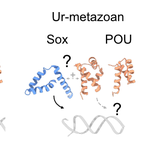
Excited to share my first paper as a postdoc with @KaHochberg @mpi_marburg! We've made some fascinating discoveries about the evolution of animal stem cells in colab with @jauchr and @deMendoza_Alex. 🧬🔬
Link: nature.com/articles/s41467-0…
(1/n)


Mathias Girbig retweeted

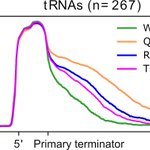
Excited to share our new work on the earliest steps of Pol-III transcription: We provide structural and kinetic insights into tRNA promoter engagement by yeast transcription factor TFIIIC!
Cool collaboration with the Müller and @EustermannLab @embl
Details by the Wolfi below👇

Our TFIIIC story continues with our latest work in NAR (academic.oup.com/nar/advance…). Using cryo-EM and single-molecule fluorescence microscopy (smFM), we explored questions that remained unanswered in our human TFIIIC structure. Wanna see the updated TFIIIC structure? 🧵🪡

Mathias Girbig retweeted

Our TFIIIC story continues with our latest work in NAR (academic.oup.com/nar/advance…). Using cryo-EM and single-molecule fluorescence microscopy (smFM), we explored questions that remained unanswered in our human TFIIIC structure. Wanna see the updated TFIIIC structure? 🧵🪡
Mathias Girbig retweeted
First paper of our lab today @Nature by Nussi!
We provide a real-time movie on how #transcription and #translation cooperate using multi-color #single-molecule FM: we find long-range #ribosome-#polymerase communication mediated by #RNA looping! @embl
doi.org/10.1038/s41586-024-0…


Our new findings on how the ribosome couples with the RNA polymerase are summarized in a movie highlighting the dynamics of the process🎞️🎥
Thanks to Clemens Bretscher for the great animations! - behance.net/cbretscher
@embl paper in @biorxivpreprint
biorxiv.org/content/10.1101/…
Mathias Girbig retweeted

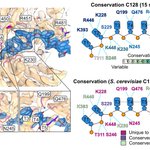
New paper from the lab: rdcu.be/d2g28. You may remember the strange fractal assemblies we discovered in citrate synthase. Well, the reason we even found that protein is that we were interested in how conserved self-assembly is in an enzyme with a very basic function.
Mathias Girbig retweeted

Happy to share our story on evolution of protein quaternary structure!
We discover an astounding variation in assembly across evolutionary timescales contrasted by strong functional conservation suggesting a significant role of non-adaptive processes nature.com/articles/s41467-0…
👇🧵

Mathias Girbig retweeted

Happy to see our work on Sox/POU origins covered in detail at the @washingtonpost by @KashaPatel. Thanks to @beaplab_ibe and Sandie Degnan for their contributions: washingtonpost.com/climate-e…


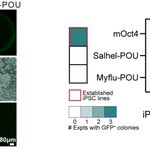
SOX and POU are crucial Transcription Factors in animal development, believed to be innovations. We found them in unicellular relatives of animals. And hold tight, you can use a choanoflagellate 🦠 SOX gene to make a full chimeric 🐁 ! Read more here: rdcu.be/d0dPN 1/6
Mathias Girbig retweeted

🚨Paper alarm
Our new work on APC/C regulation revealed by high resolution cryo-EM structures together with the groups of Leifu Chang and David Barford has been published @NatureComms. Congratulations to Anna Höfler, Jun Yu and all other authors.
🔗nature.com/articles/s41467-0…
Mathias Girbig retweeted
New paper from us and @erblabs by @schulluc : embopress.org/doi/full/10.10…. It's about the evolution of essentiality. This question has fascinated me for a long time: How does a component that was previously unnecessary for some function become essential for it?

Mathias Girbig retweeted

Very cool and relevant work and another example of the modular evolution of transcriptional networks at the onset of animals.
Here, Sox and POU are shown to be present in choanoflagellates, filastereans and, potentially, corallochytreans. So, yes, the unicellular ancestor becomes even more complex! Moreover, the authors show that choanoflagellate Sox proteins can functionally replace mammalian Sox2 in reprogramming somatic cells to induced pluripotent stem cells (iPSCs), while choanos POU show divergent DNA-binding capabilities.
Now the question is: what are those Sox and POU doing in those organisms? Also, will POU and Sox be present in the yet-to-be discovered novel lineages? (a reminder that we have data from only a small fraction of lineages closely related to animals; 4 out of 12). Exciting times ahead!
Congrats to all authors! @deMendoza_Alex @jauchr @KaHochberg @MathiasGirbig @DaisyTheBomb
@Reaya27 #multicellularity #holozoans #protists

This has been a fully collaborative project with @jauchr group in @HKUniversity, none of this would be possible without their enthusiasm, expertise and effort. It all started with an email about the origins of SOX/POU and a BLAST search. The hits were intriguing... 2/6

Mathias Girbig retweeted

Exciting news 🚀 @MathiasGirbig and @KaHochberg helped showing that essential proteins for animal #stemcell regulation are much older than previously thought, dating back over 700 million years. Check it out👓
mpi-marburg.mpg.de/1450571/2…

Our findings suggest that the evolution of animal stem cells might have involved repurposing pre-existing molecular tools, rather than inventing entirely new mechanisms.
(8/n)
1
2
154

Many thanks to our collaborators, especially to my joint-first authors Ya Gao @Reaya27 and Daisy Tan @DaisyTheBomb (see pic below) and to @jauchr and @deMendoza_Alex and of course to @KaHochberg. This was an amazing collaboration between @mpi_marburg, @hkumed and @QMUL.
(10/10)

Interestingly, while we found POU proteins in choanoflagellates too, they couldn't induce pluripotency. This suggests that POU factors needed further adaptations to function in animal stem cells.

1
1
54