



Maggie Michael retweeted
Under pressure from Israeli prime minister Benjamin Netanyahu, the Trump administration may be within days of launching a nuclear strike on Iran. The target would be Pickax Mountain in central Iran, where Israeli intelligence claims the Iranian government has restarted its nuclear enrichment program. No conventional weapon in the American arsenal can penetrate 300 feet of solid granite to destroy the tunnels where enrichment is supposedly taking place. The only military option is a nuclear strike. Netanyahu has been pushing hard for one. “Bibi calls Trump about it every day,” says an informed observer.
Netanyahu is cornered and desperate. After last week’s election results, he can’t form a government unless Trump intervenes directly in Israeli politics and brokers a deal with other parties that gives Netanyahu 61 seats in the Knesset. Otherwise, he is out as prime minister and on his way to ignominy, investigations and possibly jail. Netanyahu must stay close to Trump. He needs this war.
To that end, he’s applied maximum pressure to his closest allies in the administration, including Secretary of Defense Pete Hegseth and CENTCOM commander Brad Cooper. Both oppose a negotiated settlement to the war they’ve so grievously mismanaged; both are pushing to restart major combat operations. Secretary of State Marco Rubio and CIA director John Ratcliffe are also following Netanyahu’s lead, as are leaders of the Democratic Party. In a recent meeting on the subject, former president Barack Obama said he opposes the current Iran peace deal being drafted in Doha.
The rest of America’s longtime allies in the Middle East are terrified by the prospect of more war. On September 27th, Netanyahu flew secretly to Abu Dhabi to enlist the UAE in his lobbying effort for a final attack on Iran. The Emiratis refused. After eight months of conflict, Gulf economies are teetering. So are global energy and fertilizer markets. They won’t recover soon. Globally, there are a total of about 850 supertankers used to transport oil from producers to the rest of the world. In October alone, 11 of them were badly damaged in Hormuz. At this pace, a global depression is imminent. A nuclear strike would radically accelerate the destruction. Fallout from a ground explosion at Pickax Mountain would contaminate the Persian Gulf, poisoning the water supply for 100 million people.
And those are just some of the immediate consequences for the region. The rest of the world is every bit as exposed. No country other than the United States has ever used a nuclear weapon in war. Some would like to. An American nuclear attack on Iran would set a new precedent. The Russians have already told at least two other governments that an American nuclear strike on Iran would free them to use nuclear weapons against Ukraine. Pakistan and India would be tempted to do the same against each other, as would North Korea against Seoul. After the first nuclear strike, World War Three is inevitable. That war would be short and final.
We’ve been sleepwalking toward this moment for months. Since February, the administration has quietly rewritten America’s nuclear doctrine to make first use of so-called “battlefield nukes” easier and therefore more likely. No one in Washington in either party seems bothered by this. Now we’re on the brink of it.
Close observers say Trump is likely to decide by next weekend whether or not to use nuclear weapons. That would be November 7, six days from now. To his credit, he’s hesitating. At the moment, Trump is listening to his vice president, JD Vance, and to his envoy and friend Steve Witkoff, both of whom argue a deal with Iran can be made.
They’re right, though it won’t be simple. The Iranians are famously frustrating to negotiate with under any circumstances, and elements of that government have become more radical since Ayatollah Ali Khamenei and his family were killed in February. After decades of isolation, even relatively moderate Iranian leaders seem confused by how decisions are made in the West. (There is a widespread belief in Tehran, for example, that the United States government controls Israel.) But overall, people who have spoken to decision-makers in Iran say there is consensus there that more war is bad for everyone and a deal is worth making.
One group that hasn’t been consulted so far is the global population — the hundreds of millions of people who will be killed along with their children if Trump is pushed by Netanyahu into launching a nuclear strike next week. Now would be the time for them to speak up.
Maggie Michael retweeted

Mansour Abbaa, líder del partido árabe Ra’am, dice que aceptaría las cuatro condiciones de Gadi Eizenkot para un acuerdo de gobierno:
- Aceptar a Israel como un Estado judío y democrático.
- Alinearse con los valores y principios de la Declaración de Independencia de Israel.
- Aceptar el compromiso de que todo ciudadano realice un servicio obligatorio, ya sea militar o civil.
- Reconocer a Hamás como una organización terrorista que debe ser desmantelada.
Es lo más disruptivo y esperanzador que dejan estas elecciones. Y no me sorprende: justo ayer le decía a un amigo creía que Abbas estaría dispuesto a dar ese paso.

Maggie Michael retweeted

ثالثًا- لم تتنازل لينا عطالله في أي لحظة عن الحق في استئناف الحكم خلال المواعيد المقررة. وبناءً عليه، توجه فريق الدفاع، اليوم، الأحد 1 نوفمبر، إلى نيابة القاهرة الجديدة لاتخاذ إجراءات استئناف الحكم الصادر في 27 أكتوبر قبل مرور المواعيد القانونية، ولم نتلق ردًا حتى نهاية اليوم. كما لم يتم تمكين فريق الدفاع -مجددًا- من الحصول على نسخة من ملف الدعوى، أو صورة رسمية من الحكم.
Maggie Michael retweeted
ثانيًا- في الخميس الموافق 29 أكتوبر، تقدم فريق الدفاع بشكوى بموجب خطاب مسجل بعلم الوصول إلى السيد مساعد وزير العدل للتفتيش القضائي ضد القاضي رئيس محكمة جنح القاهرة الجديدة، طلبت التحقيق في الوقائع التي شهدتها الجلسة وسردتها بالتفصيل، والتي تضمنت: «رفض تمكين الدفاع من الاطلاع على أوراق الدعوى، وتعمد عقد جزء من الجلسة في غير علانية -دون مسوغ قانوني- بعد إخلاء القاعة، وندب محام للدفاع عن المتهمة في ظل رفضها ورفض دفاعها ذلك، وتمسكها بدفاعها الموكل الحاضر معها، ورفض إثبات اعتراضاتهم في محضر الجلسة، ورفض إثبات طلب رد القاضي بمحضر الجلسة، وكذلك تلاوة القاضي لوقائع -على خلاف الحقيقة- وإثباتها بمحضر الجلسة تتمثل في، طلب على لسان المحامي المنتدب، دون أي يتلوه أو يدفع به أو ينبس بكلمة واحدة». وحتى هذه اللحظة، لم يتم سماع أقوال أي من أعضاء فريق الدفاع -ومن بينهم الممثل القانوني لنقابة الصحفيين والذي حضر الجلسة- أو إخطارهم بمصير الشكوى.
Maggie Michael retweeted
أولًا- عقب انتهاء جلسة محاكمة لينا عطالله، رئيسة تحرير موقع «مدى مصر» وعضوة نقابة الصحفيين، أمام الدائرة التاسعة بمحكمة جنح القاهرة الجديدة، في القضية رقم 11743 لسنة 2026، يوم الثلاثاء 27 أكتوبر، تقدم فريق الدفاع بشكوى لرئيس محكمة القاهرة الجديدة تطلب التحقيق في المخالفات القانونية التي شهدتها الجلسة، من حرمان فريق الدفاع من الحصول على نسخة من أوراق القضية، إلى انتداب محامٍ لتمثيل المتهمة ورفض إثبات اعتراضها أو اعتراض فريق الدفاع الحاضر عنها، مرورًا بإثبات رئيس المحكمة لطلبات المحامي المنتدب بدلًا منه أثناء الجلسة ودون اطلاعه على أوراق القضية، وانتهاء برفض إثبات رئيس المحكمة لطلب فريق الدفاع برد القاضي.

Maggie Michael retweeted

أنباء عن وفاة موظف أممي في معتقل للحوثيين بصنعاء. #اليمن
Maggie Michael retweeted

Iran created a network of military agencies that provided many of the raw materials it needs to make missiles and drones, Reuters found. Those munitions are responsible for Iran's relentless precision attacks against Gulf energy infrastructure reut.rs/4ithOkl
Maggie Michael retweeted
Dear friends and readers of Mada,
We have been silent over the past two days, in shock at what happened in court on Tuesday but also in an attempt to organize ourselves for what looks like it will be an ongoing battle.
Maggie Michael retweeted

🔺⭕️ پردهبرداری از شبکه مخفی متشکل از هزاران نهاد نظامی وابسته به جمهوری اسلامی برای دورزدن محاصره آمریکا
خبرگزاری رویترز در گزارشی تحقیقی از شناسایی شبکهای پنهانی متشکل از بیش از ۵هزار نهاد وابسته به وزارت دفاع جمهوری اسلامی خبر داد که باوجود تحریمهای بینالمللی و محاصره دریایی آمریکا،همچنان به واردات تجهیزات حساس،مواد شیمیایی،قطعات صنعتی و اقلام موردنیاز صنایع موشکی و پهپادی ادامه میدهند.
براساس این تحقیق،شبکه یادشده با استفاده از شرکتهای پوششی،واسطههای خارجی و روشهای پیچیده تسویه مالی،از درآمد حاصل از فروش نفت برای خرید تجهیزات نظامی استفاده میکند. اسناد بررسیشده نشان میدهند این مجموعه از مسیرهای تجاری مرتبط با چین،روسیه،امارات و دیگر کشورها برای تأمین کالاهای موردنیاز صنایع دفاعی رژیم بهره میبرد.
رویترز گزارش داده است که تنها یکی از نهادهای وابسته به این شبکه،از ژانویه۲۰۲۵ تا ژوئن۲۰۲۶،حدود ۲میلیارد و ۳۰۰میلیون دلار کالا وارد کرده است. این محمولهها شامل مواد اولیه سوخت موشک،مواد منفجره،چاشنیهای انفجاری،قطعات موتور هواپیما،ماشینآلات صنعتی و صدها کامیون سنگین بودهاند.
بخش دیگری از تحقیقات رویترز نشان میدهد ارتباطات مالی این شبکه به مجموعههای وابسته به سپاه پاسداران و مقامهای مرتبط با سرکوب اعتراضات مردمی نیز امتداد دارد. از جمله،اسنادی درباره حسن شاهوارپور،فرمانده سپاه در خوزستان،بررسی شده که نشان میدهد او برای تأمین منابع مالی ساخت یک ساختمان سپاه،درخواست واریز پول به حساب یکی از نهادهای این شبکه را مطرح کرده بود. شاهوارپور پیشتر به دلیل نقش نیروهای تحت فرمانش در سرکوب خونین معترضان ماهشهر در سال۲۰۱۹ تحت تحریم آمریکا قرار گرفته است.
این یافتهها نشاندهنده ارتباط شبکه پنهان وزارت دفاع با ساختارهای امنیتی و سرکوب داخلی جمهوری اسلامی است،هرچند میزان استفاده مستقیم از تجهیزات وارداتی این شبکه در سرکوب اعتراضات بهطور کامل مشخص نشده است.
یکی دیگر از ابعاد مهم این افشاگری،ماهیت دوکاربرده بسیاری از کالاهای وارداتی است؛ تجهیزاتی که علاوه بر مصارف غیرنظامی،قابلیت استفاده در تولید موشک،پهپاد و سایر تسلیحات را دارند.
اکنون با آشکارشدن مقیاس این شبکه،احتمال دارد آمریکا و متحدانش دامنه تحریمها و کنترلهای صادراتی را به گروه گستردهتری از کالاهای دوکاربرده گسترش دهند. چنین اقدامی میتواند برخی مواد شیمیایی صنعتی،قطعات ماشینآلات و تجهیزات حملونقل سنگین را نیز با محدودیتهای بیشتری روبهرو کند.
این مسئله ممکن است پیامدهایی فراتر از صنایع نظامی داشته باشد؛ زیرا محدودیت در تأمین این کالاها میتواند فعالیت کارخانهها،صنایع تولیدی و بخش حملونقل را تحت تأثیر قرار دهد و فشار اقتصادی بیشتری بر زندگی روزمره مردم ایران تحمیل کند.
بااینحال،هنوز تصمیم مشخصی درباره تحریمهای جدید ناشی از این افشاگری اعلام نشده است.
تحقیقات رویترز نشان میدهد جمهوری اسلامی باوجود خسارتهای سنگین جنگ،همچنان از شبکهای پیچیده برای بازسازی توان تسلیحاتی و تأمین مالی بخشهایی از ساختار نظامی و امنیتی خود استفاده میکند؛ شبکهای که افشای آن میتواند زمینهساز فشارهای تحریمی تازه علیه رژیم شود.
#طرد_اقتصادی #تحریم #سرکوب
reuters.com/world/iran/irans…

Re-reading:
At its heart is the belief that, decades ago, as a result of an unequal power balance between Saudi Arabia and Yemen, the former was able to occupy territories that were historically part of the latter. This happened in the early 1930s, and the territories in question, Asir, Jizan, and Najran, today remain within Saudi Arabia’s borders.
carnegieendowment.org/middle…


Maggie Michael retweeted

2026 Election vote count complete: Prime Minister Benjamin Netanyahu's bloc holds 53 seats in the 120-member Knesset, while opposition parties have 67.
Follow Haaretz's election updates here: haaretz.com/israel-news/elec…


“The Kingdom today faces the most dangerous crisis in its history since the founding of Saudi Arabia. Perhaps people do not realize how serious this danger is”

Abdulrahman Al-Rashed’s Stark Warnings on the Houthis, Yemen, and Saudi Arabia’s War
Veteran Saudi journalist and political commentator Abdulrahman Al-Rashed @aalrashed, former general manager of @AlArabiya and former editor-in-chief of @aawsat_News, delivered a series of warnings about the war in Yemen, the Houthis' growing military capabilities, Iranian involvement, and the challenges facing Saudi Arabia.
Speaking with Omar Al-Jeraisy @Ojeraisy on the Socrates podcast, published by @thmanyah, Al-Rashed described the conflict as potentially the most dangerous security crisis in Saudi Arabia's history.
His remarks challenged assumptions about the Houthis' military weakness, questioned the ability of Yemen's divided anti-Houthi forces to defeat them, and warned Saudi audiences against expecting a quick end to the fighting. He also acknowledged that Iran had used the years of relative calm to help the Houthis build an extensive military infrastructure.
Below are ten of his key remarks on the challenges facing Saudi Arabia and the future of the war in Yemen.
1) Saudi Arabia Faces Its Most Dangerous Crisis Since Its Founding
Al-Rashed warned that Saudi Arabia faces simultaneous threats from Iran, Iraqi militias, and the Houthis, describing the current situation as more dangerous than the military threat posed by Saddam Hussein during the Gulf War.
"The Kingdom today faces the most dangerous crisis in its history since the founding of Saudi Arabia. Perhaps people do not realize how serious this danger is. Even when Saddam invaded Kuwait and positioned nearly half a million soldiers on our borders, it was not as dangerous as what we face today. Iran threatens us, the enormous militias in Iraq threaten us from the north, and the Houthis threaten us from Yemen in the south. We have three open fronts."
2) Iran Used the Ceasefire to Build the Houthis' Military Capabilities
One of Al-Rashed's most significant admissions concerned Saudi Arabia's failure to anticipate the scale of Iranian military assistance to the Houthis during the period of relative calm.
"The one thing we failed to read correctly was that, from the signing of the agreement until yesterday, Iran was working inside Houthi-controlled territory to build enormous offensive military capabilities. Thousands of missiles and drones, factories, assembly facilities, tunnels, and everything else. All of this was built during the period of truce and reconciliation."
3) Abdulmalik Al-Houthi Has Become an Iranian Proxy
Al-Rashed argued that the Houthi leadership had squandered opportunities to secure political recognition and govern Yemen, choosing instead to subordinate its military decisions to Tehran.
"In the end, he turned himself into an Iranian instrument. Having relations with Iran is not the problem. But when Iran tells you, 'I am going to close the Strait of Hormuz,' and two months later you close Bab al-Mandab, or 'I am going to fight Saudi Arabia,' and you attack it from the south, then you have become a proxy. That is the difference between an ally and a proxy."
4) Underestimating Houthi Fighters Is a Serious Military Mistake
Despite his opposition to the Houthis, Al-Rashed acknowledged their combat effectiveness, ideological commitment, and willingness to sustain casualties. He cautioned against dismissing them as poorly equipped irregular fighters.
"All the field information, and everyone who has followed the Houthis and their military history, acknowledges that the Houthis are a powerful fighting group. They are very tough fighters. They lead the battles, and they are the ones who die in those battles. You see them walking in sandals with RPGs on their shoulders, going up and down mountains. These are genuinely very dangerous fighters."
5) The Houthis Know How to Fight but Cannot Build a State
Al-Rashed compared the movement's ideological foundations and military behavior to jihadist organizations. He argued that the Houthis' ability to fight prolonged wars should not be confused with an ability to govern Yemen.
"They resemble Al-Qaeda. In the end, they resemble jihadist groups. If you examine their project and listen to their literature, that is what you find. Like other jihadist forces, they eventually lose their momentum and military capabilities. They cannot build a state. That is their fundamental weakness. They do not have the ability to become a state."
6) Yemen's Anti-Houthi Forces Are Undermined by Their Own Divisions
Al-Rashed acknowledged that Yemen's internationally recognized government and its affiliated military formations continue to struggle with rival leadership structures, political competition, and the absence of unified decision-making.
"I agree that there is a problem among our Yemeni brothers. They fight over power, they fight over decision-making, and they have different views about how things should be managed. In a state, there is a hierarchy, a strategy, a decision-maker, and people who follow that decision. Everyone is supposed to work toward their common interest. They can argue afterward if they want."
7) Without Yemen's Legitimate Government, Saudi Arabia Loses Its Legal Basis for Military Intervention
Responding to criticism of Yemen's political leadership, Al-Rashed defended the internationally recognized government's importance to Saudi Arabia, arguing that its legitimacy provides an essential legal foundation for military operations.
"It is also a mistake to underestimate the value of the legitimate government from a legal perspective. Without that legitimacy, our presence in Yemen would become illegal. Saudi Arabia cannot send a single soldier across the border without legitimacy, because it would be condemned by the United Nations and the major powers. You need that legitimacy."
8) Southern Yemeni Factions Are Mistaken if They Think the Houthis Will Spare Them
Addressing Yemen's southern political movements, Al-Rashed warned that factions seeking accommodation with the Houthis to advance their own political ambitions risk becoming their next targets.
"Why would you enter a military conflict and try to ally yourself with, or court, the Houthis in the hope that they will give you that opportunity? This is a kind of political stupidity. The Houthis will swallow you. They are not even satisfied with the north. If they were satisfied with the north, we would have established relations with them, opened our borders, traded with them, and exchanged embassies. They did not do that with us. Why would they do it with you?"
9) The War Threatens Saudi Arabia's Economic Ambitions
Al-Rashed acknowledged that the conflict could disrupt major Saudi economic projects, commercial activity, and development plans. He stressed that the Kingdom must continue functioning economically while recognizing the possibility of further disruption.
"Construction is continuing, institutions are completing their projects, and activities are continuing. I am not saying life is 100 percent normal. That is not true. But things are moving, and there is an effort not to allow this war, which has been imposed on us, to stop our economic activities. Could the war cause projects to stop? Of course, that is possible."
10) The War Could Last One or Two Years, Not Ten Days
Al-Rashed closed one of his strongest warnings by criticizing commentators who portray the ongoing conflict as an easy military campaign. He urged Saudi audiences to understand the scale of the danger and prepare psychologically for a prolonged war.
"We must understand that we face a major danger, deal with it psychologically, and accept its consequences. It is wrong to think the war will end in ten days. Those who say it will end in two months, God willing it ends in the coming days, but it could last a year, perhaps two years. It is wrong to give people the impression that everything is easy and that the matter is finished. This is a war, not a football match."
youtube.com/watch?v=SJvslMvn…

Maggie Michael retweeted

🚨A MUST READ. War or no war, the Islamic Republic was and is doing all it can to exploit gaps and slip tons of hardware past the radar to bolster its military and missile industries.🚨
In the last 2 years (Jan 2025-June 2026) the Islamic Republic reportedly imported over $2 billion worth of trucks, aircraft engine parts, rocket fuel ingredients and more to support its drone and missile programs using a vast procurement web of entities affiliated with Iran’s Ministry of Defense. Reportedly, very little money moved across borders to settle this trade. These goods came via land, sea and air and originated from jurisdictions like China, Russia, Germany, and even the UAE.
Kudos to the team at 240 Analytics and @Reuters for this investigation!

Iran has harnessed a military-financial complex of 5,000 agencies to bring in components, explosives and heavy-duty trucks critical to its drone and missile programs. Even during the war, deliveries reached Iran by land, sea and air reut.rs/4z7aCRr
التطرف الخطابي والتطرف البنيوي alquds.co.uk/%d8%a7%d9%84%d8…

Maggie Michael retweeted

An incredibly detailed piece that should be read in its entirety. One point stands out to me:
The shadow economy described in this piece is, in a sense, Iran's real economy, as it is how the country's governing elite manage their wealth, distribute patronage, arm and supply the IRGC and other military/security bodies, and maintain connections to the global economy through intermediaries.
This underscores the thesis that broad economic pressure--while very damaging to Iran's civilian economy and to the Iranian people as a whole--is less effective at pressuring the regime or those who profit from it continuing to remain in power. reuters.com/world/iran/irans…
Maggie Michael retweeted
Hidden behind names starting with the letters MOD, for the Ministry of Defence, are more than 5,000 agencies that form a formidable financial and military machine. Read how Iran's hidden web of military agencies is slipping hardware past the US blockade: reut.rs/4iLVV0U
Maggie Michael retweeted

This is an important story for three main reasons beyond the obvious value that these goods have for Iran's capabilities.
First, it shows the limits of sanctions. Max pressure sanctions have been in effect since 2018. MODAFL has been sanctioned since the Bush Admin. 1/4
Iran created a secret network of military agencies to import at least $2 billion in hardware, explosives and heavy-duty trucks since January 2025, evading both the US naval blockade and Western sanctions, a Reuters investigation found reut.rs/3UNGyfk
Maggie Michael retweeted

في مصر، تُلاحَق الصحافة المستقلّة في واحدة من أشرس الحملات ضد العمل المهني الصحافي.
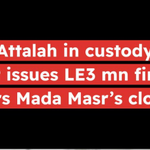
مشهد إخراج الصحافية لينا عطا الله بالقوّة من المحكمة بعد الحكم بتغريمها، وغلق موقع "مدى مصر"، تزامن مع تجديد حبس ستّة صحافيين من منصّة "متصدقش"، المتخصّصة بالتحقّق من الأخبار.
"متصدقش" و"مدى مصر"، مؤسّستان صحافيتان تواجهان الملاحقة لأنهما تتمسّكان بحقّ السؤال والتدقيق والمساءلة.
ديانا مقلّد تناقش…
In Egypt, independent journalism is facing one of the fiercest crackdowns on professional reporting.
The scene of journalist Lina Attalah being forcibly removed from a courtroom, following a ruling imposing a fine on her and ordering the closure of Mada Masr, coincided with the renewed detention of six journalists from Matsda2sh, a fact-checking platform.
Two independent media outlets are facing persecution for defending the right to question, scrutinize, and hold power accountable.
Diana Moukalled discusses.
@dianamoukalled
Maggie Michael retweeted
Iran created a secret network of military agencies to import at least $2 billion in hardware, explosives and heavy-duty trucks since January 2025, evading both the US naval blockade and Western sanctions, a Reuters investigation found reut.rs/3UNGyfk