

Former Investment Bank trader | Options trades, live market commentary & professional market insight. Education and opinion only. Not financial advice.
Joined November 2025
- Tweets856
- Following44
- Followers934
- Likes324





Pinned Tweet
You see the trade. You also see the edge behind it.
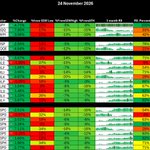
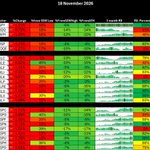
I publish my daily pre-market analysis and ETF relative-strength dashboard free on X.
Inside MikshuAlpha, subscribers see how that framework is translated into actual decisions throughout the trading day - including my entries, additions, trims, risk management and evolving thesis in real time.
Recent live examples include:
• $SPX 0DTE: up to +1,500%
• $SPX 7500/7505 call spreads: +600%
• $META calls: over +1,000%
• $CRWD calls: $9.30 → $68
• $NQ thesis: approximately +900 points in 30 hours
The percentages attract attention.
The real value is understanding why those opportunities existed before the move happened.
Subscribers receive:
• Live market commentary, theses and my trade expressions of those theses
• Index, equity, options, futures and volatility analysis
• US and global macro interpretation
• Intraday trades and longer-term swing setups
• Charts, IV curves and volatility heatmaps
• Gamma, vanna and dealer-positioning analysis
• Institutional options-flow interpretation
• Sector rotation and relative-strength analysis
• Videos and structured trading education
• Transparent reviews of winners, losers and adjustments
The channel is not built around blindly copying alerts.
It is designed to show you how I how use options mechanics, volatility, liquidity, macro and positioning to understand what's driving markets.
My framework draws on 15 years at Morgan Stanley and years of trading across multiple asset classes, including equities, FX, rates, futures and options.
Come see how I trade. Stay to develop the understanding and conviction to identify your own.
£20/month or £100 for six months.
Proceeds go to Cancer Research UK, a charity with deep meaning for my family.
Join through the link in my bio.
Educational content only. Not financial advice.
MikshuAlpha pre-market analysis, Tuesday 24th November, 2026
1. Market Summary
Yesterday delivered a powerful relief rally. Today’s task is to see how much of that move the market can hold as volatility settles.
• $SPY gained 4.71%, $QQQ 7.00% and $IWM 3.56%, with technology and semiconductors leading following Jensen Huang’s reinstatement at NVIDIA.
• Participation was broad, but concentrated: RSP gained 2.59% versus SPY’s 4.71%, while QQQE gained 4.94% versus QQQ’s 7.00%.
• The latest supplied SPX indication is 7,136, approximately 102 points below yesterday’s 7,237.7 close.
• Remaining cautious while price remains below 7,185 to 7,200. Yesterday’s rally has room to consolidate, but buyers need to establish support before I favour further upside.
The market is still digesting both yesterday’s exceptional squeeze and this morning’s tariff developments. I want the opening price action and volatility response to establish direction.
2. Macro analysis
• United States: Tomorrow’s 8:30am ET PCE release remains the immediate scheduled inflation catalyst, with December Fed tightening still central to the wider backdrop. Today’s house-price releases at 9:00am ET and consumer confidence at 10:00am ET also warrant attention.
• Trade policy: Reports that the US is preparing higher tariffs on China and other trading partners add uncertainty around inflation, margins and global demand. This is an additional factor to consider while the market digests the tariff details, rather than a settled directional signal.
• Eurozone: Composite PMI held at 51.7, with stronger German manufacturing offsetting weaker activity elsewhere. Persistent price pressures continue to complicate the ECB outlook.
• Japan: Manufacturing PMI improved to 53.7, but services slowed to 50.5, leaving composite activity at 51.5. Export strength and softer domestic momentum remain competing influences.
• China: Watch the response to the tariff reports and any implications for semiconductor trade. Further details matter more than assuming an immediate escalation.
3. Momentum and breadth
Yesterday’s participation improved much faster than the underlying trend structure.
• SPY, QQQ, IWM, RSP and QQQE all remained without the bullish price above 8, above 21, above 50 moving-average sequence.
• Only six ETFs in my dashboard satisfied that sequence, and only three also extended it through the 200-day average.
• QQQ remained 14.66% below its 52-week high, IWM 12.92% below, and SMH 31.50% below, despite the rebound.
I want to see equal-weight indices hold their opening ranges and semiconductors maintain relative strength through pullbacks. A controlled retracement with improving participation would support consolidation. Broadening weakness and repeated failed reclaims would favour another leg lower.
4. Volatility
VIX is moving between 30 and 32 as I write. Those are substantial swings, and it needs to settle before the opening move becomes more informative.
Yesterday’s 26.62 close is already well below this morning’s readings. The volatility compression has been partially reversed, but the current movement is too unsettled to establish whether this becomes sustained expansion or another retracement.
• Dealer short gamma can amplify moves in both directions.
• Today’s VIX weekly settlement around the 9:30am ET opening process adds another influence to watch.
• I want to see whether VIX establishes a range, retreats below 30 or holds above 32 alongside fresh equity lows.
SPX levels:
• 7,140: First nearby reclaim test.
• 7,150 to 7,185: Recovery zone. Holding back inside it would improve the immediate picture.
• 7,195 to 7,200: Important broken support area and the main initial reclaim.
• 7,215: Further stabilisation threshold.
• 7,238: Yesterday’s close.
• 7,275 to 7,280: Nearby call-wall resistance.
• 7,290 to 7,320: Concentrated dealer short positioning, centred on 7,300 so decay flows favour selling on the approach from below but buying above that pivot.
• 7,325 to 7,350: Potential extension area following sustained acceptance above 7,300, with intervening dealer-long positioning at 7,325.
• 7,125, then 7,110 and 7,100: Immediate downside points of interest.
• 7,080, then 7,000: Deeper levels if 7,100 fails.
5. Credit and liquidity
Fresh credit-spread readings are unavailable, so yesterday’s equity rally alone cannot confirm that wider stress has cleared.
• Watch whether high-yield credit remains resilient during the equity pullback.
• Holiday participation can thin liquidity and exaggerate short-term moves.
• A quieter period after the open would be constructive, but it needs to persist before treating the session as range-bound.
My preference is to let the opening range develop, keep risk defined and monetise favourable moves promptly.
6. ETF and Sector rotation
Yesterday’s strongest returns came from technology and semiconductors:
• SMH +15.03%, SOXX +13.63%, XSD +12.08% and XLK +8.97%.
• DRAM +18.62% and WGMI +14.15% illustrated the intensity of the rebound.
• XLY +3.97%, XLI +3.90% and XLC +3.57% supported broader participation.
• XLE fell 1.06%, while XLP slipped 0.09%.
Relative-strength leadership remains more balanced than those daily returns suggest. Utilities, discretionary, insurance, leisure and equal-weight industrials remain prominent.
• High-strength pockets with full moving-average alignment: PEJ, JETS and IBB.
• Key watch: SMH and XLK still lack bullish moving-average alignment. XLU and XLP retain stronger relative rankings despite much smaller daily moves.
Today’s test is whether yesterday’s leaders can absorb profit-taking while broader participation holds up.
7. Summary
A strong (400pt!) relief rally is being tested. Volatility needs to settle before I commit to the next directional move.
• Below 7,185 to 7,200, the immediate setup remains cautious, with 7,125, 7,110 and 7,100 underneath.
• Reclaiming 7,200 to 7,215, alongside calmer VIX and stronger breadth, would support a recovery towards 7,238, then 7,275 to 7,280.
• Tariff developments are an additional uncertainty to monitor as details emerge.
• Let VIX establish itself first.


2
458
After Friday's 3.7% drop in $SPX, a fresh put has two hurdles: the index has to keep falling, and the volatility paid for must hold up. A pause or an IV reset can hurt the option even if spot stays below Friday's open. I model price, time and IV before choosing the structure.
A half-size position with a 40% stop risks 20% of the capital used by a full-size entry, before slippage. In a volatile tape, size and the exit plan belong in the same decision. My Live channel notes showed why I kept risk defined while looking for the bounce.
MikshuAlpha pre-market analysis, Monday 23rd November, 2026
1. Market Summary
My bias is for a relief bounce within a market that remains structurally risk-off. Friday’s selling spread well beyond mega-cap technology, defensive sectors retained relative leadership, and credit weakened. This morning’s rebound needs to establish a base before I treat it as anything more durable.
• Last week, $SPY fell 8.6%, $QQQ lost 10.5%, IWM declined 7.5% and RSP dropped 6.2%. The average stock is now participating in the correction.
• Friday’s initial strength failed spectacularly. SPX traded around 7,200 before falling towards 6,880 and closing near 6,910. The ETF spreadsheet records SPY down 3.64%, QQQ 5.67% and IWM 2.88%.
• The distinction between a catalyst and an amplifier matters. Negative gamma helps explain the speed of the decline, but it does not establish what initiated the selling, though the mechanics clearly indicate that dealer hedging flows accelerated that move down through thin negative gamma
• The overnight rebound and VIX retreat towards 30 to 31 create scope for a meaningful squeeze. However, Friday’s failed gap up is a clear reminder that pre-market strength needs cash-session confirmation.
I favour tactical upside if the opening structure holds, but the broader market remains in an unstable falling phase.
2. Macro analysis
• United States: Today’s immediate catalysts are the Chicago Fed National Activity Index at 08:30 ET, flash manufacturing and services PMIs at 09:45 ET, and the two-year Treasury auction at 13:00 ET. The PMI release coincides with the end of the first 15-minute opening range, making that first breakout particularly sensitive to the data.
• The inflation test remains ahead: Wednesday’s calendar includes GDP, durable goods and jobless claims at 08:30 ET, followed by personal income and spending, including PCE inflation, at 10:00 ET. A holiday week still contains meaningful event risk.
• Nvidia: Trump’s renewed support for Jensen Huang’s reinstatement is helping drive the rebound, with $NVDA up around 8% pre-market in the early report. An actual reinstatement would be a separate catalyst and could extend the squeeze across semiconductors and technology; it remains a conditional scenario
• Eurozone: Flash composite PMI held at 51.7, below the 51.9 consensus. Manufacturing improved to 52.9, while services slipped to 51.2. Growth remains positive but uneven, with Germany offsetting weakness in France. This is limited support for global cyclicals.
• China: Friday’s loan prime rates were unchanged at 3.00% for one year and 3.50% for five years. That decision provided no fresh rate-cut stimulus. The ETF backdrop remains weak, with FXI and KWEB close to their 52-week lows. fxstreet.com
• Japan: Today is a Japanese holiday. Flash Japanese PMIs arrive at 19:30 ET tonight, making them a catalyst for the next Asian session.
• Geopolitics: Iran’s renewed threats to confront the US naval blockade keep oil and inflation risks active. A sustained energy bid would complicate the conditions needed for a durable technology recovery.
3. Momentum and breadth
Breadth is deeply washed out, but has not yet turned.
• The broad-market dashboard shows only 14.78% of stocks above their 20-day average and 26.24% above their 50-day average.
• Nasdaq participation is also depressed, with 18.61% above their five-day average.
• Russell participation has deteriorated sharply: 14.32% above the 20-day average and 23.88% above the 50-day average, alongside a further decline in participation above the 200-day average.
• RSP fell in every session last week. Friday’s 1.98% decline was smaller than SPY’s, but relative resilience still involved substantial absolute losses.
• One-month implied correlation reached 36.05, while the other correlation series rose to 29.71. Together with weak breadth, this shows how selling has become more synchronised.
The earlier positive breadth divergence has failed to protect price. For repair, I want advancing stocks to expand, equal weight to participate and the first pullback to hold a higher low.
Extreme dispersion can precede strong recoveries, but one extreme session cannot distinguish a brief liquidation from a prolonged stress episode.
4. Volatility
Volatility has reset higher. A retreat from panic levels can support a rally without restoring a calm market.
• Friday’s VIX spike towards 40, followed by a close around 35.9, was accompanied by VVIX at 138.03, VIX1D at 51.34 and VIX9D at 40.72.
• Pre-market shows VIX at 30.45, December futures at 25.30 and January futures at 24.07. The market expects stress to ease, but the curve remains inverted.
• The front futures ratio has recovered towards 0.95, still below the 1.00 threshold associated with contango.
• Total put/call is approximately 1.14, with equity-only put/call around 1.02. Protection demand is elevated, creating potential squeeze fuel if price stabilises.
•
Expiry has reduced exposure without removing negative gamma.
Monday’s SPX map:
• 7,100: First important upside trigger. Acceptance above it opens 7,150, then 7,200.
• 7,200: A reclaim would strengthen the relief rally and put 7,300 into consideration later this week.
• 7,020: First downside warning if the bounce fails.
• 6,995 to 7,000: Main downside decision zone. A confirmed break can accelerate selling.
• 6,950: A fast-moving area rather than dependable support.
• 6,930, then 6,900: Lower reference levels, followed by Friday’s low around 6,880.
• 7,400 and 7,525: Provisional gamma flip zone, still well above the immediate trading area.
5. Credit and liquidity
Credit has not yet confirmed the equity rebound.
• HYG closed around 76.33, near the lows of the displayed period.
• HYG/TLT fell towards 0.937, while LQD/HYG rose towards 1.36. Together, these ratios point to preference for duration and higher-quality credit over high yield.
• KRE closed around 68.32, then showed an early pre-market rebound. That bounce needs to hold alongside improving credit to support broader risk appetite.
• SOFR minus IORB is approximately positive one basis point. This measure alone does not indicate an acute funding squeeze.
• The displayed two-year minus ten-year yield spread is around negative 27 basis points. Its direction needs to be read alongside outright yields.
6. ETF and Sector rotation
Defensive leadership persists, while technology and momentum remain the centre of the damage.
• Defensives: XLP gained 0.67%, XLV slipped 0.12%, XLU fell 0.74% and XLRE lost 0.98%. All substantially outperformed SPY.
• Cyclicals: XLF fell 1.82%, XLY 2.95% and XLI 3.09%. Their relative rankings remain stronger than technology, but their trends still need repair.
• Technology: XLK dropped 7.27%, equal-weight technology RSPT 5.96%, and momentum MTUM 5.68%.
• Software and cybersecurity: IGV fell 4.62%, HACK 4.90% and CIBR 5.12%. Selling extended beyond semiconductor exposure.
• Other pockets: ITB gained 0.41%, while USO rose 1.12%. Gold ETFs fell approximately 3.6%, showing that Friday’s liquidation also reached traditional diversifiers.
There are no confirmed High RS Pockets: none of the ETF's I track are stacked for trend-based upside.
7. Summary
I favour a tactical relief rally, with 7,100 the immediate upside test and 7,000 the key downside decision zone. The broader trend remains damaged.
• Upside: Acceptance above 7,100, semiconductor leadership and improving breadth favour 7,150, then 7,200.
• Downside: Failure below 7,020, followed by a rejected reclaim of 7,000, favours 6,950, 6,930 and 6,900.
• Confirmation: Watch HYG, KRE, equal-weight participation and whether VIX continues lower during the first equity pullback.
• Execution: Let the opening range and 09:45 ET PMIs establish direction. Use smaller exposure and defined risk; the same negative gamma that accelerated Friday’s decline can amplify today’s rally.
A move towards 7,300 this week requires sustained recovery through 7,100 and 7,200. Until that structure develops, I am trading the bounce while keeping the broader risk-off regime firmly in view.


A high VIX does not turn oversold into a buy signal. In my 1990–2026 $SPX study, 7 of 27 first RSI <=30 closes with VIX >=30 were followed by a further 10%+ intraday fall within 20 sessions. The average rebound looked stronger later. The path still matters.
MikshuAlpha pre-market analysis, Friday 20th November, 2026
1. Market Summary
• Risk-off remains the dominant regime, but conditions for a sharp relief rally are building. Yesterday’s selling spread across the market: all 11 main sectors fell, with 82 of the 85 ETFs in my dashboard closing lower. Defensive relative strength offered limited protection.
• $SPY closed 715.87, down 1.96%, $QQQ 645.04, down 2.19%, and $IWM 264.22, down 2.18%. The early technology rally reversed completely, leaving all three close to their session lows.
• SPX suffered its sixth consecutive decline, finishing around 7,175, with the latest supplied pre-market reference near 7,120. The November lows have failed and the 200-day average, around 7,345, is now overhead resistance.
• The correction is already substantial beneath the index surface. The ETF dashboard shows QQQ 15.4% below its 52-week high, IWM 13.4% below, and semiconductors considerably weaker. SPY’s corresponding drawdown is 8.4%, so the correction label depends on the index and reference high.
• My broader view remains that this can be a deep reset within the bull market. Earnings resilience supports that thesis, but price, credit and volatility must confirm it. Longer-dated upside options activity alone cannot establish that institutions have called the bottom.
2. Macro analysis
• United States: The difficult combination is equity weakness alongside expectations of further Fed tightening. Treasury yields have fallen as investors seek safety, while the dollar remains near a 20-month high. Falling yields are therefore not yet translating into renewed risk appetite.
• China: Benchmark lending rates were held at 3.00% for one year and 3.50% for five years. There was no fresh easing surprise to offset the deterioration in global sentiment.
• Japan: October headline inflation printed 2.3%, with inflation excluding fresh food at 2.2%. Persistent inflation keeps BOJ normalisation relevant, adding another policy constraint to an already fragile global risk backdrop.
• Eurozone: Lagarde said the ECB would make its international swap lines more accessible, strengthening its liquidity backstop. That supports resilience against external shocks, but does not itself establish easier monetary policy. Eurozone consumer confidence is scheduled for 10:00am ET.
• AI positioning: Anthropic’s debut failed to restore confidence in the wider trade, with selling extending through Asian and European technology shares. IPO-related portfolio funding may have contributed, but the available evidence cannot isolate its share of the liquidation.
3. Momentum and breadth
• The breadth washout is clear. My dashboard shows only 14.4% of Nasdaq stocks above their five-day average. Its broader stock-universe readings show 21.0% above the 20-day and 31.1% above the 50-day.
• Russell breadth is also weak: 20.7% above the 20-day, 28.5% above the 50-day, and 38.7% above the 200-day. Small caps are participating in the damage rather than providing an alternative source of leadership.
• Equal weight offered modest relative resilience: RSP fell 1.76%, versus SPY’s 1.96%, while QQQE lost 1.89%, versus QQQ’s 2.19%. That is insufficient to call a positive breadth divergence.
• Oversold conditions create squeeze potential. I want an opening flush that is reclaimed, improving participation through the session, and fewer stocks making fresh lows on subsequent index tests.
• The longer-term trend-line area is worth monitoring, but the actionable signal is whether buyers defend it and recover broken levels.
4. Volatility
• My Thanksgiving volatility-crush thesis needs reassessing. VIX closed 28.44, up 15.8%, after reaching 29.13. The supplied morning snapshots show 29.9 to just above 30, with VVIX around 127.1 and one-day volatility around 32.1.
• Implied correlation has accelerated: the one-month measure reached 30.22, rising approximately 30% on the day. Positions that previously diversified one another are increasingly moving together.
• The closing volatility curve was inverted: VIX9D 29.26, VIX 28.44, VIX3M 27.03 and VIX6M 26.85. The separate front-futures ratio near 0.975 also confirms backwardation. These are different maturity measures, but both indicate immediate stress.
My research points to better medium-term opportunity, with considerable near-term path risk. The historical comparison under review showed SPY gaining an average 2.58% over 21 sessions, positive 72% of the time. However, typical intervening drawdowns were approximately 2.6% for SPY and 4.1% for QQQ, with much worse outcomes in the weakest cases.
• The next two closes matter: a return towards contango would support a temporary volatility shock. Persistent backwardation, especially if VIX divided by VIX3M exceeds 1.10, would strengthen the case for deeper stress.
• OPEX can reduce selling pressure without restoring stability. There's approx USD 900bn of gross delta expiring, predominantly puts.
• Note that standard monthly SPX settlement uses constituent opening prices through a special opening quotation. It is not necessarily the first displayed index print at 9:30am ET
• Vanna remains a potential upside accelerator once volatility falls. Continued volatility expansion can keep the pressure on instead.
• 7,090 to 7,120: Immediate decision area around the overnight lows.
• 7,150: First recovery pivot. Reclaiming and holding this level improves the bounce setup.
• 7,170 to 7,200: Broken support and initial overhead supply.
• 7,205 to 7,250: Stronger squeeze confirmation, with substantial put positioning remaining near 7,250.
• 7,285 to 7,300: Next resistance and a more meaningful recovery test.
• 7,345 to 7,355: Approximate 200-day average and nearby overhead positioning.
• 7,050 to 7,060, then 7,000: Downside objectives if 7,090 to 7,100 fails.
5. Credit and liquidity
• Credit is deteriorating alongside equities. HYG is near 76.53 on the supplied chart, while regional banks have weakened towards 69.26. The recent decline in HYG relative to Treasuries and recovery in investment-grade relative to high-yield debt reinforce the defensive message.
• These ETF ratios also contain interest-rate effects, so they cannot substitute for credit-spread data. Nevertheless, they provide little confirmation of an equity bottom.
• The SOFR-minus-IORB snapshot is near zero, without a sustained positive dislocation visible. That does not establish a funding crisis, although the chart alone cannot clear broader liquidity conditions.
• Expiry-related hedge reductions could help interrupt the selling feedback loop. Into Thanksgiving, thinner liquidity can also magnify moves in either direction.
6. ETF and Sector rotation
Relative leadership remains defensive, while absolute trends are weak. None of the 85 ETFs I track passed either supplied bullish moving-average stack.
• Consumer weakness was pronounced: XLY fell 2.79%, equal-weight discretionary 3.16%, and online retail 3.97%.
• Software held up better in IGV, down 0.87%, but equal-weight software and services fell 2.36%. The resilience was uneven.
• Gold fell alongside equities, offering no protection during this session. Oil exposure gained 1.45%, while energy equities still declined 0.65%.
• For a credible growth rebound, I want semiconductors to stop leading lower and participate in index reclaims.
7. Summary
The regime remains bearish, with an increasingly credible relief-rally setup around OPEX. I favour trading confirmed moves while keeping long swings light.
• Long scalp: Reclaim and hold 7,150, accompanied by falling VIX and improving breadth. Initial recovery objectives are 7,175 to 7,200, then 7,250.
• Stronger squeeze: Acceptance above 7,205 to 7,250 brings 7,285 to 7,300 into play. That would still leave substantial technical repair ahead.
• Short scalp: A failed reclaim of 7,150, or confirmed acceptance below 7,090 to 7,100, keeps 7,050 to 7,060 and potentially 7,000 in focus for today.
• Swing exposure: I remain lightly sized until price holds its reclaims, breadth improves and volatility stops expanding. Any tactical upside options exposure needs a defined maximum loss.
I suspect a strong relief rally is approaching. The trigger is buyers absorbing supply after expiry, with volatility falling and breadth improving. Until that appears, oversold conditions remain a setup rather than an entry.


MikshuAlpha pre-market analysis, Thursday 19th November, 2026
1. Market Summary
• My bias is tactically bullish, with a volatility-driven squeeze developing inside a damaged broader trend. Consumer discretionary, retail and cybersecurity showed strength yesterday, while semiconductors and wider technology still need to confirm the recovery.
• Yesterday’s Nvidia earnings gap was quickly faded, but the subsequent weakness produced a useful divergence. $SPY closed down 0.31% at 730.20, while $QQQ gained 0.39% to 659.51 and $IWM rose 0.40% to 270.12. VIX fell 3.53% to 24.56 despite another lower close in SPX.
• Anthropic’s IPO pricing has helped extend that reversal overnight. QQQ has traded as high as 675 in the supplied pre-market update, while SPX is testing 7,400 to 7,405, the first major decision area. Nasdaq futures have been around 2% higher, with S&P futures up about 1%.
• My thesis remains that event premium coming out after Nvidia and Anthropic can support a rebound into Thanksgiving week. Subscribers have seen me build index swings and express the short-volatility view. I am managing those gains while watching whether the cash session confirms the overnight move.
• 7,600 remains a recovery objective if the market clears successive resistance levels. A return to all-time highs would require considerably more evidence from breadth, credit and sustained leadership.
2. Macro analysis
• United States: Initial jobless claims and the Philadelphia Fed manufacturing survey are due at 8:30am ET. These remain upcoming at the preparation point of this note. After hawkish Fed minutes, the important response will be in yields: strong activity accompanied by higher yields could restrain the technology rebound.
• Anthropic: The IPO priced at 83 dollars, above its initial 70 to 78 dollar range, raising approximately 81.3 billion dollars. That demonstrates strong demand at allocation. Today’s test is whether secondary-market demand sustains the opening move and supports the wider AI complex.
• China: Trump and Xi described their talks as positive and constructive. That supports sentiment, but semiconductor export controls and tariffs remain the transmission channels to watch. Taiwan’s equity market fell more than 4% overnight, highlighting that the US futures bounce has yet to become a uniform global recovery.
• Eurozone: European equities are mixed, with technology benefiting from the anticipated Anthropic debut. Lagarde is among today’s scheduled speakers. My focus is whether European technology can retain that bid alongside the US cash session.
• Japan: The yen is lagging as sentiment improves. Takaichi has also reiterated Japan’s existing Taiwan position at APEC, although relations with China remain strained. Watch the yen and Japanese yields for any renewed disruption to global risk appetite.
3. Momentum and breadth
• Breadth remains weak enough to support a squeeze and a key breadth washout trade setup has triggered. Only 30.88% of S&P stocks are above their 20-day average and 37.31% above their 50-day average.
• Nasdaq participation is similarly depressed: 24.87% of constituents are above their five-day average, while the technology-specific measure is just 13.33%. There is considerable room for a rebound if buying broadens.
• Small caps are showing a tentative short-term improvement, but the structure remains fragile. Russell participation stands at approximately 29.63% above the 20-day, 35.33% above the 50-day and 42.98% above the 200-day.
• The advance/decline oscillator has turned sharply negative again. My SKFD signal from Tuesday remains a potential precursor to a breadth thrust; that thrust still needs to appear through stronger participation and sustained buying after the open.
• The constructive divergence is in volatility. SPX revisited its lows without VIX returning to its previous peak. However, implied-correlation readings remain elevated near 23.24 and 20.35, showing that common market risk is still significant.
4. Volatility
• The volatility-crush thesis is developing. Wednesday’s VIX close at 24.56 was below its 26.26 intraday high and the previous peak near 28. VIX9D is also below spot VIX, consistent with some immediate event stress easing.
• The futures ratio is approximately 1.02, indicating modest contango between the first two contracts. That is an improvement, although it does not mean the entire curve, including cash VIX, has normalised yet.
• VVIX remains elevated near 118, while the total put/call ratio is approximately 0.99 and equity-only approximately 0.83. Protection demand remains meaningful.
• SPX is still in a negative-gamma regime. Falling implied volatility and put monetisation can generate supportive dealer buying, but charm around the 7,450 to 7,500 area may offset part of that support before Friday’s expiry.
• Upside roadmap: Acceptance above 7,405, followed by a successful retest, favours 7,420, 7,450, then 7,475 to 7,480. Above that, 7,500 is a major positioning hurdle. 7,550 to 7,560 is the next substantial regime-change area.
• Downside roadmap: Rejection at the cap puts 7,375, then 7,345 to 7,350, back in play. Losing that support exposes 7,320 to 7,325, followed by 7,300. A sustained break below 7,300 opens 7,275, 7,268 and 7,250.
• The afternoon will need a fresh assessment as decay means 7,400 support weakens into early afternoon. A market still struggling at the same level after lunch would be less constructive than an early breakout that holds.
5. Credit and liquidity
• Credit has yet to endorse the equity rebound. HYG remains near its recent lows around 76.65, while regional banks have retreated towards 70.
• HYG/TLT has pulled back from its recent rebound, and LQD/HYG has risen from its October lows. Together, those ratios suggest a more defensive backdrop, although duration also influences both measures.
• The two-year Treasury yield remains approximately 27 basis points below the ten-year. The curve’s shape alone is insufficient to establish improving liquidity.
• SOFR minus IORB is approximately 0.02 percentage points, or 2 basis points. That reading does not show an acute funding dislocation, but it is not evidence of a broad liquidity injection.
• I want credit and banks to stabilise as equities rise. Continued weakness there would favour treating this as a positioning rebound.
6. ETF and Sector rotation
• Cybersecurity led the Saas-driven daily rebound: HACK gained 6.12% and CIBR 4.72%. WCLD rose 2.06% and IGV 1.25%. Those are strong daily moves, but none yet meets the supplied bullish MA alignment.
• Semiconductors remain the key confirmation test: SMH fell 0.12%, XSD lost 0.64%, while SOXX gained 0.28%. All remain relative laggards with failed MA alignment. Today’s opening strength needs to survive the cash session.
• Technology remains damaged: XLK gained 0.34%, but sits approximately 19.4% below its high. QQQ is approximately 13.5% below its high, with both bullish MA conditions false.
• Defensives are mixed: XLU and XLRE retained relative resilience, while XLP slipped 0.31%. XLV fell 2.20% and health-care services lost 3.26%, so this is selective rotation.
• Weakest RS group: AIQ -0.04%, BLOK +0.30%, BOTZ 0.00%, BUZZ +0.17% and GDX -5.97% are five members of the tied bottom tier. IGV, KWEB, PBW and USO also share that tier.
• Other notable laggards: XOP fell 3.40%, XLE 3.27% and USO 2.95%. China exposure also weakened, with FXI down 1.49% and KWEB 1.68%.
7. Summary
• I favour upside continuation while SPX holds reclaimed support, with 7,405 the immediate trigger for the next leg. Lower volatility, event-risk removal and depressed participation support the squeeze thesis.
• Bullish setup: Hold above 7,405 with QQQ strength, semiconductor participation and falling volatility. That brings 7,450, then 7,475 to 7,500 into focus.
• Failed-gap setup: Rejection at 7,400 to 7,405 followed by a loss of 7,345 would materially weaken the bullish case. Below 7,300, downside acceleration becomes the priority.
• I am managing profitable swings while looking for confirmation before adding exposure. The next step is for cash-market breadth and credit to validate what futures and volatility are signalling.


Vanna based market squeeze incoming. Channel subcribers get the full thesis and how I'm trading it.

The move I’ve been positioning for is here.
I’ve laid out my vanna-based rebound thesis in Live over recent days. Today’s gap-up has made my index and equity swing positions extremely profitable, and I still expect a lot more upside.
The full reasoning and trade updates are in my channel. Link in bio. $SPX
MikshuAlpha retweeted

If you don’t know about the SKFD breath setup, or so many others Mik has his his trading toolbox, and are truly serious about being a self-sufficient, successful trader, you should join his Telegram channel.
The best platform to learn trading price per pound, IMHO.
MikshuAlpha retweeted

Levels pulled from some sharp reads this morning. h/t @doc_mcgraw @MikshuAlpha @satymahajan @DavidMPontes @ClassicRoy @CoachNickMoney. Worth a follow if you trade SPX and QQQ.
MikshuAlpha retweeted
Following Mik is not about following his trades for BANGERS but to learn and interpret what the markets and/or tickers are saying under their hoods to make high probability trades that can create BANGERS.
Mik’s intention is to create great fisherman… not to hand out fish. 🐟🐟
Recent days' index trading has produced returns of +900% to 1200% on multiple occasions. I’m now positioned for a rebound, watching washed-out breadth and a potential volatility reset.
Subscribers have my thesis, level map and TradingView code to follow the process with me. $SPX
Link in bio.
Recent recap: nitter.gq/MikshuAlpha/status/212…
MikshuAlpha pre-market analysis, Wednesday 18th November, 2026
1. Market Summary
• The market remains risk-off, but my tactical bias is turning bullish around the 200 DMA, with a potential squeeze into Thanksgiving. Yesterday’s selling broadened: $SPY fell 1.01%, $QQQ lost 0.73% and IWM dropped 1.43%. Equal-weight indices underperformed, with RSP down 1.45% and QQQE down 1.27%.
• Yesterday’s pre-market downside setup delivered well. By the close, however, one of my favourite breadth washout setups had also triggered. Channel subscribers have the details, historical stats and execution details.
• SPX closed near 7,341 after trading below 7,300. The 7,345 to 7,350 area around the 200 DMA needs to be reclaimed and defended.
• Nvidia’s beat and strong guidance initially lifted futures towards 7,400, but that bid has largely faded, leaving the supplied pre-market indication around 7,350. Good earnings have created an opportunity for stabilisation; price still needs to confirm it.
• The distinction matters: I am looking for a tactical reversal within a damaged trend. A sustained loss of yesterday’s lows would undermine the immediate bullish setup.
2. Macro analysis
• United States: Housing starts are due at 8:30am ET, followed by FOMC minutes at 2pm ET. The minutes are the main scheduled afternoon risk, particularly with inflation concerns keeping tighter policy in play.
• Rates and dollar: The 10-year Treasury yield remains around 5.10%, while the dollar is firm. Neither provides a clear easing impulse for equities yet. Anthropic’s expected IPO pricing tonight adds another test of AI investment appetite.
• China: The Trump-Xi meeting around this week’s APEC summit is a key headline risk. Progress on trade and technology restrictions could help release event premium; disappointment could prolong it. Chinese equities remain weak, with Hong Kong down 0.9% and Shanghai down 0.1%.
• Europe: European technology shares are recovering, but the broader market remains subdued. That is selective semiconductor relief rather than convincing global risk appetite.
• Japan: The Nikkei gained 0.3%, supported by AI-related shares, while October’s trade deficit widened to 476.5bn yen. The regional recovery remains uneven.
3. Momentum and breadth
• Breadth is washed out: less than 8.8% of S&P technology stocks are above their five-day average. Across the broader supplied breadth universe, 29.53% are above the 20-day average and 37.03% above the 50-day.
• Small caps remain weak: 27.09% above their 20-day average, 34.73% above the 50-day and 42.48% above the 200-day.
• These conditions support a sharp mean-reversion rally, but oversold readings alone do not establish a durable bottom. I want improving participation as price reclaims resistance.
• The SKFD washout at yesterday’s close is particularly relevant to my near-term view. Subscribers already have the full framework; the public takeaway is that the balance of opportunity has shifted after the selloff.
4. Volatility
• VIX expiration is today’s immediate positioning event. VIX reached approximately 27.70 yesterday without exceeding the earlier spike above 28, despite fresh equity lows.
• December futures are around 22 below spot. That supports a normalisation thesis, but convergence can occur through rising futures as well as falling spot.
• Fixed-strike volatility remained bid yesterday, while 10-day realised volatility around 30% shows why implied volatility has been reluctant to retreat.
• My bullish thesis into Thanksgiving is that event premium starts to unwind, downside hedges lose delta and dealer hedge adjustments provide buying support. Vanna can assist a squeeze if volatility falls and price stabilises.
• The declining VVIX/VIX ratio adds to the case for easing demand for volatility protection. Nevertheless, VVIX near 121 and one-day volatility near 27 still indicate substantial uncertainty.
• Reported closing of a large November put position near Tuesday’s lows suggests some protection was monetised. That can reduce associated dealer short hedges, although the tape does not establish the holder’s identity or the aggregate market response.
• Dealer gamma remains negative, leaving moves vulnerable to acceleration in either direction. These are ideal squeeze conditions.
SPX levels I am watching:
• 7,345 : immediate decision area around the 200 DMA.
• 7,405: reclaim needed to strengthen the recovery.
• 7,450 to 7,455: next substantial resistance; clearance opens 7,475 and potentially 7,500.
• Below 7,340 to 7,345: risk returns towards 7,325 and 7,310.
• 7,300 and yesterday’s low near 7,288: critical downside defence. Sustained acceptance below exposes 7,250 (and quickly!)
5. Credit and liquidity
• Credit has yet to confirm an equity recovery. HYG remains near recent lows around 76.63, while regional banks have weakened.
• HYG/TLT has recovered from its early-November trough, but that relative improvement sits alongside weak outright high-yield prices. It is insufficient evidence of renewed risk appetite.
• The SOFR-IORB spread is approximately three basis points positive. That warrants monitoring, but this reading alone does not establish a funding squeeze.
• A more convincing rally would combine falling equity volatility with stabilising high yield and banks.
6. ETF and Sector rotation
• Defensive leadership remains relative: XLP fell 1.23%, XLV 1.41%, XLRE 1.49% and XLU 1.59%. Capital preservation themes are holding up over the ranking period, but yesterday’s selling reached them too.
• Financials weakened sharply: XLF lost 1.91% and KRE 1.86%. Their deterioration needs watching despite financials’ stronger relative ranking.
• Software remained under pressure: XSW fell 3.00%, with DTCR down 2.31%.
• Semiconductors showed a useful divergence: $SMH fell 0.39%, while SOXX gained 0.17%. Both remain relative laggards with bearish moving-average alignment.
• Recovery confirmation: semiconductors holding their earnings reaction, QQQ reclaiming intraday resistance and equal-weight participation improving would strengthen the long setup.
7. Summary
My near-term lean is bullish for a squeeze into Thanksgiving, conditional on the 200 DMA area holding and volatility starting to unwind.
Yesterday delivered the downside trade, then a breadth washout. Today brings a potential positioning reset, but negative gamma means another sharp flush remains possible before buyers establish control.
Hold 7,345 and reclaim 7,400, and the recovery gains squeeze potential. Lose 7,300 and yesterday’s lows, and the immediate bullish thesis needs reassessing.
The full washout statistics, positioning analysis and trade execution plan are already with channel subscribers.


My SKFD breadth setup triggered last night. I’m watching for a rebound over the next few sessions, with falling volatility and improving participation supporting the case.
Bullish positioning still needs a plan for being wrong. The detailed framework is in my Live channel.
Recent days' index trading has produced returns of +900% to 1200% on multiple occasions. I’m now positioned for a rebound, watching washed-out breadth and a potential volatility reset.
Subscribers have my thesis, level map and TradingView code to follow the process with me. $SPX
Link in bio.
Recent recap: nitter.gq/MikshuAlpha/status/212…
+762% on 7440p. +661% on 7420p. +454% on the 7450 fly.
The channel shows the entries, updates and selected partial trims behind those gains. I took profits, protected the book and used a portion of the day’s gains for later, smaller trades. $SPX

MikshuAlpha retweeted

if you are losing money everyday trying to follow Furu's with rented cars. Do yourself a favor and follow @MikshuAlpha.
+762% on 7440p. +661% on 7420p. +454% on the 7450 fly.
The channel shows the entries, updates and selected partial trims behind those gains. I took profits, protected the book and used a portion of the day’s gains for later, smaller trades. $SPX
1
4
784
MikshuAlpha pre-market analysis, Tuesday 17th November, 2026
1. Market Summary
• My bias remains defensive today, with the potential for a sharp recovery if volatility resets after this week’s AI events. Leadership still sits with defensives and selected financials. Yesterday, 77 of the 86 ETFs in my sheet fell, while equal-weight S&P declined 1.01% against the cap-weighted index’s 1.91% loss. Mega-cap weakness amplified an already broad sell-off.
• Yesterday delivered the downside scenario I discussed in Monday’s pre-market note, allowing us to bank substantial index profits. $SPY opened at 749.66, traded down to 738.07 and closed at 739.95, down 1.91%. SPX closed at 7,416.59, down 1.92%.
• $QQQ fell 2.67% to 661.75 as AI, semiconductors and mega caps led the liquidation. $IWM lost 1.66% to 272.94. Small caps offered relative resilience, but still participated in the selling.
• SPX remains below its 20-day near 7,600 and 50-day near 7,660, with the 200-day around 7,340 underneath. 7,400 is the immediate decision area while 7,490 to 7,500 is the more important reclaim for improving the weekly setup.
2. Macro analysis
• US: Retail sales and import/export prices arrive at 8:30 am ET, followed by industrial production at 9:15 am ET. The control-group sales reading and Treasury reaction matter for growth expectations and tech valuations. FOMC minutes follow Wednesday at 2:00 pm ET.
• Nvidia: Earnings arrive after today’s close. My focus is guidance, margins, funding commitments and management’s response to export restrictions and leadership uncertainty. A headline beat alone may struggle to restore confidence. New US chip restrictions ahead of the Trump-Xi talks add another source of event risk.
• Anthropic: IPO pricing is expected Wednesday, with trading Thursday. My working thesis remains that funding allocations could be contributing to liquidation elsewhere in AI. That is a possible flow explanation; the amount of selling still required is unknown.
• China: October retail sales grew just 0.4% year on year, industrial production rose 4.8%, and January-to-October fixed-asset investment fell 8.1%. Domestic demand remains weak, limiting support for a broad cyclical recovery.
• Eurozone: November ZEW expectations improved, with Germany rising to 35.6 from 28.1 and the eurozone to 26.5 from 18.5. That provides a constructive regional divergence, although German current conditions remain negative at -33.2.
• Japan: Third-quarter GDP contracted 0.1% annualised, its first decline in four quarters. Business investment rose 1.6%, but household consumption weakened. The global growth backdrop remains uneven.
3. Momentum and breadth
• Short-term breadth has deteriorated sharply: only 12% of S&P technology stocks sit above their five-day average, compared with 24.14% across the Nasdaq Composite. Tech is stretched, but oversold conditions still need a reversal trigger.
• Broader participation is weak: 39.01% of stocks are above their 20-day average and 42.22% above their 50-day. The recent breadth recovery has rolled over.
• Russell participation also remains soft: 37.10% above the 20-day, 40.64% above the 50-day and 44.59% above the 200-day. IWM’s smaller loss does not yet establish healthy risk appetite.
• The advance/decline momentum histogram has slipped back below zero. I want to see breadth improve alongside price before treating an index bounce as durable.
• There is a constructive volatility divergence: SPY is close to its early-November lows, while VIX remains below its earlier peak. That supports the possibility of a higher low, but price has yet to confirm it.
4. Volatility
• VIX opened at 20.00, reached 24.52 and closed at 22.91, up 18.70%. VVIX is around 114, while nine-day volatility near 23.15 sits slightly above VIX. Near-term event protection remains expensive.
• The second-to-first VIX futures ratio is around 1.015, indicating shallow contango. The curve offers little cushion, and Wednesday’s expiry will change which contracts sit at the front.
• Put/call ratios are 0.931 combined and 0.845 equity-only. Hedging demand is elevated without reaching the largest extremes visible on the charts.
• Dealer gamma remains deeply negative so expecting large intraday amplification of moves in either direction.
SPX levels I am watching:
• 7,400 to 7,425: immediate pivot. A sustained reclaim of 7,430 improves the bounce setup.
• 7,450 to 7,460: first meaningful overhead test.
• 7,475, then 7,505: major recovery hurdle. Holding above 7,500 would materially improve the flow backdrop.
• 7,550, then approximately 7,560 to 7,640: higher resistance and model-dependent gamma transition zones.
• Below 7,390 to 7,395: risk of acceleration through 7,380 to 7,350, with the 200-day near 7,340.
• 7,300 to 7,325: more substantial positioning support if the first downside zone fails.
I will assess defined-risk VIX or VXX put structures for a post-event volatility decline into next week's vol compression seasonality. A move towards VIX 18 next week is a scenario, with better confirmation coming from weaker volatility and stabilising equities after Nvidia. Elevated VIX alone is insufficient reason to sell early-session 0DTE gamma.
5. Credit and liquidity
• Credit remains a concern: high-yield bonds are near the lows of the displayed period, around 76.73. The high-yield/Treasury ratio has recovered from its early-November trough, but absolute high-yield prices have yet to confirm an equity recovery.
• Regional banks remain below their earlier highs, with the chart indicating pre-market weakness. Their relative resilience needs to translate into price strength.
• SOFR minus IORB is around zero, showing no persistent funding premium in this snapshot. That offers some reassurance on overnight funding, although it does not measure the whole liquidity backdrop.
• My read is equity de-risking with weak credit confirmation. A stronger recovery needs credit stabilisation alongside lower volatility.
6. ETF and Sector rotation
• Financials, staples, healthcare and insurance also satisfy the full ordering through the 200-day. Utilities pass the shorter stack but fail the full condition.
• Five names tied in the weakest RS group: technology -3.24%, semiconductors -5.11%, software -2.16%, global AI -3.22% and memory -7.38%. Every one fails the shorter bullish MA stack.
• Semiconductor weakness is broad: SOXX fell 5.41%, while equal-weight semiconductors lost 5.15%. The damage extends beyond Nvidia.
• Equal-weight technology fell 2.98% and momentum 3.34%, reinforcing the unwind across growth and crowded winners.
• Selective strength survives: healthcare services gained 0.79%, airlines 0.62% and transports 0.29%. Healthcare services retain both bullish MA stacks; airlines and transports do not.
• Staples remain a potential reversal trade if capital returns to growth, but their current strength argues for waiting for a failed breakout or loss of trend support before considering bearish spreads.
7. Summary
Defensive today. A post-event rebound is plausible, but needs confirmation.
• Bullish trigger: SPX holds 7,400 and sustains a reclaim of 7,430, followed by 7,455. Falling VIX and semiconductor leadership would favour a tactical Nasdaq bounce towards 7,475 and 7,500 on SPX.
• Bearish trigger: acceptance below 7,390 to 7,395 with firming volatility. That favours continuation towards 7,360 and potentially 7,325.
• Weekly view: 7,490 to 7,500. Until reclaimed, decay remains a headwind.
• My focus: protect yesterday’s gains, trade confirmed moves and assess the volatility fade around Nvidia’s reaction. Thanksgiving seasonality can help once price, breadth and volatility begin to align.


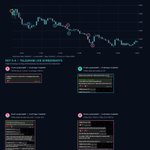
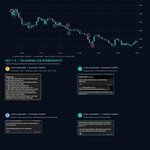
The SPX plan was on my channel before the bell: watch 7,495–7,500. If support failed, 7,450 and then 7,425–7,400 were in play.
“Trapdoor open” followed at 14:40 London/GMT (09:40 New York/EST). I added 7470p at 12.22, then set electronic stops as the move paid.
The receipts are on the chart. $SPX
