








👑_Modernerapharaoh⚜️ | △φ∞_.eth_τ💹🧲 retweeted

Quantum computing poses a serious threat to the cryptography blockchains currently rely on, while advances in AI compress best estimates for the threat's timeline.
That's why experts gathered in Cambridge to coordinate research upgrading our cryptography to be quantum-resistant.



👑_Modernerapharaoh⚜️ | △φ∞_.eth_τ💹🧲 retweeted

Sky made $196M in revenue over the past year, and $57M of it went back to $SKY holders through buybacks and staking rewards
SKY is 32% off the all-time high it set on Oct 5, which puts it near 8x revenue
I think this makes $SKY the best value buy of any crypto project on the market right now
It's got the longest and best track record in DeFi. Proven product-market fit. Real sustainable revenue. Token value capture. Incredible team. Constant innovation. Institutional adoption (Galaxy recently bought SKY and sUSDS). And a large market cap and a liquid market.
Based purely on business fundamentals, I think $SKY is as good as it gets in crypto
Full disclosure: $SKY is in my Milk Road PRO portfolio
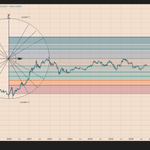
$ETH sitting in the golden pocket—that familiar $2,300–$3,600 range. Neutral territory until it makes a decisive move. #ETH #Ethereum #Crypto #ETHUSD #TechnicalAnalysis #PriceAction #CryptoTrading #GoldenPocket #Fibonacci #SupportAndResistance #Consolidation #RangeTrading


👑_Modernerapharaoh⚜️ | △φ∞_.eth_τ💹🧲 retweeted
Arthur Hayes dumped about $28.8M of crypto this weekend, including $ETH, $UNI and $AERO, three of my holdings
His reason: "I think we gotta go down to go up"
The last time he sold ETH, he bought it back at least 18% higher about a week later
Lookonchain tracked the selling from his wallets. The first tally:
- 6,400 ETH (~$15.2M)
- 14M ENA (~$2.76M)
- 323K UNI (~$2.24M)
- Plus ETHFI, AERO, PENDLE and ZAMA
His post at 2:18 AM ET Saturday said it "looks a bit dicey out there in macro and geopolitical land," and that he's "going to sit on the sidelines and wait for the all clear signal"
Nine days earlier, on Oct 15, he posted "Long $BTC $ETH"
In August 2025, he sold 2,373 ETH near $3,507. About a week later, he moved $10.5M of USDC to buy back above $4,150, and posted "I pinky swear, I'll never take profit again"
Arthur runs a macro trading book on a clock measured in weeks. Getting in and out is his job, and he's always got some way of explaining why
My $ETH thesis is measured in years and trillions of dollars. In the 9 days between Hayes saying "Long $ETH" and "I dumped it all," my thesis got stronger:
- JPM Coin went live on Ethereum mainnet (Oct 19)
- Schwab opened $BTC and $ETH trading to all eligible US retail clients, and it has 40.3M brokerage accounts (Oct 17)
- Deutsche Bank's institutional custody for $BTC and $ETH launches within weeks, per Reuters (Oct 16)
For those keeping score, ETH is still up 49% since July 1, to $2,346 from $1,570
Some of the "go down" already happened. $404M of longs got liquidated in four hours on Saturday. I don't know where the local bottom is, but I'm not going to guess and miss the next move higher.
When I had @Jamie1Coutts on @MilkRoadDaily this week, he said "dips on the back of macro uncertainty and volatility are for buying"
Jamie is correct. I expect Arthur will be long again very soon too.
If you think Wall Street keeps moving trillions of dollars onto Ethereum and other blockchain ecosystems, a macro fund going to cash for a few weeks is just noise, and it doesn't change the thesis on $ETH
Disclosure: I hold $ETH, $UNI and $AERO in my Milk Road PRO portfolio. We were early to $AERO (+93.7%), $UNI (+54.8%), and $SKY (+42.6%)
Try Milk Road PRO for $1 for 7 days, link in bio: @BitcoinJesusETH


$ETH | Mean reversion theory meets long-term market structure.
Ethereum’s weekly chart is trading within a long-term rising Fibonacci channel. The thesis: if the broader growth trend remains intact, the recent drawdown could give way to a recovery toward higher channel levels.
But the roadmap matters more than the projection.
Support: the lower rising channel bands need to hold on weekly closes.
Confirmation: reclaim overhead channel resistance and establish a higher-high/higher-low sequence.
Resistance: the horizontal Fibonacci level near $4,012 is a key upside checkpoint.
Extension scenario: sustained strength could bring the rising 1.618 channel boundary into focus.
Mean reversion provides the framework—not proof that the 1.618 level will be reached. That boundary is a time-dependent extension reference, not a fixed-price target or a measured statistical mean.
A sustained loss of channel support would weaken the thesis.
Watching the weekly structure—not chasing the projection.
#ETH #Ethereum #TechnicalAnalysis #MeanReversion


In 2020, $ETH broke out of a structure like this and went from $250 to $4,800.
This one has been building for 4 years.
$10,000 isn’t the dream scenario. It’s the conservative one.

👑_Modernerapharaoh⚜️ | △φ∞_.eth_τ💹🧲 retweeted

BREAKING:
$ETH GAS PRICE DROPS TO $0.004
ETH IS NEW SOLANA !!


👑_Modernerapharaoh⚜️ | △φ∞_.eth_τ💹🧲 retweeted
Three of the biggest names in finance just made BIG moves toward $ETH
- @CharlesSchwab opened $BTC and $ETH trading to eligible clients
- @DeutscheBank is about to custody $BTC and $ETH
- @jpmorgan Coin is live on Ethereum mainnet
Ethereum's strategy of going after institutional capital has paid off. All of these are small wins in an ongoing effort that is still only just beginning.
Ethereum spent years courting institutional capital while incumbents kept their distance and fought it. Now they're beginning to come to Ethereum.
Understand what this means.
Charles Schwab has 40.3M brokerage accounts and $13.33T in client assets, and every eligible U.S. retail client can now buy $BTC and $ETH right next to their stocks
Deutsche Bank says its custody service for institutional clients launches in Germany this year (reportedly within weeks). Initial support: $BTC, $ETH, USDC, EURC and EURAU
Then JPMorgan. JPM Coin is a dollar deposit token, one token for one dollar held at the bank. It's been running on Base, Coinbase's Ethereum L2, since last November. On Monday, it went live on Ethereum mainnet
Kinexys, JPMorgan's internal blockchain unit, pointed to Ethereum's "established depth of onchain liquidity and tokenized assets"
For context, JPMorgan moves about $12T in payments a day, per Bloomberg. Kinexys averages about $7B a day. That's a lot of capital and a lot of volume coming to Ethereum and to $ETH.
I said on @MilkRoadDaily this week that the market is going blind to these wins. All of these announcements came out, and nobody really noticed.
But regardless of anyone paying attention or not, all of global finance is quietly choosing to come to Ethereum.
When @fundstrat Tom Lee came on @MilkRoadDaily, he told me a financial institution adopts something when "it's a 10x improvement over what they do today"
Three of the biggest financial institutions in the world just voted with their feet
$BTC and $ETH benefit first. I think $ETH benefits the most. Here's why.
Institutional capital moves onchain. Then the products follow:
- JPMorgan has already launched two tokenized money market funds on Ethereum
- Deutsche Bank plans tokenized deposits and digital bond issuance for clients
- @BlackRock has launched multiple new onchain products in the last couple of months
When a bank builds on Ethereum, it's leaning on Ethereum's security, and that security runs on ETH. Every JPM Coin transfer on mainnet pays gas in ETH and is secured by validators staking ETH
At TOKEN2049 this month, Tom Lee said $ETH could top $5,000 by year-end. That's about 2x from $2,435
I don't know if that will happen by the end of 2026, but if Ethereum becomes the root of global finance, then even Tom is too low
Nobody is bullish enough
Believe in somETHing
WARTIME ETHEREUM
Full disclosure: $ETH and $BTC are positions in my Milk Road PRO portfolio. Our PRO team was early to $UNI (+54.8%), $AERO (+93.7%), and $SKY (+42.6%)
Try Milk Road PRO for $1 for 7 days, link in bio: @BitcoinJesusETH
👑_Modernerapharaoh⚜️ | △φ∞_.eth_τ💹🧲 retweeted

Ethereum is settlemenet layer of choice for global banks
- @DeutscheBank and @jpmorgan building on @ethereum
$DB $JPM

Two major pieces of Ethereum news landed today: Deutsche Bank, Germany’s largest bank, is reportedly preparing to offer institutional ETH custody, while JPMorgan, the largest bank in the United States, is bringing JPM Coin’s tokenized dollar deposits to Ethereum.
Two giants of traditional finance embracing Ethereum and ETH. But the price barely reacted, whereas on another network, people would be expecting a major pump.
There are two reasons for this.
First, ETH is larger and more liquid than most competing assets, so it takes more buying pressure to move it. Second, the market already expects major institutions to build on Ethereum. Another announcement is not subverting expectations.
Some people might say Ethereum is cursed: success is expected, and it only has something to lose when it disappoints.
This is where Ethereum bulls diverge from bears.
For years, bulls predicted the adoption now materializing before our eyes. This was NOT consensus. People said institutions would never use Ethereum, or would build everything privately.
Now it’s: “That’s already priced in. Good for Ethereum, but how does it accrue value to ETH?”
There are two things that mentality ignores.
First, this is financial adoption, with size. The players matter, but so do the capital they commit, the assets they tokenize, and how deeply they integrate their products and services.
All of that shows growing trust in Ethereum as a financial network, both for people using layer one directly and for layer twos using it for settlement.
We are gradually building an internet of finance where the underlying network has one native asset: Ether.
ETH secures that system and can be used directly as collateral. Bringing Bitcoin or any other asset, into Ethereum requires additional backing, bridge, or custody arrangements. Native ETH already belongs there.
Why does this matter so much?
Financial activity settling on Ethereum does not pay Bitcoin’s miners. Bitcoin’s own security model anticipates transaction fees replacing its declining issuance. That activity will not magically show up on Bitcoin just because its proponents expect it to.
Second, the uncertainty pushed around ETH’s supply ignores what has actually happened.
Since the Merge, ETH’s net supply has grown roughly 1.3% in total, while continuing to reward the stakers securing it. Stakers can earn above supply dilution, with transaction income on top. For an asset used as a store of value, that cannot simply be ignored.
There is already actual substance behind ETH’s gradual recognition as a store of value. The network has matured. Proof of stake has years of operation behind it. Current SEC guidance identifies ETH as a digital commodity. The ETFs that critics said would never happen now exist, including BlackRock’s multibillion-dollar fund.
Treasury companies like Bitmine and Sharplink are accumulating ETH at scale, and their holdings can produce staking income. That adds another way for investors to gain exposure, and another reason to hold the asset.
So when bulls talk about ETH eventually flipping Bitcoin, then gold, this is what they are looking at: an asset with restrained supply growth, native yield, and direct usefulness in a growing financial system.
You can disagree with that thesis. But “the price didn’t move” does not answer it. Fundamentals are moving int the right direction, but price is a lagging metric.
Many of the things bulls expected are happening. The argument is that ETH is severely underpriced, and that the market still underestimates where it leads.
$ETHBTC is approaching a key inflection point.
A confirmed breakout above descending resistance would signal a potential shift in relative strength toward $ETH, opening the path for an expansion toward the channel’s upper boundary.
Sustained follow-through would strengthen the case for broader altcoin outperformance.
#AltcoinSeason


