
We're NASA's center in Silicon Valley.
- Tweets13.1K
- Following109
- Followers503K
- Likes8.7K






ALT The shimmering colors visible in this NASA/ESA Hubble Space Telescope image show off the remarkable complexity of the Twin Jet Nebula. Lobes of material, in teal, orange and blue hues, stretch outward like elongated orbs from a central star system that shines bright white. Streams of gas jet outward from the center. Stars are visible in the background, dotting the black of space in yellow and white. Credit: NASA/ESA/Judy Schmidt



ALT Two photos side-by-side showing the Artemis I Orion heat shield on the left and the Artemis II Orion heat shield on the right. Both heat shields are seen on stands and rotated for inspection. Credit: NASA

ALT NASA's Cassini spacecraft captured this natural color view of Saturn almost a month after the planet's August 2009 equinox. The shadow cast on the planet by the rings remains narrow. Credit: NASA/JPL/Space Science Institute

ALT Saturn's rings obscure part of Titan's colorful visage in this image from NASA's Cassini spacecraft. The south polar vortex that first appeared in Titan's atmosphere in 2012 is visible at the bottom of this view. Credit: NASA/JPL-Caltech/Space Science Institute

ALT Saturn's largest and second largest moons, Titan and Rhea, appear to be stacked on top of each other in this true-color scene from NASA's Cassini spacecraft. The north polar hood can be seen on Titan appearing as a detached layer at the top of the moon on the top right. This view looks toward the Saturn-facing side of Rhea (949 miles or 1528 kilometers across). North on Rhea is up and rotated 35 degrees to the right. Images taken using red, green and blue spectral filters were combined to create this natural-color view. The images were acquired with the Cassini spacecraft narrow-angle camera on June 16, 2011, at a distance of approximately 1.1 million miles (1.8 million kilometers) from Rhea and 1.5 million miles (2.5 million kilometers) from Titan. Image scale is 7 miles (11 kilometers) per pixel on Rhea and 9 miles (15 kilometers) on Titan. Credit: NASA/JPL-Caltech/Space Science Institute

ALT A blue hue, present in the northern hemisphere of Saturn is seen here by NASA's Cassini spacecraft. The changing blue hue marks winter at Saturn and is likely due to reduction of ultraviolet sunlight and the haze it produces, making the atmosphere clearer and increasing the opportunity for Rayleigh scattering (scattering by molecules and smaller particles) and methane absorption. This view looks toward the unilluminated side of the rings from about 44 degrees below the ring plane. Images taken using red, green and blue spectral filters were combined to create this natural color view. The images were taken with the Cassini spacecraft wide-angle camera on July 29, 2013. Credit: NASA/JPL-Caltech/Space Science Institute

ALT KREPE-3 capsule floats inside the Northrup Grumman Cygnus XL 24 cargo spacecraft. Inside the capsule is a 3-D printed heat shield designed by researchers at NASA’s Johnson Space Center in Houston. The capsule is one of 10 that will be packed inside Cygnus XL for unberthing and release from the International Space Station.Credit: NASA/Anil Menon

ALT Technicians at Starfish Space prepare the Otter spacecraft ahead of NASA’s SSPICY technology demonstration mission. The CubeSat spacecraft will demonstrate technologies that could reduce orbital debris. Credit: Starfish Space

ALT Illustration of Otter, a satellite servicing spacecraft, approaching another spacecraft in low Earth orbit, traveling at roughly 17,500 mph around Earth. Credit: Starfish Space

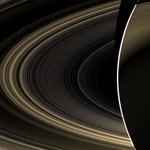
ALT Peering over the shoulder of giant Saturn, through its rings, and across interplanetary space, NASA's Cassini spacecraft spies the bright, cloudy terrestrial planet, Venus. The vast distance from Saturn means Venus only shows up as a white dot, just above and to the right of the image center. Credit: NASA/JPL-Caltech/Space Science Institute


ALT A SpaceX Falcon 9 rocket carrying the company's Dragon spacecraft is launched on NASA’s SpaceX Crew-13 mission to the International Space Station with NASA astronauts Jessica Watkins and Luke Delaney, CSA (Canadian Space Agency) astronaut Joshua Kutryk, and Roscosmos cosmonaut Sergey Teteryatnikov onboard, Thursday, Oct. 1, 2026, from Cape Canaveral Space Force Station in Florida.

ALT A SpaceX Falcon 9 rocket carrying three NASA-supported small spacecraft launched at 11:32 a.m. PDT Thursday, Oct. 1, 2026, as part of the company’s Transporter-18 mission from Space Launch Complex 4 East at Vandenberg Space Force Base in California.


ALT A view of the Moon from space, showing its crater‑covered surface in deep shadow along the lower half and illuminated along the top. Just above the lunar horizon, a thin blue crescent of Earth rises against the blackness of space, creating a striking contrast between the gray, textured Moon and the glowing curve of Earth.

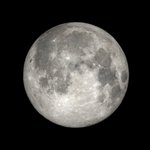
ALT A full moon, centered in the image, is pictured against the black of space. Credit: NASA

ALT Testing at NASA’s Ames Research Center in California’s Silicon Valley in March 2026 demonstrated autonomous technology that could identify an incursion – a vehicle, wayward suitcase, or other runway obstacle that could impact an aircraft’s safe landing. NASA/Brandon Torres-Navarrete

ALT An astronaut onboard the International Space Station shot this photo of peak fall colors around Ottawa, the capital of Canada. Credit:NASA

ALT This almost full moon shining in the eastern night sky was photographed on June 12, 2022, at NASA’s Kennedy Space Center in Florida. Credit: NASA/Ben Smegelsky

ALT A near full moon is silver against the black of space. Below, various shades of blue glow from Earth’s atmosphere in this image taken from the International Space Station. Credit: NASA

ALT In this view of the Moon, the near side (the hemisphere we see from Earth), is visible at the top half of the Moon disk. It is identifiable by the dark splotches. These are ancient lava flows from a time early in the Moon’s history when it was volcanically active. The large crater that appears below the lava flows, dark in the center, is Orientale basin, a nearly 600-mile-wide crater that straddles the Moon’s near and far sides as is partly visible from Earth on the edge of the Moon. In this image, we have a full view of the crater. Everything below the crater is the far side, the hemisphere we don’t get to see from Earth because the Moon rotates on its axis at the same rate that it orbits around us. Credit: NASA

ALT The south pole of Neptune is visible in this image, while the rest of the planet remains dark, blending into the black of space. The light emanating from the south pole creates an inverted crescent in shades of light blue, white, and orange. Credit: NASA/JPL

ALT NASA astronaut Jessica Meir photographed the New York City area from the International Space Station in March 2020. Credit: NASA

ALT The three moons shown here -- Titan (3,200 miles or 5,150 kilometers across), Mimas (246 miles or 396 kilometers across), and Rhea (949 miles or 1,527 kilometers across) -- show marked contrasts. Titan, the largest moon in this image, appears fuzzy because we only see its cloud layers. And because Titan's atmosphere refracts light around the moon, its crescent "wraps" just a little further around the moon than it would on an airless body. Rhea (upper left) appears rough because its icy surface is heavily cratered. And a close inspection of Mimas (center bottom), though difficult to see at this scale, shows surface irregularities due to its own violent history. This view looks toward the anti-Saturn hemisphere of Titan. North on Titan is to the right. The image was taken in visible light with the Cassini spacecraft narrow-angle camera on March 25, 2015. Credit: NASA/JPL-Caltech/Space Science Institute