









逆柱いみり情報局 retweeted

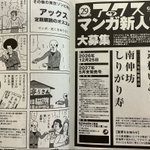
サクラボーが今日も静岡の街で暴れまわる!?
静岡クワザー『大ふ菓士サクラボー』
マンガがスタート!
描くのは、ボックスアートも手がけた
逆柱いみりさん(@NGapppa)。


逆柱いみり情報局 retweeted

「怒りがおさまらない」父は超有名アーティストの二世ミュージシャン 小泉進次郎氏と軍用犬開発キーマンの“握手写真”に怒り投稿(女性自身) news.yahoo.co.jp/articles/0a…


逆柱いみり情報局 retweeted

昨日の小林よしのり氏の違憲訴訟記者会見についてAP通信が世界に報じた。
世界が見ている。
日本裁判所の信頼度が問われる。
apnews.com/article/japan-imp…


逆柱いみり情報局 retweeted

元日本兵が、自分の口でこう語っています。
「みんな突き殺しました」
「女性も子供も生きてる物は殺せ、という命令でしたので」
「強姦はつきものでした。強姦して殺すのです」
「倉庫のような所に中国兵を放り込んで、周りに火をつけた」
これは映画『南京 引き裂かれた記憶』予告編の抜粋です。
元日本兵250人以上、中国人被害者300人以上に取材したドキュメンタリーから。
もう一つの映像は、同時期の中国の子供たち。
笑顔を浮かべるこの子たちの時代に、何が起きたのか。
当事者自身の言葉を、聞き逃さないでください。
#南京大虐殺 #南京事件 #引き裂かれた記憶 #元日本兵の証言 #歴史を直視 #戦争の記憶 #日中戦争 #証言


逆柱いみり情報局 retweeted

たまたま流れてきたけど、日本のイメージについてのアラビア語のポストへの英語のコメント。みんな読んだ方が良い。 −そして、国家のイメージについて——築くのに何十年もかかるが、破壊されるのは驚くほど速い−

The truly interesting aspect is not that "Japan has suddenly turned bad," but rather that the national image—meticulously cultivated over decades since the war—is now being dismantled, piece by piece, by the Japanese themselves.
In the postwar, Japan successfully executed a long-term rebranding of its national image:
It transformed itself from an aggressor, a colonizer, and a defeated nation into an "exemplary Asian state"—synonymous with peace, politeness, order, anime, technology, and shokunin kishitsu (artisan spirit).
Through anime, video games, automobiles, electronics, and tourism campaigns, Japan consistently projected an image that was entirely depoliticized and stripped of any association with war.
A key reason this image held up for so long was that the Japan the outside world perceived was the very version of itself that Japan chose to export.
Social media has fundamentally altered this dynamic.
It is no longer just diplomats, NHK, or animation studios speaking on Japan's behalf; ordinary Japanese citizens are now speaking for themselves. They tell Muslims to "get out," spout colonialist rhetoric directed at China, South Korea, or Southeast Asia, openly whitewash fascist war crimes, and insult the victims of those wars—all while framing their xenophobia as "protecting Japanese culture."
Consequently, the elements once obscured by cultural exports have been laid bare.
Two other variables are also critical: long-term economic stagnation in Japan, coupled with the rise of China.
The former has eroded the confidence of a nation that once saw itself as a "success story," while the latter has shattered Japan's long-held self-perception as the "only successful modernized nation in Asia."
As a result, Japanese identity politics has increasingly come to rely on a sense of historical superiority, ethnic purity, and outward hostility—a way to compensate for a profound sense of loss in the present reality.
The greatest irony is this:
For eighty years, Japan has told the world, "We are no longer that Japan."
Yet, every single day on social media, the Japanese themselves are proving: "That Japan never went away."
And as for a nation's image—it may take decades to build, but it can be destroyed with startling speed.
In the past, people from other countries might have come to know Japan through Hayao Miyazaki, Sony, Toyota, or Kyoto. More and more people are encountering Japanese political discourse for the first time, only to be met with sentiments like:
“No Muslims.”
“Get out, Chinese people.”
“There was nothing wrong with colonizing Asia.”
“Japanese militarism is something to be proud of.”
In a way, this does more damage to Japan's soft power than any so-called "anti-Japanese propaganda" from abroad ever could.
After all, the hardest form of propaganda to refute is never what others say about you.
It is what you say yourself.