

Science Writer, Editor, Author in Mind, Brain & Behavioral Sciences. Produces Consciousness & the Brain; Connected: The Nature of Your Body's Intelligence
New York
Joined May 2014
- Tweets3K
- Following4.8K
- Followers1.7K
- Likes6.1K





Natalie Geld retweeted
Ever wonder if eventually cells could be trained out of disease states? We're on the path; first steps:
New #preprint - @WesleyPClawson
"Goal directed closed-loop training of network bursts in cortical cultures produces improved performance and error correction over days"
biorxiv.org/content/10.64898…

Natalie Geld retweeted

I've been writing the ENERGY book for more than a year—with all my early morning time, weekends, and a few productive writing retreats. This book weaves together the science of energy and our research on mitochondria with stories of lived experiences, including some of our own and many others. I also share practical evidence-based guidance on how to apply energetic principles into our lives: ways to live a scientifically-informed, energetically-inspired life.
The full draft is now with the publisher. The book should launch early 2028. Translated in nine languages so far. Can't wait to share this with everyone!
I am grateful for the amazing people who are working on bringing this book to life and sharing it with the world. More here: energy-book.com/

Thanks @doristsao for your interesting + important findings that show inferotemporal and prefrontal cortex rapidly interleave conscious with suppressed content, indicating that conscious access requires temporal selection beyond localization. ✨✨✨ #MustRead @leafs_s @fanispa

1/ We discovered something totally unexpected about the neural structure of consciousness that overturns decades of thinking on its biological basis and brings us significantly closer to the recipe for generating conscious awareness.
New preprint: biorxiv.org/content/10.64898… (led by @HesseJanis, with @FrankLanfranchi, @_conor_mcgrory, @Yuelin_Shi, and @EngelTatiana)

Natalie Geld retweeted

As I splash about in the Pacific, the students are grinding out the first tool at a hackathon in Pittsburgh.
And SE&RCH begins.
The systematic excavation & review of consciousness history will be an machine assisted, human led effort through not only science, but art, literature, music, theology, philosophy and more.
Born out of our Conscientiâ meetings this year, SE&RCH will explore those corners isolated from the fast fashion consciousness science of recent decades and integrate the whole. Assisted by specially designed tools, guided by subdomain specific experts, contributed to by all of human history. @hybridkris_eth


Natalie Geld retweeted
Look at these gorgeous, dynamic, orange mitochondria surrounding the blue nucleus.
A view of life from beneath a cell monolayer in a parti dish. Whatever angle you look at it, life is always dynamic and pretty special.
Natalie Geld retweeted
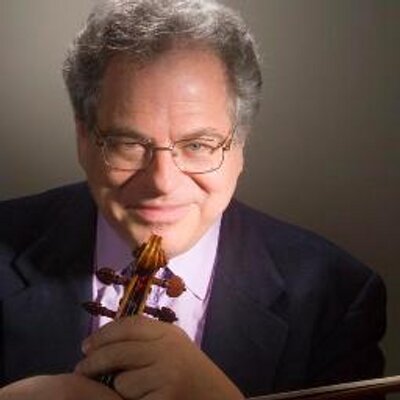
Beethoven's Violin concerto by Itzhak Perlman and the Berliner Philharmoniker, Berlin, 1992.
Natalie Geld retweeted

Plants don’t have eyes or brains. How do they know where light is coming from? Seedlings “see” with their whole bodies. quantamagazine.org/plants-fi…
Natalie Geld retweeted

This is because we interpret « seeing » with OUR human centred bias
But cognition is throughout the entire body not just the brain
aeon.co/essays/why-you-need-…


Plants don’t have eyes or brains. How do they know where light is coming from? Seedlings “see” with their whole bodies. quantamagazine.org/plants-fi…
Natalie Geld retweeted

9/3 Godspeed to the first Albatross chick to fledge, yesterday Sept 2. Their nest is much further down the hill. Āwheo was still present this afternoon altho not in cam view today
Photobomb
8/30 Āwheo in the background and TF chick
youtube.com/watch?v=tbJnPsDk…
AllAboutBIrds.org/Albatross
Natalie Geld retweeted

Psychedelics align brain activity with context - new in @Nature from Devon Stoliker @dpsyc42 @adeelrazi & many others (including me, very minorly). Full pdf #openaccess is here nature.com/articles/s41586-0… - commentary by Stefan Borgward and Mihai Avram here: nature.com/articles/d41586-0…

Natalie Geld retweeted

[BIRTHDAY] French pianist and composer Claude Debussy was born on this day in 1862! Celebrate his enduring legacy with Jeneba Kanneh-Mason as she performs the composer’s gorgeous “La fille aux cheveux de lin” (The Girl with the Flaxen Hair). bit.ly/4c19ndM
Natalie Geld retweeted

Perception is never just the passive receipt of stimulation. What is consciously seen or heard is already shaped by interpretation. Meaning enters very early. That is one reason identical input can be experienced differently under different conditions of expectation or attention.
Natalie Geld retweeted
Consciousness is sometimes described as a side effect of the brain.
But from an evolutionary point of view, that raises a difficult question: if consciousness had no causal role, how could it have evolved?
A conversation with neuroscientist David Edelman on consciousness, salience, and the interpretation of the whole.
Natalie Geld retweeted
[BIRTHDAY] On this day in 1860, the great Gustav Mahler was born! Let’s dive into the symphonist's tremendous musical legacy with Klaus Mäkelä conducting Mahler's Fifth Symphony with the Royal Concertgebouw Orchestra. bit.ly/4b5Q968
Natalie Geld retweeted

We experience our bodies as the boundary of the self. Where our skin ends and the outside world begins.
This boundary is shaped through ongoing sensory processing. In humans, this sense of separation depends in part on the left hemisphere. When it's disrupted, after strokes or under psychedelics, that boundary can dissolve, giving rise to the feeling that the self extends into the surrounding world.
Is this unique to us or our big beautiful brains?
This awesome study aims to get at this by showing that octopuses can experience a version of the rubber hand illusion, responding to touch on a fake arm as if it were part of their own body.
If a nervous system can redraw the boundary of the body, perhaps the "self" is less a fixed object than a dynamic model, continuously updated by sensory information from the world around us.
science.org/content/article/…

Natalie Geld retweeted

The paper argues that two major puzzles (how the brain creates a unified experience and maintains an “edge-of-chaos” state) may be explained by continuous electromagnetic fields generated by neural activity.
doi.org/10.3389/fncom.2026.1…
#neuroscience

Natalie Geld retweeted
[BIRTHDAY] Happy Birthday to German violin phenomenon Anne-Sophie Mutter! Watch the virtuoso perform Bach’s Partita for Solo Violin No. 2, a work that showcases her astounding artistry. bit.ly/4xMCH0K
Natalie Geld retweeted

This is a 2h podcast of us talking about brains. How they work. What makes neuroscience hard. And how progress may look like.

New episode with Dr. Konrad Kording (@kordinglab), professor of bioengineering and neuroscience at the University of Pennsylvania (@Penn) and co-director of CIFAR's Learning in Machines & Brains program (@CIFAR_News). Konrad works at the intersection of causality, machine learning, and neuroscience, building rigorous methods for causal reasoning when experiments aren't possible — and challenging how researchers interpret neural data and build AI.
Konrad argues the most promising path to understanding how the brain works is to read the brain’s wiring directly, down to the molecular detail of each connection, and to build compilers and simulations to understand the brain’s computation directly.
In this episode we go deep into how neurons work, how neurons wire together, and how organic and artificial neural networks differ. We discuss why organic neurons are doing much more; how a model of a single organic neuron can solve MNIST — computing more like a 3-layer artificial neural network; how the brain might learn by solving credit assignment with only local signals; how to approximate backprop without a global algorithm; why AI and humans are intelligent along different dimensions; why Konrad isn’t very worried about AI replacing us; economic models of intelligence and physical work; and much more.
Konrad is a brilliant, contrarian thinker who explains complex concepts very intuitively. It is a solid computational neuroscience primer. I hope you enjoy this conversation as much as I did!
Other links to this episode and references below.
Chapters
00:00:00 Introduction
00:01:01 How organic neurons work
00:24:13 How the brain learns: circuits and credit assignment
00:45:29 Recording the brain
00:52:47 Why simulating brains is hard
01:05:00 A new approach: connectomes and compilers
01:21:00 Why simulate brains?
01:29:50 How AI and human intelligence differ
01:41:04 Evolution, intelligence and AI risk
01:52:42 Robotics, causality, and the roots of intelligence
02:05:53 AI for science and scientific rigor
02:13:05 The economics of intelligence
02:27:50 A hopeful future
Natalie Geld retweeted
We don't often think of the brain serving any role other than the leader in whole body communication.
But the human body is an information-exchanging system that is largely decentralized. Signaling dynamics should always be considered in the greater context of the whole.
Just as forests are missed for trees, we often miss the orchestra of human physiology for the individual instruments and players that are the organs.
This quoted post is unavailable.
Natalie Geld retweeted

We used a GLM-HMM to identify latent states of engagement from neural data, then asked whether those states had a movement signature. They did, but it took some untangling b/c not all movements are created equal. Some reflect engagement, others don't. sciencedirect.com/science/ar…
