

Dave retweeted

🇺🇸 AI just cloned all of Adobe’s main apps and is giving them away…FOR FREE
Atlanta developer Brandon Thomas rebuilt Photoshop, Premiere, and Illustrator using Claude Opus 5.5 and Rust.
Seven apps, zero subscription fees, completely open source.
Yeah, software giants ain't going to like this one bit.
Source: Gizmodo / Writer: Bri

Readers added context they thought people might want to know
This post reuses the exact same image as a nearly identical earlier post by @Pirat_Nation and presents early prototypes as complete clones. The apps are free open-source early alpha projects with limited functionality.
x.com/pirat_nation/s…
gizmodo.com/someone-vibe-c…
arstechnica.com/ai/2026/10/sof…
getartcraft.com/apps/photocraft
Dave retweeted

YouTube just released a video explaining their algorithm. Here are 50 lessons from this video:
1. YouTube says recommendations are generated based on what it knows about a viewer and their current context. Current context could be factors such as viewing history, time of day, and device type.
2. YouTube says it doesn’t just take a video and try to find an audience for that video. Instead, it starts with a viewer and asks which videos are best for that video at that specific moment.
3. YouTube says a video can have very strong overall metrics (such as ctr and avd) while still being a bad recommendation for a particular viewer.
4. YouTube says a video isn’t initially testing against your subscribers.
5. YouTube says some channels could receive the majority of their viewers from non-subscribers, even shortly after the video being uploaded.
6. YouTube says it can learn that subscribers may not like a video while non-subscribers do.
7. YouTube says it does not decide whether a video is good or bad for everyone based on its early audience response.
8. YouTube says creators tend to overfocus on the first few hours of their analytics. And I couldn’t agree more with this statement.
9. YouTube says a viewer may need to be shown the same video multiple times before they decide to click on it. Often, more than 5 or 6 times even.
10. YouTube says it has experimented with limiting how many times the same video can be recommended to someone.
11. YouTube says context can determine what videos get shown, such as prioritizing a longer video when someone is watching from their TV in the evening.
12. YouTube says its algorithm tries to focus on the long-term value for a viewer.
13. YouTube says there’s no individual metric which determines a video’s success.
14. YouTube says click-through rate often decreases as a successful video reaches a broader audience.
15. YouTube says watch time is important, but doesn’t assume that every minute watched actually represents value.
16. YouTube says it considers both absolute and relative watch time. For those who aren’t too aware of what this means. Absolute watch time is the total amount of time someone spends watching a video, while relative watch time is the total amount of time someone spends watching a video relative to its length.
17. YouTube says satisfaction surveys are used because other metrics alone can’t tell whether viewers actually enjoyed the video.
18. YouTube says, and this one is important, that there’s no universal weighting where one metric has the same importance for every viewer.
19. YouTube specifically recommends looking at retention graphs to understand where viewers are dropping off (You can image how much I smiled when a heard this, for those who don’t know me, I’ve been obsessed with retention knowledge for years)
20. YouTube says turning comments off is not supposed to cause the recommendation system to penalize your videos.
21. YouTube says it tries not to interpret the lack of comments as evidence that viewers don’t like the video.
22. YouTube says the recommendation system is designed not to make decisions based on a single factor.
23. YouTube says turning ads off reduces your video’s reach.
24. YouTube says the algorithm is not trying to assign your entire channel to one topic category.
25. YouTube says it doesn’t deliberately push longer videos simply because it wants longer content getting more views.
26. YouTube says the change in performance for longer viewers is driven by viewer preferences.
27. YouTube believes short-form video became successful because it reduces the decision a person needs to make when choosing what to watch. I’m saying believe because it’s a hypothesis, a hypothesis that I believe is fair to make.
28. YouTube says increasing thumbnail size and showing less videos on desktop increase overall engagement with long-form content.
29. YouTube says it would not have launched the homepage redesign if its experiments had shown that it reduced viewership.
30. YouTube says they’re running hundreds of experiments on the platform at any given moment.
31. YouTube says people sometimes think temporary experiments are permanent changes.
32. YouTube says one off-topic video blowing up does not mean the algorithm is suddenly confused about your channel.
33. YouTube says the decision to create a second channel should be based on whether the content serves the same general audience.
34. YouTube says if two types of content offer different value propositions to different audiences, you should probably consider a second channel.
35. YouTube says its recommendation system can connect audiences between two separate channels when the same viewers watch both channels.
36. YouTube says even when unrelated content is uploaded on the same channel, it can distinguish which videos a viewer may care about.
37. YouTube says a viewer who watched only your short-form videos doesn’t necessarily get your long-form videos recommended. This is in-line with my own findings on viewer conversion being extremely low between formats, often reaching 0.2% or lower.
38. YouTube says a viewer who likes only one topic on your channel, can increasingly only be served that specific topic from your channel.
39. YouTube says creators should plan content around different audience groups instead of assuming their entire audience is one homogeneous group. The way I explain it to creators is: the viewer composition from one video may completely differ from the composition from another video, even though the performance looks the same.
40. YouTube says data from your subscription feed is often better to look at because it's a more controlled subset of your audience. I agree and disagree on this one, because it may also be a limited subset of your audience, so there’s nuance involved with this one.
41. YouTube says viewers regularly watch content from hundreds of channels that have little topical overlap to one another.
42. YouTube says a brand-new channel does not need existing viewer history for its videos to get recommendations.
43. YouTube says it actively tracks whether creators are succeeding and growing through the ecosystem. I can say that they definitely do, sometimes at the benefit of big creators, sometimes at the benefit of smaller creators.
44. YouTube says it actively tracks whether creators are earning enough revenue to system themselves. This is an interesting one which I haven’t heard them talk about, even in private conversations so I’d be curious to know how they’re doing this.
45. YouTube says bad retention from an external viewing source doesn’t automatically mean that performance should hurt the video on the homepage. This aligns with the advice that you can actually link your content to groups you know for some initial traffic, as long as this group would actually enjoy your content.
46. YouTube says homepage recommendations mainly care about how a video performs in the homepage context. We can actually notice this with shorts. When shorts have better thumbnails, they perform better through browse versus when they don’t have thumbnails.
47. YouTube explicitly gives advice to not disable subscriber notifications in an attempt to improve algorithm performance. They even state that it could prevent connecting your upload to people who would have watched it. Also, at the beginning of the interview they also state that this is the only way to guarantee your content being pushed to your audience.
48. YouTube says subscribing to a channel is a weaker signal of future viewing than most creators assume.
49. YouTube says creators often underestimate how many other channels their own fans regularly watch.
50. YouTube says that you should comment under this post so it reaches more people and so I’m more likely to re-appear in your feed. While I’m half-joking, it does help and my goal is to always spread as much of this information as possible to others.
Hope you enjoyed this long summary.

Dave retweeted

The European mind simply cannot comprehend a random citizen playing the national anthem with a semi automatic rifle in their backyard shooting range
Dave retweeted

Pretty rare earthquake activity tonight on Earth.
Both of these things happening within 2 hours of each other:
1 in 1,000 to 1,200 years
• A “doublet” earthquake in Venezuela (two quakes of similar magnitude in the exact same spot)
• A totally separate 6.9+ quake somewhere else (Japan)





Dave retweeted

People erupted during the Boston Tea Party over just a few percentages as they believed they were being taxed without representation.
Nowadays we have the representation, but do we trust our representatives?
Here is my full testimony from Congress 🤝
Dave retweeted
Minnesotas Department of Human Services has given over $724,000,000 to an NGO(s) who’s name has been protected as “Masked to protect Not Public Data”
This is suspicious because other NGOs have their name but this certain NGO has been protected.
Expose all the fraud

Dave retweeted

Sat down with @davidlin_TV for the latest forecast into 2026 on the stock market, crypto and gold/silver.
youtu.be/NF43g0ATNm4

Dave retweeted
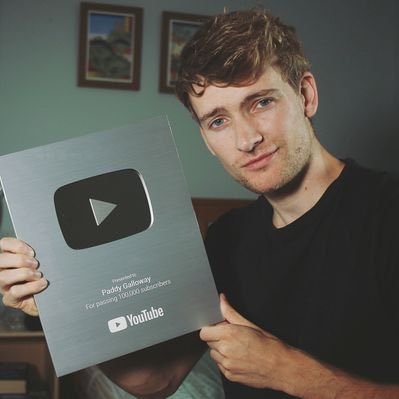
We gave our new strategy to a tiny channel (1.3k subs)
Their video went viral.
- 350k views in a tiny niche.
- 280x their average view count
- Then repeated it multiple times
So f**k it…. Here’s the strategy he used:


Dave retweeted

THIS IS THE MOST SAUCE I'VE EVER DROPPED
Selling ebooks through a simple nurturing marketing funnel is the fastest way to $15k/month.
I wrote a guide detailing the marketing funnel:
- how to get customers from each step to the next
- psychological techniques to break customer's false beliefs
- effective nurturing to increase conversions
- how to launch funnel and not waste time + effort (avoid mistakes)
- SO MUCH MORE
Only my students had access to this guide, but now I'm giving it away free for the next 48 hours only
Like, retweet, and comment "funnel" and I'll send you the guide (can only send if you follow me)

Dave retweeted

Meet the strategist behind the biggest YouTubers: @PaddyG96
He works with some of the biggest creators as well as the biggest brands to help them maximize their viewership
Watch + Learn → youtu.be/L9CO1FcRHCM
Dave retweeted
“YouTube is too saturated”
This video was uploaded to a channel with 0 subscribers.
It just passed 750k views…
New channels are blowing up right now🧵

Dave retweeted
So that’s our method for identifying channels with huge potential.
Simple, but extremely useful.
Go through it, see where you potentially fall short. Assess your channel like a start-up.
It can help flag issues early on and you can course correct.

Dave retweeted

Excited to introduce Icon, The First AI Admaker.
We’re backed by Peter Thiel’s Founders Fund & execs of frontier AI labs like OpenAI, Pika, & Cognition.
Icon (icon.me) is like ChatGPT + CapCut, but for making winning ads with AI in minutes.
How it works:
1. Icon looks at your video library & tags scenes (e.g. "close-up," "unboxing"). These scenes become reusable clips used as lego blocks for making ads.
2. Prompt Icon’s AdGPT to generate scripts focused on specific angles & audiences.
3. Icon finds perfectly matching clips for every script scene & generates an ad that is 80-99% complete.
4. Make edits with our CapCut-like video editor until you're happy.
3-person creative teams make 30 ads per month. With Icon, they make 300.
We co-built Icon with $100M+ revenue brands like Ridge, Jones Road, Immi, Backbone, & MUD\WTR to solve big pain-points:
1. Making lots of ads is extremely painful. Icon helps you automate the tedious parts of scriptwriting, scene matching, video editing, audience research, UGC creation, & more.
2. AI-generated ads look like trash. Icon remixes your existing footage into new ads, matching your production quality & maintaining brand aesthetics.
3. Existing solutions charge $2K-$30K/month for:
🔍 Competitor ad spying & cloning
📈 Creative analytics
📹 Custom & stock avatars for AI UGC
👥 Audience research
📁 Video storage & tagging
Icon does scriptwriting & video editing on top of everything above for just $999/year (their margin is our opportunity 😉).
If you’ve made it this far, we have a surprise for you 👇🏻
Dave retweeted
The result? Well that's a 1/10 anyway.
I don't usually reveal client videos like this. If you found this valuable, I'll do more.
I'll pick someone who likes + RT's the top tweet & literally help you come up with an outlier idea myself.
Also follow @PaddyG96 (100k so close!)
