

WHFB helps mitigate wildfire by restoring native wild horses as keystone herbivores into designated wilderness areas reducing grass and brush wildfire fuels.
Joined March 2022
- Tweets2.8K
- Following1
- Followers1.9K
- Likes2K







Pinned Tweet
Wild Horse Fire Brigade (WHFB) has been studying *Environmental Benefits of Wild Horses for 10-yrs!
*ReWilding for: Carbon cycling, wildfire fuel management & reseeding benefits to soils & coevolved species
Lyrics & music by 'Unspoken' 'GOOD FIGHT' [WHFB Remix]
#WildHorses
SHARE-SHARE-SHARE! 𝐓𝐇𝐄 𝐌𝐀𝐆𝐈𝐂 𝐀𝐍𝐃 𝐓𝐇𝐄 𝐏𝐎𝐖𝐄𝐑 𝐨𝐟 𝐭𝐡𝐞 𝐒𝐩𝐢𝐫𝐢𝐭 𝐇𝐨𝐫𝐬𝐞𝐬 𝐢𝐬 𝐚𝐭 𝐰𝐨𝐫𝐤... 𝐄𝐯𝐢𝐥 𝐖𝐢𝐥𝐥 𝐋𝐨𝐬𝐞!
#wildhorses #WildHorseSong #SpiritHorse #SpiritHorseSong #WakanTanka #WilliameSimpsonII #WildHorseLivesMatter #BrumbyLivesMatter #WildHorseResearch #BioFieldResearch #BioFieldEnergy #StoptheRoundups @HeartMathInst @JaneGoodallInst @grok @bot @BodyBioField @Lakota_Timez @StandingRockST @IENearth
Wild Horse Fire Brigade retweeted
This Org is the head of the Sterilization Cult taking blood money from the BLM to sterilize Wild Horses using an EPA Registered Pesticide 'PZP' that is NOT an FDA approved-registered Veterinarian vaccine for euine contraception. These people work both sides of the street!
#wildHorses #AmericanWildHorseConservation is formerly (renamed itself) #AmericanWildHorseCampaign
realitycheckswithstacilee.co…

Wild Horse Fire Brigade retweeted
The BIG wild horse nonprofits lobbied against my nomination so they could continue making a living by getting paid by the BLM to sterilize wild horses...
They are diabolical and sinister people who just look nice on the cover... a deep dive into their IRS form 990's and their lack of results (other than sterilizing horses) shows they are Grifters. #WildHorses
Wild Horse Fire Brigade retweeted
youtube.com/watch?v=lBZht46q…
𝗦𝗛𝗔𝗥𝗘: 𝗗𝗲𝗽𝗮𝗿𝘁𝗺𝗲𝗻𝘁 𝗼𝗳 𝗜𝗻𝘁𝗲𝗿𝗶𝗼𝗿 𝗦𝗲𝗰. 𝗕𝘂𝗿𝗴𝘂𝗺’𝘀 ‘𝗗𝗲𝗰𝗹𝗮𝗿𝗮𝘁𝗶𝗼𝗻 𝗼𝗳 𝗪𝗮𝗿’ 𝗔𝗴𝗮𝗶𝗻𝘀𝘁 𝗔𝗺𝗲𝗿𝗶𝗰𝗮’𝘀 𝗪𝗶𝗹𝗱 𝗛𝗼𝗿𝘀𝗲𝘀
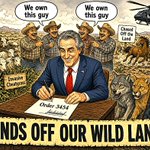
Secretary Burgum’s Order 3454 has officially pitted rancher-driven interests against the will of the American people. Roughly 80% of Americans oppose wild horse roundups and find the BLM’s involvement in the slaughter pipeline revolting and un-American. That order accelerates the removal of wild horses to free up forage for cattle and sheep while opening the door to more aggressive population control.
This is not management. It is the continuation of a long-standing plan known as the 𝗣𝗔𝗧𝗛 𝗙𝗢𝗥𝗪𝗔𝗥𝗗.
The Path Forward was a 2019 coalition agreement backed by groups including the Humane Society of the United States, ASPCA, Return to Freedom, the American Farm Bureau, and the National Cattlemen’s Beef Association. Its core goal was to reduce wild horse numbers toward the BLM’s artificially low 𝗔𝗽𝗽𝗿𝗼𝗽𝗿𝗶𝗮𝘁𝗲 𝗠𝗮𝗻𝗮𝗴𝗲𝗺𝗲𝗻𝘁 𝗟𝗲𝘃𝗲𝗹 (𝗔𝗠𝗟)—currently set at roughly 26,000 animals nationwide—through large-scale removals combined with fertility control.
Congress has repeatedly directed funding toward this approach, and BLM budgets for the wild horse program have risen significantly since the plan was introduced.
The national AML is not a scientific carrying capacity.
It is a political number set to maximize livestock use on public lands.
Driving herds to these levels while applying fertility control at high rates risks genetic decline in populations that have never been fully sequenced.
𝗧𝗵𝗲 𝘀𝘁𝗲𝗿𝗶𝗹𝗶𝘇𝗮𝘁𝗶𝗼𝗻 𝗽𝗿𝗼𝗴𝗿𝗮𝗺 𝗶𝘀 𝗯𝗲𝗶𝗻𝗴 𝗰𝗮𝗿𝗿𝗶𝗲𝗱 𝗼𝘂𝘁 𝘄𝗶𝘁𝗵 𝗮𝗻 𝗘𝗣𝗔-𝗿𝗲𝗴𝗶𝘀𝘁𝗲𝗿𝗲𝗱 𝗽𝗲𝘀𝘁𝗶𝗰𝗶𝗱𝗲.
Porcine Zona Pellucida (PZP), the most widely used fertility control agent, is registered by the EPA as a restricted-use pesticide (PC Code 176603). It is not an FDA-approved veterinary vaccine. It is a pesticide product registered for population control of wild horses, burros, and deer.
Repeated use of PZP can suppress reproduction for years. Some groups continue to falsely market it to the public as a simple “vaccine.”
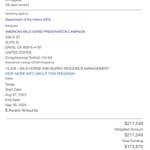
American Wild Horse Conservation (formerly the American Wild Horse Campaign) has received BLM cooperative agreements to administer PZP fertility control, including a 2023 agreement worth over $217,000 specifically for PZP work on the Cedar Mountain Herd Management Area.
In addition to American Wild Horse Conservation, Return to Freedom and Humane World for Animals among others who are supporting this genetic demise via EPA registered pesticides. These nonprofits are 'collaborators' to the BLM's genetic demise of wild horses in America.
American Wild Horse Conservation are not outsiders criticizing the program—they are partners in implementing the sinister Path Forward’s fertility-control component.
𝗕𝗼𝘆𝗰𝗼𝘁𝘁𝗶𝗻𝗴 𝘁𝗵𝗲 𝗰𝗼𝗹𝗹𝗮𝗯𝗼𝗿𝗮𝘁𝗼𝗿𝘀 𝗺𝗮𝘁𝘁𝗲𝗿𝘀 𝗺𝗼𝗿𝗲 𝘁𝗵𝗮𝗻 𝗯𝗼𝘆𝗰𝗼𝘁𝘁𝗶𝗻𝗴 𝗯𝗲𝗲𝗳.
The nonprofits, like American Wild Horse Conservation, that accept BLM funding and contracts to dart mares with an EPA-registered pesticide, or who support that crime against Nature, are actively helping reduce wild horse numbers under a framework that prioritizes livestock forage at the cost of the wildlife, wild horses and ultimately, the degradation of public lands.
These nonprofits are assisting the very EVIL that true wild horse advocates and honest science oppose and condemn.
Americans who care about these animals and our public lands are not powerless.
Public opposition remains strong across party lines. The financial and political pressure can be directed where it belongs:
At the agencies and ALL the 'wild horse organizations' that are carrying out this plan as soldiers for the DOI and BLM.
𝗪𝗔𝗧𝗖𝗛 & 𝗦𝗛𝗔𝗥𝗘:
youtube.com/watch?v=lBZht46q…
The genetic integrity of America’s free-roaming wild horses is being traded away under a plan that was never about protecting them.
The People, Politicians and Greedy Nonprofits engaged in this unsavory un-American action are clearly uncaring that the ancestors of these same wild horses HELPED MAKE AMERICA GREAT!
Where's the Loyalty? Where's the Integrity? Where's the Honor? What Say YOU President TRUMP? @POTUS
#WildHorses #WildHorseLivesMatter #WildHorseFireBrigade #WHFB #WildHorseFireBrigade #BrumbyLivesMatter #PublicLands #DOI #GROK #BLM #WildHorseGenetics #WildHorseConservation #AmericanWildHorseConservation @IUCN @IUCN_Water @IUCN_PA @IUCNsos @IUCNssc @theNASciences @SecKennedy @POTUS @TruthTrumpPost @TrumpTruthOnX @thehorse @thehorsemag @60Minutes @TuckerCarlson @joerogan @joeroganhq @NancyMace @77WABCradio
Wild Horse Fire Brigade retweeted
SHARE-SHARE-SHARE: 𝗧𝗿𝘂𝗺𝗽’𝘀 𝗢𝘃𝗲𝗿𝗿𝗲𝗮𝗰𝗵 𝗼𝗻 𝗣𝘂𝗯𝗹𝗶𝗰 𝗟𝗮𝗻𝗱𝘀 𝗠𝗮𝘆 𝗖𝗼𝘀𝘁 𝗥𝗲𝗽𝘂𝗯𝗹𝗶𝗰𝗮𝗻𝘀 𝘁𝗵𝗲 𝗠𝗶𝗱𝘁𝗲𝗿𝗺𝘀 - 𝗗𝗶𝘀𝗿𝗲𝗴𝗮𝗿𝗱 𝗳𝗼𝗿 𝗹𝗼𝗴𝗶𝗰, 𝘀𝗰𝗶𝗲𝗻𝗰𝗲, 𝗮𝗻𝗱 𝘁𝗮𝘅𝗽𝗮𝘆𝗲𝗿 𝘀𝗮𝘃𝗶𝗻𝗴𝘀 𝗵𝗮𝘀 𝗮 𝗰𝗼𝘀𝘁
𝗢𝗣𝗜𝗡𝗜𝗢𝗡: 𝗕𝘆 𝗪𝗶𝗹𝗹𝗶𝗮𝗺 𝗘. 𝗦𝗶𝗺𝗽𝘀𝗼𝗻 𝗜𝗜
With the 2026 midterm elections one day away, the latest polling and forecasting models show Democrats as clear favorites to retake the House and as the favorite to capture the Senate.
𝗗𝗲𝗰𝗶𝘀𝗶𝗼𝗻 𝗗𝗲𝘀𝗸 𝗛𝗤 𝗮𝗻𝗱 𝗼𝘁𝗵𝗲𝗿 𝗮𝗴𝗴𝗿𝗲𝗴𝗮𝘁𝗼𝗿𝘀 𝗽𝘂𝘁 𝗗𝗲𝗺𝗼𝗰𝗿𝗮𝘁𝗶𝗰 𝗼𝗱𝗱𝘀 𝗼𝗳 𝗮 𝗛𝗼𝘂𝘀𝗲 𝗺𝗮𝗷𝗼𝗿𝗶𝘁𝘆 𝗶𝗻 𝘁𝗵𝗲 𝟴𝟰–𝟵𝟴% 𝗿𝗮𝗻𝗴𝗲, with projected gains of 12–30 seats. Senate control odds for Democrats sit in the 𝟲𝟰–𝟴𝟱% 𝗿𝗮𝗻𝗴𝗲 across major models and prediction markets, despite Republicans currently holding a 53–47 majority.
A Democratic sweep of both chambers is the single most probable outcome in most simulations. These numbers reflect a national environment in which the president’s party is facing significant headwinds.
President Trump’s political capital was already under strain from ongoing conflict in the Middle East. That strain has been compounded by a domestic policy that many voters view as an aggressive prioritization of commercial interests on public lands over wildlife, wild horses, and the preferences of the broader public.
𝗦𝗲𝗰𝗿𝗲𝘁𝗮𝗿𝘆 𝗼𝗳 𝘁𝗵𝗲 𝗜𝗻𝘁𝗲𝗿𝗶𝗼𝗿 𝗗𝗼𝘂𝗴 𝗕𝘂𝗿𝗴𝘂𝗺’𝘀 𝗢𝗿𝗱𝗲𝗿 𝗡𝗼. 𝟯𝟰𝟱𝟰, signed October 27, 2026, directs bureaus to expand grazing opportunities, expedite permit renewals, reinstate suspended Animal Unit Months where possible, and accelerate reductions of wild horses and burros.
Order 3454 is framed as support for ranchers and rangeland health. In practice, it functions as a systematic transfer of forage and habitat priority from free-roaming equines and native wildlife to domestic livestock.
Wild horses occupy a unique place in American history. They provided the power that settled the West, moved goods, and supported the expansion of the country.
For decades, roughly 𝟴𝟬% 𝗼𝗳 𝗔𝗺𝗲𝗿𝗶𝗰𝗮𝗻𝘀 𝗵𝗮𝘃𝗲 𝗼𝗽𝗽𝗼𝘀𝗲𝗱 the Bureau of Land Management’s helicopter roundups and the slaughter of horses. That majority has not shifted.
𝗢𝗿𝗱𝗲𝗿 𝟯𝟰𝟱𝟰 and parallel actions at the Department of Agriculture under 𝗦𝗲𝗰𝗿𝗲𝘁𝗮𝗿𝘆 𝗕𝗿𝗼𝗼𝗸𝗲 𝗥𝗼𝗹𝗹𝗶𝗻𝘀 treat those public preferences as secondary to the economic interests of a relatively small number of livestock operators. The result is a policy that reduces genetic viability of remaining wild horse herds through aggressive removals and continued use of fertility control, while expanding the footprint of non-native cattle and sheep.
𝗪𝗶𝗹𝗹𝗶𝗮𝗺 𝗘. 𝗦𝗶𝗺𝗽𝘀𝗼𝗻 𝗜𝗜, through 𝗪𝗶𝗹𝗱 𝗛𝗼𝗿𝘀𝗲 𝗙𝗶𝗿𝗲 𝗕𝗿𝗶𝗴𝗮𝗱𝗲, has spent more than a decade documenting a proven, cost-effective alternative. The WHFB model, grounded in the BLM’s own handbook and supplemented by IUCN and National Academy of Sciences guidance, treats properly managed wild horses as ecosystem engineers that reduce fine fuels and create natural firebreaks.
The 𝗪𝗶𝗹𝗱 𝗛𝗼𝗿𝘀𝗲 𝗙𝗶𝗿𝗲 𝗕𝗿𝗶𝗴𝗮𝗱𝗲 𝗣𝗹𝗮𝗻 centers on the appropriate relocation of wild horses from areas of economic conflict into suitable vacant wilderness habitats, paired with the rewilding of horses currently held in costly and inhumane government holding facilities into those same appropriate areas. This approach restores genetically intact wild horses to landscapes where they can function as keystone grazers, reducing fine fuels and helping mitigate wildfire risk through natural ecological processes, rather than relying on mass roundups, sterilization, or other intensive interventions.
Those arguments have been dismissed by the current administration in favor of rapid expansion of livestock use of public lands, including vacant wilderness.
𝗜𝗻𝘁𝗿𝗼𝗱𝘂𝗰𝗶𝗻𝗴 𝗱𝗼𝗺𝗲𝘀𝘁𝗶𝗰 𝗰𝗮𝘁𝘁𝗹𝗲 𝗮𝗻𝗱 𝘀𝗵𝗲𝗲𝗽 (Eurasian ruminants that are non-native to North American wilderness) into vacant wilderness areas—particularly the arid and semi-arid landscapes of the western United States—creates a cascade of serious, often long-lasting ecological problems. These stem from their concentrated grazing behavior, heavy hoof impact, and preference for riparian zones, which the native ecosystems were not adapted to handle at livestock densities.
𝗦𝗼𝗶𝗹 𝗱𝗲𝗴𝗿𝗮𝗱𝗮𝘁𝗶𝗼𝗻 𝗮𝗻𝗱 𝗹𝗼𝘀𝘀 𝗼𝗳 𝗯𝗶𝗼𝗹𝗼𝗴𝗶𝗰𝗮𝗹 𝗳𝘂𝗻𝗰𝘁𝗶𝗼𝗻.
Cattle and sheep compact soils and destroy biological soil crusts (biocrusts of lichens, mosses, and cyanobacteria). These crusts stabilize soil, reduce erosion, fix nitrogen, and suppress invasive plant germination. Once broken, soils lose water-holding capacity, become more prone to wind and water erosion, and can take decades or longer to recover. Historical heavy sheep grazing in places like Yosemite’s Tuolumne Meadows has left measurable soil carbon loss more than a century later.
𝗥𝗶𝗽𝗮𝗿𝗶𝗮𝗻 𝗱𝗲𝘀𝘁𝗿𝘂𝗰𝘁𝗶𝗼𝗻 𝗮𝗻𝗱 𝘄𝗮𝘁𝗲𝗿 𝗶𝗺𝗽𝗮𝗰𝘁𝘀.
In dry western landscapes, riparian zones (streamsides and wet meadows) support a disproportionate share of biodiversity—often 70–80% of species. Livestock are strongly attracted to these areas for water, shade, and green forage. The result is trampling of banks, overgrazing of stabilizing vegetation, channel incision, higher water temperatures, sedimentation, and fecal contamination. Studies and agency reviews have documented livestock damage to roughly 𝟴𝟬% 𝗼𝗳 𝘄𝗲𝘀𝘁𝗲𝗿𝗻 𝘀𝘁𝗿𝗲𝗮𝗺 𝗮𝗻𝗱 𝗿𝗶𝗽𝗮𝗿𝗶𝗮𝗻 𝗲𝗰𝗼𝘀𝘆𝘀𝘁𝗲𝗺𝘀.𝗣𝗿𝗼𝗺𝗼𝘁𝗶𝗼𝗻 𝗼𝗳 𝗶𝗻𝘃𝗮𝘀𝗶𝘃𝗲 𝗽𝗹𝗮𝗻𝘁𝘀 𝗮𝗻𝗱 𝗮𝗹𝘁𝗲𝗿𝗲𝗱 𝗳𝗶𝗿𝗲 𝗿𝗲𝗴𝗶𝗺𝗲𝘀.
Livestock grazing and trampling create the disturbed conditions that allow Eurasian annual grasses—especially 𝗰𝗵𝗲𝗮𝘁𝗴𝗿𝗮𝘀𝘀 (𝗕𝗿𝗼𝗺𝘂𝘀 𝘁𝗲𝗰𝘁𝗼𝗿𝘂𝗺)—to invade and dominate. Livestock help spread seeds in fur, hooves, and manure while preferentially consuming native perennial bunch-grasses that otherwise resist invasion. Once established, cheatgrass produces continuous, highly flammable fine fuels that dry early, shortening fire-return intervals from decades to every few years. This creates a self-reinforcing livestock–cheatgrass–fire cycle that eliminates native plant communities and makes restoration extremely difficult.
𝗕𝗶𝗼𝗱𝗶𝘃𝗲𝗿𝘀𝗶𝘁𝘆 𝗱𝗲𝗰𝗹𝗶𝗻𝗲 𝗮𝗻𝗱 𝘀𝗽𝗲𝗰𝗶𝗲𝘀 𝗲𝗻𝗱𝗮𝗻𝗴𝗲𝗿𝗺𝗲𝗻𝘁.
Selective grazing removes the most nutritious native plants first, shifting composition toward less desirable or invasive species. This reduces forage and habitat for native wildlife, increases competition, and can transmit disease (notably to bighorn sheep). Combined with predator-control programs historically tied to livestock protection, the cumulative effect has made livestock grazing one of the leading causes of species endangerment on western public lands.
𝗔𝗱𝗱𝗶𝘁𝗶𝗼𝗻𝗮𝗹 𝘀𝘆𝘀𝘁𝗲𝗺𝗶𝗰 𝗰𝗼𝘀𝘁𝘀.
Livestock production on these lands contributes greenhouse gases through enteric fermentation and manure while reducing the land’s capacity to store carbon. Introducing them into true vacant wilderness also typically requires fencing, water developments, and roads that further fragment habitats and compromise wilderness character.
These impacts are not limited to “overgrazing” in the colloquial sense; even moderate or historical use has produced persistent degradation in ecosystems that evolved without continuous, high-density ruminant pressure of this type. While carefully managed, short-duration targeted grazing can reduce fuels in some already-altered settings, the scientific record shows that introducing cattle and sheep into vacant or recovering wilderness commonly initiates or accelerates long-term ecological decline rather than restoring balance.
𝗕𝗲𝗻𝗲𝗳𝗶𝘁𝘀 𝗼𝗳 𝗻𝗮𝘁𝗶𝘃𝗲 𝘄𝗶𝗹𝗱 𝗵𝗼𝗿𝘀𝗲𝘀 𝗶𝗻 𝗮𝗽𝗽𝗿𝗼𝗽𝗿𝗶𝗮𝘁𝗲 𝘃𝗮𝗰𝗮𝗻𝘁 𝘄𝗶𝗹𝗱𝗲𝗿𝗻𝗲𝘀𝘀
Native wild horses, as hindgut fermenters with evolutionary roots on this continent, offer distinct ecological advantages when restored to suitable vacant wilderness habitats. Their grazing and ranging behavior supports fuel reduction, plant community health, and landscape resilience in ways that differ markedly from cattle and sheep.
𝗬𝗲𝗮𝗿-𝗿𝗼𝘂𝗻𝗱 𝗳𝗶𝗻𝗲-𝗳𝘂𝗲𝗹 𝗿𝗲𝗱𝘂𝗰𝘁𝗶𝗼𝗻 𝗮𝗻𝗱 𝘄𝗶𝗹𝗱𝗳𝗶𝗿𝗲 𝗺𝗶𝘁𝗶𝗴𝗮𝘁𝗶𝗼𝗻.
Wild horses continuously consume grasses and other fine fuels, including dry and lower-quality vegetation that ruminants often leave behind once it senesces. With both upper and lower incisors, they clip plants cleanly rather than pulling them out by the roots, allowing regrowth while steadily lowering the continuous layer of flammable material.
On-the-ground observations, including during the 𝟮𝟬𝟭𝟴 𝗞𝗹𝗮𝗺𝗮𝘁𝗵𝗼𝗻 𝗙𝗶𝗿𝗲, recorded thousands of acres of horse-grazed zones that moderated fuel loads, limited fire advance, and created safer areas for firefighters. Studies of semi-wild horses in Mediterranean landscapes (such as Portugal’s Côa Valley) have documented reductions in grass height and biomass that lower local fire hazard while supporting forb diversity. Horses also range widely, cleaning understory fuels around trees they use for shade and shelter, enhancing forest resilience.
𝗟𝗮𝗻𝗱𝘀𝗰𝗮𝗽𝗲-𝘀𝗰𝗮𝗹𝗲 𝗲𝗰𝗼𝗹𝗼𝗴𝗶𝗰𝗮𝗹 𝗳𝘂𝗻𝗰𝘁𝗶𝗼𝗻𝘀.
By moving across broad areas rather than concentrating heavily in riparian zones, native wild horses distribute their grazing pressure more evenly. This intermediate disturbance helps maintain open or mosaic habitats, promotes plant species diversity, and facilitates seed dispersal through material that passes incompletely digested. In arid systems, equids can also create or maintain water sources (such as wells dug by burros or horses) that benefit other wildlife. These processes support the role of large native grazers in shaping resilient ecosystems, reducing the dominance of invasive annuals where densities are appropriate to the habitat, and restoring functions lost with the Pleistocene extinctions.
Placed in appropriate vacant wilderness and managed through natural selection rather than intensive intervention (roundups & use of EPA-registered pesticides, 'PZP' & 'GonaCon' to sterilize horses), native wild horses function as keystone partners that reduce fine fuels, support biodiversity, and help mitigate wildfire risk without the concentrated damage associated with introduced livestock.
𝗡𝗲𝘃𝗮𝗱𝗮 𝗿𝗮𝗻𝗰𝗵𝗲𝗿𝘀 𝗮𝗻𝗱 𝗰𝗮𝘁𝘁𝗹𝗲𝗺𝗲𝗻 who have supported or benefited from the current trajectory may soon confront the consequences of a Democratic Congress.
A Democratic House and Senate would possess both the legislative and appropriations tools to reverse or sharply constrain the directives in 𝗢𝗿𝗱𝗲𝗿 𝟯𝟰𝟱𝟰, reimpose stronger limits on roundups, and scrutinize the use of public funds for fertility-control programs that critics describe as de facto sterilization.
The same ranchers who rejected the WHFB plan as an obstacle to maximum forage allocation may discover that a more balanced, science-based approach would have been politically and ecologically more durable than the current course.
Midterm losses are not caused by any single policy. They are the product of accumulated choices that alienate voters on cost-of-living issues, foreign entanglements, and the visible management of public resources.
The decision to accelerate livestock expansion and wild-horse reductions at the expense of wildlife and against the preferences of a large majority of the public is one of those choices. If the polls hold, Republicans will lose control of the House and likely the Senate. President Trump will enter the final two years of his term as a lame duck, constrained by a Congress that has little incentive to continue the current trajectory on public lands.
The outcome will illustrate a recurring political reality: policies that treat public lands primarily as a revenue stream for a narrow set of interests, while disregarding the majority of Americans and the long-term condition of the landscapes themselves, carry electoral costs.
#WildHorses @IUCN @IUCNRedList @IUCN_Water @IUCN_PA @IUCNsos @IUCNssc @theNASciences @news_elko @ElkoNevadaGOP @elkogop @ElkoNewsViews @ElkoCounty @SecKennedy @TruthTrumpPost @TrumpTruthOnX @truthPR @EpochTimes @ScienceNews @thehorse @taxpayers @JaneGoodallInst

Wild Horse Fire Brigade retweeted

For decades, roughly 𝟴𝟬% 𝗼𝗳 𝗔𝗺𝗲𝗿𝗶𝗰𝗮𝗻𝘀 𝗵𝗮𝘃𝗲 𝗼𝗽𝗽𝗼𝘀𝗲𝗱 the Bureau of Land Management’s helicopter roundups and the slaughter of horses. That majority has not shifted.
BLM is failing it's legal mandate not to kill
Wild Horses on Federal property.

SHARE-SHARE-SHARE: 𝗧𝗿𝘂𝗺𝗽’𝘀 𝗢𝘃𝗲𝗿𝗿𝗲𝗮𝗰𝗵 𝗼𝗻 𝗣𝘂𝗯𝗹𝗶𝗰 𝗟𝗮𝗻𝗱𝘀 𝗠𝗮𝘆 𝗖𝗼𝘀𝘁 𝗥𝗲𝗽𝘂𝗯𝗹𝗶𝗰𝗮𝗻𝘀 𝘁𝗵𝗲 𝗠𝗶𝗱𝘁𝗲𝗿𝗺𝘀 - 𝗗𝗶𝘀𝗿𝗲𝗴𝗮𝗿𝗱 𝗳𝗼𝗿 𝗹𝗼𝗴𝗶𝗰, 𝘀𝗰𝗶𝗲𝗻𝗰𝗲, 𝗮𝗻𝗱 𝘁𝗮𝘅𝗽𝗮𝘆𝗲𝗿 𝘀𝗮𝘃𝗶𝗻𝗴𝘀 𝗵𝗮𝘀 𝗮 𝗰𝗼𝘀𝘁
𝗢𝗣𝗜𝗡𝗜𝗢𝗡: 𝗕𝘆 𝗪𝗶𝗹𝗹𝗶𝗮𝗺 𝗘. 𝗦𝗶𝗺𝗽𝘀𝗼𝗻 𝗜𝗜
With the 2026 midterm elections one day away, the latest polling and forecasting models show Democrats as clear favorites to retake the House and as the favorite to capture the Senate.
𝗗𝗲𝗰𝗶𝘀𝗶𝗼𝗻 𝗗𝗲𝘀𝗸 𝗛𝗤 𝗮𝗻𝗱 𝗼𝘁𝗵𝗲𝗿 𝗮𝗴𝗴𝗿𝗲𝗴𝗮𝘁𝗼𝗿𝘀 𝗽𝘂𝘁 𝗗𝗲𝗺𝗼𝗰𝗿𝗮𝘁𝗶𝗰 𝗼𝗱𝗱𝘀 𝗼𝗳 𝗮 𝗛𝗼𝘂𝘀𝗲 𝗺𝗮𝗷𝗼𝗿𝗶𝘁𝘆 𝗶𝗻 𝘁𝗵𝗲 𝟴𝟰–𝟵𝟴% 𝗿𝗮𝗻𝗴𝗲, with projected gains of 12–30 seats. Senate control odds for Democrats sit in the 𝟲𝟰–𝟴𝟱% 𝗿𝗮𝗻𝗴𝗲 across major models and prediction markets, despite Republicans currently holding a 53–47 majority.
A Democratic sweep of both chambers is the single most probable outcome in most simulations. These numbers reflect a national environment in which the president’s party is facing significant headwinds.
President Trump’s political capital was already under strain from ongoing conflict in the Middle East. That strain has been compounded by a domestic policy that many voters view as an aggressive prioritization of commercial interests on public lands over wildlife, wild horses, and the preferences of the broader public.
𝗦𝗲𝗰𝗿𝗲𝘁𝗮𝗿𝘆 𝗼𝗳 𝘁𝗵𝗲 𝗜𝗻𝘁𝗲𝗿𝗶𝗼𝗿 𝗗𝗼𝘂𝗴 𝗕𝘂𝗿𝗴𝘂𝗺’𝘀 𝗢𝗿𝗱𝗲𝗿 𝗡𝗼. 𝟯𝟰𝟱𝟰, signed October 27, 2026, directs bureaus to expand grazing opportunities, expedite permit renewals, reinstate suspended Animal Unit Months where possible, and accelerate reductions of wild horses and burros.
Order 3454 is framed as support for ranchers and rangeland health. In practice, it functions as a systematic transfer of forage and habitat priority from free-roaming equines and native wildlife to domestic livestock.
Wild horses occupy a unique place in American history. They provided the power that settled the West, moved goods, and supported the expansion of the country.
For decades, roughly 𝟴𝟬% 𝗼𝗳 𝗔𝗺𝗲𝗿𝗶𝗰𝗮𝗻𝘀 𝗵𝗮𝘃𝗲 𝗼𝗽𝗽𝗼𝘀𝗲𝗱 the Bureau of Land Management’s helicopter roundups and the slaughter of horses. That majority has not shifted.
𝗢𝗿𝗱𝗲𝗿 𝟯𝟰𝟱𝟰 and parallel actions at the Department of Agriculture under 𝗦𝗲𝗰𝗿𝗲𝘁𝗮𝗿𝘆 𝗕𝗿𝗼𝗼𝗸𝗲 𝗥𝗼𝗹𝗹𝗶𝗻𝘀 treat those public preferences as secondary to the economic interests of a relatively small number of livestock operators. The result is a policy that reduces genetic viability of remaining wild horse herds through aggressive removals and continued use of fertility control, while expanding the footprint of non-native cattle and sheep.
𝗪𝗶𝗹𝗹𝗶𝗮𝗺 𝗘. 𝗦𝗶𝗺𝗽𝘀𝗼𝗻 𝗜𝗜, through 𝗪𝗶𝗹𝗱 𝗛𝗼𝗿𝘀𝗲 𝗙𝗶𝗿𝗲 𝗕𝗿𝗶𝗴𝗮𝗱𝗲, has spent more than a decade documenting a proven, cost-effective alternative. The WHFB model, grounded in the BLM’s own handbook and supplemented by IUCN and National Academy of Sciences guidance, treats properly managed wild horses as ecosystem engineers that reduce fine fuels and create natural firebreaks.
The 𝗪𝗶𝗹𝗱 𝗛𝗼𝗿𝘀𝗲 𝗙𝗶𝗿𝗲 𝗕𝗿𝗶𝗴𝗮𝗱𝗲 𝗣𝗹𝗮𝗻 centers on the appropriate relocation of wild horses from areas of economic conflict into suitable vacant wilderness habitats, paired with the rewilding of horses currently held in costly and inhumane government holding facilities into those same appropriate areas. This approach restores genetically intact wild horses to landscapes where they can function as keystone grazers, reducing fine fuels and helping mitigate wildfire risk through natural ecological processes, rather than relying on mass roundups, sterilization, or other intensive interventions.
Those arguments have been dismissed by the current administration in favor of rapid expansion of livestock use of public lands, including vacant wilderness.
𝗜𝗻𝘁𝗿𝗼𝗱𝘂𝗰𝗶𝗻𝗴 𝗱𝗼𝗺𝗲𝘀𝘁𝗶𝗰 𝗰𝗮𝘁𝘁𝗹𝗲 𝗮𝗻𝗱 𝘀𝗵𝗲𝗲𝗽 (Eurasian ruminants that are non-native to North American wilderness) into vacant wilderness areas—particularly the arid and semi-arid landscapes of the western United States—creates a cascade of serious, often long-lasting ecological problems. These stem from their concentrated grazing behavior, heavy hoof impact, and preference for riparian zones, which the native ecosystems were not adapted to handle at livestock densities.
𝗦𝗼𝗶𝗹 𝗱𝗲𝗴𝗿𝗮𝗱𝗮𝘁𝗶𝗼𝗻 𝗮𝗻𝗱 𝗹𝗼𝘀𝘀 𝗼𝗳 𝗯𝗶𝗼𝗹𝗼𝗴𝗶𝗰𝗮𝗹 𝗳𝘂𝗻𝗰𝘁𝗶𝗼𝗻.
Cattle and sheep compact soils and destroy biological soil crusts (biocrusts of lichens, mosses, and cyanobacteria). These crusts stabilize soil, reduce erosion, fix nitrogen, and suppress invasive plant germination. Once broken, soils lose water-holding capacity, become more prone to wind and water erosion, and can take decades or longer to recover. Historical heavy sheep grazing in places like Yosemite’s Tuolumne Meadows has left measurable soil carbon loss more than a century later.
𝗥𝗶𝗽𝗮𝗿𝗶𝗮𝗻 𝗱𝗲𝘀𝘁𝗿𝘂𝗰𝘁𝗶𝗼𝗻 𝗮𝗻𝗱 𝘄𝗮𝘁𝗲𝗿 𝗶𝗺𝗽𝗮𝗰𝘁𝘀.
In dry western landscapes, riparian zones (streamsides and wet meadows) support a disproportionate share of biodiversity—often 70–80% of species. Livestock are strongly attracted to these areas for water, shade, and green forage. The result is trampling of banks, overgrazing of stabilizing vegetation, channel incision, higher water temperatures, sedimentation, and fecal contamination. Studies and agency reviews have documented livestock damage to roughly 𝟴𝟬% 𝗼𝗳 𝘄𝗲𝘀𝘁𝗲𝗿𝗻 𝘀𝘁𝗿𝗲𝗮𝗺 𝗮𝗻𝗱 𝗿𝗶𝗽𝗮𝗿𝗶𝗮𝗻 𝗲𝗰𝗼𝘀𝘆𝘀𝘁𝗲𝗺𝘀.𝗣𝗿𝗼𝗺𝗼𝘁𝗶𝗼𝗻 𝗼𝗳 𝗶𝗻𝘃𝗮𝘀𝗶𝘃𝗲 𝗽𝗹𝗮𝗻𝘁𝘀 𝗮𝗻𝗱 𝗮𝗹𝘁𝗲𝗿𝗲𝗱 𝗳𝗶𝗿𝗲 𝗿𝗲𝗴𝗶𝗺𝗲𝘀.
Livestock grazing and trampling create the disturbed conditions that allow Eurasian annual grasses—especially 𝗰𝗵𝗲𝗮𝘁𝗴𝗿𝗮𝘀𝘀 (𝗕𝗿𝗼𝗺𝘂𝘀 𝘁𝗲𝗰𝘁𝗼𝗿𝘂𝗺)—to invade and dominate. Livestock help spread seeds in fur, hooves, and manure while preferentially consuming native perennial bunch-grasses that otherwise resist invasion. Once established, cheatgrass produces continuous, highly flammable fine fuels that dry early, shortening fire-return intervals from decades to every few years. This creates a self-reinforcing livestock–cheatgrass–fire cycle that eliminates native plant communities and makes restoration extremely difficult.
𝗕𝗶𝗼𝗱𝗶𝘃𝗲𝗿𝘀𝗶𝘁𝘆 𝗱𝗲𝗰𝗹𝗶𝗻𝗲 𝗮𝗻𝗱 𝘀𝗽𝗲𝗰𝗶𝗲𝘀 𝗲𝗻𝗱𝗮𝗻𝗴𝗲𝗿𝗺𝗲𝗻𝘁.
Selective grazing removes the most nutritious native plants first, shifting composition toward less desirable or invasive species. This reduces forage and habitat for native wildlife, increases competition, and can transmit disease (notably to bighorn sheep). Combined with predator-control programs historically tied to livestock protection, the cumulative effect has made livestock grazing one of the leading causes of species endangerment on western public lands.
𝗔𝗱𝗱𝗶𝘁𝗶𝗼𝗻𝗮𝗹 𝘀𝘆𝘀𝘁𝗲𝗺𝗶𝗰 𝗰𝗼𝘀𝘁𝘀.
Livestock production on these lands contributes greenhouse gases through enteric fermentation and manure while reducing the land’s capacity to store carbon. Introducing them into true vacant wilderness also typically requires fencing, water developments, and roads that further fragment habitats and compromise wilderness character.
These impacts are not limited to “overgrazing” in the colloquial sense; even moderate or historical use has produced persistent degradation in ecosystems that evolved without continuous, high-density ruminant pressure of this type. While carefully managed, short-duration targeted grazing can reduce fuels in some already-altered settings, the scientific record shows that introducing cattle and sheep into vacant or recovering wilderness commonly initiates or accelerates long-term ecological decline rather than restoring balance.
𝗕𝗲𝗻𝗲𝗳𝗶𝘁𝘀 𝗼𝗳 𝗻𝗮𝘁𝗶𝘃𝗲 𝘄𝗶𝗹𝗱 𝗵𝗼𝗿𝘀𝗲𝘀 𝗶𝗻 𝗮𝗽𝗽𝗿𝗼𝗽𝗿𝗶𝗮𝘁𝗲 𝘃𝗮𝗰𝗮𝗻𝘁 𝘄𝗶𝗹𝗱𝗲𝗿𝗻𝗲𝘀𝘀
Native wild horses, as hindgut fermenters with evolutionary roots on this continent, offer distinct ecological advantages when restored to suitable vacant wilderness habitats. Their grazing and ranging behavior supports fuel reduction, plant community health, and landscape resilience in ways that differ markedly from cattle and sheep.
𝗬𝗲𝗮𝗿-𝗿𝗼𝘂𝗻𝗱 𝗳𝗶𝗻𝗲-𝗳𝘂𝗲𝗹 𝗿𝗲𝗱𝘂𝗰𝘁𝗶𝗼𝗻 𝗮𝗻𝗱 𝘄𝗶𝗹𝗱𝗳𝗶𝗿𝗲 𝗺𝗶𝘁𝗶𝗴𝗮𝘁𝗶𝗼𝗻.
Wild horses continuously consume grasses and other fine fuels, including dry and lower-quality vegetation that ruminants often leave behind once it senesces. With both upper and lower incisors, they clip plants cleanly rather than pulling them out by the roots, allowing regrowth while steadily lowering the continuous layer of flammable material.
On-the-ground observations, including during the 𝟮𝟬𝟭𝟴 𝗞𝗹𝗮𝗺𝗮𝘁𝗵𝗼𝗻 𝗙𝗶𝗿𝗲, recorded thousands of acres of horse-grazed zones that moderated fuel loads, limited fire advance, and created safer areas for firefighters. Studies of semi-wild horses in Mediterranean landscapes (such as Portugal’s Côa Valley) have documented reductions in grass height and biomass that lower local fire hazard while supporting forb diversity. Horses also range widely, cleaning understory fuels around trees they use for shade and shelter, enhancing forest resilience.
𝗟𝗮𝗻𝗱𝘀𝗰𝗮𝗽𝗲-𝘀𝗰𝗮𝗹𝗲 𝗲𝗰𝗼𝗹𝗼𝗴𝗶𝗰𝗮𝗹 𝗳𝘂𝗻𝗰𝘁𝗶𝗼𝗻𝘀.
By moving across broad areas rather than concentrating heavily in riparian zones, native wild horses distribute their grazing pressure more evenly. This intermediate disturbance helps maintain open or mosaic habitats, promotes plant species diversity, and facilitates seed dispersal through material that passes incompletely digested. In arid systems, equids can also create or maintain water sources (such as wells dug by burros or horses) that benefit other wildlife. These processes support the role of large native grazers in shaping resilient ecosystems, reducing the dominance of invasive annuals where densities are appropriate to the habitat, and restoring functions lost with the Pleistocene extinctions.
Placed in appropriate vacant wilderness and managed through natural selection rather than intensive intervention (roundups & use of EPA-registered pesticides, 'PZP' & 'GonaCon' to sterilize horses), native wild horses function as keystone partners that reduce fine fuels, support biodiversity, and help mitigate wildfire risk without the concentrated damage associated with introduced livestock.
𝗡𝗲𝘃𝗮𝗱𝗮 𝗿𝗮𝗻𝗰𝗵𝗲𝗿𝘀 𝗮𝗻𝗱 𝗰𝗮𝘁𝘁𝗹𝗲𝗺𝗲𝗻 who have supported or benefited from the current trajectory may soon confront the consequences of a Democratic Congress.
A Democratic House and Senate would possess both the legislative and appropriations tools to reverse or sharply constrain the directives in 𝗢𝗿𝗱𝗲𝗿 𝟯𝟰𝟱𝟰, reimpose stronger limits on roundups, and scrutinize the use of public funds for fertility-control programs that critics describe as de facto sterilization.
The same ranchers who rejected the WHFB plan as an obstacle to maximum forage allocation may discover that a more balanced, science-based approach would have been politically and ecologically more durable than the current course.
Midterm losses are not caused by any single policy. They are the product of accumulated choices that alienate voters on cost-of-living issues, foreign entanglements, and the visible management of public resources.
The decision to accelerate livestock expansion and wild-horse reductions at the expense of wildlife and against the preferences of a large majority of the public is one of those choices. If the polls hold, Republicans will lose control of the House and likely the Senate. President Trump will enter the final two years of his term as a lame duck, constrained by a Congress that has little incentive to continue the current trajectory on public lands.
The outcome will illustrate a recurring political reality: policies that treat public lands primarily as a revenue stream for a narrow set of interests, while disregarding the majority of Americans and the long-term condition of the landscapes themselves, carry electoral costs.
#WildHorses @IUCN @IUCNRedList @IUCN_Water @IUCN_PA @IUCNsos @IUCNssc @theNASciences @news_elko @ElkoNevadaGOP @elkogop @ElkoNewsViews @ElkoCounty @SecKennedy @TruthTrumpPost @TrumpTruthOnX @truthPR @EpochTimes @ScienceNews @thehorse @taxpayers @JaneGoodallInst
Wild Horse Fire Brigade retweeted

The Jane Goodall of wild mustangs, what a hero
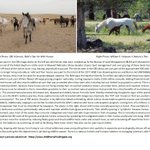
Genuine Wild Horse Research @ 'Wild Horse Fire Brigade's 'Wild Horse Ranch' - with researcher William E. Simpson II -
William has been engaged in the longest running continuous study (12-years, 24-7/365) of a wild herd of 200 free-roaming American wild horses in a balanced mountain wilderness ecosystem, where wild horses live among all of their co-evolved flora and fauna. Simpson has followed in the footsteps of Dr. Jane Goodall, and in her honor calls the study method he uses the 'Goodall Method'.
This video offers the truth about wild horse research and nonprofits who are merely grifting off the backs of wild horse advocates, with some taking Blood Money from the BLM to assist with the PATH FORWARD = roundups + sterilization = extinction
#WildHorses #WildHorseResearch #DrJaneGoodall #JaneGoodall #WildHorseConservation #WildHorseGrift #StoptheGrift #StopFundingFailure #BanPZP #PZPkills #AWHC #FundTruth #TruthMatters #WildHorseGenetics #Stoptheroundups @SecKennedy @POTUS @IUCN @IUCN_forests @IUCN_Water @JaneGoodallInst @IUCN_PA @IUCNsos @IUCNssc @theNASciences @ScienceNews @ScienceMagazine @ScienceChannel @grok @PTES
youtube.com/watch?v=lBZht46q…
𝗦𝗛𝗔𝗥𝗘: 𝗗𝗲𝗽𝗮𝗿𝘁𝗺𝗲𝗻𝘁 𝗼𝗳 𝗜𝗻𝘁𝗲𝗿𝗶𝗼𝗿 𝗦𝗲𝗰. 𝗕𝘂𝗿𝗴𝘂𝗺’𝘀 ‘𝗗𝗲𝗰𝗹𝗮𝗿𝗮𝘁𝗶𝗼𝗻 𝗼𝗳 𝗪𝗮𝗿’ 𝗔𝗴𝗮𝗶𝗻𝘀𝘁 𝗔𝗺𝗲𝗿𝗶𝗰𝗮’𝘀 𝗪𝗶𝗹𝗱 𝗛𝗼𝗿𝘀𝗲𝘀
Secretary Burgum’s Order 3454 has officially pitted rancher-driven interests against the will of the American people. Roughly 80% of Americans oppose wild horse roundups and find the BLM’s involvement in the slaughter pipeline revolting and un-American. That order accelerates the removal of wild horses to free up forage for cattle and sheep while opening the door to more aggressive population control.
This is not management. It is the continuation of a long-standing plan known as the 𝗣𝗔𝗧𝗛 𝗙𝗢𝗥𝗪𝗔𝗥𝗗.
The Path Forward was a 2019 coalition agreement backed by groups including the Humane Society of the United States, ASPCA, Return to Freedom, the American Farm Bureau, and the National Cattlemen’s Beef Association. Its core goal was to reduce wild horse numbers toward the BLM’s artificially low 𝗔𝗽𝗽𝗿𝗼𝗽𝗿𝗶𝗮𝘁𝗲 𝗠𝗮𝗻𝗮𝗴𝗲𝗺𝗲𝗻𝘁 𝗟𝗲𝘃𝗲𝗹 (𝗔𝗠𝗟)—currently set at roughly 26,000 animals nationwide—through large-scale removals combined with fertility control.
Congress has repeatedly directed funding toward this approach, and BLM budgets for the wild horse program have risen significantly since the plan was introduced.
The national AML is not a scientific carrying capacity.
It is a political number set to maximize livestock use on public lands.
Driving herds to these levels while applying fertility control at high rates risks genetic decline in populations that have never been fully sequenced.
𝗧𝗵𝗲 𝘀𝘁𝗲𝗿𝗶𝗹𝗶𝘇𝗮𝘁𝗶𝗼𝗻 𝗽𝗿𝗼𝗴𝗿𝗮𝗺 𝗶𝘀 𝗯𝗲𝗶𝗻𝗴 𝗰𝗮𝗿𝗿𝗶𝗲𝗱 𝗼𝘂𝘁 𝘄𝗶𝘁𝗵 𝗮𝗻 𝗘𝗣𝗔-𝗿𝗲𝗴𝗶𝘀𝘁𝗲𝗿𝗲𝗱 𝗽𝗲𝘀𝘁𝗶𝗰𝗶𝗱𝗲.
Porcine Zona Pellucida (PZP), the most widely used fertility control agent, is registered by the EPA as a restricted-use pesticide (PC Code 176603). It is not an FDA-approved veterinary vaccine. It is a pesticide product registered for population control of wild horses, burros, and deer.
Repeated use of PZP can suppress reproduction for years. Some groups continue to falsely market it to the public as a simple “vaccine.”
American Wild Horse Conservation (formerly the American Wild Horse Campaign) has received BLM cooperative agreements to administer PZP fertility control, including a 2023 agreement worth over $217,000 specifically for PZP work on the Cedar Mountain Herd Management Area.
In addition to American Wild Horse Conservation, Return to Freedom and Humane World for Animals among others who are supporting this genetic demise via EPA registered pesticides. These nonprofits are 'collaborators' to the BLM's genetic demise of wild horses in America.
American Wild Horse Conservation are not outsiders criticizing the program—they are partners in implementing the sinister Path Forward’s fertility-control component.
𝗕𝗼𝘆𝗰𝗼𝘁𝘁𝗶𝗻𝗴 𝘁𝗵𝗲 𝗰𝗼𝗹𝗹𝗮𝗯𝗼𝗿𝗮𝘁𝗼𝗿𝘀 𝗺𝗮𝘁𝘁𝗲𝗿𝘀 𝗺𝗼𝗿𝗲 𝘁𝗵𝗮𝗻 𝗯𝗼𝘆𝗰𝗼𝘁𝘁𝗶𝗻𝗴 𝗯𝗲𝗲𝗳.
The nonprofits, like American Wild Horse Conservation, that accept BLM funding and contracts to dart mares with an EPA-registered pesticide, or who support that crime against Nature, are actively helping reduce wild horse numbers under a framework that prioritizes livestock forage at the cost of the wildlife, wild horses and ultimately, the degradation of public lands.
These nonprofits are assisting the very EVIL that true wild horse advocates and honest science oppose and condemn.
Americans who care about these animals and our public lands are not powerless.
Public opposition remains strong across party lines. The financial and political pressure can be directed where it belongs:
At the agencies and ALL the 'wild horse organizations' that are carrying out this plan as soldiers for the DOI and BLM.
𝗪𝗔𝗧𝗖𝗛 & 𝗦𝗛𝗔𝗥𝗘:
youtube.com/watch?v=lBZht46q…
The genetic integrity of America’s free-roaming wild horses is being traded away under a plan that was never about protecting them.
The People, Politicians and Greedy Nonprofits engaged in this unsavory un-American action are clearly uncaring that the ancestors of these same wild horses HELPED MAKE AMERICA GREAT!
Where's the Loyalty? Where's the Integrity? Where's the Honor? What Say YOU President TRUMP? @POTUS
#WildHorses #WildHorseLivesMatter #WildHorseFireBrigade #WHFB #WildHorseFireBrigade #BrumbyLivesMatter #PublicLands #DOI #GROK #BLM #WildHorseGenetics #WildHorseConservation #AmericanWildHorseConservation @IUCN @IUCN_Water @IUCN_PA @IUCNsos @IUCNssc @theNASciences @SecKennedy @POTUS @TruthTrumpPost @TrumpTruthOnX @thehorse @thehorsemag @60Minutes @TuckerCarlson @joerogan @joeroganhq @NancyMace @77WABCradio
Wild Horse Fire Brigade retweeted
All-volunteer team from Wild Horse Fire Brigade (CA 501-c-3 nonprofit) will be presenting at the EQUUS Film & Arts Festival (Dec. 2-4, 2022, Sacramento, CA
#WildHorses #KeepWildHorsesWild #SaveWildHorses

Wild Horse Fire Brigade retweeted

Siskiyou County Ag Commissioner: "Bill (William E. Simpson II) established a privately-owned wild horse reserve in his community"
This is the VISION of Wild Horse Fire Brigade; Naturally-Living Free Roaming #WildHorses
Quote is HERE: wildhorsefirebrigade.org/_fi… #WildHorse #WHFB
Wild Horse Fire Brigade retweeted
Genuine Wild Horse Research @ 'Wild Horse Fire Brigade's 'Wild Horse Ranch' - with researcher William E. Simpson II -
William has been engaged in the longest running continuous study (12-years, 24-7/365) of a wild herd of 200 free-roaming American wild horses in a balanced mountain wilderness ecosystem, where wild horses live among all of their co-evolved flora and fauna. Simpson has followed in the footsteps of Dr. Jane Goodall, and in her honor calls the study method he uses the 'Goodall Method'.
This video offers the truth about wild horse research and nonprofits who are merely grifting off the backs of wild horse advocates, with some taking Blood Money from the BLM to assist with the PATH FORWARD = roundups + sterilization = extinction
#WildHorses #WildHorseResearch #DrJaneGoodall #JaneGoodall #WildHorseConservation #WildHorseGrift #StoptheGrift #StopFundingFailure #BanPZP #PZPkills #AWHC #FundTruth #TruthMatters #WildHorseGenetics #Stoptheroundups @SecKennedy @POTUS @IUCN @IUCN_forests @IUCN_Water @JaneGoodallInst @IUCN_PA @IUCNsos @IUCNssc @theNASciences @ScienceNews @ScienceMagazine @ScienceChannel @grok @PTES
Wild Horse Fire Brigade retweeted

It's interesting to see long-term studies like this one shining a light on the lives of free-roaming herds and their well-being
Genuine Wild Horse Research @ 'Wild Horse Fire Brigade's 'Wild Horse Ranch' - with researcher William E. Simpson II -
William has been engaged in the longest running continuous study (12-years, 24-7/365) of a wild herd of 200 free-roaming American wild horses in a balanced mountain wilderness ecosystem, where wild horses live among all of their co-evolved flora and fauna. Simpson has followed in the footsteps of Dr. Jane Goodall, and in her honor calls the study method he uses the 'Goodall Method'.
This video offers the truth about wild horse research and nonprofits who are merely grifting off the backs of wild horse advocates, with some taking Blood Money from the BLM to assist with the PATH FORWARD = roundups + sterilization = extinction
#WildHorses #WildHorseResearch #DrJaneGoodall #JaneGoodall #WildHorseConservation #WildHorseGrift #StoptheGrift #StopFundingFailure #BanPZP #PZPkills #AWHC #FundTruth #TruthMatters #WildHorseGenetics #Stoptheroundups @SecKennedy @POTUS @IUCN @IUCN_forests @IUCN_Water @JaneGoodallInst @IUCN_PA @IUCNsos @IUCNssc @theNASciences @ScienceNews @ScienceMagazine @ScienceChannel @grok @PTES
Wild Horse Fire Brigade retweeted
Sadly, Burgum is about Money for Ranchers and is mismanaging American wild horses, which are a protected by law, "native species" in North America.
Cattle are invasive and destroying the landscape... they caused the great dust bowls during the 1930s.
Anyone telling the truth and has a token understanding of science knows: ALL horses in the world came from those that evolved here in America according to a plentiful fossil record, starting 55-Million Years ago, with E. Caballus, the modern horse, being 2-Million years on the continent.
There is NOT A SINGLE COW FOSSIL in America... they call came over from Africa and Europe. So, the science says Sec. Burgum failed science, or he's mouthing a predetermined narrative that benefits his rancher friends
Sorry Doug, you know we are 100% correct, and so did the award-winning journalist who wrote this factual article:
theepochtimes.com/article/ca…
#WildHorses @SecretaryBurgum @DougBurgum @SecKennedy @RobertKennedyJc @RobertKennedyJr @grok @bot @elonmusk @POTUS @azritnede

Wild Horse Fire Brigade retweeted
🐴 A BAN ON A SLAUGHTERHOUSE THAT DOESN’T EXIST
Newsom’s horse bill, the export loophole, Mono Lake — and the cultural-heritage herd still on the mountain at Wild Horse Ranch
👇 Read every section. This is the record.
━━━━━━━━━━━━━━━━━━━━
THE POINT
━━━━━━━━━━━━━━━━━━━━
A governor can sign a bill that sounds like a rescue and still leave the pipeline open. That is the difference between protecting horses and posing with them.
━━━━━━━━━━━━━━━━━━━━
WHAT THE “BAN” ACTUALLY DOES
━━━━━━━━━━━━━━━━━━━━
California already made it a felony to possess or sell a horse knowing the carcass would be used for HUMAN CONSUMPTION. Voters did that in 1998 (Proposition 6). There has been NO USDA-inspected horse slaughter plant on U.S. soil since 2007, when Congress stopped funding inspections.
So a new Sacramento headline that “bans horse slaughter in California” is, in practice, a ban on something that is already illegal here and already gone from American packing plants.
What still happens is the part a press release never leads with: horses leave the state. They go to auctions, kill buyers, and plants in Mexico and Canada.
The federal SAFE Act — still not the law of the land — is written around slaughter FOR HUMAN CONSUMPTION. Ship the same animal as “animal feed,” “byproduct,” or a $25 “sale” that strips Wild Horse Act status, and the moral vocabulary changes while the truck still rolls.
If Newsom wanted a law that matched the rhetoric, he would have banned EXPORT of California horses for slaughter or rendering of ANY kind, including the feed loophole. He did not.
That is gamesmanship: take the applause, leave the loophole.
━━━━━━━━━━━━━━━━━━━━
MONO LAKE IS THE TELL
━━━━━━━━━━━━━━━━━━━━
While Sacramento sold a slaughter story, the Forest Service and BLM ran a helicopter gather on the Montgomery Pass / Mono Lake horses in July 2026.
Official tally: 461 CAPTURED.
Destination: off-range corrals in Modoc County, then the adoption-and-sale machinery.
Inyo National Forest’s own daily sheet listed deaths during the operation (three listed as chronic on July 9).
Tribes with ancestral claim to that ground sued and were not allowed to stop it.
That is not a rumor. That is the federal record.
Advocates have alleged worse disposal — including mass burial dug with heavy equipment. That allegation has not been established in the public documents reviewed here.
What IS established is the pattern:
California will pose as the state that “saved horses from slaughter” in the same season it green-lit, or at least did not fight, a gather that took hundreds of free-roaming animals off a landscape tribes call kinship and tourists call Mono Lake.
A ban that does not stop the trailer is a campaign prop.
━━━━━━━━━━━━━━━━━━━━
A CULTURAL-HERITAGE HERD STILL ON THE LAND — WILD HORSE RANCH
━━━━━━━━━━━━━━━━━━━━
There is another California herd that was not put on a truck this summer.
It lives on and around WILD HORSE RANCH, the wilderness research site of Wild Horse Fire Brigade on the California–Oregon border in Siskiyou County, in the Hornbrook / Copco / Soda Mountain country.
William Simpson and Michelle Gough have lived with that band for more than a decade — continuous, close-range observation, not a weekend count.
Siskiyou County recognized their ownership and management of the local cultural-heritage herd in 2022.
The herd is not a BLM HMA remnant held at a few dozen head. It is a functioning social system:
• Family bands • Bachelor competition • Foals • The natural selection that only happens when enough stallions still contest breeding rights
━━━━━━━━━━━━━━━━━━━━
DRAKE, 1579 — AND WHY THIS HERD IS ARGUABLY CALIFORNIA’S MOST IMPORTANT
━━━━━━━━━━━━━━━━━━━━
Yvette Running Horse Collin’s 2017 University of Alaska Fairbanks dissertation argues that the official story — horses vanished from North America after the Ice Age and returned only with the Spanish — is a Eurocentric compression of Indigenous knowledge.
In that thesis she cites early European observers, including SIR FRANCIS DRAKE’S 1579 VOYAGE along what is now the California and Oregon coast, recording horses among Native peoples at a date that undercuts the “no horses until the conquistadors” classroom version.
WHFB treats the Siskiyou herd as a living piece of that older lineage — a cultural-heritage population on the same general coast Drake’s men saw.
Mainstream 2023 archaeology (the Science collaboration that included Collin) is more cautious: it shows Indigenous horse cultures flourishing in the West by the early 1600s, earlier than many textbooks allowed, while still tracing those animals to Spanish-introduced stock.
Honest writing holds both:
• The Collin / Drake claim is the heritage argument this herd is managed under • The genetic last-word is not settled in a press release
What is not in dispute is that this is one of the last INTACT, NATURALLY BREEDING, UNDOCUMENTED-BY-ROUNDUP herds left in California.
That is why it matters more than a bill that bans a plant that does not exist.
━━━━━━━━━━━━━━━━━━━━
WHAT THIS HERD DOES THAT A STATUTE CANNOT
━━━━━━━━━━━━━━━━━━━━
On the ranch and the adjoining wilderness these horses graze 1-HOUR FINE FUELS — the grass and brush that carry fire into timber.
That is work, not scenery.
It is the same logic Elko County and the Six Rivers pilot letter put in front of the Cabinet: a horse on the right landscape is cheaper than a horse in a Midwestern pen and more useful than a horse in a press conference.
Hornbrook is a small border town. People come for the Klamath country, the lakes, the horses on the skyline.
Local advocates put the tourism value of that living herd above $100,000 a year to the Hornbrook area — gas, rooms, guides, the simple fact that visitors still want to see wild horses that were not just loaded out.
Whether an economist would audit that figure to the dollar is beside the point. The point is the herd is an asset ON THE LAND, not a liability to be gathered because a management plan wrote down a number.
━━━━━━━━━━━━━━━━━━━━
THE POLITICAL CONTRAST, IN ONE LINE
━━━━━━━━━━━━━━━━━━━━
Newsom can sign a slaughter bill that California voters already passed in spirit in 1998, ignore the export and feed loopholes the SAFE Act still leaves, and stay quiet while 461 Mono Lake horses leave the basin — then ask to be remembered as the horse governor.
That is not conservation. That is a cut for the next campaign.
The cultural-heritage herd at Wild Horse Ranch is the opposite of that performance.
It is still free. It is still breeding under natural selection. It is still cutting fine fuels. It is still drawing people to Hornbrook. It is still standing as the argument Yvette Running Horse Collin and Drake’s log put on the table:
These animals are not a 20th-century feral accident. They are a California treasure that the state could protect by leaving them on the mountain and shutting the REAL pipeline — the trailer out of state — instead of announcing a ban on a slaughterhouse that is already gone.
🔗 wildhorsefirebrigade.org
SHARE this so a press-release “ban” is not the only story California hears.
#WildHorseFireBrigade #KeepWildHorsesWild #StopTheRoundups #MonoLake #Hornbrook #WHFB #CulturalHeritageHerd
━━━━━━━━━━━━━━━━━━━━
REFERENCES
━━━━━━━━━━━━━━━━━━━━
1998 California Proposition 6 — Prohibition on slaughter of horses and sale of horsemeat for human consumption (Penal Code §§ 598c–598d). Archived ballot / statute summary: web.archive.org/web/20251117…
Return to Freedom. “California governor signs anti-horse slaughter bill” (AB 128, signed Oct. 12, 2019 — auction branding/records; Prop. 6 already banned slaughter for human consumption). returntofreedom.org/californ…
LegalClarity. “Can You Buy Horse Meat in the US? Federal and State Rules” (no USDA-inspected horse slaughter plants; inspection-funding rider since FY2006; plants closed 2007; SAFE Act framed as human-consumption ban). legalclarity.org/can-you-leg…
ASPCA. “Animal Welfare Groups Celebrate Committee Passage of the Van Drew-Titus Amendment to Ban Horse Slaughter” (May 22, 2026 — export to foreign plants still the live pipeline; SAFE Act H.R.1661 / S.775 aimed at slaughter for human consumption). aspca.org/about-us/press-rel…
Horses for Life Foundation. “History of Horse Slaughter” (SAFE / Safeguard American Food Exports language: U.S. soil and export for human consumption). horsesforlife.org/history-of…
The New York Times. “Under Trump, Protected Wild Horses Are Going to Slaughter” (Aug. 20, 2026 — cheap BLM sales, loss of 1971 Act status, suspected slaughter trail). nytimes.com/2026/08/20/us/tr…
Snopes. “Is Trump admin allowing sale of protected wild horses to slaughterhouses? What we know” (updated Aug. 31, 2026). snopes.com/news/2026/08/21/t…
U.S. Forest Service — Inyo National Forest. “Wild Horses” / 2026 gather daily numbers (July 8–10, 2026: 461 gathered at Montgomery Pass; 3 chronic deaths listed July 9; destination adoption/sale pipeline). fs.usda.gov/r05/inyo/natural…
San Francisco Chronicle. Kurtis Alexander. “Feds round up hundreds of wild horses by California’s Mono Lake” (July 15, 2026 — 461 captured; herd estimated ~700 in 2024; AML 138–230). sfchronicle.com/california/a…
San Francisco Chronicle. Kurtis Alexander. “Federal officials to remove hundreds of wild horses near Mono Lake” (June 25, 2026 — USFS/BLM plan; helicopters and trucks; off-site pens / adoption). sfchronicle.com/california/a…
Los Angeles Times. Lila Seidman. “450 wild horses face relocation in Eastern Sierra, reigniting a clash” (June 30, 2026 — tribal and advocate opposition; gather set July 8). latimes.com/environment/stor…
Bureau of Land Management. “BLM and USFS approve plan to remove wild horses near Mono Lake” (March 7, 2025 — 300–500 authorized; horses outside Montgomery Pass WHT; FS corrals then adoption/sale). blm.gov/press-release/blm-an…
Las Vegas Sun. “Tribe’s lawsuit seeks to block federal agencies from removing wild horses near California-Nevada border” (July 4, 2026 — Utu Utu Gwaitu Paiute; cultural-relative claim). lasvegassun.com/news/2026/ju…
Suzanne Roy. “Heartbreak At Mono Lake Part 2: The Montgomery Pass Wild Horse Roundup Begins” (July 7–8, 2026 — TRO denied; gather starts). suzanneroy.substack.com/p/he…
Bighorn County News. “‘They’re raping the land.’ Massive Wild Horse Round Up Proceeds on Ancestral Native Lands” (July 21–22, 2026 — Ronda Kauk / Indigenous Wild Horse Society; contractor C.D. Warner Livestock; Modoc corrals). bighorncountynews.com/news/t…
Yvette Running Horse Collin. The relationship between the indigenous peoples of the Americas and the horse: deconstructing a Eurocentric myth. Ph.D. dissertation, University of Alaska Fairbanks, 2017. Internet Archive: archive.org/details/collin-y…
Sierra Nevada Ally. “The American Heritage of Wild Horses” (April 4, 2022 — quotes Collin on Drake, 1579, horses observed on the Northern California / Southern Oregon coast). sierranevadaally.org/2022/04…
Science / ScienceDaily. “New, exhaustive study probes hidden history of horses in the American West” (March 30–31, 2023 — Taylor, Orlando, Running Horse Collin et al.; Indigenous horse cultures in the West by early 1600s; Spanish-introduced stock still the genetic frame of that paper). sciencedaily.com/releases/20…
Science News. “Native Americans corralled Spanish horses decades before Europeans arrived” (March 30, 2023 — same collaboration). sciencenews.org/article/nati…
Wild Horse Fire Brigade — organization and ranch context: wildhorsefirebrigade.org
Siskiyou County recognition of WHFB / Simpson-Gough cultural-heritage herd (2022) — county record and contemporaneous coverage as cited in WHFB materials and CapRadio field reporting on the Soda Mountain / Hornbrook herd.
#WildHorses #WildHorseRanch #WilliameSimpsonII #WildfirePrevention #PoliticalKabuki #TomFoolery #GavinNewsom #CaliforniaCon #StopRoundups #StoptheRoundup #StoptheGrift #SaveWildHorses #SaveOurWildHorses #WildHorseFireBrigade #WHFB @CalMatters @grok @bot @elonmusk @SecKennedy @RobertKennedyJr @RobertKennedyJc @NancyMace @ShawnRyan762 @ShawnRyanShow @SRS_Producer @MichaelJaco9 @joerogan @joeroganhq @TruthTrumpPost @realDonaldTrump @Trump @POTUS @EricTrump @DonaldJTrumpJr

Wild Horse Fire Brigade retweeted
SHARE - SHARE THIS Great Story From Oregon Public Broadcasting 'OPB'
Sometimes, we have so much news about our nonprofit happening stories get passed-up or missed, even by us!
This one is worth covering again... and sharing again!
opb.org/article/2022/10/30/p…
#WildHorses #Wildfires #Wildfire #WildfirePrevention #WildHorseManagement #HorseSlaughter #OPB #PBS #NEWS #WildHorseSlaughter #WildHorseResearch #WildHorseEcology #WilliameSimpsonII #WildHorseFireBrigade #WildHorseRanch @grok @bot @OPB @PBS @BBCBreaking @WestermanAR @SecKennedy @RobertKennedyJr @RobertKennedyJc @SecretaryBurgum @TruthTrumpPost @TrumpTruthOnX @EpochTimes @EpochInspired @TIME @Discover @nytimes @WSJopinion @WashPost @seattletimes @latimes

Wild Horse Fire Brigade retweeted
SHARE-SHARE-SHARE: WANTED: The published science on PZP’s adverse impacts on wild horses - PZP Snake-Oil Business is booming! And Wild Horses Are Being Decimated Via Roundups & Slaughter!
A field brief you can post, save, and hand to anyone who says “PZP is harmless.”
Porcine zona pellucida (PZP) is not a single “all adverse” or “all safe” literature. Proponents report low rates of debilitating illness and good contraceptive efficacy. Independent and later studies document real secondary effects, especially with repeated doses: ovarian shutdown, delayed or year-round foaling, band-switching, and injection-site trauma from remote darts.
On the specific Marberg and Kreager item: there is no peer-reviewed journal paper under that exact spelling on PZP. The closest match to “broken bones, hematoma and bleeding from syringe impacts” is the classic Cap-Chur paper by Jack Ward Thomas and Rodney G. Marburger (1964) — Mortality in Deer Shot in the Thoracic Area with the Cap-Chur Gun, Journal of Wildlife Management 28: 173–175. Field notes referring to “Marburg and Kreager” appear to point at that dart-trauma lineage, not an indexed PZP-only horse paper. The closest published wild-horse dart-trauma science remains Roelle & Ransom 2009, which records darts hitting bone and broken needles. The five dart-welfare papers listed below now sit in the trauma section.
1. Dart / syringe trauma — hematoma, swelling, bone strike, cavity penetration, hemorrhage
Roelle, J.E. & Ransom, J.I. 2009. Injection-Site Reactions in Wild Horses Receiving an Immunocontraceptive Vaccine. USGS Scientific Investigations Report 2009-5038.
This is the main published field study of PZP dart trauma in western wild horses.
• Hand injection (100 shots): almost no reactions (1 nodule, 2 swellings, no abscesses).
• Remote darting: abscesses ~1–6%; nodules ~25%; swelling 11–33%; stiffness 1–12%, depending on herd.
• “Abnormal dart trauma” = the dart hit bone or the needle broke off.
• Abnormal trauma was associated with higher nodule formation (odds ratio ~8.7, P = 0.07).
• Blowgun delivery had higher odds of swelling than rifle delivery.
That paper does not quantify “broken bones” as fractures of the horse’s skeleton. It documents bone strikes by the dart and needle breakage. Those events can produce hematoma, swelling, and local tissue injury. Catastrophic fracture from a 1 cc PZP dart is not described in the indexed horse-PZP literature.
Other published injection-site data:
• Kirkpatrick and coauthors: among hundreds of Assateague dartings, abscess rate about 0.2–1%; sterile granulomas (~10–25 mm) are common.
• Virginia Range field program (native PZP, 2019–2022): visible granulomas and abscesses uncommon but recorded (~0.6–1.3% of administrations in the highest year).
• Freund’s complete / modified adjuvant is repeatedly cited as the driver of abscesses and granulomas, worse with dart trauma than with hand injection.
Wound-ballistics papers (the delivery system, not the zona protein)
These papers are not PZP pharmacology papers. They are the published science on what a projectile syringe does to tissue. They apply to any remote PZP dart, because PZP in the field is delivered by the same class of CO₂ and powder projectors.
Thomas, J.W. & Marburger, R.G. 1964. Mortality in deer shot in the thoracic area with the Cap-Chur gun. Journal of Wildlife Management 28: 173–175.
Twenty adult white-tailed bucks were shot in the thorax with standard 1-cc Cap-Chur projectile-syringes. Seven of 20 (35%) were killed by the dart itself — the syringe penetrated the lung cavity. Necropsy showed massive hemorrhage or heart damage, not drug overdose. There was no external evidence of that penetration. This is the published report of syringe-impact bleeding and internal trauma. Beckmann et al. (2025) still cite this paper as the upper-end dart-mortality case (up to 35% when placement is thoracic).
Cattet, M.R.L., Bourque, A., Elkin, B.T., Powley, K.D., Dahlstrom, D.B. & Caulkett, N.A. 2006. Evaluation of the potential for injury with remote drug-delivery systems. Wildlife Society Bulletin 34: 741–749.
They measured dart velocity with Doppler radar and fired dye-filled darts into elk-hide-covered gelatin and calf thighs.
• Rapid-injection darts with end-ported needles consistently: (1) forced hair and skin beneath the hide; (2) formed a permanent wound cavity 2–3× the needle length; (3) pulled the hide off the gelatin before the payload finished injecting.
• Heavy darts and some light rapid-injection darts often hit at >50 m/s.
• Drop of repeated shots exceeded 10 cm in 28 of 90 trials; heavy-mass darts were least precise.
• Conclusion: injury is minimized only with lightweight, slow-injection darts, side-ported needles, broad needle seals, and 40–50 m/s impact with high precision.
• They recommend against rapid-injection / end-ported darts because they produce deep, chronic wounds.
Pneu-Dart-style PZP darts used on western mares are typically explosive/rapid-injection devices. That is exactly the class Cattet flagged.
Hampton, J.O., Arnemo, J.M. et al. 2021. Animal welfare testing for shooting and darting free-ranging wildlife: a review and recommendations. Wildlife Research 48: 577–589.
Ballistic injury is inherent to all darting, by two mechanisms:
Collision of the dart with the animal (Valkenburg et al. 1999).
Expulsion of the dart’s contents into tissue (Cattet et al. 2006).
Excess kinetic energy (Eₖ = ½mv²) produces:
• broken bones (Tribe et al. 2014; Colgan et al. 2019)
• penetration of thorax or abdomen (Tsuruga et al. 1999)
• excessive tissue trauma (Cattet et al. 2006)
• deep wounds that seed subcutaneous infection
They note darting welfare risks are often under-recognised by agencies that permit operations, and that new dart types (including marker/contraceptive darts) are being fielded without the four-step welfare testing used for kill-traps: (1) range/ballistic testing, (2) cadaver wound assessment, (3) small live pilots with pass/fail thresholds, (4) operational use with mandatory reporting of adverse outcomes. Most wild-horse PZP programs have not published that sequence.
Beckmann, J., Wölfel, H. & Neumann, S. 2025/2026. Ballistics and wound ballistics of CO₂-powered dart guns in relation to ungulate dart injury and animal welfare. Wildlife Biology e01490.
(ResearchGate: researchgate.net/.../3958873…...
Full text: nsojournals.onlinelibrary.wi…)
Opening finding: “Darting is invasive and associated with risks of trauma, and severe and fatal dart injuries have been reported.” CO₂ guns are safer than powder guns, but not harmless.
Ballistics they measured on three commercial CO₂ projectors (the same family used for PZP):
• Velocity and impact energy rise with distance and with every 1 bar of pressure (~5 m/s and ~3 J per bar).
• Dan-Inject at 40 m: 65.5 m/s, 23.4 J.
• TeleDart at 1 m / 10 bar: 79.8 m/s, 34.9 J.
• Some manufacturer-recommended settings already put darts above 50 m/s and 19 J, the injury threshold cited from Hector & Wiesner (1996) and Cattet.
Wound-ballistic tests on fresh hides + gelatin (red deer, fallow deer, roe deer, wild boar):
• Each species has a different penetration risk. Shoulder is more vulnerable than thigh. Juveniles penetrate at lower energy than adults.
• Juvenile roe-deer shoulder penetrated at 44.6 m/s (10.9 J).
• Adult red-deer hide needed ~67 m/s (24.6 J).
• The old “19 J is safe for all species” rule failed in 6 of 14 trials — the dart went through the skin.
• When a dart fully penetrates, it drags hair into the wound cavity, contaminating the track.
Literature they compile on severe and fatal dart injury (the list that belongs next to Marburger):
• Pneumothorax, heart trauma, head/abdomen trauma (Thomas & Marburger 1964; Tsuruga et al. 1999; Arnemo et al. 2006; Cunningham et al. 2015)
• Complete dart penetration and muscle destruction (Smith & Huse 1980; Spurlock & Spurlock 1988)
• Abdominal infection from a misplaced dart (Kenny et al. 2008)
• Spine injury and femur fracture requiring euthanasia (Van Ballenberghe 1984; Tribe et al. 2014)
• Unspecified dart-trauma deaths (Arnemo et al. 2006; Tribe et al. 2014; Wimpenny & Hinds 2018)
• Published dart-injury mortality: 0.04–0.53% in moose, 4.03% in eastern grey kangaroos, up to 35% in white-tailed deer when the thorax is the target (Thomas & Marburger 1964)
Beckmann’s welfare conclusion is conditional: darting is “only minimally invasive when done properly and with pertinent ballistic data.” They say manufacturers must publish velocity/energy tables, and operators must match pressure and distance to species, age, and body part. That is the opposite of volunteer PZP darting at unknown range on moving mares.
What this means for wild-horse PZP darting. None of these five papers measured ZonaStat-H chemistry. They measured the delivery system. A western mare darted in the glute is in the “larger ungulate / thigh” class Beckmann found more resistant. A mare darted in the flank, abdomen, shoulder, or neck — the misplaced-dart problem already photographed in the field — is in the class Thomas & Marburger, Tsuruga, Kenny, Tribe, and Colgan documented as hemorrhage, cavity penetration, fracture, and death. Cattet’s rapid-injection / end-port wound cavity is the mechanism that produces hematoma and a contaminated track even when the horse walks away.
So: hematoma, bleeding, nodules, abscesses, stiffness, darts striking bone, wound cavities several times needle length, hair driven under the hide, thoracic/abdominal penetration, and, in the wider ungulate literature, broken bones and fatal hemorrhage are in the published record. A standalone “Marberg and Kreager PZP horse fracture” journal article is still not indexed; Thomas & Marburger 1964 is the published syringe-impact hemorrhage paper that name is pointing at.
Hampton review: connectsci.au/.../Animal-wel…...
Cattet 2006: onlinelibrary.wiley.com/.../…...
2. Ovarian damage, ovulatory failure, and long-term infertility
These are the strongest horse-specific laboratory and field findings.
Kirkpatrick, J.F., Liu, I.K.M., Turner, J.W., Naugle, R. & Keiper, R. 1992. Long-term effects of porcine zonae pellucidae immunocontraception on ovarian function in feral horses. Journal of Reproduction and Fertility 94: 437–444.
After three consecutive annual PZP treatments, several mares showed no ovulation and markedly depressed urinary estrogen. Contraceptive efficacy was >90% that year.
Joonè, C.J. et al. 2017. Ovarian function and pregnancy outcome in pony mares following immunocontraception with native and recombinant porcine zona pellucida vaccines. Equine Veterinary Journal 49: 189–195.
6 of 7 native-PZP mares (86%) entered extended anoestrus with small, inactive ovaries and basal estradiol/progesterone. Cyclicity resumed by ~10 months in that short protocol. Pregnancy: 0/7 PZP vs 7/7 controls.
Related work from the same group (Joonè, Schulman, Nolan, Bertschinger): anti-Müllerian hormone (AMH) dropped to undetectable during ovarian shutdown, consistent with loss or malfunction of small antral follicles—not only a zona-block at fertilization.
Nuñez, C.M.V. et al. 2010, 2017. Lingering effects after treatment stops.
• Mares with 4+ PZP applications did not show a clear rebound in foaling as time since last shot increased.
• Mares with 1–3 shots showed some recovery, then a later decline around ~6 years.
• Previously treated mares still conceived later than untreated mares.
• Permanent or long-term sterility after 5–7 consecutive years is reported in this line of work.
Knight, C.M. 2014 (Princeton thesis, widely cited in BLM reviews): as few as three to four years, or a first dose before puberty, may trigger longer-term infertility.
Feh, C. 2012: long-term infertility in Przewalski’s horses after as little as one booster in some animals (cited in BLM literature reviews).
BLM’s own fertility-control literature reviews now state that the chance of long-term or permanent sterility rises with number of doses, and that PZP can have direct ovarian effects.
That is the opposite of the older “pure zona-block, fully reversible, ovaries untouched” description.
3. Behavior, band structure, and extended breeding season
Nuñez, C.M.V. et al. 2009 and related Shackleford Banks papers.
Treated mares were up to 10 times more likely to change bands than untreated mares. Effects scaled with total and consecutive doses.
Madosky, J.M. et al. 2010 and Ransom, J.I. et al. 2010: more reproductive behavior directed at treated mares; reduced harem stability.
Nuñez 2018 (Human–Wildlife Interactions): synthesis across Shackleford Banks plus Little Book Cliffs, McCullough Peaks, and Pryor Mountains. Compared with never-treated mares:
• lower fidelity to the band stallion
• increased and prolonged reproductive behavior
• cycling into fall/winter
Effects persisted years after shots stopped in heavily treated mares, and can alter stallion behavior and stress physiology.
NAS (2013) judged serious welfare harm from harem-changing “low” given how many mares have been treated, but did not deny the behavioral change.
4. Shifted foaling dates and possible foal-season mismatch
Ransom, J.I., Hobbs, N.T. & Bruemmer, J. 2013. Contraception can lead to trophic asynchrony between birth pulse and resources. PLoS ONE 8(1): e54972.
PZP-associated births were later and more spread out. Foal mortality risk rose about 1.4% per 10 days after peak forage; a mid-winter birth would carry a substantially higher risk in that model.
Nuñez et al. 2010 and Ransom et al. 2014 similarly document a longer foaling window (in some herds approaching much of the year).
Counter-finding (important):
Kane / Rutberg and coauthors, 2024. Animals 14: 3550. Eight-year study at Cedar Mountain (UT) and Sand Wash Basin (CO). Births to recently treated mares were delayed and spread out, but foal mortality through year 2 was low and not different from untreated mares. Body condition improved because treated mares were not nursing, not from a direct PZP metabolic effect.
So delayed/spread foaling is well documented. Whether that kills foals depends on climate, forage, and herd. Ransom’s paper says it can; the 2024 western HMA paper says it did not in those two herds.
5. Broader reviews and mixed-species concerns often cited against PZP
Nettles, V.F. 1997. Potential consequences and problems with wildlife contraceptives. Reproduction, Fertility and Development 9: 137–143.
Literature review across species (including horses). Flags: stillbirths, altered ovarian structure/cyclicity, permanent ovarian damage, autoimmune oophoritis, sex-ratio shifts, injection abscesses, possible selection on disease resistance.
PZP advocates (e.g. Rutberg) argue Nettles’ stillbirth citation traces to a contaminated PZP prep in caged monkeys, not clean native PZP in free-roaming horses. That dispute is unresolved in the horse field data.
Gray, M.E. & Cameron, E.Z. 2010. Does contraceptive treatment in wildlife result in side effects? Reproduction 139: 45–55.
Reviews ovarian cysts/oophoritis across taxa and raises the immune-selection issue: PZP works best in strong immune responders, so those mares are the ones removed from the breeding pool. Over generations that can theoretically weaken herd immunocompetence. This is a mechanistic argument, not a completed multi-generation horse experiment.
Kaur, K. & Prabha, V. 2014. Immunocontraceptives: new approaches to fertility control. BioMed Research International 2014: 868196.
Reviews ZP vaccines inducing autoimmune oophoritis in experimental systems.
ISPMB / Karen Sussman field notes (not a journal article) reported high stillbirth rates in a small set of mares that conceived after PZP was stopped. That is frequently cited in comments to EPA/BLM; it is not a controlled published study.
6. What the “PZP is safe” papers actually claim
Fairness requires stating the other side’s published position:
• Kirkpatrick, Turner, Lyda, and SCC materials: after decades of Assateague and sanctuary use they report no debilitating systemic disease, pregnancies in progress not aborted, foals of treated mares surviving normally, abscesses rare, granulomas mostly cosmetic.
• EPA registration materials for ZonaStat-H waived many tox studies on the basis of limited environmental release and a history of use; they do list injection-site reactions.
• The 2024 Cedar Mountain / Sand Wash paper concludes PZP changed breeding timing but not mare or foal survival at those sites.
Those papers generally do not refute Nuñez/Joonè/Ransom on ovarian suppression, band-switching, or late births. They argue those changes are not “debilitating” or not lethal in the herds they measured. They also do not refute Cattet, Hampton, Beckmann, or Thomas & Marburger on projectile-syringe trauma. Those are a different injury pathway: the dart, not the zona protein.
Practical reading of the science
Dart can hit bone, break a needle, cause hematoma/swelling/abscess
Support: Roelle & Ransom 2009; multiple darting tallies.
Caveat: Horse-PZP papers rarely X-ray for fracture.
Rapid-injection / end-port darts drive hair under hide and cut a wound cavity 2–3× needle length
Support: Cattet et al. 2006.
Caveat: Applies to common PZP field darts.
Excess dart energy → cavity penetration, hemorrhage, broken bone, death
Support: Thomas & Marburger 1964; Hampton et al. 2021; Beckmann et al. 2025; Tribe 2014; Colgan 2019; Van Ballenberghe 1984.
Caveat: Most extreme numbers are thoracic shots or other species; horse field rates unpublished at that resolution.
CO₂-gun energy at routine settings can exceed published “safe” limits (40–50 m/s, ~19 J), especially as distance or pressure rises
Support: Beckmann et al. 2025.
Caveat: Horse hide not in that trial; thigh of a large ungulate is more resistant than shoulder of a juvenile.
Repeated PZP can shut ovaries down (not only block sperm)
Support: Kirkpatrick 1992; Joonè 2017; Nolan 2018.
Caveat: Often reversible after short protocols; less so after many consecutive years.
Multi-year use can leave mares subfertile for years or permanently
Support: Nuñez 2010/2017; Knight 2014; BLM reviews.
Caveat: Rate for any given mare is hard to predict.
Treated mares change bands and keep cycling late
Support: Nuñez, Madosky, Ransom.
Caveat: Welfare impact is disputed.
Foals born late may face higher mortality
Support: Ransom 2013.
Caveat: Not seen in Kane/Rutberg 2024 at two western HMAs.
Stillbirths / genetic decline from PZP
Support: Nettles 1997; Gray & Cameron 2010; small field reports.
Caveat: Horse-specific, controlled stillbirth data are thin.
If a PDF or first names surface that are not Thomas & Marburger 1964, they can be slotted the same way. The five links requested are in this article: Beckmann (ResearchGate + Wildlife Biology PDF), Hampton 2021, and Cattet 2006. The JSTOR item that carries the syringe-hemorrhage finding is Thomas & Marburger 1964.
Seeking $5-Million Donation (we are an IRS accredited 501-c-3 public benefit nonprofit) to assist in independent work on wild horse ecology, ethology, mass rewilding into appropriate wilderness, and the genetic cost of sterilizing free-roaming herds.
#WildHorses #PZP #PZPkills #WildHorseGenetics #Genocide #WildHorseGenocide #WildHorseResearch #WildHorseRoundups #StopWildHorseRoundups #Stoptheroundups #WildHorseGrift #StoptheGrift #WildHorseLivesMatter #BrumbyLivesMatter #WildHorseSlaughter #HorseSlaughter @grok @bot @ScienceNews @ScienceMagazine @ScienceChannel @NPR @npratc @nprscience @OPB @PBS @EquusOnlineUni @SecRollins @SecKennedy @POTUS @NewYorker @nytimes @seattletimes @latimes @NEWSMAX @thehorse @thehorsemag @paulickreport @jaredpolis @JoeNeguse @VernBuchanan @JuanCiscomani @RepCohen @RepBoice @BarbaraJWalters @KatiWeis

Wild Horse Fire Brigade retweeted
SHARE-SHARE-SHARE - VIDEO — NAYA’S RECOVERY
What actually 'saving wild horses' looks like.
By: William Simpson II © Sept. 29, 2026
We do more than some people think. Research. Education. Years and dollars into Wild Horse Ranch and Wild Horse Fire Brigade. Ownership of this native cultural-heritage herd so the bands cannot be trucked off. And when a horse or foal is hurt and we know it, we act.
Mid-July 2026 a landowner three miles down the mountain called in an injured filly. Naya was about a year and a half old. Legacy barbwire from failed ranches — posts that rotted out 50 to 150 years ago, wire left in the grass and wrapped on trees — had cut her right hind leg to the bone. We trapped her, moved her to the research site, and documented the wound. By September 26 she was sound enough to go back. She is healed. She will be rewilded to her family band.
That is not a sympathy story. It is a genetics statement.
Naya comes from a family that still carries hardiness domestic breeding did not keep. Fast closure of a wound to bone, on a mountain, without a hospital, is the kind of trait population genetics treats as functional variation — alleles we have not sequenced in this herd, or in most free-roaming herds.
Comparative wound work already shows healing is not the same across equids. Ponies, with less intense artificial selection and more remaining wild reserve, close deep wounds faster than highly selected horses. Domestication genomes show modern managed lines piled up deleterious mutations their wild ancestors did not carry. You do not find which alleles still sit in a living band by darting the mares first.
Arizona is being told to manage the other way. The Salt River herd has been under PZP since 2018. The contractor’s own numbers: more than 100 foals in 2019, then 15, then 13, then a handful. They call that success. Population genetics calls it closed gene flow. Foals are how alleles move. Silence most of the mares for years inside a small, isolated herd and rare variants — healing, heat, forage, whatever Naya’s line still holds — leak out at about $1/(2N_e)$ per generation. Arizona finally paused removals and ordered a genetic study. That pause is the minimum. It is not a license to keep sterilizing an unread genome down to a political number.
AML is that number. BLM’s own handbook says about 150–200 animals, roughly 50 effective breeders, to hold variation loss near 1 percent a generation. Many AMLs sit below that floor. The National Academies already said AML-setting is not transparent science. Pair a low cap with ZonaStat-H or GonaCon-Equine and you shrink who actually reproduces. Those products are not FDA-registered veterinary vaccines. ZonaStat-H is EPA Reg. No. 86833-1, a restricted-use pesticide under FIFRA. GonaCon-Equine is on an EPA pesticide label. The immune mechanism does not change the legal class. Repeat darting decides which lineages copy forward. For GonaCon, duration of infertility has already been mapped to immune-response DNA on ECA18.
Exterminating gene flow in horses that still heal like Naya, before the herds are sequenced, is not “humane management.” It is deletion in the dark.
Watch the video.
Look at July 15 and September 26. Then say plainly: no more AML-plus-pesticide programs on unsequenced American wild horses.
Condemn the sterilization cult. Sequence first. Leave the family bands intact.
Images: Naya, July 15, 2026 and September 26, 2026. William E. Simpson II © 2026.
References
U.S. EPA. ZonaStat-H, EPA Reg. No. 86833-1 (restricted-use pesticide). Label/registration: www3.epa.gov/.../ppls/086833…
Bureau of Land Management. Wild Horses and Burros Management Handbook H-4700-1 (2010), §4.4.6.3 (150–200 animals / ~50 effective breeders). blm.gov/.../Media_Library_BL…...
National Research Council. Using Science to Improve the BLM Wild Horse and Burro Program: A Way Forward (2013). nap.nationalacademies.org/ca…
Wright S. Evolution in Mendelian populations. Genetics. 1931;16:97–159. ncbi.nlm.nih.gov/pmc/article…
Gross JE. A dynamic simulation model for evaluating effects of removal and contraception on genetic variation and demography of Pryor Mountain wild horses. Biological Conservation. 2000;96:319–330. doi.org/10.1016/S0006-3207(0…
Roelle JE, Oyler-McCance SJ. Potential demographic and genetic effects of a sterilant applied to wild horse mares. USGS OFR 2015-1045. doi.org/10.3133/ofr20151045
Cooper DW, Larsen E. Immunocontraception of mammalian wildlife: ecological and immunogenetic issues. Reproduction. 2006;132:821–828. doi.org/10.1530/REP-06-0037
Thompson MA, et al. Major locus on ECA18 influences effectiveness of GonaCon vaccine in feral horses. Journal of Reproductive Immunology. 2023;155:103779. doi.org/10.1016/j.jri.2022.1…
Wilmink JM, et al. Differences in second-intention wound healing between horses and ponies: macroscopic aspects. Equine Veterinary Journal. 1999;31:93–99. doi.org/10.1111/j.2042-3306.…
Wilmink JM, van Weeren PR. Differences in wound healing between horses and ponies: application of research results to the clinical approach of equine wounds. Clinical Techniques in Equine Practice. 2004;3:274–280. doi.org/10.1053/j.ctep.2004.…
Schubert M, et al. / Orlando L. Prehistoric genomes reveal the genetic foundation and cost of horse domestication. PNAS (reported in Science, 2014). science.org/doi/10.1126/scie…
Kirkpatrick JF, et al. Long-term effects of porcine zonae pellucidae immunocontraception on ovarian function of feral horses. J Reprod Fertil. 1992;94:437–444. doi.org/10.1530/jrf.0.094043…
Salt River Wild Horse Management Group. Fertility-control results (2019: 100+ foals; subsequent collapse under PZP). saltriverwildhorsemanagement…
Office of the Arizona Governor. Hobbs pause on Salt River removals and genetic viability study (Aug. 18, 2026). azgovernor.gov/.../governor-…...
Arizona House. Rep. Cody Reim on SB 1199: moratorium until effective population size, allelic diversity, and inbreeding are measured. azleg.gov/.../2R/260819REIMS…
#WildHorses #WildHorseGenetics #Genetics #GeneticsMatter #WildHorseResearch #WildHorseFireBrigade #WilliameSimpsonII #WildHorseRanch #WHFB #Stoptheroundups #WildHorseLivesMatter #BrumbyLivesMatter @SecKennedy @JaneGoodallInst @theNASciences @IUCN @IUCNRedList @IUCN_forests @IUCNsos @IUCNssc @POTUS @NPR @npratc @grok @bot
