
₿itcoin is like building the tallest fort that can't be knocked over. An uncensorable consensus based neutral legder made to validate ₿ transactions.
Joined June 2022
- Tweets3.8K
- Following2.2K
- Followers294
- Likes44.2K
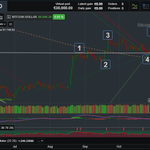









4th wave, or a mistaken 5th wave crash?
We are not bullish yet, but that never really convinces the bears with Bitcoin.
Remember it does not break structure if it invalidates the previous structure, by making the previous 3-4 interior structure.
nitter.gq/cryptorover/status/209…


Patrick Salvation $DOG (Data Orientation Gateway) retweeted

The idolization of Darth Vader and Lucifer is exactly what you should expect from a movement operating on Gnostic inversion and the power game rather than the civilization game. It is a movement that has:
1. Promoted fascism (as a dialectical reaction and “based” aesthetic)
2. Endorsed multipolarity (the Eurasianist project)
3. Encouraged the Balkanization of the United States
4. Amplified the Gnostic wizard Alexander Dugin
5. Set itself against cognitive liberty
6. Bowed at the feet of the transhumanist Peter Thiel
7. Pushed integralist governance
This is not conservatism. It is not the Gospel.
It is a new totalitarian synthesis that abandons reality, personal freedom, and American coherence for moral inversion, dialectical power politics, and anti-liberty dissolution.
The Anakin-to-Vader transformation is no accident.


Patrick Salvation $DOG (Data Orientation Gateway) retweeted

I've said it before, but the Rebel Alliance, as least in how George Lucas portrayed it (of course Disney is trying to change a bit of it around and make the Rebels look bad and the Empire more sympathetic), was at least in part inspired by American patriots in the Revolution. Much of the rebellion were people from Outer Rim worlds fighting a much larger, more powerful Empire from all the way in the Core Worlds that was trying to control and profit off them and their resources. (No taxation without representation)
The fighters of the Alliance used their own privately owned weapons and ships or what they could steal from the Empire. (2nd amendment)
The rebels were friends to the Jedi, whom the Empire was trying to completely stamp out (in other words, one of their motives was also religious freedom)
The Declaration of Rebellion from the original Expanded Universe, which Disney decanonized when they made out the old Expanded Universe into a non-canon "Legends" timeline, even reads like the the Declaration of Independence.
Patrick Salvation $DOG (Data Orientation Gateway) retweeted

Greetings young Sith, let’s have a chat.
Your essay is insightful and, at its core, substantially correct. I accept your reading of the Boomer generation and the mythology of Star Wars. The aesthetics, the simplistic moral universe, the endless recasting of every political disagreement into a struggle between liberators and Nazis, the treatment of Alderaan as a rubber stamp reading VILLAIN, the discovery that the hippies eventually became the Jedi Council, and the extraordinary hypocrisy of a generation that overthrew its fathers and now regards succession as an existential threat.
All of it. The frame is good. It is thick enough to be genuinely useful, even as it exposes the remarkable thinness, and frankly the stupidity, of the worldview it describes.
But something important is missing.
An entire generation, in fact.
And the absence of Generation X from your account reveals a larger story. One that makes sense of the Boomer mythology, explains why it took the form that it did, and introduces a rather serious problem with your proposed solution.

What Do the Boomers Really Believe?
Not what they say at dinner. What they believe in the dark, deep in the soul, where a generation keeps the story it tells about itself.
Every civilization has a sacred text. The Greeks had Homer. The Hebrews had Exodus. The boomers have Star Wars. Laugh if you like. They didn't. They lined up around the block for it, raised their children on it, and paid to hear it retold for fifty years. Because it was about them.
In their youth, they saw themselves as rebels. A handful of brave young idealists against an evil empire whose uniforms their fathers wore. So they rose up, blew it to pieces, and danced in the forest while it burned.
But ask yourself one question. How oppressive was that order, really? The one that won WW2, built the suburbs, sent them to university for next to nothing, and handed them the richest society in human history? Watch the films again. The Empire never governs. It never builds a road or collects a tax. It just wears a costume borrowed from 1945. They never asked what it actually did. They only needed it to be evil.
Then they grew older, and the story changed. Now they were the Jedi. Wise masters in robes, keepers of the peace, guardians of the temple and the ancient ways. An order with total power over the Republic, answerable to no one, testing blood, taking children, deciding who rises and who waits.
And yet something is wrong in the temple. Their powers are fading, and they know it. They hide it from the Senate. They turn away the most gifted boy they have ever seen. Why? Because they can feel it coming. The usurper. A young man who will do to them exactly what they did to their fathers.
That's the boomer soul. Rebel in youth. Priest in old age. Terrified, always, of the next rebellion. And George Lucas put every bit of it on screen.
Which leaves us something remarkable: a lexicon. A map of a generation's mind, drawn by its own hand. Through Star Wars we can walk the corridors of boomer consciousness and see what they worship, what they hide, and what keeps them awake at night.
Which brings us to the prophecy. For a thousand years the Jedi guarded it. A Chosen One will come and bring balance to the Force. They were sure it meant their victory. It didn't.
So what did it mean? Who was it really about? Why did the wise masters never see it coming? Or did they? And if Lucas wrote a generation's deepest fear into its own sacred text, what else did he write down without knowing?
The boy is still standing in the middle of the Council. He has waited long enough.
So have you.
Come with me, and I'll show you the Sith pill.
(Link in the next post)

Patrick Salvation $DOG (Data Orientation Gateway) retweeted
I grew up with Star Wars. We all did. We played Luke Skywalker in our backyards, swung imaginary lightsabers, and dreamed of blowing up the Death Star.
But there is something you have overlooked about the generation that actually grew up with the original trilogy.
We wanted to be Han Solo.
Of course Luke was the central character. He had the destiny, the mystical power, the lineage, the responsibility to redeem his father and restore the order of the universe.
Han Solo wanted absolutely nothing to do with any of that nonsense.
He was a rogue. A smuggler. A cynic. A man with a permanently exasperated expression who had somehow found himself entangled in a grand cosmic conflict between people who took themselves and their respective claims to ultimate significance far too seriously.
He wanted his money. His ship. His freedom. Ideally, he wanted to be somewhere else.
He thought the mystical stuff was ridiculous. He had no interest in the Jedi or the Sith, in prophecy or the restoration of an ancient order. He had no sacred lineage, no inherited claim, no extraordinary connection to the Force.
And yet, in the decisive moment, it is Han Solo who makes the difference.
He has already escaped. He has his reward. He has every reason to leave the rebellion and its grand ideological struggle behind him. Yet at the critical moment, he turns his ship around and returns to save Luke.
There is something extraordinarily important here.
Han Solo’s choice arises from responsibility. From loyalty. From an actual relationship with another human being. He has come to love these people, in spite of himself, and that love places a claim upon him.
He returns because he has become the kind of man who returns.
And in doing so, he makes possible the victory of the mystical hero whose entire destiny would otherwise have amounted to nothing.
This is the Gen X character. We find ourselves sandwiched between the Boomers and their heirs, dragged into their grand narratives of oppression and liberation, and increasingly exhausted by the whole affair.
We have our own flaws, certainly. But we have never been particularly impressed by the idea that history exists to vindicate us. Our instinctive response to grand ideological declarations has generally been to roll our eyes.
The crucial question is what happens when the cynical rogue discovers that he actually loves something enough to take responsibility for it.
And that question points toward a much deeper story.
Because your account of the Boomers is a very ancient one.
You describe a generation that turns against its fathers, overthrows their authority, seizes their kingdom, and then, having achieved sovereignty, becomes consumed by the fear that its own children will do precisely the same thing.
Of course it does.
This is the myth of Cronus.
In the Greek tradition, Uranus fears his children and attempts to suppress them. Cronus overthrows his father and establishes his own sovereignty. Having done so, he learns that one of his own children will eventually overthrow him. His solution is to swallow them.
Zeus escapes, grows to maturity, defeats Cronus, and establishes the Olympian order.
The cycle of usurpation, sovereignty, and threatened succession is among the oldest structures in pagan mythology. Variations appear throughout the ancient world. Fathers fear sons. Sons overthrow fathers. Victorious sons become fathers who must defend themselves against their own children.
The central problem is intrinsic to the conception of sovereignty.
If sovereignty consists in possessing power, and if power is fundamentally acquired through overcoming another, then the existence of an heir is always a threat. The young man’s strength is the old man’s weakness. The son’s flourishing anticipates the father’s destruction.
This is precisely the structure you have identified in the Boomer mythology. And you have identified it well.
But this also tells us something about the nature of the myth itself.
It is pagan.
More importantly, it is a pagan narrative being told by a civilization that had inherited a profoundly different story.
The Christian narrative breaks this cycle at its root.
Here the Father is sovereign in plenitude. He has usurped nothing. His sovereignty is neither contingent upon defeating a predecessor nor threatened by the flourishing of his Son. He gives generously out of inexhaustible abundance.
The Father delights in the Son. The glory of the Son is the glory of the Father. Inheritance is the expression of love and the fulfillment of fatherhood.
And when the relationship between father and son is broken, the Christian story tells us something even more extraordinary.
Consider the parable of the prodigal son.
The son repudiates his father. He demands his inheritance, effectively treating his father as already dead. He rejects tradition, wisdom, propriety, and the order into which he was born. He takes what he has received and squanders it in the pursuit of his own desires.
Eventually, he finds himself utterly debased.
He returns to his father with nothing. No triumph. No enlightenment. No great moral victory. No newly acquired power with which to renegotiate their relationship.
He returns in surrender.
And his father, who has remained steadfast in love throughout the entire episode, runs to embrace him. He welcomes him home with an extravagance of generosity that exceeds every expectation of justice and propriety.
The father has no need to be redeemed by his son. His love is the very ground to which the son returns.
Now notice something remarkable in your essay.
When you discuss the final redemption of Darth Vader, you casually append the phrase, “The prodigal returns.”
But you have the story perfectly inverted.
In Star Wars, the father has fallen into darkness. The son possesses the light. The father must repent, turn away from his corruption, and be redeemed through the steadfast righteousness of his son.
The son saves the father.
In the Christian parable, the father has remained steadfast in love and righteousness. The son has fallen into darkness. The son returns in humility and surrender, and finds himself received into the love of his father.
The father saves the son.
The inversion is profound.
And it reveals exactly what has happened to the underlying myth.
The Boomers inherited a civilization whose deepest story was Christian. They broke with the faith of their fathers, repudiated the moral and spiritual authority from which their inheritance had arisen, and attempted to recreate the sacred order on their own terms.
Having rejected the very category of legitimate authority, they increasingly understood every hierarchy through the lens of power.
The father becomes an oppressor. The son becomes a liberator. The ancient institutions become the Empire. The overthrow of those institutions becomes righteousness.
And so they construct a new priesthood, complete with mystical authority, sacred language, initiation rites, moral prohibitions, and a monopoly on the interpretation of ultimate reality.
A priesthood that speaks incessantly about non-attachment while displaying an extraordinary attachment to its own institutional power.
A priesthood that claims to be the guardian of peace while commanding armies and policing dissent.
A priesthood whose moral vocabulary is increasingly indistinguishable from the requirements of its own preservation.
Your analysis of the Jedi Council is devastating precisely because it captures something real about this attempted secularization of the sacred.
But the hypocrisy goes all the way down.
The Boomers sought to retain the moral power of Christianity after severing themselves from the reality that gave that morality its meaning. They wanted the authority of a priesthood without submission to God. They wanted redemption without repentance. They wanted the kingdom without the Father.
And having rejected the Christian story, they found themselves repeating the pagan one.
They became Cronus.
The irony is that their new religion worked.
Or, more precisely, it delivered real benefits.
The sacred language of liberation justified the acquisition of power. The mythology of perpetual resistance provided moral cover for the accumulation of wealth, institutional control, prestige, and authority. The high priests of anti-authoritarianism became the custodians of the institutions. The revolutionaries became the establishment.
They consumed their inheritance, secured their own positions, and found themselves increasingly terrified of succession.
An entire generation lived quite comfortably under the protection of its idols.
And here, I think, your narrative begins to crack.
Because you have correctly identified the false priesthood. You have correctly identified the hypocrisy of the Jedi. You have correctly identified the generational struggle over power and the extraordinary moral fraud by which that struggle has been concealed.
But then you arrive at your conclusion.
Get Sith-pilled.
Embrace power.
Learn from Palpatine. Build your networks. Acquire the machinery of government. Take control of the institutions. Establish your own sovereignty.
And I find myself wondering whether you have noticed what has just happened.
You have returned to the story of Cronus.
You have correctly recognized that the preceding generation overthrew its fathers, acquired power, constructed a mythology to justify that power, and then became consumed by the fear of its own succession.
And your solution is to do it better.
To be the more cunning revolutionary. The more disciplined usurper. The more competent sovereign.
To become Zeus.
Of course, within the terms of the pagan mythology, this is a perfectly coherent response. Zeus really does defeat Cronus. The children really do escape their father’s tyranny. The Olympians really do inherit the world.
And then?
What happens when Zeus has sons?
The deeper problem is that you have accepted the Boomers’ most fundamental premise: that the world is ultimately organized by the struggle for power.
Having seen through their particular moral pretensions, you propose to replace their priesthood with your own.
Their religion was false, and its gods were idols. You have exposed the idols with considerable skill.
But the fact that their sorcery delivered real benefits never made their gods true.
And the fact that you can learn to practice their sorcery more effectively does nothing to change that.
Indeed, one of the extraordinary features of the Boomer story is how completely its rebellion against Christian authority has reproduced the pagan cycle of sovereignty. Having rejected the Father, they became obsessed with the throne.
Now their heirs, having discovered the fraud, are invited to repeat the same error with greater competence and fewer illusions.
The tragedy is that disillusionment with a false priesthood has become an invitation to worship power itself.
Nietzsche would recognize the move immediately.
But Christianity has already provided the way out.
The Christian account of sovereignty begins with a Father who gives. Its account of inheritance is grounded in love rather than usurpation. Its account of legitimate authority is inseparable from responsibility, sacrifice, and the good of those over whom authority is exercised.
The sovereign is fulfilled in the flourishing of his heirs.
And the heir is fulfilled in receiving, preserving, and bringing to fruition what has been entrusted to him.
This is a radically different understanding of power, authority, and succession. It makes possible an entirely different relationship between generations.
Which brings me back to Han Solo.
He occupies a peculiar place in this mythology. He is outside the sacred lineage and outside the contest for mystical sovereignty. He has no claim to the throne, no prophecy, no priestly ordination.
He is suspicious of the entire enterprise.
Yet when it matters, he acts. His loyalty becomes real precisely because he is free to leave. His responsibility emerges from love rather than destiny, ambition, or an inherited position in a cosmic struggle.
Han Solo provides a glimpse of a kind of agency that the Skywalker drama struggles to comprehend.
And perhaps this is why Generation X matters.
We have spent our lives watching the Boomers’ great performance of moral superiority, while their children increasingly discover the same machinery and contemplate using it against them. We understand the temptation to become cynical. We understand the desire to abandon the whole absurd spectacle.
But we also know that the world still needs to be held together.
Children need fathers. Families need homes. Communities need institutions worthy of loyalty. Civilization requires an inheritance that someone has the courage and generosity to preserve, cultivate, and eventually give away.
Somebody has to take responsibility for things that are actually real.
And that responsibility cannot be discharged through another revolution in the mythology of power.
The most important question facing the heirs of the Boomer generation is whether they can recover an understanding of authority that makes succession something to welcome rather than fear.
Whether they can become fathers whose greatest desire is to see their children flourish.
Whether they can receive an inheritance without believing that inheritance must be seized.
Whether they can exercise power without worshiping it.
The Boomers were raised within the remnants of a Christian civilization and chose to imagine themselves as pagan liberators. They got their revolution, their institutions, and their wealth. They also inherited the ancient pagan terror of their own children.
You have diagnosed their predicament with considerable insight.
But I suspect the genuine way out requires recovering the story they abandoned.
Because the problem was never that the sons had insufficient power to overthrow their fathers.
The problem was that they had forgotten what it meant to be sons.
And, eventually, fathers.
Meanwhile, those of us who grew up wanting to be Han Solo are still standing beside the Millennium Falcon, looking at the latest generation of Skywalkers and wondering how we got dragged into this mess.
We have a choice, of course.
We can take the money and fly away.
Or we can turn around and do what love requires.
I think we know what Han Solo would do.
cf - nitter.gq/jgreenhall/status/2108…

I just turned 55 - which puts me in an interesting position on this conversation. I got my AARP card in the mail and I am, in fact, retired (I think). Which means that I’m not paying into SS anymore. I’ve paid all I’ll ever pay.
And it will be seven years before I get to take anything out. So I’m also not getting any thing for a decent while.
Right in the middle - more or less.
I would not vote to kill social security, as such. But I would make participation optional. Anyone who wants to pay in can participate per normal and earn out their retirement payments.
But anyone who doesn’t can stop paying - at the price of course that they would also not earn any benefit when they retire.
Personally, under the current program, I do not expect to ever collect a check. I have long assumed that it was just money wasted, just another in a long line of bad choices produced by our governance, and when I look at the trajectory of our governance I see no reason to revise that view.
Patrick Salvation $DOG (Data Orientation Gateway) retweeted

One of the main reasons the Anakin thing is going viral is that its proponents know it's an illiterate reading that will provoke offense. They just don't care.
Postmodernists don't care about the facts, just the thrill of transgression. (It's why this scene is popular too.)

Patrick Salvation $DOG (Data Orientation Gateway) retweeted

No human is omniscient.
No human is omnipotent.
Humans have less than .0 trillion trillion triollon% data on the universe.
We do know time isn't real because even we can manipulate it.
So every single time you see anyone claim X amount of years like this👆 know they care nothing for science or truth.
They want blind obedience as if they are omniscient. Which we can easily prove is not true.
A person can say they believe X because of of Y and Z as a theory, but they don't know. That's real science.
Patrick Salvation $DOG (Data Orientation Gateway) retweeted

Whoever wrote this is a fool. The exact reason why his masters deny him is the same reason he falls to darkness: fear of loss.
He has created a good life, yet he is still impatient, arrogant, and unable to let go of his own fears.
You do not give power to people ruled by fear, they will always abuse it. When the chancellor promises to give Anakin the power he seeks, he murders his own former allies, and destroys his entire happy life to try and get it.
Struggles make characters interesting, they do not absolve or justify their evil choices. In trying to paint Anakin as the hero, you take away his own agency and failures, and instead blame a system that refuses to bend to him.
Sounds an awful lot like the same talking points of communists and leftists from the past decade.
Patrick Salvation $DOG (Data Orientation Gateway) retweeted

AWFUL take. It's a Faustian bargain & the Picture of Dorian Gray, all rolled into one. Anakin is a tragic character because he made the wrong choices & destroyed all that he loved in the process. All but himself.
He is forced to live in the prison of his own body, in perpetual pain, physically and mentally, having lost Padme. Like Ashwatthama, or the mariner in The Ancient Mariner, or Oedipus at Colonus - all doomed to a living death.
It's shame that we don't teach great works of literature anymore. Gen Z would have sorted this out properly long ago if we did so.
Patrick Salvation $DOG (Data Orientation Gateway) retweeted

Don’t empathize with Anakin.
Identify with Aragorn.
He’s the ultimate anti-doomer.
When all seemed lost, Aragorn still acted out of principle & not self-interest.
He didn’t change his actions based on feelings or probabilities.
He didn’t harbor vengeance.
He had a duty, and he risked life and love to fulfill it (saving both in the process).


Patrick Salvation $DOG (Data Orientation Gateway) retweeted

Anakin is indeed the worst looser possible to emulate.
Some people on this app say he just wanted a family. In reality, he ignored his family for power, as a pawn of Darth Sidious.
Dude got played. Don’t be a loser like Anakin. Go home to your family.
He choked his own wife half to death, and she gave birth and died from emotional trauma.
Anakin wanted power and was denied for years. Was super emotional, emo, and violent, and then still didn’t get what he wanted. Directly killed Jedi children with his saber, personally. Not by a bomb or something. He cut the children down himself,
Billions died once he was kind of in power, and he supported it.
Absolutely terrible leader. Never once thought about his people in the galaxy. Almost comically bad.
Like, the show Andor imagines senior Empire people who care about their jobs. But Vader? He just wants to dominate.
Imagine thinking of him as an ideal leader.

I'll never understand people who stan Anakin Skywalker.
Dude had EVERYTHING. Literal superpowers, a gorgeous, wealthy, powerful wife, loyal friends, and a servant droid.
Then some creepy old politician promised him he could save everyone he loved.
So Anakin murdered children, choked his pregnant wife, tried to kill his best friend, and lost everything.
And the old man couldn't even deliver on his promise.
Congratulations. You traded your entire life for a miserable, thankless government job working for the guy who screwed you over.
And somehow people think he's the victim.

Patrick Salvation $DOG (Data Orientation Gateway) retweeted

🧵 for the people who think the Jedi were the bad guys (including certain billionaires)

Patrick Salvation $DOG (Data Orientation Gateway) retweeted

He could have been a Bitcoin Jedi, but he chose the dark side.
The side of centralization.

Patrick Salvation $DOG (Data Orientation Gateway) retweeted

I'll never understand people who stan Anakin Skywalker.
Dude had EVERYTHING. Literal superpowers, a gorgeous, wealthy, powerful wife, loyal friends, and a servant droid.
Then some creepy old politician promised him he could save everyone he loved.
So Anakin murdered children, choked his pregnant wife, tried to kill his best friend, and lost everything.
And the old man couldn't even deliver on his promise.
Congratulations. You traded your entire life for a miserable, thankless government job working for the guy who screwed you over.
And somehow people think he's the victim.
Patrick Salvation $DOG (Data Orientation Gateway) retweeted

Scariest Halloween costume for 2026 spotted?


Patrick Salvation $DOG (Data Orientation Gateway) retweeted

16 years ago today, Bitboy posted the iconic Bitcoin logo on BitcoinTalk — free for the world to use.
Legend.


Patrick Salvation $DOG (Data Orientation Gateway) retweeted

All the children are choosing candy over a copy of the Bitcoin whitepaper. Bearish.

