

Entrepreneur & investor. Man of the world.
Joined November 2012
- Tweets6.2K
- Following4.7K
- Followers1.4K
- Likes59.3K
𝙶𝚎𝚘𝚛𝚐𝚎 𝙶𝚘𝚍𝚞𝚕𝚊 👾 retweeted

You can now go into the web when you want. :)
bronze-age-troy.3dstoa.com/?…

𝙶𝚎𝚘𝚛𝚐𝚎 𝙶𝚘𝚍𝚞𝚕𝚊 👾 retweeted
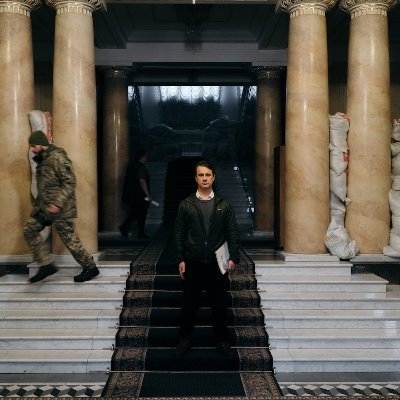
NEW: Our reporting found the recent Starlink outage in Ukraine could be part of an elaborate upsell.
When U.S. officials asked Musk's company about it, they were told the problem could be fixed by upgrading to a new contract.
@isaacstanbecker @TheAtlantic
theatlantic.com/national-sec…

𝙶𝚎𝚘𝚛𝚐𝚎 𝙶𝚘𝚍𝚞𝚕𝚊 👾 retweeted

3rd RoboTaxi ride of the day in the new Houston Geofence. Both this one and the prior car had to be pulled off line due to them going rogue and quite literally kidnapping me. Support could not control the cars and they were getting further and further away from home. Houston we have a problem!!!
PS I live streamed the whole thing to the Tesla Club of Greater Houston Facebook page. @Tesla @TeslaSI @elonmusk @aelluswamy @wholemars @JCChristopher

𝙶𝚎𝚘𝚛𝚐𝚎 𝙶𝚘𝚍𝚞𝚕𝚊 👾 retweeted

As someone who has personally spent $500k / mo+ on Google Ads for years, I can tell you with certainty:
This revenue growth in Search is artificial & extremely unhealthy for Google’s business long term
Search volumes are declining as legacy search is being increasingly cannibalized by non-monetized LLM queries
Google’s response?
Manufacture revenue growth via short-sighted, highly extractive, customer-hostile tactics. I.e. charge advertisers more for lower quality clicks, including clicks they do not want and explicitly did not approve Google to charge them for
A few examples to illustrate:
For all of its history until recently, Google operated on a 2nd price auction model
I.e. if you bid $5 CPC and the next highest bidder bids $1 CPC, Google charged you $1.01 for the click (one penny more than the 2nd highest bidder) rather than the $5 you bid
This was a genius move by Google early on as it incentivizes advertisers to input their true maximum willingness to pay rather than trying to play the game of bidding low and constantly adjusting to try to stay just ahead of the next highest bidder while still not paying too much
However recently, Google silently deprecated the 2nd price auction and began charging advertisers as much as their bid and budget caps allow, regardless of what anyone else is bidding
It’s a short-sighted cash grab at the expense of the long term health of the advertiser ecosystem
Making thing worse, Google also recently nerfed keyword targeting precision
Google previously had precise keyword targeting settings that allowed advertisers pick individual search phrases to bid on, defined down to the character w/ exact match or phrase match targeting
This was one of the core features that made search advertising magic, enabling advertisers to run extremely precise campaigns based on exactly what their target customer typed
But now, even if you bid on a specific term or phrase using the strictest exact
-match targeting settings, Google will show your ad across 1000’s of unrelated keywords, labeling them as as “exact match (close variant)”
The definition of “close variant” means whatever they want it to and changes constantly. The result is advertisers get billed for clicks that are totally irrelevant to their business and that their targeting settings explicitly forbid Google from targeting. Google does it anyway and there’s no ability to turn this off
So now exact match is broad match, and broad match is just meaningless spam
This is all very bad for advertisers, but for Google, it allows them to show your ad and bill you for clicks across 1000x more searches that were previously going unmonetized (mainly because they’re garbage queries no one wants)
This is how you grow revenue atop declining search volumes
Lastly, and perhaps most egregiously, Google quietly stopped respecting budget caps by a factor of 2x. For example campaigns we’ve been running for years with $1000 daily budget caps suddenly began spending $2000+ per day
And the extra spend is entirely on the garbage keywords Google arbitrarily throws in as “exact match (close variants)” which have no value to our business, but can’t be turned off
Google offers no refunds nor any recourse for overspend or spend on keywords you explicitly did not target
These are not the actions of a healthy business. These are the actions of company whose core business is in decline but desperately needs to pump quarterly earnings so Wall Street will continue to fund insane capex while hopefully looking through their rapidly deteriorating negative free cash flow
Google operated a benevolent monopoly for the better part of 25 yrs
Meaning the value Google captured from Search was but a small fraction of the value it created, and that spread produced a potential energy that justified expectations of high earnings growth far, far into the future
This is now no longer the case
At the alter of AI capex, Google is sacrificing the golden goose

Q2 was an amazing quarter, with our AI investments redefining what’s possible across every part of our business.
Alphabet revenue grew 24% YoY and Google Cloud accelerated to 82% growth. We saw exciting momentum across the board from Search to YouTube to the Gemini app (which reached 950M monthly active users). Our model APIs are processing 22B tokens/min (up from 16B+ last quarter) driven by our workhorse Flash models. We’re also seeing great adoption of Gemini Enterprise, used by 90% of the Fortune 100, as well as strong demand for our security solutions.
Outstanding results and momentum, and such an exciting moment—thanks to all of our partners and employees around the world! 🙌 About to hop on the call!

𝙶𝚎𝚘𝚛𝚐𝚎 𝙶𝚘𝚍𝚞𝚕𝚊 👾 retweeted

SCOOP: The DoD Inspector General is declining to investigate Musk and Starlink slowdowns in Ukraine despite a bipartisan request from 9 Senators.
@SenatorShaheen calls it “concerning”
The IG says the lawmakers should direct their questions to the @usairforce and @USSpaceForce

𝙶𝚎𝚘𝚛𝚐𝚎 𝙶𝚘𝚍𝚞𝚕𝚊 👾 retweeted

Over the past few months, Anthropic scientists have engaged in deep research partnerships with six organizations developing new medicines. We've also begun drug discovery efforts of our own.
In doing so, we’ve learned much more about how Claude can support the many stages of drug development.
In this blog post, we share some early results from these efforts, and describe how this work fits in with our wider ambitions in the life sciences.
anthropic.com/research/early…

𝙶𝚎𝚘𝚛𝚐𝚎 𝙶𝚘𝚍𝚞𝚕𝚊 👾 retweeted

Another note for SpaceX attorneys and PR: There was no need to issue an alert at all. Your own internal data showed a safe 2km pass. But you issued a 400m collision alert anyway. Why? Because the alert itself is the weapon. Issuing it triggered FCC Cond 16, legally freezing ICEYE so it couldn't dodge. STARLINK-35856 didn't use its auto-evasion. It just parked there and kept the false alarm blaring while Russia sprinted in. It wasn't an accident.

SpaceX Blocked A U.S. And NATO Satellite to Assist a Russian Intercept After Crippling Ukraine's Air Defenses
The Math Proves the Reality that Musk doesn't want you to see.
On Oct 13-14, SpaceX restricted Starshield/Starlink during a 39-missile Russian attack, cutting Ukrainian drone intercepts by 23% and stranding U.S. personnel in Kyiv. Forty-eight hours later (Oct 15), SpaceX blocked U.S.-licensed NRO, Space Force, and NATO radar satellite ICEYE-X36 in orbit so Russia's COSMOS 2612 weapon could intercept it (99.89%-99.98% posterior)
Our Model Demonstrates that the Russian intercept of the US/NATO ICEYE X-36 satellite (contemporaneous with the throttling of Starlink) would not have been possible, and almost certainly not been attempted, without SpaceX resources. At a material opportunity cost, Russia sprinted its COSMOS satellite to intercept ICEYE X36. Based on a previous attempt in June during which X36 maneuvered to evade COSMOS, Russia knew that this would be successful only if X36 could not maneuver. On October 15, SpaceX fixed X36 in place by issuing a collision alert for a sub-kilometer approach with its Starlink 35856 when SpaceX's own data shows that the actual distance was 4.8-5.0x as great. SpaceX issued no warning to COSMOS despite the fact that its sprint was far more threatening than the stable X36 orbit. SpaceX did not maneuver its Starlink 35856 satellite to clear the supposed collision risk. How, absent coordination with SpaceX, could Russia have known that SpaceX would take actions that (a) misrepresented the danger posed by X36, and (b) resulted in the fixing of X36 thereby enabling COSMOS's successful intercept? Thus, SpaceX was directly involved in simultaneously compromising Ukraine’s defensive and offensive capabilities. The conjunction of these two events makes innocent explanations untenable.
The Pentagon Capture & Iran Round Two Trap: Pentagon CTO Emil Michael who cashed out $7M–$35M from Musk’s inner-circle SpaceX vehicles (M8/Gigafund 0.1 and M6/Valor M33 II) and KQ Partners / xAI (selling xAIfor $5M–$25M three days before taking over CDAO/OSCand 21 days before SpaceX bought xAI, while keeping M8, M6, M9, M10 & Nomadic open) and Pete Hegseth purged rival Anthropic in two hours, surrendered combat command over US drones used to attack Iran to Starlink’s "Terms of Service," and on October 2 named Musk Co-Director of Project Meridian to design the Pentagon's "Future of Warfighting" just as America enters Iran Round Twowith depleted Patriot/THAAD magazines and Russia feeding U.S. warship/aircraft locations to Tehran.
SpaceX’s actions in Ukraine raise serious questions about its alignment with US security interests and its reliability as a cornerstone of US defense. These questions are particularly troubling given the effectively irreplaceable position SpaceX has been granted by the Hegseth/Emil Michael Pentagon.
$SPCX $TSLA
Our full quantitative analysis below w/ @streetwiseprof


𝙶𝚎𝚘𝚛𝚐𝚎 𝙶𝚘𝚍𝚞𝚕𝚊 👾 retweeted

Sotheby’s just sold Jodi, a Nanotyrannus (a smallish friend of T-Rex) for:
*$47,000,000*
High estimate was $9M.
2nd most expensive dinosaur EVER.
I really think it’s because
A) low estimate was very inviting
B) it’s the perfect size at ~20ft
This is going in a home, imo

𝙶𝚎𝚘𝚛𝚐𝚎 𝙶𝚘𝚍𝚞𝚕𝚊 👾 retweeted

While Waymo expands to 🇯🇵 🇬🇧 🇨🇦 🇩🇪 🇫🇷 🇳🇱 🇵🇹& 🇸🇬, Tesla is still struggling to train its Cybercab not to kill people when trains approach railway crossings in Seattle.
H/T @radiokaos666
𝙶𝚎𝚘𝚛𝚐𝚎 𝙶𝚘𝚍𝚞𝚕𝚊 👾 retweeted

This table is impossible to read, but this shows that between 2017 and 2025, the number of highly indebted (deep blue, over 50% of GDP) provinces has grown from 3 to 22. Meanwhile, low debt provinces (light blue, less than 25% of GDP), dropped to zero by 2025. Even Shanghai crossed the threshold to medium debt in 2025. (3/N)

𝙶𝚎𝚘𝚛𝚐𝚎 𝙶𝚘𝚍𝚞𝚕𝚊 👾 retweeted

Shanghai's 2027-2030 satellite internet action plan targets 400 Gbps inter-satellite laser links, over 30 POPS of onboard AI computing per satellite, direct-to-phone access and more than 3,000 satellites in orbit by 2030.

𝙶𝚎𝚘𝚛𝚐𝚎 𝙶𝚘𝚍𝚞𝚕𝚊 👾 retweeted

Everyone keeps a list of unicorns.
Nobody keeps a list of what happened next.
So we did. 🦄📉
440+ startups once worth $1 billion or more. Not anymore.
Over $1.4 trillion of valuation, gone.
Meet the Unitard Index: unitard.io

𝙶𝚎𝚘𝚛𝚐𝚎 𝙶𝚘𝚍𝚞𝚕𝚊 👾 retweeted

Many of you don't understand how serious this is, so let me break it down.
In computer science there is a famous kind of puzzle called 3-SAT. You are given a long list of yes-or-no switches and a set of rules about how they must be arranged, and you have to find a combination that satisfies every rule. The obvious way to solve it is to try every combination, but each new switch doubles the number of possibilities, so a puzzle with a few hundred switches would take longer than the age of the universe to brute force.
For decades, the smartest people in the field found clever tricks that made this a little faster, but every trick still hit the same wall: the time required kept exploding as the puzzle grew.
About 25 years ago, two computer scientists, Russell Impagliazzo and Ramamohan Paturi, working with Francis Zane, turned that wall into a formal idea.
They proposed the Exponential Time Hypothesis, which says this explosion is not a failure of human cleverness but a law of nature. No algorithm, however brilliant, will ever solve 3-SAT without the time blowing up exponentially. Nobody could prove it, but almost everyone believed it, and it became one of the foundations of modern computer science.
Researchers used it as a measuring stick. If you could show that solving some other problem quickly would also crack 3-SAT quickly, you had shown that problem was hopelessly hard too. Hundreds of papers, across scheduling, graphs, logic and much more, rest on this one assumption.
Now an internal AI model at OpenAI claims to have broken it. It says it found an algorithm that solves these puzzles meaningfully faster than the hypothesis allows, and it has checked the proof in a computer verification system called Lean.
And here is the remarkable part: the very people who proposed the hypothesis, Impagliazzo and Paturi, along with MIT's Ryan Williams, are now leading the public review of whether a machine has disproved their own idea.
So what happens next? If the disproof holds, a large part of theoretical computer science has to be revisited.
Every result that said "this problem cannot be solved faster, assuming ETH" loses its foundation, and researchers will have to work out which of those walls were real and which were simply where we stopped looking. It does not mean everything becomes easy. The new algorithm is still slow in absolute terms and this is not the famous P versus NP problem being solved.
But it means our map of what is possible was wrong in a place we were very confident about, and it was an AI that redrew it. If the disproof fails, the hypothesis survives and the field breathes out, but we will still have watched an AI produce serious, checkable work on one of the deepest questions in the discipline, closely enough that the founders of the idea had to take it seriously. Either way, something has shifted.

𝙶𝚎𝚘𝚛𝚐𝚎 𝙶𝚘𝚍𝚞𝚕𝚊 👾 retweeted

BREAKING ASTRONOMY NEWS!
After 49 years, the mystery of exactly where the Wow! Signal came from has been solved.
The #AreciboWow "has solved this mystery using three independent methods." But looks like we'll have to wait a little longer for the answer, as they're planning to present their findings next year. I can hardly wait!
Here's some background 👇
The Wow! Signal was a strong, narrowband radio signal detected on August 15, 1977, by Ohio State University’s Big Ear radio telescope during a SETI (Search for Extraterrestrial Intelligence) survey.
It appeared near the 1420 MHz hydrogen line (a frequency long considered a natural “calling card” for any technological civilization) and lasted the full 72 seconds of the telescope’s observing window as Earth rotated.
A few days later, volunteer astronomer Jerry Ehman reviewed the computer printout, circled the intensity sequence “6EQUJ5,” and wrote “Wow!” in the margin, giving the signal its name.
Despite many follow up searches, it was never detected again. Its one time nature and lack of modulation or encoded message leave its origin open: possible natural explanations (such as a briefly energized hydrogen cloud, potentially triggered by a magnetar or similar transient) have been proposed in recent analyses, but none are confirmed, and the signal remains one of the most famous unexplained events in SETI history.


One of the biggest mysteries of the Wow! Signal is its exact location, with two possible positions in the sky. Our #AreciboWow team has solved this mystery using three independent methods. We’ll present our findings in 2027.
We know! 😉

𝙶𝚎𝚘𝚛𝚐𝚎 𝙶𝚘𝚍𝚞𝚕𝚊 👾 retweeted

We are announcing three new discoveries in mathematics, computer science, and physics about harmonic analysis, complexity theory, and quantum field theory.
openai.com/index/building-sc…

𝙶𝚎𝚘𝚛𝚐𝚎 𝙶𝚘𝚍𝚞𝚕𝚊 👾 retweeted

An internal model at OpenAI has produced a claimed refutation of ETH! Russell Impagliazzo, Mohan Paturi, and I have been asked to help organize an open and independent examination of this claim. 1/4
𝙶𝚎𝚘𝚛𝚐𝚎 𝙶𝚘𝚍𝚞𝚕𝚊 👾 retweeted

Elon Musk has spent more money on American elections in the last two years than George Soros has in his entire life.

𝙶𝚎𝚘𝚛𝚐𝚎 𝙶𝚘𝚍𝚞𝚕𝚊 👾 retweeted

88% of VC-backed founders who exited their companies got $0. Eduardo Azevedo and Kent Smetters analysed 157,669 startups and 248,454 founders from 1987 to 2025.
Let that sink in...
𝙶𝚎𝚘𝚛𝚐𝚎 𝙶𝚘𝚍𝚞𝚕𝚊 👾 retweeted
SpaceX Blocked A U.S. And NATO Satellite to Assist a Russian Intercept After Crippling Ukraine's Air Defenses
The Math Proves the Reality that Musk doesn't want you to see.
On Oct 13-14, SpaceX restricted Starshield/Starlink during a 39-missile Russian attack, cutting Ukrainian drone intercepts by 23% and stranding U.S. personnel in Kyiv. Forty-eight hours later (Oct 15), SpaceX blocked U.S.-licensed NRO, Space Force, and NATO radar satellite ICEYE-X36 in orbit so Russia's COSMOS 2612 weapon could intercept it (99.89%-99.98% posterior)
Our Model Demonstrates that the Russian intercept of the US/NATO ICEYE X-36 satellite (contemporaneous with the throttling of Starlink) would not have been possible, and almost certainly not been attempted, without SpaceX resources. At a material opportunity cost, Russia sprinted its COSMOS satellite to intercept ICEYE X36. Based on a previous attempt in June during which X36 maneuvered to evade COSMOS, Russia knew that this would be successful only if X36 could not maneuver. On October 15, SpaceX fixed X36 in place by issuing a collision alert for a sub-kilometer approach with its Starlink 35856 when SpaceX's own data shows that the actual distance was 4.8-5.0x as great. SpaceX issued no warning to COSMOS despite the fact that its sprint was far more threatening than the stable X36 orbit. SpaceX did not maneuver its Starlink 35856 satellite to clear the supposed collision risk. How, absent coordination with SpaceX, could Russia have known that SpaceX would take actions that (a) misrepresented the danger posed by X36, and (b) resulted in the fixing of X36 thereby enabling COSMOS's successful intercept? Thus, SpaceX was directly involved in simultaneously compromising Ukraine’s defensive and offensive capabilities. The conjunction of these two events makes innocent explanations untenable.
The Pentagon Capture & Iran Round Two Trap: Pentagon CTO Emil Michael who cashed out $7M–$35M from Musk’s inner-circle SpaceX vehicles (M8/Gigafund 0.1 and M6/Valor M33 II) and KQ Partners / xAI (selling xAIfor $5M–$25M three days before taking over CDAO/OSCand 21 days before SpaceX bought xAI, while keeping M8, M6, M9, M10 & Nomadic open) and Pete Hegseth purged rival Anthropic in two hours, surrendered combat command over US drones used to attack Iran to Starlink’s "Terms of Service," and on October 2 named Musk Co-Director of Project Meridian to design the Pentagon's "Future of Warfighting" just as America enters Iran Round Twowith depleted Patriot/THAAD magazines and Russia feeding U.S. warship/aircraft locations to Tehran.
SpaceX’s actions in Ukraine raise serious questions about its alignment with US security interests and its reliability as a cornerstone of US defense. These questions are particularly troubling given the effectively irreplaceable position SpaceX has been granted by the Hegseth/Emil Michael Pentagon.
$SPCX $TSLA
Our full quantitative analysis below w/ @streetwiseprof