

PhD philosopher and committed Protestant. Teaching The Object Test, a live masterclass on Catholic miracles, Nov 14. Enroll at link below.
Joined January 2022
- Tweets3.2K
- Following591
- Followers2.8K
- Likes3.3K





The Protestant Philosopher retweeted

I have plagiarized the work of others. This was wrong, and it was sinful. Over the years, I allowed myself to develop justifications for my actions, minimizing their seriousness and, at times, even pushing them so far from my mind that I failed to reckon with what I had done. These patterns have affected far more of my work than I ever wanted to acknowledge.
I do not want to simply move past this or treat it as something to be managed. I deeply regret my initial defensive and dishonest response to the accusations, and my involvement of others in that response. I want to face all of this truthfully, accept the consequences of my actions, and do what I can to make things right.
My heart has always been to tell people about Jesus, to share the gospel, and to help others discover the beauty and richness of the Bible and its history. But having a good desire does not excuse the ways I have fallen short in pursuing it. I have clearly failed to uphold the standards of integrity that I have encouraged others to value. That failure is mine, and I take responsibility for it. One of the things that grieves me most is the reality that, through my own actions, I have undeniably brought reproach upon the very gospel I have spent so much of my life seeking to proclaim. The truth of the gospel is never served by dishonesty in the way we communicate it. I cannot justify my actions by appealing to my intentions.
In my sin and failing, I have wronged those who have trusted me and sought to learn from me, and have wronged those whose work I treated as my own. To those individuals, and to everyone who has trusted me and my work, I am deeply sorry. I ask for your forgiveness, recognizing that forgiveness cannot be demanded and that rebuilding trust, if it is possible, will take time.
As I step back from my ministry and church work, I am submitting myself fully to Apologetics Canada's in-depth review, and to any academic disciplinary process I will be subject to. I will also be under the care and counsel of my church and elders.
Above all, I want to walk through this with genuine repentance before God, and with humility toward those I have wronged. I know that repentance is more than words, and I recognize that it will need to be demonstrated through my actions going forward. My prayer is that God would use this painful season to confront what needs to change in me and to lead me toward genuine repentance.
My soul feels grieved by this situation. My heart is heavy. And my guilt at times has felt like it will swallow me whole. I am grateful for those who can still find it in their hearts to pray for me and my family.
The Protestant Philosopher retweeted

You claimed it was logically impossible. Ergo, impossible in every possible world.
This is precisely @ProtPhilosopher’s point. You guys don’t even seem to understand the extent of the claims you’re making.
And this is especially ironic because you’re constantly calling out other Protestant apologists (rightfully so, btw) for being ignorant and overconfident on matters such as sola scriptura, for not being sufficiently well-read, and so forth.
For example, you rightly criticize Protestants for making claims without understanding the concepts behind them, or even what the relevant authorities in the field mean by those concepts. You’ve pointed out, for instance, that Reformed scholastics such as Turretin, LeBlanc, and others understood sola scriptura in terms of Scripture being the sole rule of faith, rather than merely “the only infallible authority.”
You complain about Protestants being ignorant of these distinctions, and at times borderline mock them for it (as do others in your camp, such as @DoorDashThomist and @WalmartThomist). But then you turn around and do the very same thing when making claims such as “logically impossible,” without apparently understanding even the basic entailments of what you’re claiming. Namely, that to establish logical impossibility, you need to demonstrate that the proposition entails a contradiction, such as P and not-P in the same sense and at the same time.
Moreover, your comment about MCU only further demonstrates that you don’t seem to understand the very modal terms you’re employing, such as “impossible.”
And this is what makes you guys come across as hypocrites. On the one hand, you mock people and demand precision and accuracy on niche and esoteric theological matters. But on the other, when you make similarly uninformed claims, you either ignore the criticism or brush it aside.
You’re essentially doing the very thing you criticize independent fundamentalist Baptists for doing in sola scriptura debates, except now it’s with elementary modal claims.
Do better, man.
The Protestant Philosopher retweeted

I can tell you I have had multiple occasions irl where people have brought up the Catechism change on the death penalty as an obstacle in their devotion to the Faith or in their conversion.
It is absolutely a problem.

The Protestant Philosopher retweeted
If the pope or the DDF would just clearly and explicitly reaffirm "The death penalty is not intrinsically wrong..." before going on to criticize its use in practice however harshly they like, it would instantly resolve this problem for most of the people troubled by the issue. There is no rational basis for refraining from doing this.

The Protestant Philosopher retweeted

The Catechism of the Council of Trent said the magistrate bears the sword and the power of life and death, and that the exercise of that power is not murder. The Bible teaches its propriety, Paul said he was not afraid to die if he had committed a crime for which it was the proper punishment, and yet, once you abandon sola scriptura, you get to "develop" doctrine X into doctrine NOT X in a relatively short period of time. What other doctrines will undergo similar "development" in Rome?

The death penalty is inadmissible because it is an attack on the inviolability and dignity of the person. The common good can be safeguarded and the requirements of justice can be met without recourse to capital punishment: effective systems of detention have been developed that protect citizens while at the same time do not completely deprive those who are guilty of the possibility of redemption. #NoDeathPenalty
The Protestant Philosopher retweeted

Complete contradiction with Scripture and the official Catechism the Roman Catholic Church taught for over 400 years.
“The just use of this power, far from involving the crime of murder, is an act of paramount obedience to this Commandment which prohibits murder.”
-CCC Trent
The death penalty is inadmissible because it is an attack on the inviolability and dignity of the person. The common good can be safeguarded and the requirements of justice can be met without recourse to capital punishment: effective systems of detention have been developed that protect citizens while at the same time do not completely deprive those who are guilty of the possibility of redemption. #NoDeathPenalty
The Protestant Philosopher retweeted
The reason I highlight the pope’s strong rejection of both Scripture and Catholic Tradition is not to attack his supposed infallibility.
It is to do something more important.
It shows that the pope and the RC authority is simply not trustworthy. Because infallibility isn’t the real reason people run to Rome. It’s the sense that they have a faithful and trustworthy source for guidance and clarity in Christian truth.
But history (and the last several days) proves this is not true.
RCism’s trustworthiness is not as advertised.
Go to Scripture as your final authority. Learn from history.
The Protestant Philosopher retweeted
Here’s 5 ways the Pharisees are a perfect correlation to the Papacy (and in many cases Eastern Orthodoxy).
1. Jesus said of the Pharisees that they “sit in Moses’ seat” meaning that they genuinely carried forward a kind of teaching authority connected to Moses. This is the most important parallel because, it is believed the Pope sits in the chair of Peter or EO’s stand on their apostolic succession. This single parallel means that Jesus’ treatment of them is valid when it comes to others who claim (legit or not) to have such a position in teaching authority.
2. The Pharisees claimed to have unwritten Tradition which came to them from Moses. It was preserved through time and carried binding authority upon Jews. This is identical to RC and EO claims, as they insist they are not innovating but preserving what Jesus and the apostles taught but which was not written down.
3. Jesus rebuked the Pharisees for teaching their traditions which conflicted with and subverted the commands of God in Scripture. He pulled no punches here! Their additions to God’s word were rejected. Their Tradition, along with its supposed claims to merely preserve unwritten teachings from Moses, were subjected to the testing of Scripture. Scripture had authority over the Tradition. Jesus modeled for us the practicing of Sola Scriptura.
4. Their authority was acknowledged and diminished. Jesus acknowledged they sat in Moses’ seat and as much as they merely taught what Moses said they were to be obeyed. But when they added their traditions and rules of man their authority was to be ignored. They were going beyond the sphere where their authority could hold power. Why? Because the power was in Scripture and when they departed from it they went away powerless. Roman Catholic and Eastern Orthodox authority should be treated the same way.
5. In the end, Jesus was continuing the work of God and those men could either get with it or get left behind. Some of them got with it. Nicodemus is a wonderful example of a man who was in those ranks who learned that he didn’t know as much as he thought. Jesus exposed the ignorance of Scripture that results from a mind ruled by Tradition when he said to Nicodemus, “Are you the teacher of Israel and yet you do not understand these things?”
— John 3:10
The Pharisees are a solid parallel of ecclesial authorities who came after the apostles’ time.
The Protestant Philosopher retweeted

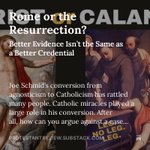
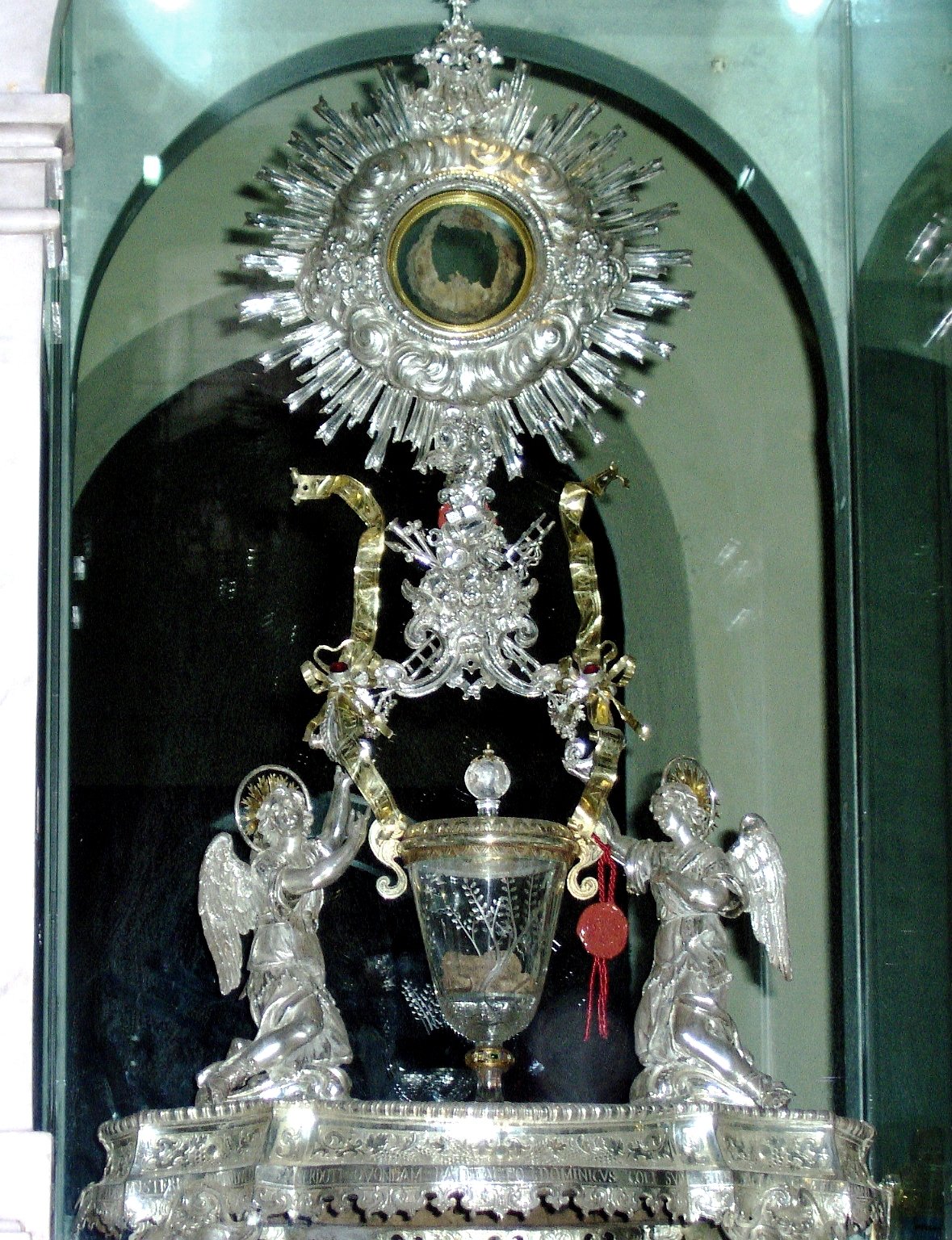
Over at Substack, @FrictionPhilo drops a cluster bomb analysis of the Eucharistic miracle of Lanciano. I'm glad someone took the time to investigate this and continue to prove Hume's maxim that miracle accounts tend to collapse under rigorous scrutiny.

The Protestant Philosopher retweeted
Great video by @gavinortlund highlighting some of the relevant and recent scholarship on the dating and authorship of the Gospel of John. Really well put together stuff!
youtu.be/ZC3VYrzVUP4?si=G0Zc…

The Protestant Philosopher retweeted
Great commentary by my friend @glenscrivener on the recent conversion of Joe Shmid.
youtu.be/WefvbYxkyZ4?si=1T18…


The Protestant Philosopher retweeted

Panic?
Nah.
However, to me. It does raise some interesting questions about the more supernatural aspects (miracles, exorcisms, etc.) he stated as what ultimately convinced him, given his obvious intellectual prowess and prior functionally naturalistic tendencies.
Outside of the crazier elements of Charismatic circles (very unappealing), Protestant Evangelicalism, including even the sane Charismatic circles, has conditioned itself to have little to say about those sorts of things (at least without first offering some weird, long-winded disclaimers or embarrassment before bringing it up), and even shy away from those sorts of things (also very unappealing).
Schmid isn’t just some “based Trad bro” looking for smells and bells and a cooler aesthetic rooted in ancient history, which is the stated reason for the flock of young men to Rome or the EO, which has been quite overstated anyway (it’s an Internet thing mostly).
Rather, he is altogether something different. So, his stated reasons in light of the bare minimum supernaturalism of God, sin, salvation, and heaven and otherwise a functionally naturalistic approach of Evangelical Protestantism as the alternative, aside from crazy Charismaticism, should be cause for some internal reflection on our part as how we approach these issues.
The Protestant Philosopher retweeted

Foreshadowing:

Look at you, Joe, getting all RC up in here. Lol! I had many of those same worries, which I worked through.
First, you haven't even seen the actual argument. If you still have the same worries after looking at it, then that will be good to know. It's a work in progress.
Second, and more substantively, you worry that the commitments aren't logically independent. The argument doesn't assume independence. It uses conditional probabilities. There's a probabilistic penalty applied to the conjunction not because the claims are independent but because they're not related by logical entailment. You also raise the issue of them being strongly probabilified by papal authority. But even if the probability of tradition and magisterium and infallibility given papal authority is something like 0.95, the conjunction penalty still applies because 0.95 is less than 1. Further, "papal authority" as a basic supposition is what needs justification, and the historical evidence calls this into question. You say it's a "modest basic posit," but it's not. It's the very claim under dispute.
Third, you worry that coherence is an advantage over "pick and choose" Protestantism. But that coherence is bought at the price of construction. That is, if the Magisterium has final interpretive authority over Scripture and Tradition, plus its own past declarations, then the system will appear coherent regardless of whether the claims are true. What evidence within the Catholic system could falsify the papal infallibility that the system assumes and relies on? Any counterevidence gets reinterpreted by the authority whose claims are being questioned. That's a hoot and a holler from full-blown unfalsifiability. Also, Protestantism isn't "pick and choose." It's Scripture judging tradition, which is a principled criterion. We're not arbitrarily selecting doctrines. All are tested against the infallible norm of Scripture. That's not incoherent. It's a different model of coherence, one that has an external check instead of something like a self-validating circle.
Fourth, you say logically stronger hypotheses gain more from successful predictions. That is a good Bayesian point. Riskier and more specific predictions do get a boost in confirmation when successful. But what successful predictions does Catholicism make? Well, I won't walk through them all, but going off what Joshua Sijuwade has argued in sections 4 and 5 of his paper "The Identity of the Church," the Catholic system's predictions fail. So we don't get the likelihood boost you're gesturing at. However, Protestantism predicts a fallible church guided by infallible Scripture would show the pattern we actually observe. The broad agreement over first degree doctrines and the messiness over secondary matters is what we predict and observe. So I'd say the predictive power point cuts against Catholicism when you look at the actual historical evidence.
The Protestant Philosopher retweeted
Many think Catholicism is the ancient church. The apostles would never do or allow this sort of idolatrous behavior. Never.
The issue with claims to originality and an unchanged tradition within either Catholicism or Orhodoxy is that they are full of changed traditions and practices. They just try to pretend these things go back to the apostles when they don’t. It’s very much the same as the Pharisees of Jesus’ day. The Pharisees had a host of traditions and practices that at times conflicted with Scripture. So, to buffer against complaints they just said that an unwritten “oral tradition” connected all their teachings to Mount Sinai. It was just unwritten tradition and if you wanted real ancient Judaism you had to follow their lead. Jesus blew that out of the water! They were just inheriting slowly developed traditions of man and calling them ancient and authoritative. Jesus appealed to Scripture to trump them.
This Protestant will remain Protestant.

The Protestant Philosopher retweeted
It’s out! Let me know what you guys think of this format.
youtu.be/Xh5ksPYrQ58?is=3zdc…

The Protestant Philosopher retweeted

🚨🚨NEW VIDEO is out today talking about the metaphysical problems entailed by transubstantiation, and the various ways in which the Roman scholastics have attempted to solve it, and how they ultimately end up contradicting one another, thus destroying their apologetic defense from within itself.
Go give it a watch and subscribe!
youtube.com/watch?v=SWWw1yBY…

The Protestant Philosopher retweeted

New response to the grounding objection against Molinism just dropped

The Protestant Philosopher retweeted

What is a charitable interpretation of this verse?
Seems quite sexist

The Protestant Philosopher retweeted
The Council of Trent was actually incredibly corrupt and disingenous in many of its proceedings, akin more to the Sanhedrin's judgment against the Lord Jesus Christ than to any legitimate council.
I put out a new article today with some lesser-known and forgotten sources that prove this. It's going to be an absolute truth-nuke. Go check it out!
mattjhedges.substack.com/p/t…
