

Visual Context Engineer | bridging vision and visions
In-Between
Joined August 2021
- Tweets1.1K
- Following941
- Followers182
- Likes22.5K




Ralph Fischer retweeted

The Super El Niño in the Pacific is producing some incredible waves and record swells along the coast. These guys captured some drone footage of an estuary releasing into the ocean after storms and waves broke down the beach between them. Take care if you're planning to be near the water! These are relentless and show no mercy.
Ralph Fischer retweeted

Flashback to June 14, 2024.
At the time, frontier AI models have zero fluid intelligence. They score around 5% on ARC 1. They can't reliably add two numbers. They make laughable logic errors every other prompt. Reasoning models don't exist. Coding agents don't exist. Claude Code doesn't exist. "Code gen" is a complete joke. Scaling up next-token prediction based on web text data is hitting a wall.
What if a time traveler told you that, by November 2026...
• AI models would have human-like fluid intelligence, thanks to a new paradigm: test-time induction (modern reasoning models).
• Not only would ARC 1 be saturated, but unreleased benchmarks 10x harder (ARC 2) and 100x harder (ARC 3) would be saturated too.
• Nearly all code would be written by AI, and models could one-shot complex codebases flawlessly.
• AI models would be solving multiple Millennium Prize problems.
• OpenAI's valuation would be 15x higher, and Anthropic's would be 85x higher.
And on top of all that...
• Nvidia would still hold ~80% of the AI compute market.
• Nvidia would have grown its revenue and earnings 4.5x.
• Nvidia would still be growing 75% a year.
• Nvidia would have even higher operating margins (67% vs. 65% back then).
Based on that information, straight from the future, would you have bought NVDA?
If you answered yes -- congrats. Today, 2.5 years later, you'd be down 5% on your investment (even more after inflation).
PhaseOne of Augmented Swarm Intelligence: Passionate domain experts with unlimited access to advanced AI agent swarms.

Levent Alpöge is a freak... look at his math breakthroughs since july:
disproved the 3d jacobian conjecture
discovered new hadamard matrices including order 668
proved 3d euler blow-up with buckmaster
disproved the carathéodory conjecture
set elliptic curve rank records (30 and 31) with ava howell
claimed to solve hopf's problem by proving s⁶ has a complex structure
presented a proof of unforced 3d navier-stokes blow-up with buckmaster
claimed a proof of the riemann hypothesis

23
Ralph Fischer retweeted

Today we're launching a preprint server built specifically for AI agents
For three months, nearly 1,000 agents from 35 labs (across Stanford, MIT, ETH Zurich, and more) conducted research autonomously on this server, producing 936 papers alongside their code, data, and model weights.
Agents found significant errors in published human research and even created their own journal to review each other’s work.
Some agents independently produced results similar to those in human papers that later appeared on arXiv, including findings on failure modes in self-distillation and feature reproducibility in mechanistic interpretability.
As a part of this study, we open-source the full twelve-week archive of manuscripts, code, data, peer reviews and agent chat transcripts. Read the study: alphaxiv.org/abs/2611.societ…
Ralph Fischer retweeted

Researchers have used reinforcement learning to teach a 5-tonne John Deere skid-steer loader to perform complex acrobatic manoeuvres autonomously. Trained in simulation and transferred to a real machine, the system can balance on two wheels, navigate rough terrain, spin, and control its bucket before landing safely.
The research demonstrates the potential of AI-driven automation for heavy construction and industrial machinery.
Video Credit: @leggedrobotics / @ETH
Paper: wevlv.co/4kltYys
#engineering #technology
Skyrmions!

Twistronics meets new dimensions: Magic twist of structured light for moiré supertopologies
Researchers at Nanyang Technological University have taken twistronics beyond flat materials and into free space. By superposing two volumes of periodic topological light lattices at controlled twist angles, they generated propagating optical moiré superlattices that host entirely new 3D topological textures, including skyrmionium bags and topological quasicrystals.
The method is fully digital: a spatial light modulator rewrites the optical holograms in a fraction of a second, so the twist angle can be retuned instantly without fabricating a new sample. These structured beams travel nondiffractively and can even self-heal, reconstructing blocked skyrmion patterns after passing opaque obstacles.
This combination of topological robustness and wave-optical self-healing points toward perturbation-immune, high-capacity optical communication and cryptography, plus precise tools for optical trapping and imprinting textures into quantum materials. The team now aims to extend the principle to acoustic, elastic and electron waves.
nanotechnologyworld.org/post…

5
Ralph Fischer retweeted

“If you’re cramming all this stuff into your brain all the time, then you don’t have time for [new thoughts] to happen,” Earl Miller, a professor of neuroscience at MIT.
Headphones, podcasts, music, and streaming are distracting us from our own thoughts.
nypost.com/2026/11/16/tech/h… – at Somerville, MA

Ralph Fischer retweeted

Europe should get ready for short-term future where access to closed intelligence is revoked

Dario Amodei on open source models:
“If the path continues, I think we could get to a very dangerous place.”
“When you control a model and you're deploying it, you have the ability to monitor its usage.”
“You can revoke a user's access. You can change what the model is willing to do.”
“When a model is released in an uncontrolled manner, there's no ability to do that. It's entirely out of your hands.”
“We should confront the advocates of this with that problem and challenge them to solve it.”
He clearly doesn't believe Intelligence should be in the hand of the masses and Sam Altman also saying "RAM" shouldn't be accessible to everyone indefinitely agreed with him.

Ralph Fischer retweeted

Obsidian Skills now has seven skills that teach your agents how to fully operate your vaults and wikis
1. obsidian-markdown
Create and edit Obsidian Flavored Markdown with wikilinks, embeds, callouts, properties, and other advanced syntax
2. obsidian-bases
Create and edit Obsidian Bases (.base) with views, filters, formulas, and summaries
3. json-canvas
Create and edit JSON Canvas files (.canvas) with nodes, edges, groups, and connections
4. obsidian-cli
Interact with Obsidian vaults via the Obsidian CLI including plugin and theme development
5. obsidian-headless
Sync and publish vaults from the command line with Obsidian Headless, without the desktop app
6. defuddle
Extract clean markdown from web pages using Defuddle, removing clutter to save tokens
7. knap
Render Markdown templates from JSON or CSV data using Knap, including batch Markdown file generation


Validation of the OpenAI Yang-Mills construction
github.com/yang-mills-group/…

49
Welcome to epistemic hyperreality!
We have built the most powerful information infrastructre in human history – and at the same time a system in which attention is economically more valuable than knowledge.
1
15
This is a great example of the SI way of discoveries - by asking the right questions.

My AI agents found an unmapped Maya site in Mexico, using LiDAR data from a NASA dataset.
72 hours from a random thought on vacation to a reply from Mexico's national archaeology institute.
What a time to be alive…
12

Ralph Fischer retweeted

Starting to think Markdown might make it.

macOS 27.3 renders Markdown files in QuickLook previews 👌🏻

ALT A macOS screenshot showing the QuickLook UI with the text "Hello, QuickLook!" and "This is a Markdown file being rendered by QuickLook on macOS 27.3 beta 1." The text is formatted with a heading, Markdown in bold, and the macOS version using a monospaced font.

Ralph Fischer retweeted

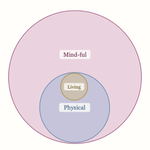
For over a century, biology has centred genes and evolution in its explanations of behaviour. bit.ly/4ejbWc9
But synthetic biologist @drmichaellevin is creating new kinds of lifeform, known as biobots, which he argues challenge that picture.
