








SWC-Wiki retweeted

Great graphic in the post below from @Michaeljdobbin on the current position with Smarter Web’s MORE preference share, trading at just over £80 per share today,
In another scenario, this might have been the IPO launch price (Strive for example IPO’s SATA down at $80 versus its $100 par price.)
Now we get the opportunity to see how interest in MORE grows from this level, with the higher effective yield that entry at this point gives investors.
Volume on the buy side bodes well for starters 👀🇬🇧


SWC-Wiki retweeted

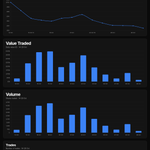
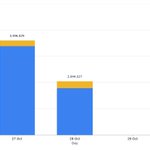
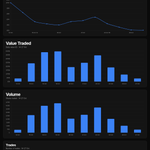
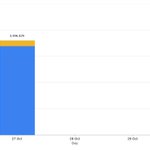
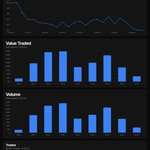
$MORE Day 13: traded 3,582 shares worth £298,000 today, equal to 3.2% of shares issued.
Daily average this week: 1,573 shares / £136,000.
Closing mid price was £81.00. It was a tough day for price, but it's good to see volume picking up.
Onwards.
LSE: #SWC #MORE | OTCQB: $TSWCF | FRA: $3M8


SWC-Wiki retweeted

EARLY BIRD TICKETS - FINAL CHANCE
Early bird pricing for the Bitcoin Treasuries Conference UK 2027 ends tomorrow, Saturday 31 October.
If you want to hear how companies are putting Bitcoin on the balance sheet, and meet the investors, executives and thought leaders doing it, now is the time to lock in your place at the lowest price.
Once tomorrow's gone, so is the early bird rate. Link in comments.
LSE: #SWC #MORE | OTCQB: $TSWCF | FRA: $3M8

SWC-Wiki retweeted

One of the largest crypto exchanges gets hacked for $6 billion and bitcoin sold off less than 5%?
Bullish.
SWC-Wiki retweeted

The news overnight about the Binance hack is concerning for everyone, but we'd like to confirm Smarter Web has not been impacted.
We have relationships with five institutional-grade custodians: Fidelity, Coinbase, Kraken, Anchorage and Xapo, and allocate our Bitcoin between them as our needs require.
Smarter Web keeps these arrangements under regular review.
LSE: #SWC #MORE | OTCQB: $TSWCF | FRA: $3M8
SWC-Wiki retweeted
Yesterday's Binance hack was valued at approx $6.3 billion, equivalent to around 4.4% of the $144 billion in assets Binance held on its platform before the hack occurred.
Binance is privately owned, and there is no reliable, publicly established market capitalisation against which to calculate the hack's percentage of its equity value. - but obviously reputationally it seems horrrific.
There are some important mitigating factors it seems:
Approximately $3 billion has already been frozen, potentially reducing the ultimate loss.
Binance's SAFU emergency fund reportedly held around $1 billion before the incident.
And Binance has pledged to cover customer losses using its SAFU fund and company resources.
It will be interesting to see the repercussions.
Well run treasury companies that separate their custody arrangements still the order of the day for me.
SWC-Wiki retweeted
Smarter Web Livestream: Thursday, 5 November, 14:00 GMT / 09:00 ET.
@millercole is joined by Smarter Web CEO, @asjwebley.
The conversation will cover the latest developments at Smarter Web, recent Bitcoin accumulation, updates on MORE preferred shares, capital structure, and the broader Bitcoin treasury and Digital Credit landscape.
Watch live here on X or YouTube.
LSE: #SWC #MORE | OTCQB: $TSWCF | FRA: $3M8

SWC-Wiki retweeted
The ability for UK investors to buy Smarter Web’s newly launched MORE preferred shares, receive £12 per share in annual dividends paid in WEEKLY increments, hold them tax-efficiently in an ISA or SIPP, and reinvest those dividends to compound returns over time should be enormous, enormous news.
🇬🇧
At today’s share price of £89, that’s an effective annual dividend yield of 13.48%.
And that’s before considering the potential long-term impact of compounding.
@andysmith_asap’s post below illustrates just how powerful those numbers could become. 👇


£20,000 IN AN ISA. NO TOP-UPS.
What difference could a 10%, 11%, 12%, 13%, 14% or 15% annual dividend make when you reinvest every week?
Following my posts on $MORE and compounding, here’s the same starting investment at six different assumed rates.
Every dividend buys more shares. Those shares generate more dividends. Reinvest them, and the process continues.
These are hypothetical constant-rate scenarios, assuming an unchanged share price and immediate weekly reinvestment.
AFTER 10 YEARS
10% → £54,313
11% → £60,014
12% → £66,311
13% → £73,267
14% → £80,952
15% → £89,440
AFTER 20 YEARS
10% → £147,498
11% → £180,081
12% → £219,855
13% → £268,402
14% → £327,658
15% → £399,980
AFTER 30 YEARS
10% → £400,555
11% → £540,366
12% → £728,935
13% → £983,252
14% → £1,326,221
15% → £1,788,718
AFTER 40 YEARS
10% → £1,087,777
11% → £1,621,464
12% → £2,416,806
13% → £3,601,995
14% → £5,367,982
15% → £7,999,186
Your contribution in every example?
£20,000. Once.
To find the gain above your original investment, subtract £20,000 from each figure.
At 12%, for example:
10-year gain: £46,311.
20-year gain: £199,855.
30-year gain: £708,935.
40-year gain: £2,396,806.
LOOK AT WHAT ONE PERCENTAGE POINT DOES OVER TIME.
After ten years, the difference between 12% and 13% is approximately £6,956.
After forty years, it is approximately £1.19 million.
That is the mathematical effect of reinvesting returns over a long period.
The weekly payments grow because the number of shares grows. You keep buying more income-producing shares with the income already received.
Inside an ISA, eligible dividends and capital gains are free of UK tax under current rules. Reinvested dividends don’t use additional subscription allowance.
These figures are before fees and inflation and assume fractional-share reinvestment, uninterrupted payments and no redemption. They aren’t forecasts of MORE: its dividend rate and share price can change, and capital is at risk. The larger figures depend on sustaining exceptionally high returns for decades.
But the lesson is worth understanding:
The starting amount matters.
The return matters.
The time you allow it to compound matters enormously.
£20,000 is the beginning of the calculation.
$MORE $SWC
#CompoundGrowth #DividendInvesting #StocksAndSharesISA #LongTermInvesting #MORE
SWC-Wiki retweeted

There’s a strong possibility today could be looked back upon as the start of the next bull run.
Tonight Strategy holds their Q3 earnings call and they have timed the recovery to par for $STRC perfectly.
$STRC closed at $99.99 and with daily dividends commencing next week and the last day of trading before the final semi monthly dividend tomorrow the ATM has once again been unlocked.
@YChoueifaty on the latest Inside the Walls pod has said it best. Nothing has happened yet.
We are marvelling at the rockets but they are on the launchpad without the fuel.
Bitcoin has hardly moved.
Things can move fast in this space. It’s easy to get lulled into a false sense of security.
I highly recommend tuning in to the latest episode.
mNAVs will expand again and it’s the smallest companies that have the digital credit engine in place that are likely to see the outsized returns.
$STRC returning to par may provide the pressure required as the catalyst for the start of this bull run proper. Time will tell but don’t be surprised, once the US mid term elections are complete, for Bitcoin buying pressure to be too much for the price to be held below the current $82,000 level.
But once again, regardless of short term price action, the medium to long term path remains clear.
We’re going higher.
It’s only a matter of time.
And when we do, the UK’s largest Bitcoin holder and only digital credit issuer outside of the US on a main market?
Yes, $SWC is going higher too.
Onwards! 🚀

Volatility on the way down isn’t fun and it isn’t predictable (not to me at least).
But perspective remains key.
Whilst share price is down and mNAV has contracted sharply in recent weeks they are equally still significantly up year to date.
At today’s snapshot the mNAV sits at 1.09, up from 0.7 at the start of the year.
Share price is 44p, up 27% from 32p at the start of the year.
$SWC has uplisted to the main market LSE stock exchange and #MORE has been launched.
With Bitcoin currently down 7.3% year to date most would consider today’s snapshot and year to date performance extremely encouraging.
It’s for every individual to reach their own conclusion.
Will #MORE continue to grow and build towards par in the coming weeks and months?
Will $SWC increase further access to the US capital markets to access deeper liquidity?
Will @asjwebley continue to forge ahead and prove doubters wrong as he had demonstrated time and time again?
Will $SWC remain one of, if not the fastest horse as this next bull run really gets going?
The share price is not the company. For anyone with a long time horizon even the recent local high share price can be considered good value. If so, current share price provides even better value.
I’m here for the entirety of the 10 year plan.
Onwards! 🚀
SWC-Wiki retweeted
“We’re not competitors, we’re cooperators”
Saylor, in Strategy’s Q3 Earnings Call today gave a shoutout to the presence of more issuers, more capital into Bitcoin.
Fantastic to see Smarter Web’s MORE getting some recognition from the big man himself, noting Smarter Web as the 🇬🇧 flag bearer alongside the 3 other global giants of Strategy, Strive, and Metaplanet, issuing digital credit via perpetual preferred stocks.
👀

SWC-Wiki retweeted
Touching distance away from having Digital Credit’s OG cheerleader back at $100.00 par value…
With that, there will be more eyes once again on Bitcoin-backed high yielding pref shares - and what STRC can do for Strategy in the US, MORE can do for Smarter Web in the UK.

SWC-Wiki retweeted
$MORE Day 12: traded 509 shares worth £45,000 today, equal to 0.5% of shares issued.
10-day average volume: 1,935 shares a day. 25,191 shares traded since launch, 22.7% of shares issued.
Closing mid price was £88.50
LSE: #SWC #MORE | OTCQB: $TSWCF | FRA: $3M8


SWC-Wiki retweeted

Once $MORE first dividend payment lands, a regulatory and operational line is crossed that most crypto treasury names haven’t.
The FCA’s 10% crypto ETN rule is now live, signalling that regulated funds can hold digital asset exposure inside standard products. $MORE itself sits outside that sleeve, but the door it opened points straight at Qualified Investor Schemes, where there is no cap at all.
Those pools, plus specialist crypto treasury funds able to hold non voting preferreds, represent the first real institutional channel MORE has had. Converting even 1–2% of that QIS into allocations would be transformative for the stock.
@smarterwebuk
SWC-Wiki retweeted
Today’s Smarter Web Livestream has been cancelled.
Our guest is unwell and unable to take part. We wish them a quick recovery.
The livestream will return next week - we’ll announce the guest tomorrow as usual. Apologies to anyone who was planning to tune in.
LSE: #SWC #MORE | OTCQB: $TSWCF | FRA: $3M8

Smarter Web Livestream: Thursday, 29 October, 14:00 GMT / 10:00 ET.
@millercole is joined by @benharvey, Digital Assets Researcher at Keyrock.
The conversation will explore Ben’s research on Bitcoin treasury companies, Digital Credit and capital structure.
Watch live here on X or Youtube.
LSE: #SWC #MORE | OTCQB: $TSWCF | FRA: $3M8


SWC-Wiki retweeted
WHAT COULD YOUR MONTHLY PENSION CONTRIBUTIONS BECOME? 💷
Following my series on building wealth, let’s look at workplace pensions—and what reinvesting dividends could do over a working lifetime.
The median eligible private-sector pension saver in Great Britain received £3,430 in total contributions in 2025.
That’s approximately £286 a month, including employer contributions and applicable tax relief.
For a return benchmark, Nest’s 2046 Retirement Date Fund delivered 8.5% annualised over the ten years to March 2026. That’s one major fund’s historical performance, rather than a UK-wide average.
Now imagine the same £286 a month invested under two scenarios:
• 8.5% annual investment growth.
• MORE maintaining a 12% annual dividend, with payments reinvested weekly at an unchanged £100 share price.
Starting from zero, with no increases in contributions:
AFTER 10 YEARS
You’ve contributed £34,300.
At 8.5%: £52,838.
MORE scenario: £65,932.
That’s £13,094 more.
AFTER 20 YEARS
You’ve contributed £68,600.
At 8.5%: £172,302.
MORE scenario: £284,529.
That’s £112,227 more.
AFTER 30 YEARS
You’ve contributed £102,900.
At 8.5%: £442,410.
MORE scenario: £1,009,298.
That’s £566,887 more and a gain of £906,398 above contributions in the MORE illustration.
THE WEEKLY REINVESTMENT IS THE KEY.
Every dividend buys more shares.
Those shares generate more dividends.
Reinvest those, and the following payments grow again.
If you stopped reinvesting at those milestones, the MORE holdings could generate, at the same assumed rate:
10 years: approximately £152 a week.
20 years: approximately £657 a week.
30 years: approximately £2,329 a week.
And MORE can be held within a SIPP where the provider supports it, so pension investing and MORE aren’t mutually exclusive. Keeping employer contributions and tax relief in the equation matters.
These figures illustrate constant returns, before inflation, additional fees and withdrawal tax. MORE’s dividend and share price can change, so the outcomes aren’t guaranteed.
The point is how much the return on your money can matter over time.
Same monthly contribution.
Same number of years.
A very different potential retirement pot.
Your pension deserves more attention than a line on your payslip.
$MORE $SWC
#WorkplacePension #CompoundGrowth #RetirementPlanning #DividendInvesting #MORE
COULD YOUR NEXT CAR HELP BUILD YOUR INVESTMENTS?
Following my posts on income and compounding, here’s another way to look at your monthly spending.
Choose a car that costs less to own, then invest the difference in $MORE.
You still have a new car. But some of the money you would have spent running it starts buying an investment instead.
LET’S PUT SOME NUMBERS BEHIND IT.
Autotrader reported an average advertised new petrol-car price of £43,405 in April 2026, after discounts.
That is a published price benchmark, not the average amount every UK buyer actually pays.
Tesla currently advertises the Model Y Rear-Wheel Drive at £44,990, with a representative 0% APR PCP offer:
• £6,850 deposit.
• 47 monthly payments of £349.
• £21,753 optional final payment.
• 48-month agreement.
• 8,000 miles a year.
That final payment matters. £349 a month does not buy the car outright.
For this comparison, we include the final payment so that both cars are fully paid for after four years.
THE PURCHASE AND FINANCE COST.
Petrol-car example:
£43,405 purchase price.
£6,850 deposit.
The remaining £36,555 financed over 48 months at an assumed 8.9% APR, with no balloon.
That works out at approximately £902 a month.
Total paid to own it: approximately £50,146.
Of that, approximately £6,741 is interest.
The 8.9% is an illustrative rate, not a claim about the national average. Your actual finance quote could be lower or higher.
Model Y:
Total paid to own it, including the deposit and final payment: £44,990.
Interest under the advertised offer: £0.
That gives the Tesla a £5,156 purchase-and-finance advantage in this example, despite its higher cash price.
It also explains why comparing monthly payments alone can be misleading: the Tesla has a large payment deferred to the end.
NOW THE ENERGY COST.
Assume both cars cover 8,000 miles a year.
For the petrol car:
• 40 miles per UK gallon.
• Petrol at 174.79p per litre, the RAC’s published figure on 9 October.
• Annual petrol bill: approximately £1,589.
For the Model Y:
• An assumed 3.5 miles per kWh measured from the electricity meter, including charging losses.
• All charging at home.
• Electricity at 26.32p per kWh, Ofgem’s current average capped direct-debit unit rate.
• Annual charging bill: approximately £602.
Annual energy saving: approximately £988.
That uses standard home electricity pricing. An appropriate overnight EV tariff could reduce charging costs further.
Public charging, winter weather, motorway speeds and your driving style can change the result considerably.
THE OTHER COSTS COUNT TOO.
Here are explicit annual budget assumptions, rather than pretending every driver gets the same insurance quote or maintenance bill:
Petrol car:
• Insurance: £900.
• Servicing and maintenance: £350.
• Tyres: £300.
Model Y:
• Insurance: £1,100.
• Servicing and maintenance: £150.
• Tyres: £350.
So this example allows the Tesla to cost more for insurance and tyres.
I’ve also included a £1,000 one-off home-charger installation budget. Actual installation quotes vary.
For vehicle tax, assume the petrol car’s original list price exceeds £40,000 and the Model Y remains below the £50,000 electric-car threshold.
At current rates, years two to four cost:
• Petrol: £640 a year, including the expensive-car supplement.
• Model Y: £200 a year.
First-year tax is assumed included in each purchase price. Future tax and energy rates are held constant purely for the calculation.
WHAT ABOUT DEPRECIATION?
This is one of the biggest ownership costs.
For a transparent comparison, assume each car is worth £20,000 after four years. That is a modelling assumption, not a resale forecast.
Add purchase and finance costs, energy, insurance, maintenance, tyres, subsequent vehicle tax and the Tesla charger. Then subtract that assumed resale value.
FOUR-YEAR NET OWNERSHIP COST:
Petrol car: approximately £44,622.
Tesla Model Y: approximately £35,396.
Difference: approximately £9,226.
That is equivalent to approximately £192 a month, or £44 a week.
This is an average ownership-cost difference, not a promise that £192 becomes available in cash every month. Deposits, the Tesla balloon and resale proceeds happen at different times.
And resale values matter: if the Tesla were worth £5,000 less than the petrol car at the end, the saving would fall to approximately £88 a month.
BUT IF YOUR ACTUAL BUDGET FREES UP £192 A MONTH…
What could happen if you invested that saving instead of absorbing it into everyday spending?
Using the model’s unrounded saving of approximately £192.21 a month, invested as equivalent weekly contributions into MORE:
Assume a maintained 12% annual dividend rate, shares bought and reinvested at £100, and all dividends reinvested weekly.
AFTER FOUR YEARS
Money contributed: approximately £9,226.
Illustrative investment value: £11,824.
Gain above contributions: approximately £2,598.
At that assumed rate, the holding could then produce approximately £27 a week in dividends.
The car-cost saving has helped build a separate income-producing investment.
IF YOU KEPT SAVING THE SAME AMOUNT FOR LONGER…
These longer examples require you to maintain the saving through future motoring decisions. Today’s Tesla offer does not guarantee that.
After 10 years:
Contributions: approximately £23,065.
Illustrative investment value: £44,507.
Gain: approximately £21,442.
After 20 years:
Contributions: approximately £46,130.
Illustrative investment value: £192,070.
Gain: approximately £145,940.
Those are nominal figures before inflation, investment fees and dealing costs. They assume immediate weekly reinvestment, including fractional shares.
MORE is ISA eligible where supported by your provider. The contributions in this example are around £2,307 a year, within the current £20,000 annual ISA allowance if you have enough allowance available.
You would still need to fund every car payment, including any balloon, independently. Investments are not a guaranteed way to meet a finance commitment.
MORE’s dividend is variable, payments can be suspended, the shares can be redeemed and capital is at risk. Its Bitcoin exposure creates significant risk. These investment figures illustrate the maths, not an expected return.
THE IDEA IS SIMPLE.
Look beyond the monthly car advert.
Compare the full finance cost, charging or fuel, insurance, maintenance, tax and likely resale value.
Then, if your choice genuinely saves money, give that saving a purpose.
A lower motoring bill can do more than make this month cheaper.
Invested consistently, it could help build something you still own long after you’ve changed the car.
$MORE $SWC
Illustrative comparison, not financial advice. Finance offers are subject to eligibility and change. Check your own quotes and read the MORE prospectus.
#TeslaModelY #CostOfOwnership #ElectricVehicles #DividendInvesting #StocksAndSharesISA #MORE
SWC-Wiki retweeted
Every Thursday morning, Smarter Web announces the proceeds raised through the Company's at-the-market facilities:
- Ordinary Shares ATM Facility
- Preferred Shares ATM Facility
Today, no RNS was issued, meaning there were no sales under either facility during the reporting period.
The ATM facilities provide Smarter Web with flexibility to raise capital. Not just issue shares simply because the facilities are available.
LSE: #SWC #MORE | OTCQB: $TSWCF | FRA: $3M8
