

Hands-on science made simple. Our convenient and cost-effective, no-prep science kits are ready-to-go!
Pittsford, New York
Joined January 2011
- Tweets2K
- Following404
- Followers754
- Likes390





Science Take-Out retweeted

Hummingbird feeders are a beloved pastime for millions of backyard birders and a convenient dining spot for the birds. But for the Anna’s hummingbird, a common species in the western United States, feeders have become a major evolutionary force.
According to research published last year, artificial feeders have allowed the birds to expand their range out of Southern California up to the state’s northern end.
They have also driven a transformation of the birds themselves. Over just a few generations, their beaks have dramatically changed in size and shape.
Learn more on #NationalHummingbirdDay: scim.ag/4jMUmNu

ALT Bird feeders have caused a dramatic evolution of California hummingbirds
Science Take-Out retweeted

This year, emergency room visits for tick bites have increased dramatically, corresponding with a new threat: a rise in Alpha-gal syndrome (AGS), where one bite from a lone star tick can make you violently allergic to red meat.
David @Pogue looks at how residents of Martha Vineyard are addressing an epidemic of Alpha-gal, and talks with experts about how best to avoid tick bites. cbsn.ws/4c7IQvk
Science Take-Out retweeted

Teachers explored microplastics and health at our workshop yesterday @UofR_Warner.
#microplastics


Science Take-Out retweeted
FREE workshop for Orleans and Genesee County NY middle school and high school teachers, counseling staff, nurses, and administrators. 📢
"The Science Behind the Health Risks of Vaping"
See below for details.
#teachers #vaping #handsonscience

Science Take-Out retweeted

Vaccines were once so uncontroversial that McDonald’s restaurants put the childhood immunization schedule on their tray liners.
Now, as the U.S. government sows doubt, preventable diseases could come roaring back.
propublica.org/article/rfk-j…

Science Take-Out retweeted

Can cooling ingredients in e-cigarettes cause irregular heartbeat or cardiac arrest?
spr.ly/6018BDE4aG
Science Take-Out retweeted

After more than 20 years of regulatory roadblocks, the U.S. is finally getting a new, more protective sunscreen filter. Experts explain how bemotrizinol works
spklr.io/6011E3Moc

Science Take-Out retweeted

Model bioremediation using yeast as a flocculant to remove microplastics in water.
sbgo.org/bioremediation26-tw
Thank you, @MilliporeSigma, for supporting #sustainability projects & student #STEM.
Reply or DM to share your #scienceproject
#scienceteacher #worldoceans #oceansday

ALT Image of glitter on a spoon as part of a bioremediation project
Science Take-Out retweeted

"Tanmaxxing" is trending on social media. The reality? A tan is skin damage.
UV exposure damages skin cells, speeds up premature aging, and increases your risk of skin cancer. There’s no such thing as a safe tan.
#SkinCancerAwareness #Tanmaxxing #WearSPF


Science Take-Out retweeted
Don’t be fooled by flavours.
Most e-cigarettes contain nicotine, which is highly addictive and can quickly get you hooked.
They also produce tiny particles that can travel deep into your lungs, along with toxic chemicals such as formaldehyde and heavy metals.
E-cigarettes can harm your lungs and heart.
Don’t let e-cigarettes take over your life.
Science Take-Out retweeted

Today on #WorldNoTobaccoDay, we’re exposing Big Tobacco companies and their tactics to hook a new generation.
From candy flavors and flashy packaging to products designed to look like toys, tech and lifestyle accessories, these companies continue to market addiction as something fun and modern.
The truth? These products are designed to addict young people and increase profits. #TobaccoExposed #WNTD2026


Science Take-Out retweeted

Every fall, Culex pipiens mosquitoes, the primary carriers of West Nile virus in the United States, are supposed to take their cues from the waning daylight and go dormant for the winter.
Now, a new backyard study finds that the glow of a floodlight may be enough to delay that shutdown, giving the mosquitoes more opportunities to bite.
The research suggests artificial light at night powerfully disrupts mosquitoes’ ability to go dormant—raising the possibility that as cities grow brighter, disease transmission seasons could extend.
Learn more: scim.ag/4fadqGW

ALT Outdoor lights may be making mosquito season longer Artificial light at night delays winter “shutdown” of mosquitoes carrying disease
Science Take-Out retweeted

Airborne plastic particles, particularly colorful ones, absorb more sunlight than they reflect, which can heat the surrounding air, according to a new study. bit.ly/4uGxx3X

Science Take-Out retweeted

Human, animal, plant and environmental health are all inextricably linked.
This means that to address global health issues, we must collaborate across all sectors.
A #OneHealth approach is key.
But what is One Health exactly?
#WorldVeterinaryDay #AnimalHealth

Science Take-Out retweeted
Dr. Katrina Korfmacher, IHHE Co-Leader of Engagement, was interviewed for this article about the impact of climate change on people with asthma.
#climatechange #asthma
wxxinews.org/local-news/2026…

Science Take-Out retweeted

Volcanic rock cement developed to replace limestone, could cut carbon emissions by 67%. Cement currently accounts for 8% of global greenhouse gas emissions. interestingengineering.com/s… #geophysics #science #environment #STEM #SciChat
Science Take-Out retweeted

April is Citizen Science Month — and we’re going live.
Acts of Science: Connected is a weekly series of guided Zoom events where anyone can contribute to real research, together.
What’s an Act of Science? One measurable contribution to research — like classifying an image, transcribing a document, identifying a species, or spotting a comet. Every click counts.
This April, we’re working toward 2.50 million Acts of Science to celebrate America’s 250th birthday.
Join anytime, from anywhere. Each week features live sessions with scientists from NASA, the Smithsonian, and more — with multiple time slots and no experience needed.
Plus, report your Act of Science and get a free year-long digital subscription to New Scientist.
Science doesn’t just happen in labs. It works better when we show up.
Register: SciStarter.org/Connected
#actsofscience #CitSciMonth
@DoNASAScience @smithsonian @WDNR @the_zooniverse
Science Take-Out retweeted
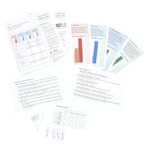
Meet the Plastics of LOMP!
Our researchers from the Lake Ontario MicroPlastics Center (LOMP) are studying many types of plastics. These fact sheets provide information about some of these plastics and why LOMP researchers are studying them.
urmc.rochester.edu/environme…
#URochesterResearch

Science Take-Out retweeted
Tropical plants flowering months earlier or later because of climate crisis. Changes threaten ecosystems as flowering falls out of sync with fruit-eating, seed-dispersing animals & pollinators. theguardian.com/environment/… #ClimateScience #environment #biodiversity #science #SciChat

Science Take-Out retweeted

#Microplastics are plastic fragments smaller than 5 mm that results from breakdown of plastic litter.
📄 This JAMA Patient Page describes microplastics and the potential health effects of human exposure to microplastics.
ja.ma/4tKqOWW
