
A patriotic SA citizen who values Ethical Leadership, Selfless Governance & Political Accountability. A Kaizer Chiefs & Man City fan.
Pretoria, South Africa
Joined November 2021
- Tweets3.7K
- Following296
- Followers367
- Likes3.9K






Teboho Sephapo retweeted

Herman Mashaba might see himself in Union Buildings in 2029 and simply because he prioritises majority of South Africans over party position.
Teboho Sephapo retweeted

We’ve had a 1% mayor from Al Jama-ah in Joburg, a COPE mayor in Tshwane, and a 10% DA mayor Tania Campbell in Ekurhuleni. Yet today, we are suddenly getting lectures on political morality? The selective amnesia and hypocrisy are truly impressive.
Let’s deal with the facts..."nobody won an outright majority", so the condescending superiority complex needs to take a back seat.
Coalition politics is about negotiation, not entitlement. ActionSA earned its votes independently and reserves the full right to decide how to use them without needing permission or patronizing approval from anyone else.
Devils Alliance ( DA) doesn't dictate terms for anyone ! Instability, or not , blah blah blah coalition chaos DA must never forget how it collapsed Johannesburg coalition under Dr Mpho Phalatse want to climb their horses up-high here!
Asijiki


Teboho Sephapo retweeted
Ancestors died for freedom, yet Black South Africans still fight racism, economic exclusion, corrupt leadership and threats to our sovereignty, even from fellow African countries. We recognise white South Africans who mean well. The struggle did not end in 1994, it changed form.
Teboho Sephapo retweeted

The apartheid economy by the 1980s had debt it could not afford and defaulted.
By the 1980s Corporate taxes were at about 50% even personal income taxes were among the highest on earth.
The apartheid economy also had ggrand corruption here in RSA.
Yes, those points are supported by South Africa’s economic and historical record.
During the 1980s, the cost of enforcing apartheid, fighting regional border wars, and surviving international sanctions pushed the state into a severe fiscal and governance crisis.
1. The 1985 Debt Default (Standstill)
The Trigger. Following escalating internal unrest and P.W. Botha’s August 1985 "Rubicon" speech—which signaled no meaningful political reform—foreign banks led by Chase Manhattan refused to roll over South Africa’s short-term loans.
The Moratorium. Unable to meet its obligations, the government closed the Johannesburg Stock Exchange and currency markets temporarily and declared a unilateral "debt standstill" (a sovereign default) on roughly $13.6 billion to $14 billion of short-term foreign commercial debt.
Long-Term Impact. South Africa was cut off from normal international capital markets, forcing the democratic government after 1994 to honour rescheduled repayment agreements until the final tranche was paid off in August 2001.
2. High Corporate and Personal Tax Rates
Corporate Taxes. Throughout the 1980s and peaking in 1991, South Africa’s statutory corporate income tax rate sat between 42% and 50% (alongside a 33.33% Undistributed Profits Tax)—nearly double today's rate of 27%.
Personal Income Taxes. The top marginal personal income tax rate reached 50%, accompanied by "fiscal drag" (bracket creep) driven by double-digit inflation (which hit 15%–18.9%).
Because the tax base was narrow and state spending on security and bloated racial administrations surged, the overall tax-to-GDP ratio climbed from roughly 19% in the 1970s to over 27% by 1990.
3. Grand Corruption and Secret Slush Funds
Sanctions-Busting and Secrecy. As documented in the Institute for Security Studies (ISS) Apartheid Grand Corruption Report, the regime created covert networks to bypass arms and oil embargoes.
Because these operations were classified under national security laws, oversight and auditing were virtually non-existent.
Scale of Looted Funds. Investigations and historical audits indicate that billions of rands (estimated at the equivalent of US$54 billion in 2005 terms between 1976 and 1994) flowed through secret government accounts and slush funds, fueling personal enrichment, illicit foreign currency transfers into Swiss bank accounts, and patronage across the Bantustan (homeland) administrations.
Destruction of Evidence.
Ahead of the 1994 transition, state agencies systematically shredded and incinerated massive volumes of financial and intelligence records (including over 44 metric tons of National Intelligence Service documents) to conceal the paper trail.


Teboho Sephapo retweeted

🚨 BREAKING NEWS🚨
We have finally found ActionSA's social media ghost members who are unhappy with the party's leadership.
When you come across them, please give them a hug. They are clearly going through a lot😂😂
@helenzille

Teboho Sephapo retweeted

Dear @MYANC @EFFSouthAfrica @Action4SA @MKParliament @BuildOneSA @Rise_Mzansi @OnsBaizaNie
Re a le kopa, PLEASE DON NOT DISAPPOINT US!


Teboho Sephapo retweeted

It's time for the South African government to withdraw from
1951 UN Refugee Convention
Teboho Sephapo retweeted

@mmkubayi why are you guys allowing @Leon_Schreib to sell out the government responsibility to their funders @CapitecBankSA ? @Our_DA is pushing for this privatisation so that all the people they want to bring in can easily get the documents. You can’t fool me


Teboho Sephapo retweeted

As taxpayers, we are calling for the abolition of the Grade 1 and Grade 8 online admissions system and Foreign nationals should enrol their children in private schools.
Teboho Sephapo retweeted

@Anele proven CORRECT,🫣

This aged just right. @Anele did tell you @helenzille
But you know best! Jonga ngoku.
Teboho Sephapo retweeted

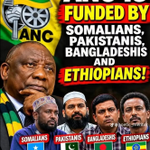
A referral to the Special Investigating Unit (SIU) concerning the administration of the Spaza Shop Support Fund is being finalised.
The submission incorporates the concerns raised by survey respondents, supporting documentation already gathered by SACR, and a whistle-blower report containing further allegations requiring independent investigation.
Kuthiwa kuneqembu lebhola elathola lemali.
This quoted post is unavailable.
Teboho Sephapo retweeted

Please tag Gogo Helen Zille and all DA White privilege Apartheid Beneficiaries and every one who believes white is superior.🇿🇦‼️
